Short answer
On a roof under ten years old, the installer almost always pays, because failures that early are installation failures rather than product defects. The shingle manufacturer covers the shingle itself, which is rarely the thing that failed, and your homeowners insurance covers sudden storm damage, not bad workmanship. Your first job is to get the cause documented in photographs, because the cause decides who is responsible.
On this page
- Find the cause before you argue about the bill
- Who is responsible, by cause
- Workmanship coverage and manufacturer coverage are two different things
- What to do first, in order
- When the installer will not come back, or no longer exists
- What a real second-opinion inspection should give you
- How the next roof avoids this
On a roof under ten years old, the installer almost always pays. Asphalt shingles do not fail at year four. Flashing that was reused, nails that were driven high or overdriven, a valley cut wrong, a pipe boot that was never replaced, ventilation that was never corrected — those fail at year four, and every one of them is workmanship.
That is the answer. Getting someone to honor it depends entirely on whether you can show what caused the leak. So start there, not with the phone call.
Find the cause before you argue about the bill
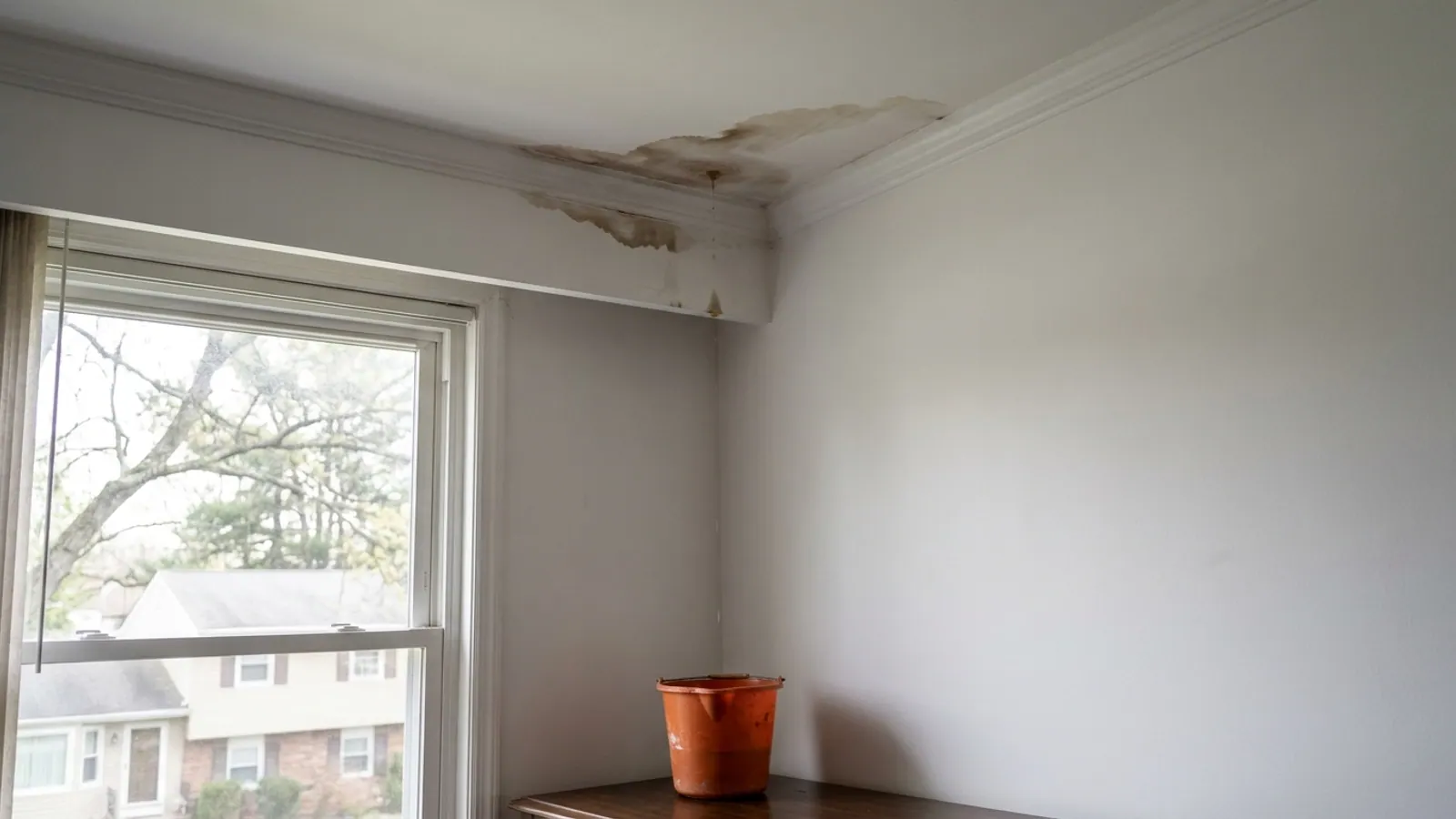
Who pays is decided by the cause. A contractor is not going to accept responsibility for a stain on your ceiling; he is going to accept responsibility for his step flashing, and only when he is looking at a photograph of it.
The four causes that produce almost every early leak on a New Jersey roof:
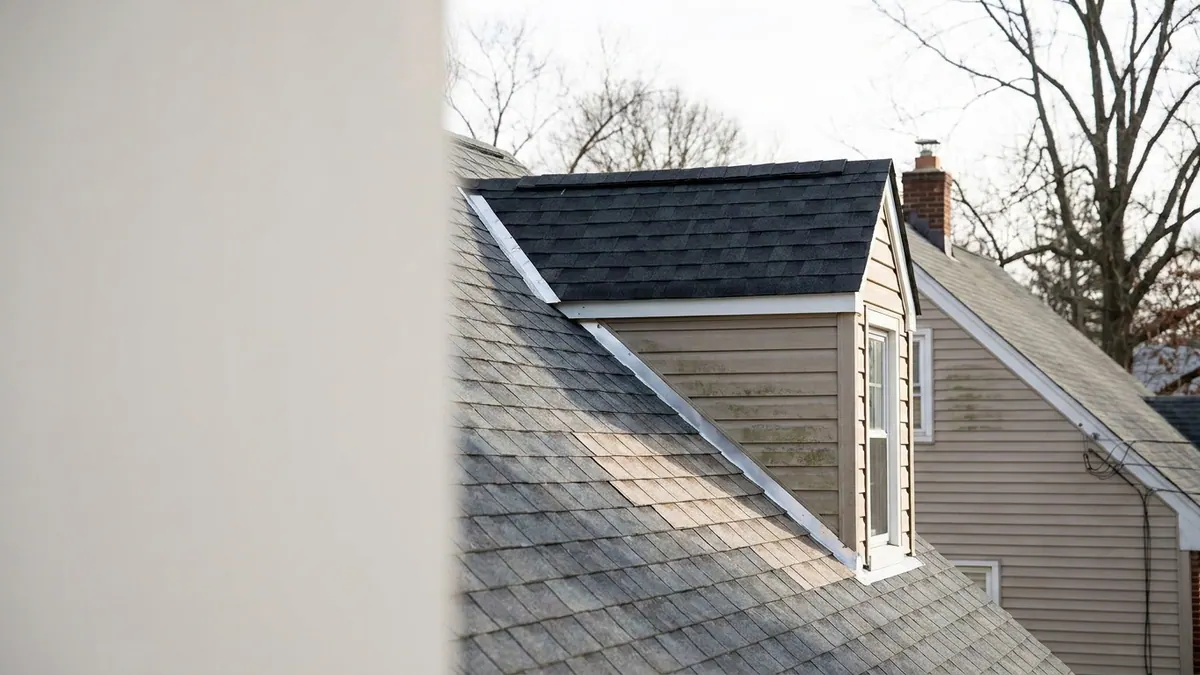
- Flashing. Chimneys, sidewalls, dormer returns, skylight curbs. Old step flashing that was left in place and shingled over is the single most common reason a cheap roof leaks early.
- Penetrations. Plumbing vent boots, bath fan exits, satellite mounts. A boot that was reused rather than replaced splits at the collar.
- The roof edge and ice. Missing or short ice and water shield at the eaves, or no drip edge, lets melt water back up under the shingles during a January thaw.
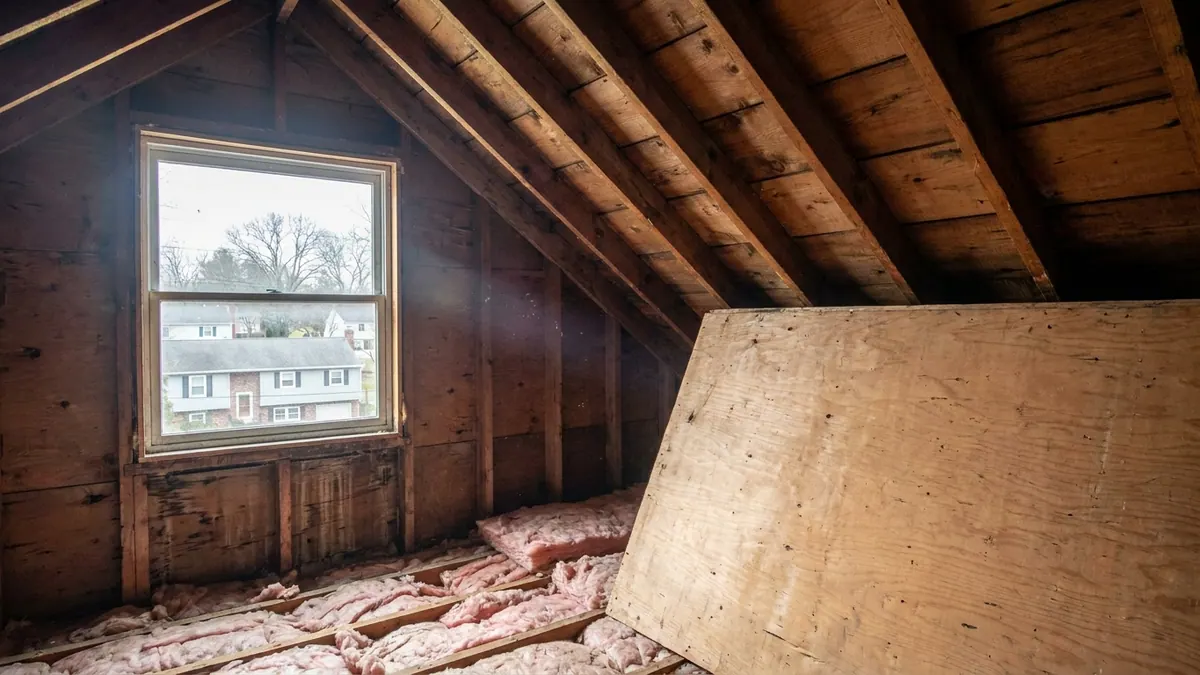
- Ventilation. Water that drips from the underside of the sheathing and stains a ceiling is condensation, not a roof leak. A roof with a ridge vent and no intake at the soffit does this every winter.
That last one matters because it is the one homeowners misdiagnose most often. The attic ventilation guide explains what balanced intake and exhaust actually looks like and how to tell condensation from a leak before you accuse anyone of anything.
Who is responsible, by cause
| What failed | Who normally pays | What you need |
|---|---|---|
| What failedFlashing, nailing, valleys, boots, underlayment | Who normally paysThe installing contractor, under workmanship coverage | What you needYour signed contract, photos of the failure, dated written notice |
| What failedThe shingle itself — widespread cracking, blistering, granule loss across whole slopes | Who normally paysThe manufacturer, under material coverage | What you needRegistration or proof of purchase, product name, photos of multiple slopes |
| What failedWind or hail in a dated storm event | Who normally paysHomeowners insurance | What you needDate of loss, photos, adjuster inspection |
| What failedCondensation from unbalanced attic ventilation | Who normally paysDepends on whether ventilation was in the original scope | What you needYour original estimate, line by line |
| What failedWork a different trade did after the roof — solar, antenna, chimney cap | Who normally paysWhoever drilled the hole | What you needDates of each job |
Workmanship coverage and manufacturer coverage are two different things
The shingle manufacturer warrants the shingle. It does not warrant the person who nailed it down. That is the distinction that catches people, because the long number on the brochure — the one with "lifetime" in it — is the material warranty, and a material warranty pays for nothing when the material is fine and the flashing is not.
Workmanship coverage comes from the contractor and is worth exactly as much as the contractor is still worth. There is no industry standard length, so read what you actually signed rather than what you remember being told in the driveway. The roof warranty guide walks through both documents and what has to be written down for either one to be enforceable.
Two things quietly reduce manufacturer coverage on a newer roof: mixed components, and no permit. Top-tier coverage generally requires the manufacturer's own starter strip, underlayment, ridge cap and ventilation as a system. Swap two of those to save a few hundred dollars and the roof drops a tier without anyone mentioning it.
What to do first, in order
- Photograph the interior stain with something in frame for scale, and photograph it again after the next rain so you have a progression.
- Find your contract, your estimate, your final invoice and your permit paperwork. Put them in one folder.
- Check whether a permit was pulled. In New Jersey the roofer files with the municipal construction office under the Uniform Construction Code, and the town has the record. A replacement done with no permit and no inspection is a much weaker position for the contractor, not for you.
- Notify the installer in writing — email is fine, a text thread is fine — describing the leak, the date it appeared and the weather at the time. Keep it factual. The written date starts the clock.
- Give a reasonable window for a response, then follow up once in writing.
- If there is no response, get an independent inspection with photographs before anyone repairs anything.
Do not let a second contractor patch the roof before step four is on the record. Work by another company can void the original installer's obligation, and then the argument is over.
When the installer will not come back, or no longer exists
This is the common ending, and it is worth being blunt about it. Workmanship coverage lives with the company. If the company dissolved, the coverage went with it. The manufacturer's material coverage survives on the shingle, but the shingle is probably not what failed.
Two things still help. Check the contractor's New Jersey Home Improvement Contractor registration status and whether it is current — a registered, insured contractor is a different conversation than an unregistered one. And keep the written record, because a documented pattern of non-response is what you need if you pursue it further.
If you are hiring the next contractor, the 10 questions and red flags guide is the short version of how this is avoided: registration number, proof of insurance, who pulls the permit, what the workmanship coverage says, and whether the estimate prices the conditions that will be found under the old roof.
What a real second-opinion inspection should give you
Not an opinion. Photographs.
A proper inspection covers the roof surface, every flashing point, the roof edge and gutters, and the attic underneath, and it ends with the inspector showing you the pictures on a screen and telling you which items are failing now and which are simply aging. That photo set is what you take back to the original installer. It is also what tells you whether you are looking at a repair at one chimney or a roof that was installed badly from eave to ridge.
At Lightning Construction the inspection and the written estimate are free with no obligation, and a salesperson does come to the house. We will tell you plainly if the honest answer is a repair.
How the next roof avoids this
Early leaks trace back to things priced out of the job before it started. Reused step flashing. Reused pipe boots. Decking nobody looked at. Ventilation left off the estimate.
Lightning Construction finds those at the free inspection and prices them into the quote, because there are no change orders here — the written estimate is the final price. There is no deposit; nothing is due until the work is finished and you have inspected it. Lightning pulls the permit and attends the municipal inspection in every New Jersey municipality, so there is a town record of the roof. Most asphalt replacements are torn off and finished in a single day. The company is veteran-owned and family-operated, GAF Certified, licensed and insured under New Jersey HIC registration 13VH12437000, and rated 4.9 out of 5 from 264 Google reviews.
If your roof is leaking and you want the cause documented in photographs before you call the company that installed it, book a free inspection or read more about what is included in a roof replacement.