Short answer
Most Bergen County asphalt roof replacements fall between $9,000 and $22,000 in standard-value municipalities and between $14,000 and $35,000 in higher-value ones, with large or luxury homes running $25,000 to $60,000. The band your house falls into is set by your municipality's median home value from ACS 2024 five-year estimates, and then roof size, pitch, layers and decking condition decide where you land inside it. Metal roofing starts around $18,000 and climbs from there.
On this page
- Why the Bergen County range is so wide
- What actually moves the number on your house
- Older Bergen County houses have two expensive surprises
- Snow load and wind in northern Bergen County
- What a Bergen County estimate should say in writing
- Permits in a county with 70 construction offices
- Paying for it without a deposit
- What to do next
A new asphalt roof in Bergen County generally lands between $9,000 and $22,000 if your town falls in the standard-value band, and between $14,000 and $35,000 if it falls in the higher-value band. Large or luxury homes run $25,000 to $60,000. Metal roofing is a separate set of numbers: $18,000 to $35,000 standard, $28,000 to $55,000 higher-value, and $45,000 to $120,000 for luxury homes.
Those are ranges, not quotes. Nobody can tell you what your roof costs without measuring it, counting what is already up there and looking at the decking. What follows is how the range gets narrowed on a real Bergen County house.
Why the Bergen County range is so wide
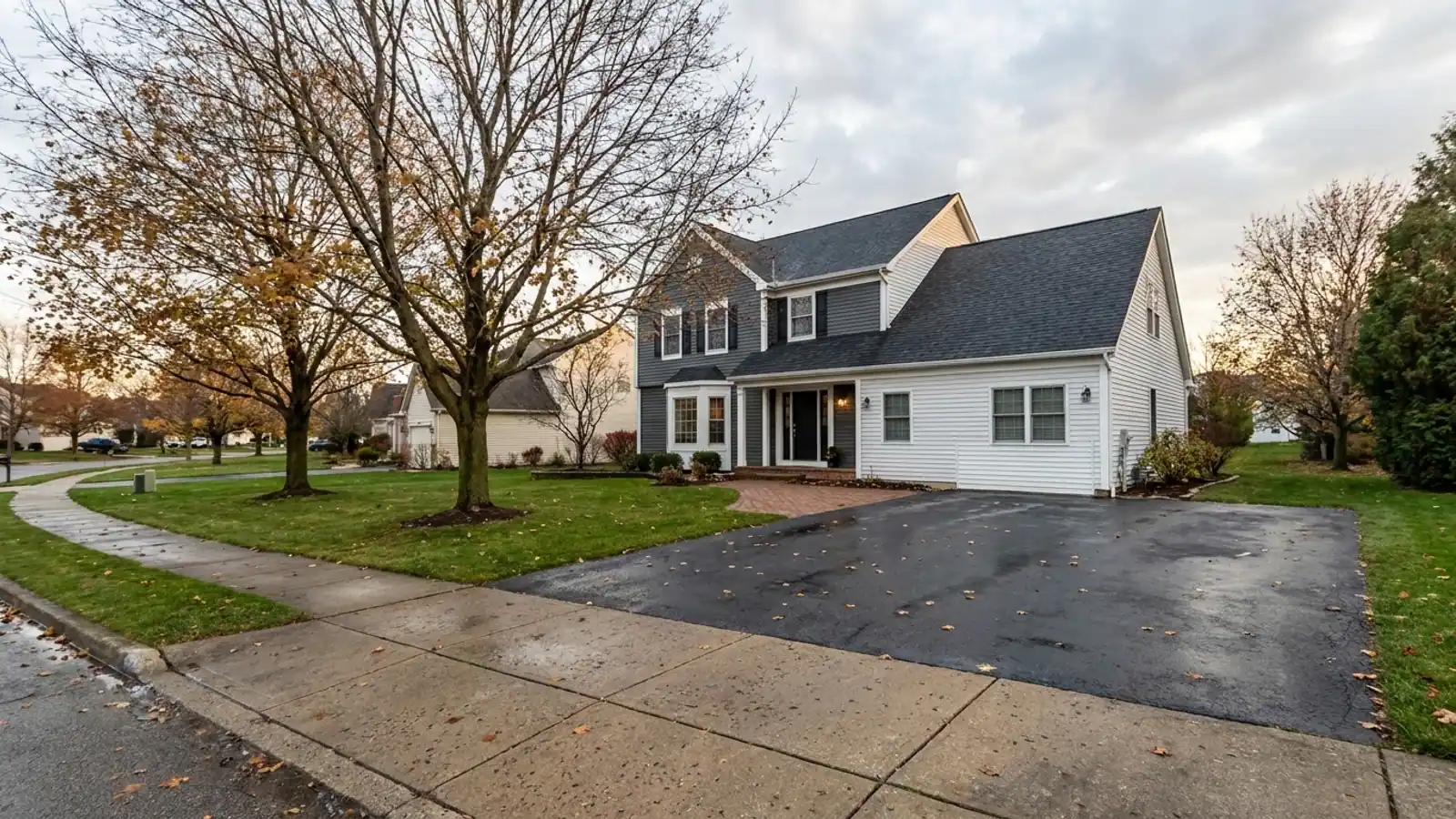
Bergen County has 70 municipalities and roughly 369,613 housing units, and that is the whole explanation. Price bands are set by the median home value of the municipality, taken from American Community Survey 2024 five-year estimates. Two houses of identical size and identical roof geometry sitting in different Bergen towns can price into different bands.
That sounds arbitrary until you look at what else travels with home value in this county: lot access, roof complexity, house size, the cost of staging equipment on a narrow street, and what the local construction office expects to see on an application. The band is a starting point. It does not set your price by itself.
If you want the band for your specific town, the Bergen County service area page lists the municipalities Lightning covers, and each town page states that town's own housing data.
What actually moves the number on your house
Size matters less than homeowners expect and complexity matters more. A 2,400 square foot colonial with one ridge, two slopes and a single chimney is a cheaper roof than a 1,900 square foot house with four dormers, three valleys, a cross gable and a low-slope porch tie-in.
| Driver | Effect on price |
|---|---|
| DriverRoof area (squares) | Effect on priceThe base of the number. More material, more labor, more disposal. |
| DriverPitch | Effect on priceSteep roofs slow everything down and may need staging and fall protection. |
| DriverExisting layers | Effect on priceA second layer doubles the tear-off and the dumpster volume. |
| DriverDecking condition | Effect on priceSoft, delaminated or cracked sheathing has to be replaced before anything new goes down. |
| DriverValleys, dormers, chimneys | Effect on priceEach one is flashing work, and flashing is labor, not shingles. |
| DriverSkylights and penetrations | Effect on priceOld curbs and pipe boots get replaced with the roof or they leak through the new one. |
| DriverVentilation | Effect on priceIntake and exhaust get corrected during the replacement, not after. |
| DriverGutters and drip edge | Effect on priceOften replaced at the same time because the roof edge is already open. |
Shingle line is on that list too, but it moves the total less than any of the above. The shingle is a modest share of an installed roof. Tear-off, disposal, underlayment, ice and water shield, flashing, drip edge, ventilation, labor and the permit are the rest, and none of those change when you move up a product line.
The full breakdown of what sits behind each line is in the New Jersey roof cost guide.
Older Bergen County houses have two expensive surprises
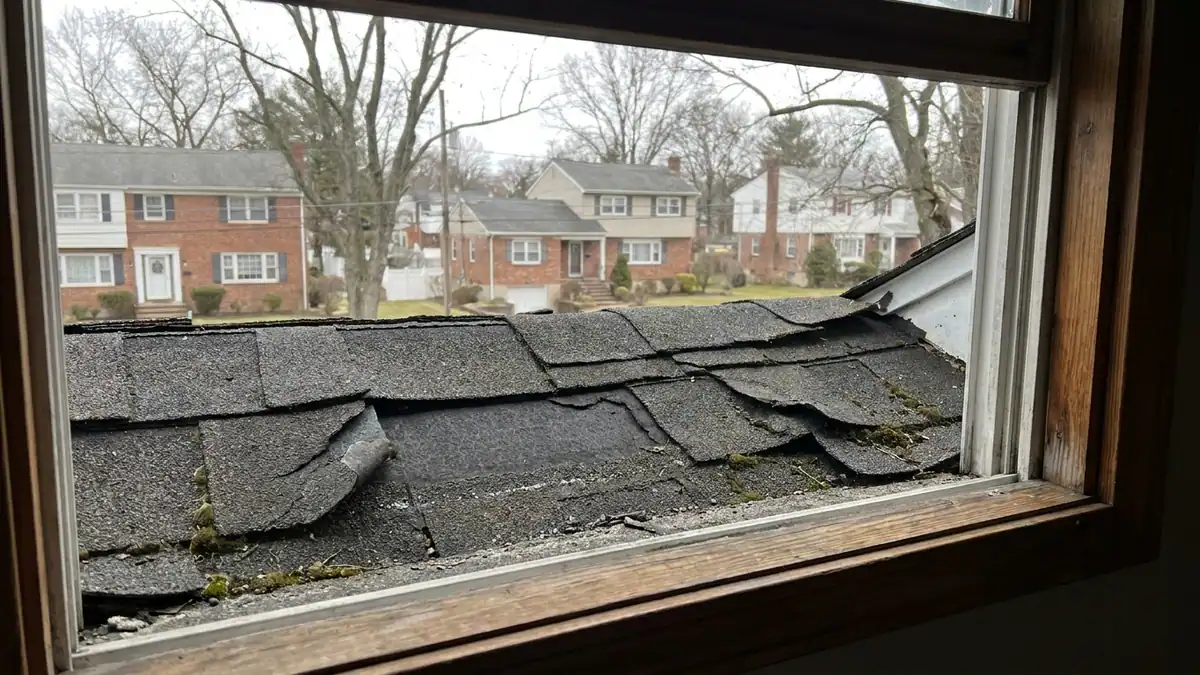
The first is layers. Plenty of North Jersey houses have been reroofed at least once, and a second layer of asphalt is usually only visible at the rake edge or from inside the attic. Two layers means twice the tear-off labor and a bigger container on the driveway. A contractor who quotes from the sidewalk will not see it.
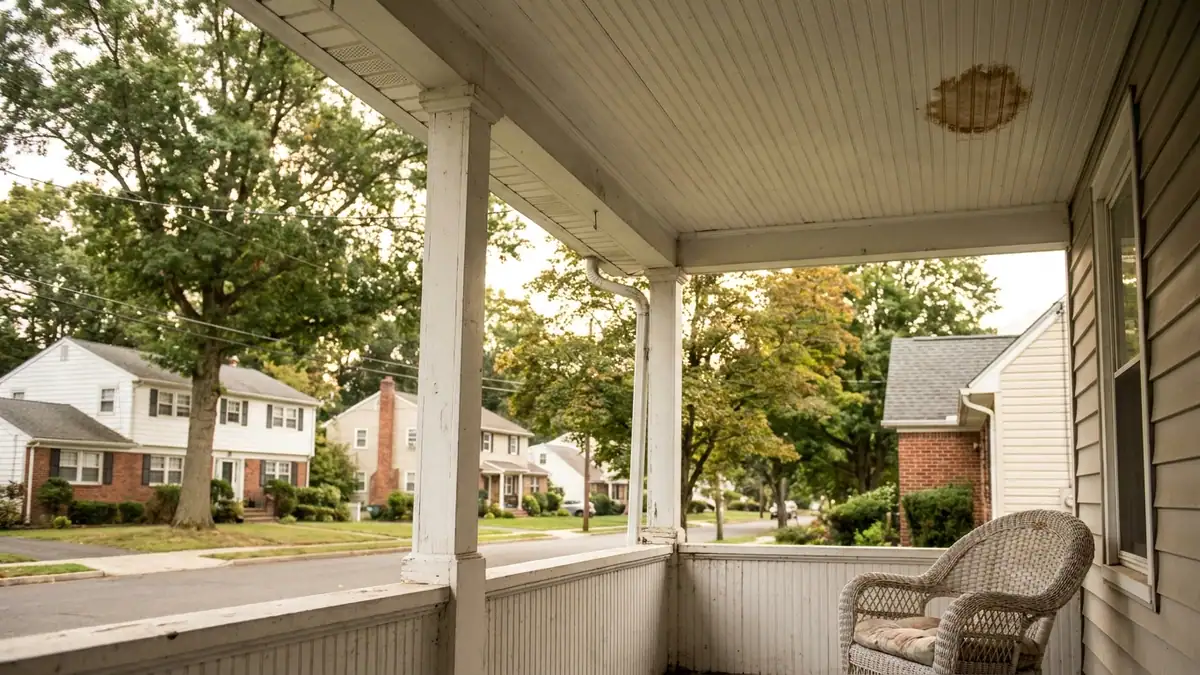
The second is the deck. Plank sheathing, older plywood that has taken water around a chimney or a valley, or sheathing that has been stewing under a poorly vented attic for twenty years will not hold a nail. That gets found when the old roof comes off, which is the single most common reason a price changes mid-job.
Lightning handles both the same way: they are found at the free inspection, before the contract, and priced into the written estimate. The estimate is the final price. There are no change orders, and the conditions that normally cause them (extra layers, bad decking, inadequate flashing) are already in the number.
Snow load and wind in northern Bergen County
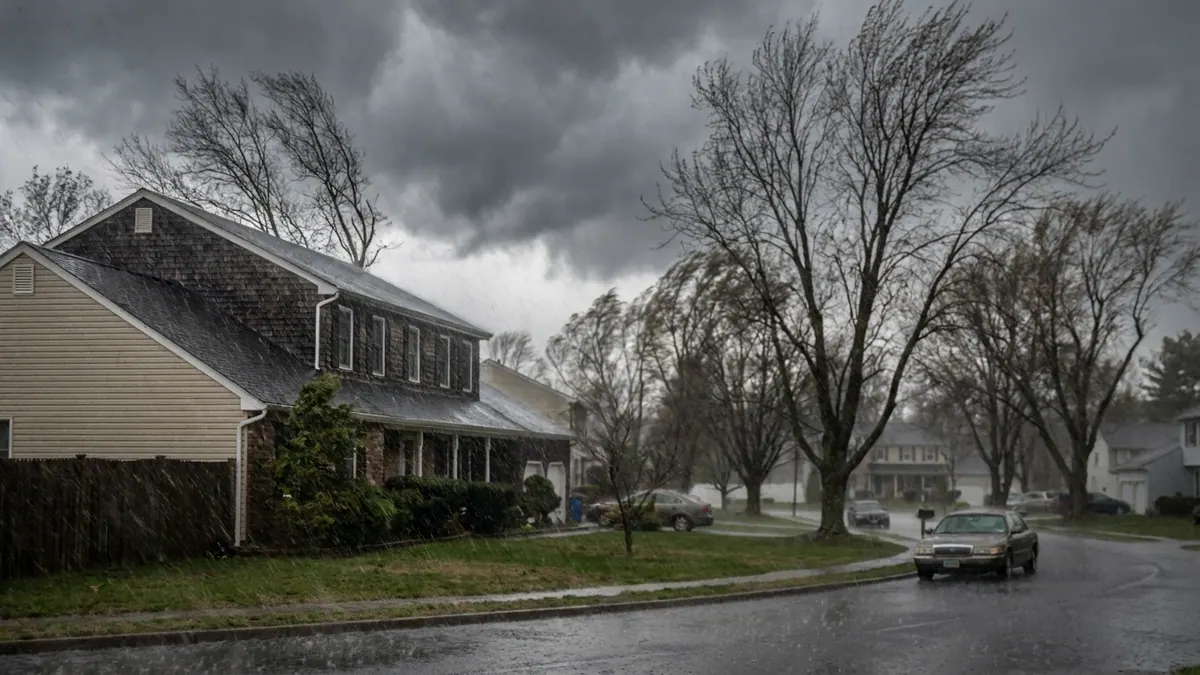
New Jersey DCA Bulletin 19-1 publishes ground snow loads for several counties outright: Sussex at 50 psf, Passaic at 40 psf, Warren, Hunterdon and Morris at 35 psf, and Somerset at 30 psf. Bergen is not a flat published figure; it generates a site-specific value based on your location. Elevation varies a good deal across the county, and that is why.
For a shingle roof the practical effect shows up in two places: ice and water shield coverage at the eaves and valleys, and attic ventilation. Ice dams form when heat escapes into the attic, melts snow at the ridge and refreezes at the cold eave. That is a ventilation and air sealing problem, and the right time to fix it is while the roof is off.
What a Bergen County estimate should say in writing
Get all of this on paper before you sign anything:
- Total roof area in squares, with the measurement method stated.
- The number of existing layers being removed, and disposal included.
- Decking replacement: whether it is included, and at what scope.
- Underlayment type, and where ice and water shield goes.
- Flashing: new step flashing, chimney flashing and valley detail, not reused metal.
- Drip edge, starter strip and ridge cap, named by product.
- Ventilation: intake and exhaust, with the product and linear footage.
- Permit, with a statement of who pulls it.
- Workmanship warranty terms and the manufacturer warranty tier.
- Cleanup, including magnetic nail sweep.
A low number usually means something on that list is missing. The most common omissions are flashing and ventilation, and both of them are what makes a roof last.
Permits in a county with 70 construction offices
A roof replacement in New Jersey requires a permit, and Bergen County has 70 municipalities, each with its own construction office, hours and submission habits. That is a real friction point for a homeowner trying to do it alone.
Lightning pulls the permit from your municipality's own office under the New Jersey Uniform Construction Code and attends the municipal inspection. You file nothing. How the process works in general is covered in the New Jersey roof permit guide.
Paying for it without a deposit
There is no deposit on any Lightning job. Nothing is due until the work is finished and you have walked the property and inspected it. That is unusual in this trade, and it is worth asking any other contractor you are considering to match it in writing.
Financing is available through GreenSky and FTL, including 24 months at 0 percent interest and 120-month terms with no prepayment penalty. If you are weighing a monthly payment against a lump sum, the roof financing guide lays out how the options compare. If anyone tells you a roof, siding or gutter job carries a federal energy tax credit, confirm it with a tax professional before you count on it.
What to do next
Get a measured, written estimate from someone who has been in your attic and on your roof, not just in your driveway. Lightning Construction NJ is veteran-owned, GAF Certified, licensed and insured, New Jersey Home Improvement Contractor registration 13VH12437000, and rated 4.9 out of 5 from 264 Google reviews.
The inspection and the written estimate are free with no obligation, and a salesperson does come to the house. Most asphalt replacements are done in a single day. Start on the roofing page or book the visit at get a free estimate.