Short answer
A shingle roof repair is priced as a whole job, not by the square foot, because most of the cost is getting a crew, a truck and fall protection to your house for a few hours of work. The size of the damaged area matters far less than where it sits, how steep the roof is, and whether the shingles can be matched. The only honest number is a written one from someone who has been on the roof, and at Lightning Construction that inspection and estimate are free.
On this page
- What you are paying for on a small roof repair
- The repairs homeowners ask for most, and what moves the price
- Why there is no published price range for repairs
- Shingle matching is the part nobody warns you about
- When a repair is the wrong purchase
- Insurance rarely covers a small repair
- What to get in writing before anyone goes up
- Getting a real number for your roof
A shingle roof repair in New Jersey is priced as a whole job, not by the square foot. Two damaged shingles and ten damaged shingles in the same spot often land within a few hundred dollars of each other, because almost all of the cost is getting a crew and a truck to your house, setting up safely, and opening up the courses around the damage.
That is why nobody can give you a real repair price over the phone, and why the roofers who try are guessing. What follows is what actually sits inside a repair number, what pushes it up, and the point where paying for repairs stops being a good use of money.
What you are paying for on a small roof repair
Strip out the materials and a repair is mostly labor and logistics.
- The trip. A crew, a truck and the time to drive to your house and back. This does not shrink because the repair is small.
- Setup and safety. Ladders, roof jacks or harnesses depending on pitch, and ground protection if the work is over a deck, a walkway or landscaping.
- Opening the roof. Shingles are sealed and nailed under the course above them. To replace one, the installer has to break the seal on the course above, pull nails, slide the new shingle in, renail and reseal. The damaged area is always smaller than the worked area.
- The materials. A bundle of shingles, sealant, a few nails, sometimes a length of flashing or a new pipe boot. On a small repair this is the cheapest line on the job.
- Diagnosis. Finding where water is actually entering, which is frequently several feet uphill of the stain on your ceiling.
That last one is where repair pricing goes wrong most often. Replacing shingles at the wet spot is fast. Finding out that the wet spot is fed by a failed step flashing behind a chimney takes someone who knows where to look.
The repairs homeowners ask for most, and what moves the price
| Repair | What drives the cost |
|---|---|
| RepairMissing or torn shingles after wind | What drives the costHow many separate areas, roof pitch, height, whether the color can be matched |
| RepairLeaking pipe boot | What drives the costEasy if accessible, more if the boot sits high on a steep slope or near a valley |
| RepairStep flashing at a sidewall or chimney | What drives the costSiding or masonry usually has to come off and go back, which is the real labor |
| RepairExposed or popped nails | What drives the costQuantity, and whether the nails signal a wider installation problem |
| RepairRidge cap damage | What drives the costLength of ridge affected, and whether a ridge vent is involved |
| RepairSmall area of soft decking | What drives the costFound only after shingles come off, so it needs a price agreed in advance |
| RepairValley leak | What drives the costOpen or closed valley, and how far the repair has to reach to tie back in |
Two things change the number more than the damage itself. Pitch is the first. A roof a crew can walk is a different job from one that needs staging and harnesses for every move. Height is the second. The same repair on a third-story dormer costs more than on a one-story ranch because of access, not because of the shingles.
Why there is no published price range for repairs
Lightning publishes replacement ranges because a replacement is a defined scope: tear off everything, put back everything. Most asphalt roof replacements run $9,000 to $22,000 in standard-value towns, $14,000 to $35,000 in higher-value towns, and $25,000 to $60,000 for large or luxury homes, with the band set by the municipality's median home value from the ACS 2024 five-year estimates. The New Jersey roof cost guide explains how a specific house lands inside its band.
A repair has no defined scope until somebody is on the roof. The same described problem, "a leak over the kitchen," can be a twenty-minute pipe boot swap or a full chimney reflash with siding work. Any contractor who quotes one of those sight unseen has priced the other one into it.
So the process is the opposite of a range. Free inspection, photographs of what is actually failing, a written estimate with the scope spelled out, no obligation, and no deposit. A salesperson does come to the house for that appointment, which is worth knowing going in.
Shingle matching is the part nobody warns you about
Every asphalt roof fades. Granule color shifts with sun exposure, and the south and west slopes shift faster. A shingle pulled from a bundle today will be close to your roof, not identical to it, even when the exact product and color blend are still being made.
When they are not still being made, and that is common on roofs past fifteen years, the installer picks the nearest current blend. On a back slope nobody sees, this is a non-issue. On the front elevation above the entry, a patch of slightly different shingles is permanent and visible, and it is a reason some homeowners decide to replace a slope rather than repair it.
If you have leftover bundles in the garage from the original installation, say so before the estimate. It changes the conversation.
When a repair is the wrong purchase
A repair is a good buy when the damage has one clear cause and the rest of the roof is sound. Wind lifted a few shingles. A pipe boot cracked. A tree limb scuffed one area.
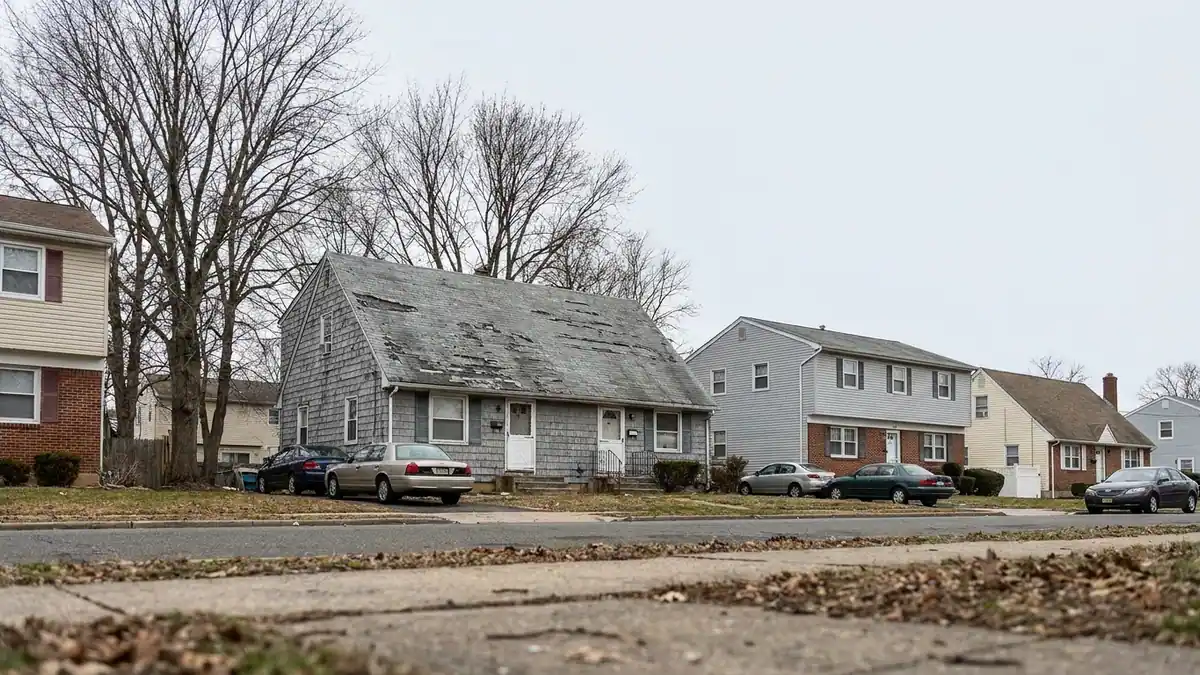
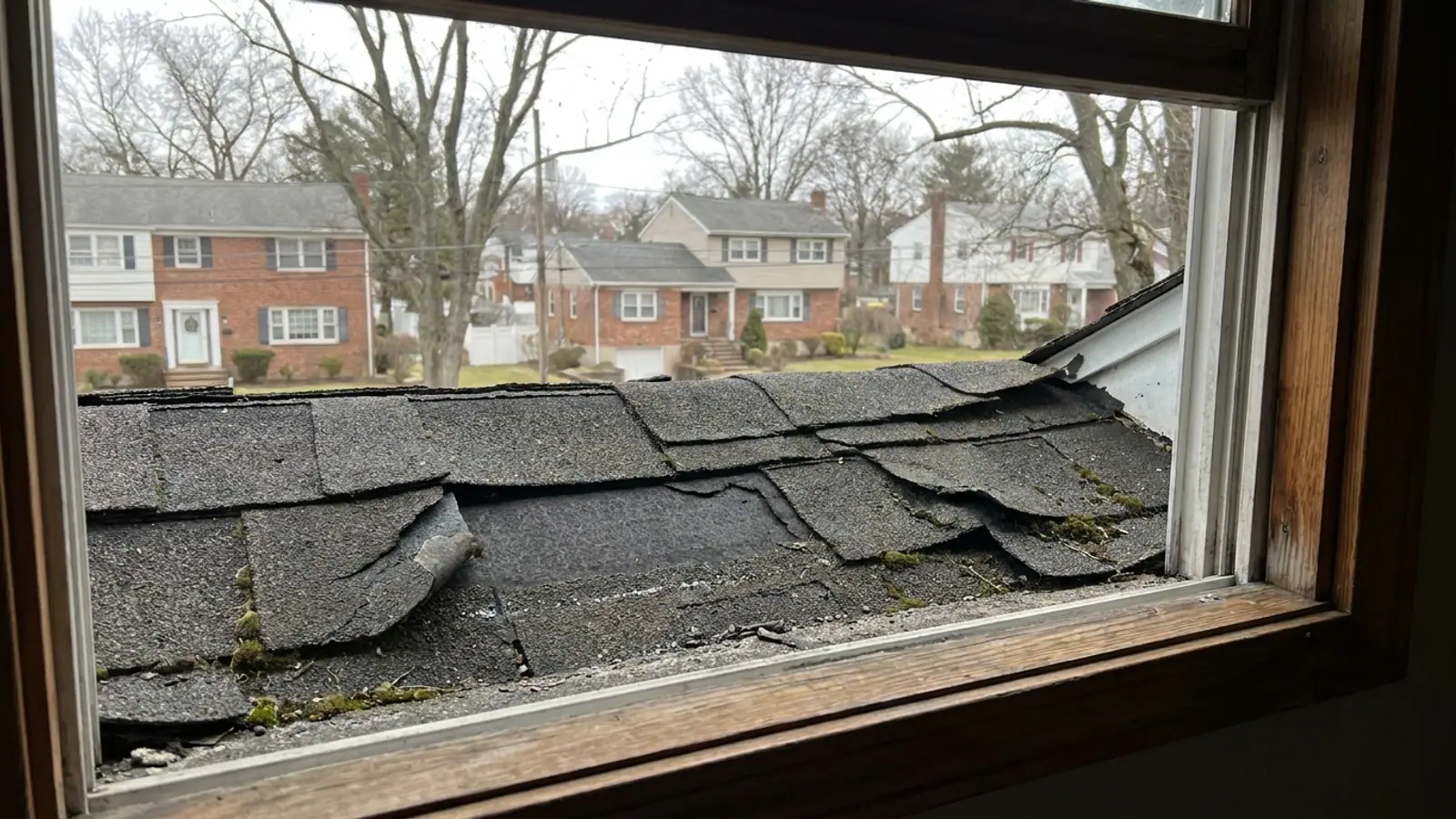
It is a poor buy when the roof is failing generally. Granules filling the gutters, shingles curling at the corners, brittle tabs that crack when a hand touches them, and multiple leaks in unrelated spots all mean the same thing: the roof is at the end of its life and you would be spending money on a surface that needs to come off. The signs you need a new roof guide lists the specific conditions worth checking before you authorize anything.
There is also a middle case. A roof with ten good years left, one chronically leaking chimney, and a homeowner who is not moving. That is a repair, and a contractor who tells you otherwise is selling.
Insurance rarely covers a small repair
Most single-event repairs cost less than a New Jersey wind or hail deductible, which means filing produces a claim on your record and no payment. Insurance becomes worth pursuing when a storm has damaged whole slopes, torn off a large section, or driven a tree into the roof.
If you are not sure which situation you are in, get the inspection and the photos first, then decide. The roof insurance claim guide covers the sequence and what documentation an adjuster expects.
What to get in writing before anyone goes up
- The exact scope, named by component: how many shingles, which flashing, which boot, which section of ridge.
- A price for decking replacement per sheet if soft decking is found, agreed before the work starts rather than after.
- Whether the price includes resealing and renailing the courses disturbed around the repair.
- What happens if the leak continues, and who comes back.
- The contractor's New Jersey Home Improvement Contractor registration number.
On Lightning's work the written estimate is the final price. Conditions that normally trigger a change order, including extra shingle layers, damaged decking and inadequate flashing, are identified at the free inspection and priced into the quote, and nothing is due until the job is finished and you have inspected it. On replacements, Lightning pulls the permit from the municipality's own construction office under the New Jersey Uniform Construction Code and attends the inspection, so you file nothing.
Getting a real number for your roof
Have someone qualified look at it, get photographs of what they found, and get the scope in writing. Lightning Construction is veteran-owned, GAF Certified, licensed and insured under New Jersey Home Improvement Contractor registration 13VH12437000, and serves all 21 counties.
Start with the roofing page for what repair and replacement work covers, or book the free inspection and written estimate and find out whether you are buying a repair or a roof.