Short answer
A roof replacement on a rental works the same way as one on your own house, with two added jobs: keeping the tenant informed and keeping the paperwork clean. Most New Jersey asphalt roofs are torn off and replaced in a single day, so a tenant loses one noisy day rather than a week. Lightning Construction pulls the permit, attends the municipal inspection, takes no deposit and writes no change orders, which is what makes the cost predictable on a property you do not live in.
On this page
- What makes a rental roof replacement different
- Telling the tenant: what to send and when
- Permits and inspections when you do not live there
- No deposit and no change orders on a property you cannot watch
- What it costs, and how the band is set
- Spec the roof for the hold period, not for the showing
- Two-family and multi-unit specifics
- The file to keep
- What to do next
Replacing a roof on a rental is the same work as replacing a roof on the house you live in. What changes is everything around the work: a tenant who did not choose the schedule, a property you may be an hour away from, and a file of documents you will need again when you refinance, insure or sell. Get those three right and the job itself is one loud day.
Most New Jersey residential asphalt roofs are torn off and replaced in a single day. Standing-seam metal takes two to four. For a landlord, that one number does more to keep tenants calm than anything you can put in a letter.
What makes a rental roof replacement different
Three things, and none of them are technical.
First, you are not the person living under the noise. A tear-off is loud through the ceiling, shakes light fixtures and drops debris into the yard all morning. The tenant absorbs that. You decide when it happens.
Second, you are often not on site. Decisions that a resident owner makes in the driveway in ten seconds become phone calls. That is exactly why a fixed written price matters more on an investment property than on your own house.
Third, the roof is an asset line rather than a home improvement. You care about service life, documentation and what the next buyer or the insurance carrier will ask about it.
Telling the tenant: what to send and when
Start with the lease. The lease governs entry, notice and what you owe the tenant in writing, and it is the first document to read before you schedule anything.
Then send two notices.
- The early notice, as soon as you have a date. State the date, the fact that it is exterior work, that the unit stays occupied, and that the job is expected to take one day.
- The day-before notice. Confirm the start time, ask that cars be moved off the driveway, and say where the dumpster and the debris chute will sit.
Tell them what will actually happen, because the surprises are what generate angry calls:
- The crew starts early. One Lightning review describes a crew arriving just before 7am and finishing by 7pm.
- Nails and granules will land in the yard and the driveway. The crew sweeps and runs a magnet at the end.
- Anything hanging on interior walls near the roofline can move. Ask the tenant to take fragile items off those walls.
- Attic storage should be covered or moved. Dust comes through the decking during tear-off.
- Pets should be kept inside and away from exterior doors.
If there is a shared driveway or street parking only, say so in the notice. Access for a dump trailer and a materials delivery is the single most common friction point on a two-family or a row house.
Permits and inspections when you do not live there
Lightning Construction pulls the permit from the municipality's own construction office under the New Jersey Uniform Construction Code and attends the municipal inspection, in every municipality. You file nothing and you do not have to drive out to meet an inspector. That matters more on a rental than anywhere else, because an out-of-area owner otherwise spends a weekday on a trip to a building department counter.
Keep the closed permit in the property file. It is the document that answers the question a buyer's attorney or a new carrier asks later, which is whether the work was permitted and inspected rather than done quietly on a Saturday. The New Jersey roof permit guide explains how the process runs and what the inspection covers.
No deposit and no change orders on a property you cannot watch
On an investment property, the risk is not that the roof is bad. The risk is that the price moves after the old roof is off and you are not there to argue about it.
Two terms remove that. Lightning takes no deposit, so nothing is due until the work is finished and inspected. And Lightning writes no change orders, so the written estimate is the final price. The conditions that normally trigger one, extra shingle layers, rotted decking and inadequate flashing, are found at the free inspection and priced into the quote before anyone signs.
That is the difference between a predictable capital expense and an open-ended one on a building you visit twice a year.
What it costs, and how the band is set
Most New Jersey asphalt roof replacements run $9,000 to $22,000 in standard-value towns, $14,000 to $35,000 in higher-value towns, and $25,000 to $60,000 for large or luxury homes. Metal roofing starts around $18,000. The band is set by the median home value of the municipality from ACS 2024 five-year estimates, not by whether the house is owner-occupied or rented.
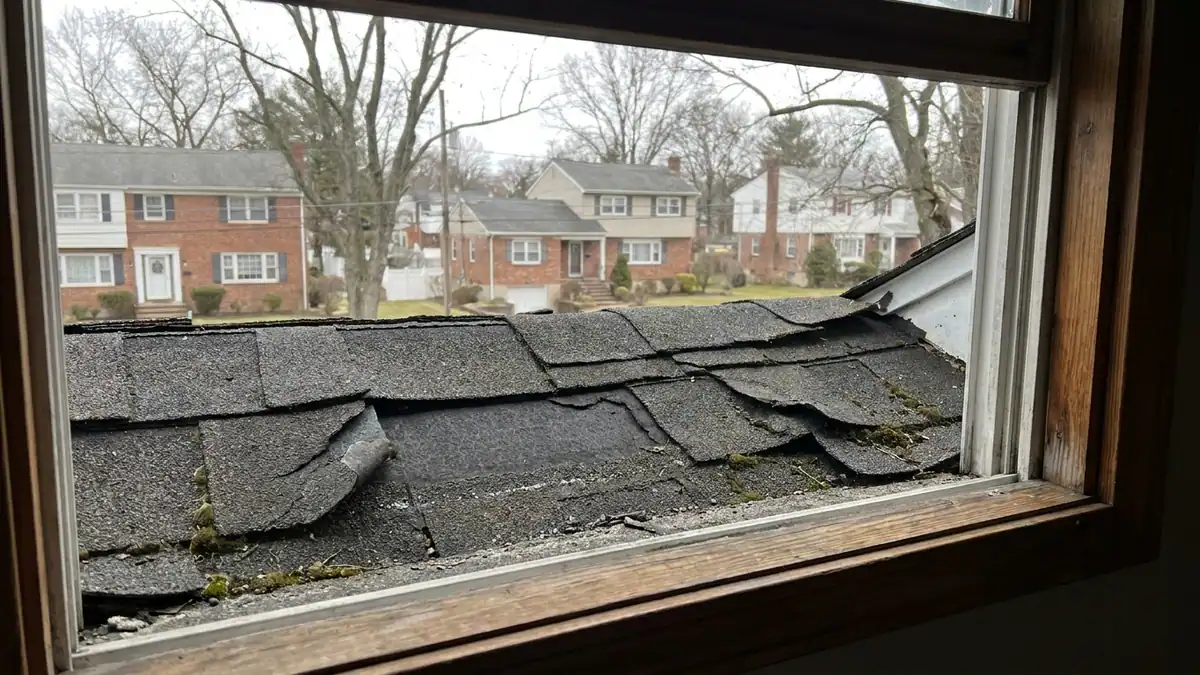
What moves the number inside the band is the roof itself: square footage, pitch, valleys and penetrations, how many shingle layers are already up there and the condition of the decking. A two-family with a simple gable and a low pitch can cost less than a single-family colonial with three dormers. The roof cost guide breaks down the drivers in detail.
Financing is available through GreenSky and FTL, including 24 months at 0% interest and 120-month terms with no prepayment penalty, which some owners use to keep the expense off a line of credit they want available for other properties.
How a roof replacement is treated on your return is a question for your accountant. Confirm current programs and treatment with a tax professional rather than with a contractor.
Spec the roof for the hold period, not for the showing
| Your plan | What to weigh |
|---|---|
| Your planSelling within a year or two | What to weighA sound, permitted, properly flashed asphalt roof with transferable coverage. Buyers ask about age and paperwork, not product tiers. |
| Your planHolding ten years or more | What to weighArchitectural asphalt with full attic ventilation, or metal if the building and budget suit it. You are buying years of not getting leak calls. |
| Your planMulti-unit with tenants above | What to weighVentilation and flashing detail matter most, because interior leak calls on an occupied unit cost you twice. |
| Your planLow-slope porch or flat section | What to weighThese are a separate system from the shingle field and need to be quoted as one. |
The cheapest roof on the street is not the cheapest roof to own when every leak is a tenant phone call, a ceiling repair and a day of your time.
Two-family and multi-unit specifics
On a two-family, confirm who controls the driveway, whether both units get notice, and whether there is a shared attic or a firewall running to the ridge. Shared attic space changes how ventilation is designed, and a crew needs to know before the estimate is written, not on the day.
If the units have separate electric service, note where the mast and the drop enter. Crews work around them, but it affects staging and ladder placement.
Check the gutters at the same time. On a rental, overflowing gutters cause basement water complaints that get blamed on the roof, and the time to handle that is while the crew is already on the property.
The file to keep
Ask for all of it in writing, and keep it with the deed and the lease:
- The signed estimate with the final price and every line item.
- Proof that the contractor is licensed and insured. Lightning holds New Jersey Home Improvement Contractor registration 13VH12437000 and is GAF Certified.
- The closed permit and the inspection result.
- The manufacturer warranty registration and the workmanship terms, including what transfers on a sale. The roof warranty guide explains how the two differ.
- Dated photos of the decking, flashing and finished roof.
What to do next
Book the free inspection and written estimate before you talk to the tenant, so the date you promise is a real one. The inspection is free, there is no obligation, and a salesperson does come to the property. See what is covered on the roofing page, or request an estimate and have the written price in hand before you send the first notice.