Short answer
For most New Jersey roofs, yes. Algae resistance costs very little on top of an already five-figure roof replacement, and it is the only thing that keeps the dark streaks off a light-colored roof in a humid, tree-shaded climate. It is not worth paying a large premium for on a roof with no shade, full southern exposure and a dark shingle color, where the streaking would barely show anyway.
On this page
For most New Jersey houses, the algae-resistant version of a shingle is worth buying. The upgrade is small against a roof replacement that runs five figures, and it is the only thing that keeps black streaks off a light gray or weathered wood roof in a state that is humid five months a year and shaded by mature oaks and maples in most established neighborhoods.
The honest exception is a roof with no tree cover, full southern sun and a dark charcoal shingle. Streaking is slower there and shows less when it happens. If a contractor wants a real premium to add algae resistance on that house, you can decline it and lose very little.
What algae resistance actually is
Copper granules mixed into the shingle surface.
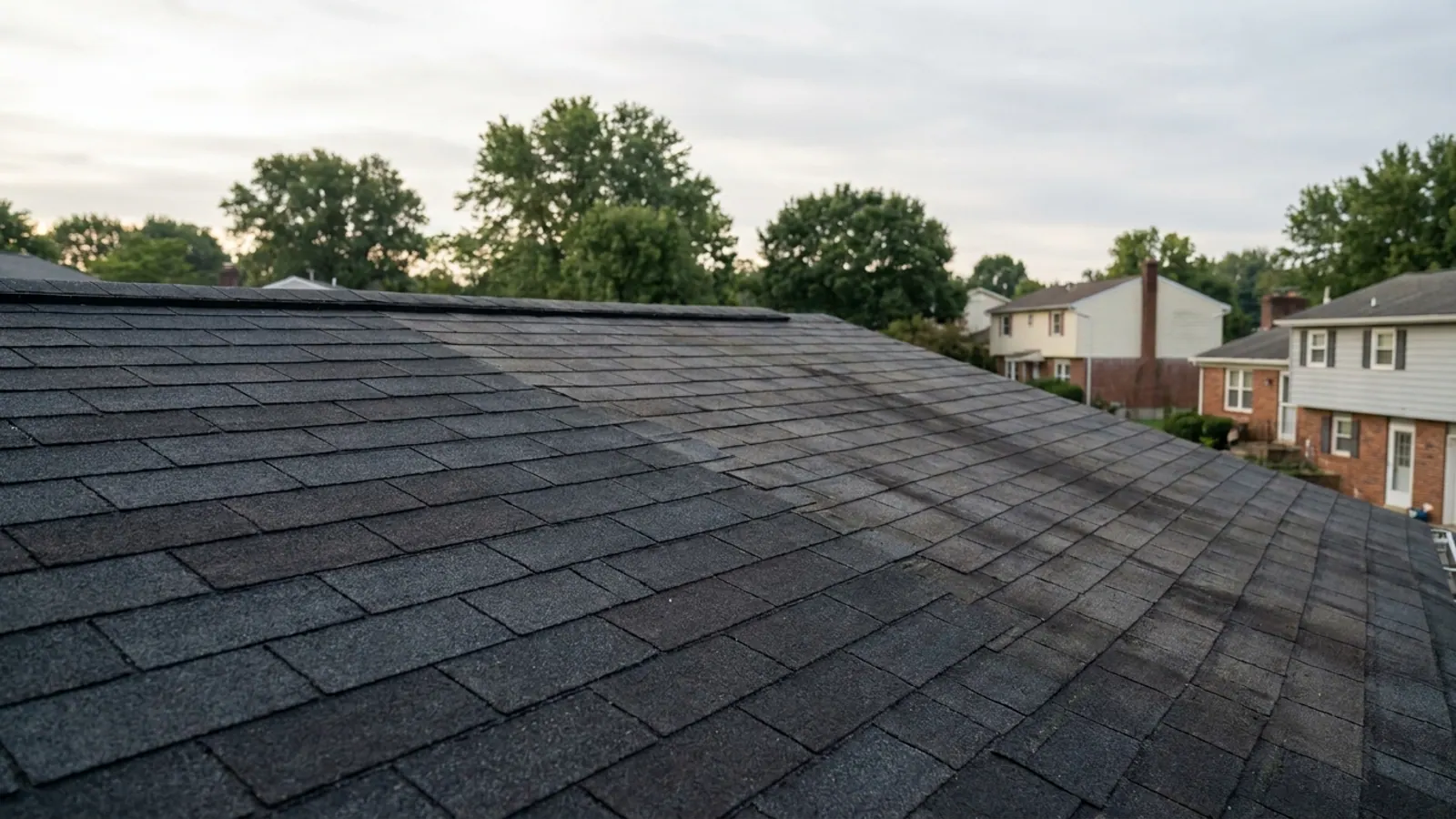
The streaks are a blue-green algae that feeds on the limestone filler in asphalt shingles. It lands as airborne spores, takes hold where the roof stays damp longest, and darkens as the colony builds up. An algae-resistant shingle has copper-containing granules blended through the top surface. Every time it rains, trace copper washes down the slope and keeps the colony from establishing.
That mechanism explains the two things homeowners get wrong about it.
First, it is not a coating that can be added later. It is in the granules, decided at the factory, which means it is a purchasing decision you make when you sign the estimate and never again for the life of the roof.
Second, it wears out. The copper leaches away over years of rain. The protection is strongest early and fades, which is why manufacturers cover algae staining under a separate, shorter limited clause rather than under the main shingle warranty. Ask for the product data sheet for the exact shingle line on your quote and read that clause yourself.
Which New Jersey roofs actually get streaked
The pattern is consistent and it has nothing to do with how well the roof was installed.
- North-facing slopes. They dry slowest. On a house with an east-west ridge, the north plane streaks and the south plane stays clean for years, on the same roof, from the same truckload of shingles.
- Slopes under trees. Shade holds moisture and the debris that drops from branches feeds the growth. Neighborhoods with 50-year-old street trees are the worst offenders.
- Low-slope planes. Water sits longer on a shallow pitch than on a steep one.
- Anywhere close to the water. Coastal humidity keeps roof surfaces damp overnight most of the year.
- Roofs with poor attic ventilation. A hot, damp deck keeps the shingle surface warm and wet longer than it should be, and ventilation is worth fixing on its own terms. The attic ventilation guide covers what the intake and exhaust need to look like.
If your house has none of those conditions, the upgrade is optional. If it has two or more, buy it.
Standard versus algae-resistant, side by side
| Standard shingle | Algae-resistant shingle | |
|---|---|---|
| How it works | Standard shingleNothing in the surface resists algae | Algae-resistant shingleCopper-bearing granules blended into the surface |
| Streaking on a shaded north slope | Standard shingleUsually visible within several years | Algae-resistant shingleDelayed for years, then gradual |
| Effect on leak performance | Standard shingleNone | Algae-resistant shingleNone, this is cosmetic only |
| Effect on install time | Standard shingleNone | Algae-resistant shingleNone |
| Warranty | Standard shingleMain limited warranty only | Algae-resistant shingleMain warranty plus a separate, shorter algae clause |
| Can it be added later | Standard shingleNo | Algae-resistant shingleNo, it is decided at purchase |
Notice what is not in that table. Algae resistance does not make a roof last longer structurally, does not improve wind rating, and does not keep water out. A streaked roof is not a failing roof. If a salesperson tells you algae is eating through your shingles and you need a replacement today, that is a pressure tactic, and the 10 signs you need a new roof guide lists what an actual failure looks like.
What it does to the price
Very little, and it should never move you into a different price band.
Most New Jersey asphalt roof replacements run $9,000 to $22,000 in standard-value towns, $14,000 to $35,000 in higher-value towns, and $25,000 to $60,000 for large or luxury homes. The band is set by the municipality's median home value from ACS 2024 five-year estimates. What moves your number inside that band is roof size, pitch, valleys and penetrations, how many shingle layers are already up there and the condition of the decking underneath — not whether the granules contain copper.
In practice, most of the architectural lines a New Jersey contractor will quote already include algae resistance. If yours does, the question answers itself. If the estimate offers it as a line item, ask what the difference is in dollars before you decide. Do not let it be the reason a quote climbs by thousands.
What to put in writing
Ask for the shingle manufacturer, the product line and the color on the estimate, in writing, before you sign anything. "Architectural shingles" is not a specification. With the product named, you can look up the data sheet and see for yourself whether algae resistance is included, what the algae clause covers and for how long.
While you are reading the estimate, confirm three more things:
- The starter strip and ridge cap are matched to the shingle line, because mixed accessories can drop you into lower manufacturer coverage without anyone mentioning it.
- The workmanship coverage is separate from the manufacturer's and is stated in writing. The roof warranty guide explains which one covers what in the first ten years.
- The price is final. At Lightning Construction there are no change orders — the written estimate is the price, and the conditions that normally trigger one, like extra shingle layers, rotted decking or bad flashing, are found at the free inspection and included in the quote.
Color matters more than most homeowners think
If you are choosing a light gray, a weathered wood or any blend with pale granules, algae resistance is close to mandatory in New Jersey. Streaking shows hardest against a light field. On charcoal and dark browns, the same growth is barely visible from the street for years.
Color and line selection deserve their own sitting. The GAF shingles guide walks through the product lines, the color families and how the warranty tiers stack, and it is worth reading before the salesperson arrives with the sample board rather than after.
What to do next
If your current roof is streaked and you are wondering whether it is due for replacement, get it looked at before you spend money on cleaning. Lightning Construction is veteran-owned, GAF Certified, registered in New Jersey under 13VH12437000, and serves all 21 counties and 544 municipalities. The inspection and the written estimate are free with no obligation, and a salesperson does come to the house — that is what the appointment is.
If the roof is going, pick the shingle line deliberately, get the product name on paper, and take the algae-resistant version unless your house has no shade and a dark color. See the roofing service page for what a replacement includes, or request a free estimate. There is no deposit, nothing is due until the work is finished and you have inspected it, and Lightning pulls the permit and attends the municipal inspection under the New Jersey Uniform Construction Code. Most asphalt replacements are done in a single day.