Short answer
Starter strip is a purpose-made first course installed at the eaves and rakes, under the first visible row of shingles, with a factory adhesive line that seals the roof edge. It stops wind from lifting the bottom course and keeps water from running back under the shingles at the edge. It is a real material with a real cost, which is why an honest estimate names it instead of hiding it.
On this page
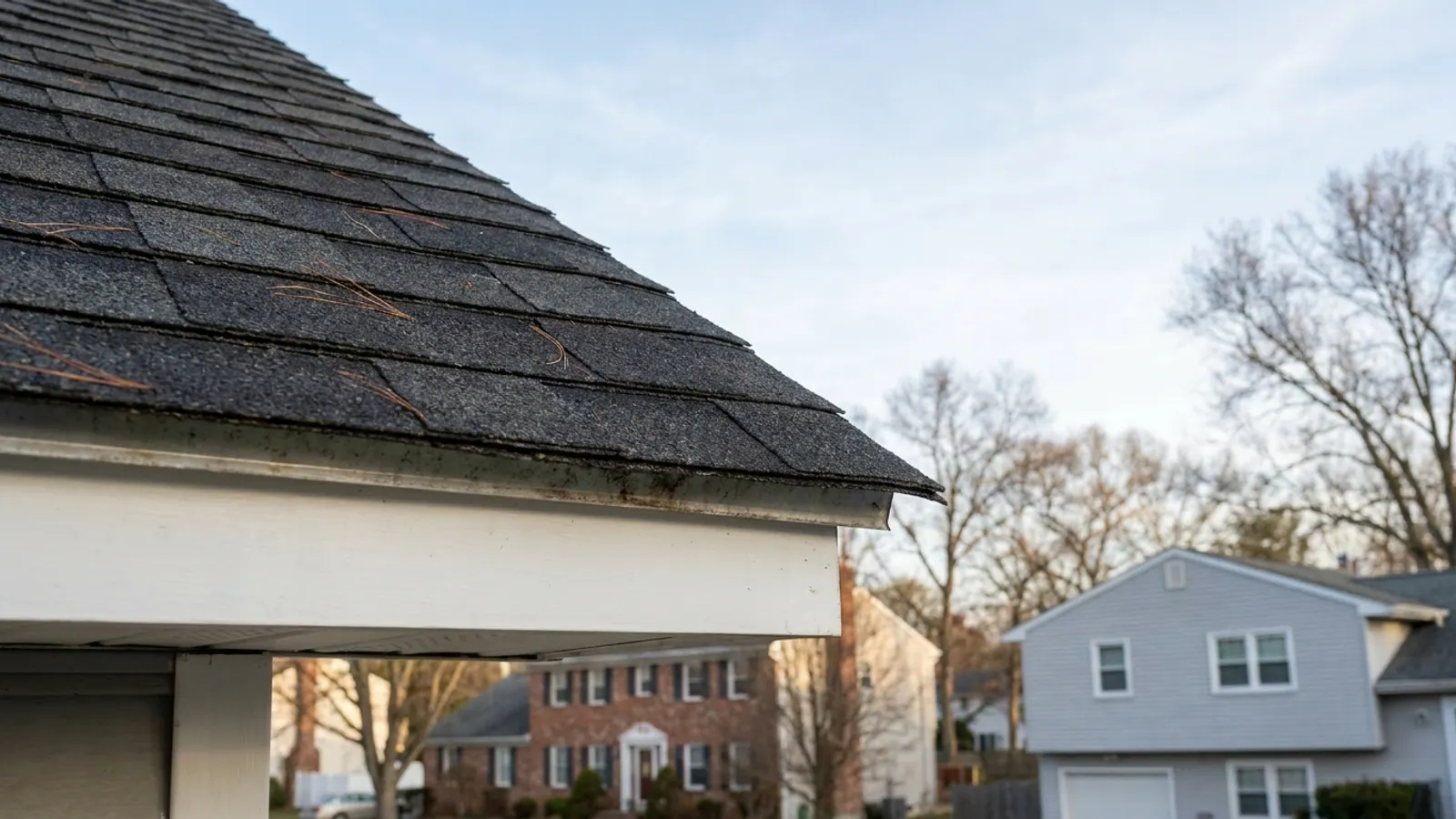
Starter strip is the first course of material laid at the bottom edge of a shingle roof, and on most modern installations along the gable rakes as well. It sits under the first row of shingles you can see from the street, with a factory-applied adhesive line positioned to grab the bottom of that first course. If your estimate names it, the contractor is pricing a real product. If the estimate does not mention it anywhere, ask what is going down at the eaves, because something has to.
This is one of the smallest dollar items on a roofing quote and one of the most common places a low bid saves money where you cannot see it.
What starter strip does at the eaves
Two things: it seals the bottom edge and it fills the gap.
A shingle has a sealant strip partway up its face. That strip bonds to the shingle in the course above it. The very first course on the roof has nothing below it to bond to, so without a starter, the bottom edge of the roof is a free flap. Wind gets under it, works the course loose, and the failure travels up the slope from there.
The second job is geometry. Shingles are laid with an exposure, meaning each course covers part of the one beneath. At the eave there is no course beneath, so the cutouts and joints of the first row would sit directly on the underlayment with nothing behind them. Starter strip is a solid, unnotched piece that backs up those joints so water running off the roof edge has no path to the deck.
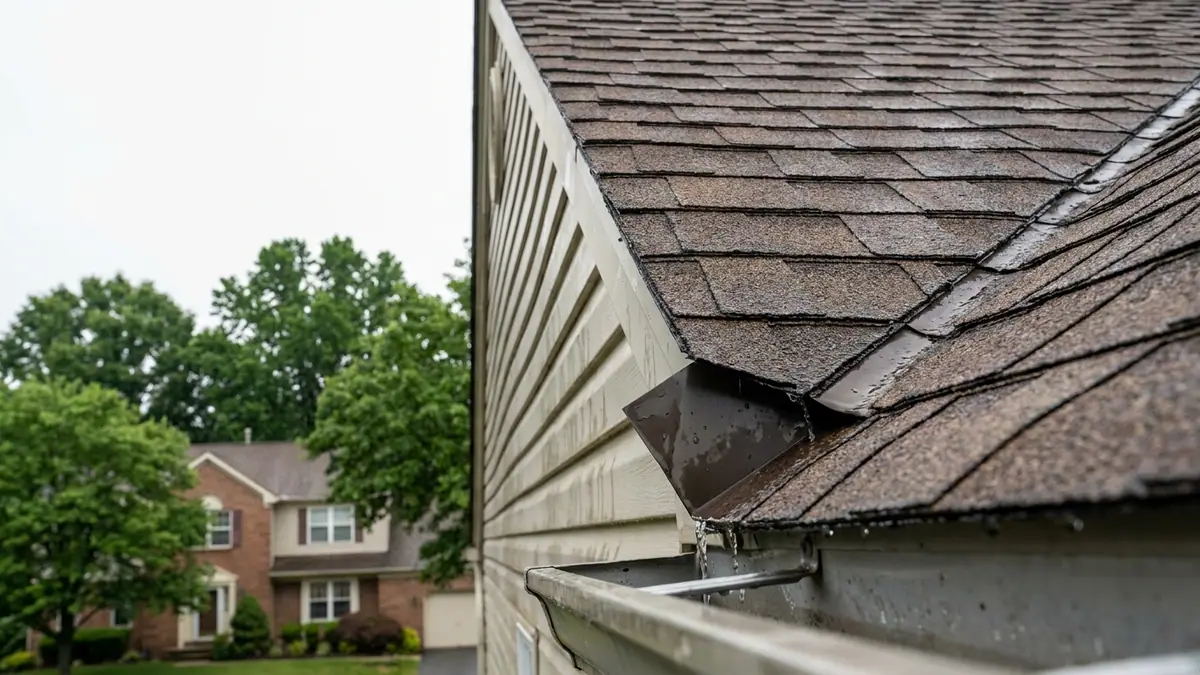
A proper starter also overhangs the drip edge slightly, so water leaves the roof and lands in the gutter instead of curling back onto the fascia.
Why the rakes matter as much as the eaves
On gable ends, the shingle ends are exposed to wind hitting the side of the house and rolling over the edge. That is where lifted shingles usually start on a New Jersey roof, not in the middle of the field.
Current installation instructions for most architectural shingle lines call for starter along the rakes as well as the eaves, precisely so the outer end of every course has a bonded edge. It is extra material and extra labor, and it is the first thing dropped when a bid is being squeezed. After a nor'easter, the rake is the edge that peels.
Factory starter strip versus cut-up shingles
For years the common practice was to take a 3-tab shingle, cut the tabs off, and run the remaining strip along the eave. It works well enough on a 3-tab roof. It is the wrong product on an architectural roof, for a specific reason: the adhesive ends up in the wrong place.
| Factory starter strip | Cut-up field shingles | |
|---|---|---|
| Adhesive location | Factory starter stripFactory line placed near the eave edge, where the first course needs it | Cut-up field shinglesWherever the original sealant strip happened to land after cutting |
| Joints | Factory starter stripSolid, no cutouts to back up | Cut-up field shinglesMay carry cutouts or laminate seams depending on the cut |
| Wind warranty | Factory starter stripCounts as a matched accessory for enhanced coverage | Cut-up field shinglesGenerally does not qualify |
| Labor | Factory starter stripRoll out and nail | Cut-up field shinglesCut every piece on site |
| Appearance at the edge | Factory starter stripConsistent thickness under the first course | Cut-up field shinglesUneven, can telegraph through |
A crew cutting starter on site is not automatically doing bad work. But on a laminated architectural shingle, the manufacturer's own instructions specify a starter product, and that specification is what the enhanced wind rating and the upper warranty tiers hang on. The GAF shingles guide explains how the product lines and warranty tiers stack up, and the accessories requirement runs through all of them.
How starter strip gets installed
On a standard tear-off day, the sequence at the eave goes like this:
- The old roof is stripped to the deck and the sheathing is inspected and repaired.
- Drip edge goes on at the eaves, under the underlayment.
- Ice and water shield is rolled along the eaves, then synthetic underlayment up the slope.
- Drip edge goes on at the rakes, over the underlayment.
- Starter strip is installed along the eaves with the adhesive near the edge, overhanging the drip edge slightly, and along the rakes.
- The first visible course of shingles goes down on top of the starter, its bottom edge bonding to that adhesive line.
It takes a crew very little time. It is also invisible within an hour, which is exactly why it gets skipped. Ask for photos of the eave and rake before the first course covers it. Any crew doing the work correctly will hand them over without an argument.
What it means when a quote is unusually cheap
Starter strip belongs to the same family of items as drip edge, ice and water shield, matched ridge cap and adequate ventilation. None of them are visible in the finished roof from the ground. All of them are where a number gets cut.
When you compare estimates, compare the scope, not the totals. Most New Jersey asphalt roof replacements run $9,000 to $22,000 in standard-value towns, $14,000 to $35,000 in higher-value towns, and $25,000 to $60,000 for large or luxury homes, with the band set by the municipality's median home value from ACS 2024 five-year estimates. Within any of those bands, two quotes can be thousands apart entirely because of what is and is not written into the scope. How to choose a roofing contractor in NJ lists the questions that surface this before you sign.
Starter strip and your warranty
Manufacturer coverage on shingles is tiered, and the upper tiers require the manufacturer's matched components: starter, underlayment, hip and ridge cap, and ventilation. Substitute one of them and the roof quietly drops a tier. Nobody calls to tell you. You find out when you file.
That coverage is also separate from workmanship coverage, which is what actually applies during the first decade, because most problems in that window come from installation rather than the product. The roof warranty guide walks through the difference and what has to appear in writing.
What to ask for before you sign
Get these in the written scope, in these words:
- Starter strip at eaves and rakes, named as a product rather than described as "starter course."
- Drip edge at eaves and rakes, with the ice and water shield placement stated.
- Hip and ridge cap made for the shingle line, not cut field shingles.
- The ventilation plan for the attic, stated as a specific product and quantity.
A written estimate that names all four is a contractor who intends to install all four.
Getting a number you can trust
Lightning Construction is a veteran-owned, family-operated contractor based in Manalapan, GAF Certified, licensed and insured under New Jersey Home Improvement Contractor registration 13VH12437000, and rated 4.9 out of 5 from 264 Google reviews. Inspections and written estimates are free with no obligation, and a salesperson does come to the house.
There is no deposit. Nothing is due until the work is finished and you have inspected it. There are no change orders, because the conditions that normally cause them — extra shingle layers, rotted decking, failed flashing — are found at the inspection and priced into the quote. Lightning pulls the permit from your municipality's construction office under the New Jersey Uniform Construction Code and attends the inspection; you file nothing. Most asphalt roof replacements are torn off and finished in a single day.
If you want a line-by-line scope that names the starter strip, the drip edge and everything else going on your roof, see roofing services or book a free estimate.