Short answer
The roofing crew takes the dish or antenna down, because it is bolted through the roof they are about to strip. What a roofer will not do is reconnect and re-aim it, since aiming a dish is a signal job that belongs to your TV provider. Decide before the job whether the dish is coming back at all, and get that answer written on the estimate.
On this page
- What happens to the dish on roof replacement day
- Why roofers will not re-aim your dish
- The damage usually hiding under the mount
- Where to mount the dish after the new roof goes on
- Does remounting a dish void your roof warranty
- Dishes and antennas on a metal roof
- What to settle before the crew arrives
- Next step
Your roofing crew takes it down. A satellite dish or a TV antenna is lag-bolted straight through the shingles and into the roof decking that is about to be stripped, so it comes off before tear-off reaches that slope. What the crew does not do is reconnect it, re-aim it or guarantee your signal, because aiming a dish is a reception job that belongs to the company whose service you pay for.
That split surprises people. The confusion is worth clearing up before the trucks show up at seven in the morning, because the decision about where the dish ends up is yours and it is much cheaper to make it in advance.
What happens to the dish on roof replacement day
The sequence on a normal asphalt job looks like this.
- The crew protects the ground and the landscaping, then starts the tear-off on the slope the dish is mounted on.
- The dish and its bracket are unbolted and set aside somewhere safe on the property, usually on the ground against the foundation, with the coax disconnected at the dish.
- The old sealant, the bracket footprint and the decking around the bolt holes get inspected. If the sheathing is soft, that section is cut out and replaced.
- New underlayment and shingles go over the area as if the dish had never been there.
- If a remount was agreed in writing, the bracket goes back on the new roof with proper flashing at the end of the day. If it was not, the dish stays on the ground for you or your provider.
Most New Jersey asphalt roof replacements are torn off and finished in a single day, so the dish is off and the decision is final within that window. Standing-seam metal runs two to four days, which gives you a little more time but makes the remount question harder, not easier.
Why roofers will not re-aim your dish
A dish has to point at a specific satellite within a fraction of a degree. Getting it back on the same bracket in the same spot is not the same as getting the signal back, and anyone who tells you it is has not done it. Trees grow, the roof plane shifts slightly after a tear-off, and a bracket that is out by a hair reads as no signal on the TV.
The practical answer is to call your provider once the roof is done and book a service visit to remount and re-aim. Many providers treat this as a routine call. Doing it the other way around, having them come first, wastes the trip, because the dish is coming down again.
An over-the-air antenna is more forgiving. It is aimed at a broadcast tower rather than a satellite, so a careful remount in roughly the original orientation usually restores the channels. It still needs grounding to be handled correctly, which is a reason to put it back on a wall or a pole instead of the roof field.
The damage usually hiding under the mount
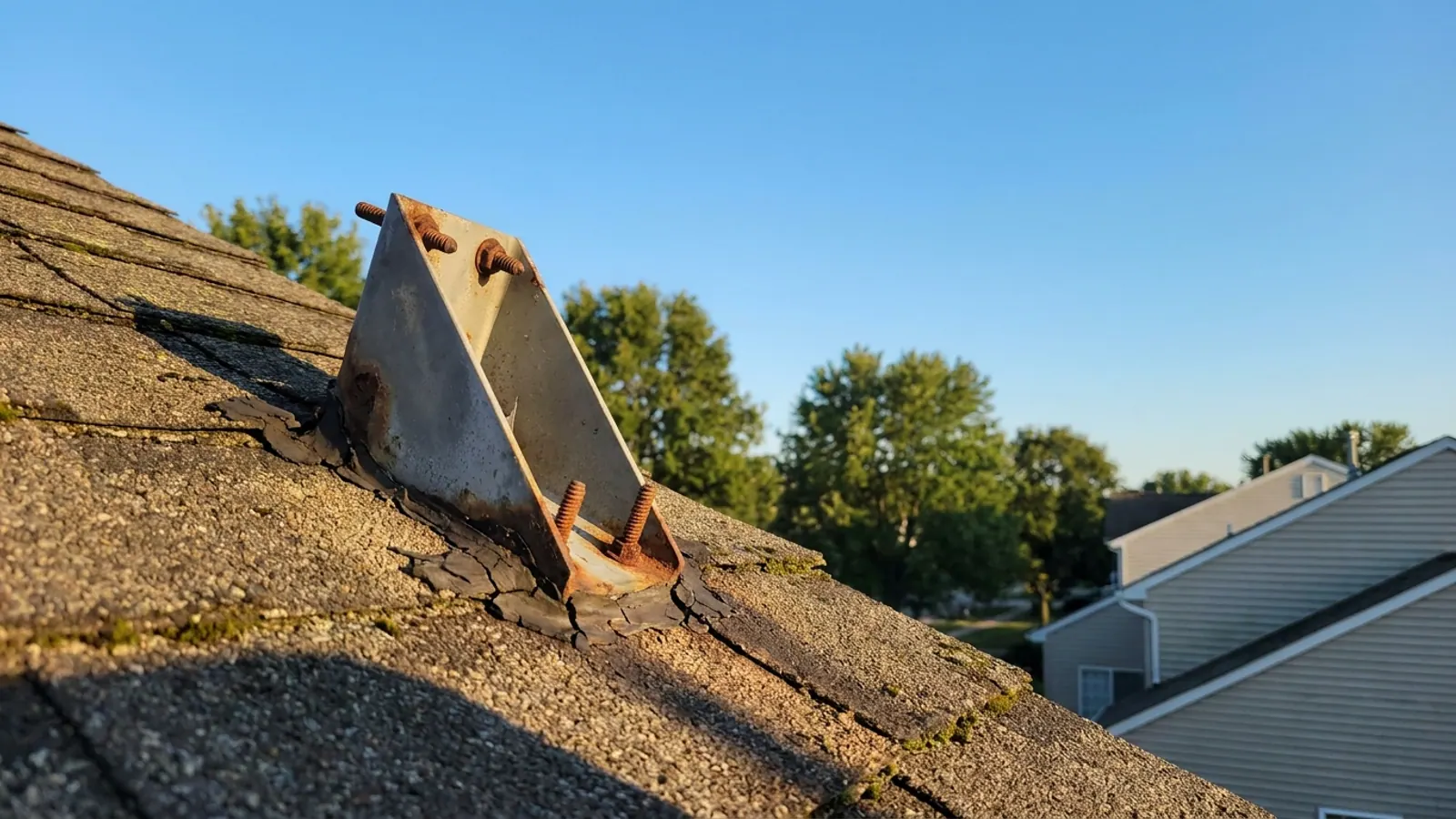
Pull a dish bracket that has been up for a decade and you often find three things: cracked sealant around the lag bolts, black staining on the shingle surface where water tracked downhill into the fastener, and decking that has gone dark and soft in a patch the size of a dinner plate.
That is normal. A bracket bolted through shingles depends entirely on sealant, and sealant does not last as long as a roof does. Water follows the bolt into the deck, sits there, and nobody sees it because the dish is covering it. This is one of the quiet reasons older roofs leak near a penetration with no obvious cause above it.
It is also a cost question. On a contract with change orders, rotted sheathing under a dish is the kind of surprise that becomes a line item at ten in the morning with your roof open. Lightning Construction finds it at the free inspection and prices it into the written estimate, and there are no change orders, so the number on the paper is the number you pay. Nothing is due until the work is finished and you have inspected it.
Where to mount the dish after the new roof goes on
The best mount is the one that does not put a hole in the roof plane. Ranked by how much risk they add to a new roof:
| Mount location | Puts a fastener through the roof | Notes |
|---|---|---|
| Mount locationGround pole | Puts a fastener through the roofNo | NotesBest for the roof, needs a clear sight line and a trench or run for the cable |
| Mount locationGable-end wall | Puts a fastener through the roofNo | NotesFasteners go into a vertical surface where water does not sit |
| Mount locationFascia or eave bracket | Puts a fastener through the roofNo | NotesKeeps the roof field clean, but loads the fascia board and can interfere with gutters |
| Mount locationRoof field | Puts a fastener through the roofYes | NotesWorks, but every bolt is a penetration that has to be flashed, not caulked |
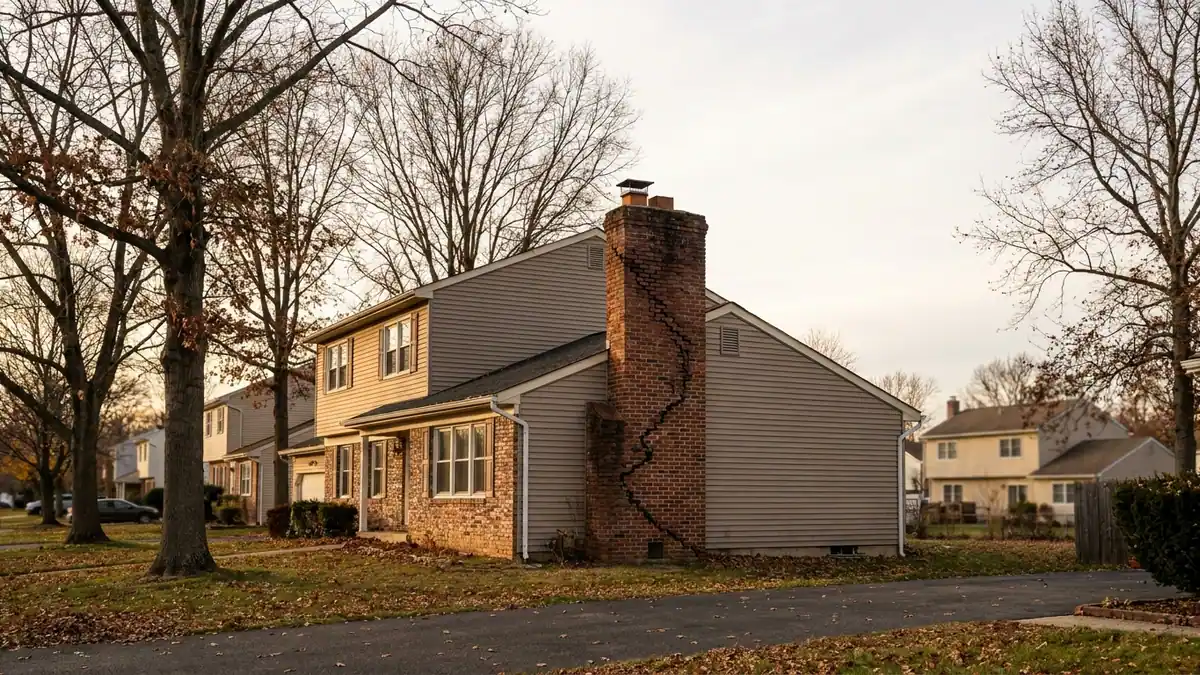
| Mount locationChimney strap mount | Puts a fastener through the roofNo | NotesStraps around the masonry, avoids holes, depends on the chimney being sound |
If the roof field is the only option your sight line allows, insist the bracket is set with a proper flashed penetration and sealed under the shingle course above it, not smeared over the top with a tube of caulk. A surface bead of sealant on a brand new roof is a leak with a start date.
Does remounting a dish void your roof warranty
It can, and this is the part homeowners miss. A third party drilling into a new roof after the fact is exactly the sort of thing a workmanship warranty excludes. If your provider sends a technician out next month and he puts four lag bolts through fresh shingles, the leak that follows is not a manufacturing defect and it is not a roofer's error.
Before anyone drills, read what your coverage actually says. The difference between manufacturer coverage on the shingle and workmanship coverage on the installation is laid out in the roof warranty guide. The safe route is to have the roofing contractor set the bracket and flash it while the roof is open, or to move the dish off the roof entirely.
Dishes and antennas on a metal roof
Standing seam changes the rules. You do not drill a standing-seam panel for a dish bracket. The panels move with temperature, and a fixed bolt through a panel fights that movement and eventually opens up. The correct hardware is a non-penetrating seam clamp that grips the raised seam, the same approach used for snow retention and solar.
If you are weighing a metal roof and you have a dish you cannot live without, raise it at the estimate. A clamp-mounted bracket is a straightforward detail when it is planned and an expensive problem when it is improvised on day three.
What to settle before the crew arrives
Sort this out at the estimate appointment, not on the morning of the job. The estimate visit is free, there is no obligation, and a salesperson does come to the house, so it is the right time to walk the roof line and point at things.
Ask for these to be written down:
- Who removes the dish or antenna and where it will be set during the job.
- Whether a remount is included, and if so, exactly where and how it will be flashed.
- That any rotted decking under the bracket is included at the quoted price.
- Whether you want the dish gone for good, which is the answer for most households that have switched to streaming and have not watched that dish in years.
The cable itself is the small detail that gets forgotten. Coax that runs over the roof edge and under the drip edge has to be rerouted, and the hole it enters the wall through should be sealed and sloped downward. Point it out so it is handled rather than reattached in the same wrong place.
And if the dish is dead weight, say so. Removing it permanently is the cheapest outcome, it deletes a penetration from the roof forever, and it takes one item off the maintenance list for the next twenty years.
Next step
If a dish or an antenna is sitting on a roof you are about to replace, have it looked at as part of the inspection rather than as an afterthought. Lightning Construction is GAF Certified, licensed and insured under New Jersey Home Improvement Contractor registration 13VH12437000, pulls the permit itself and attends the municipal inspection in every municipality, and takes no deposit. See what a full roof replacement includes, read the New Jersey roof cost guide so the numbers are not a surprise, then book a free inspection and written estimate.