Short answer
The panels have to come off before the tear-off and go back on after the new roof is finished, and a solar contractor does that work rather than the roofing crew. You hire and pay for the detach and reset separately, and it is not part of a roofing estimate. Once the array is down, the replacement itself runs like any other asphalt roof, and most are torn off and finished in a single day.
On this page
- Why the panels cannot stay on during a roof replacement
- Who removes the panels, and who pays for it
- The order of operations
- Replace the roof now, or wait
- What the crew finds under an array
- Permits, inspections and who files what
- What to get in writing from both companies
- What a solar roof replacement costs in New Jersey
- What to do next
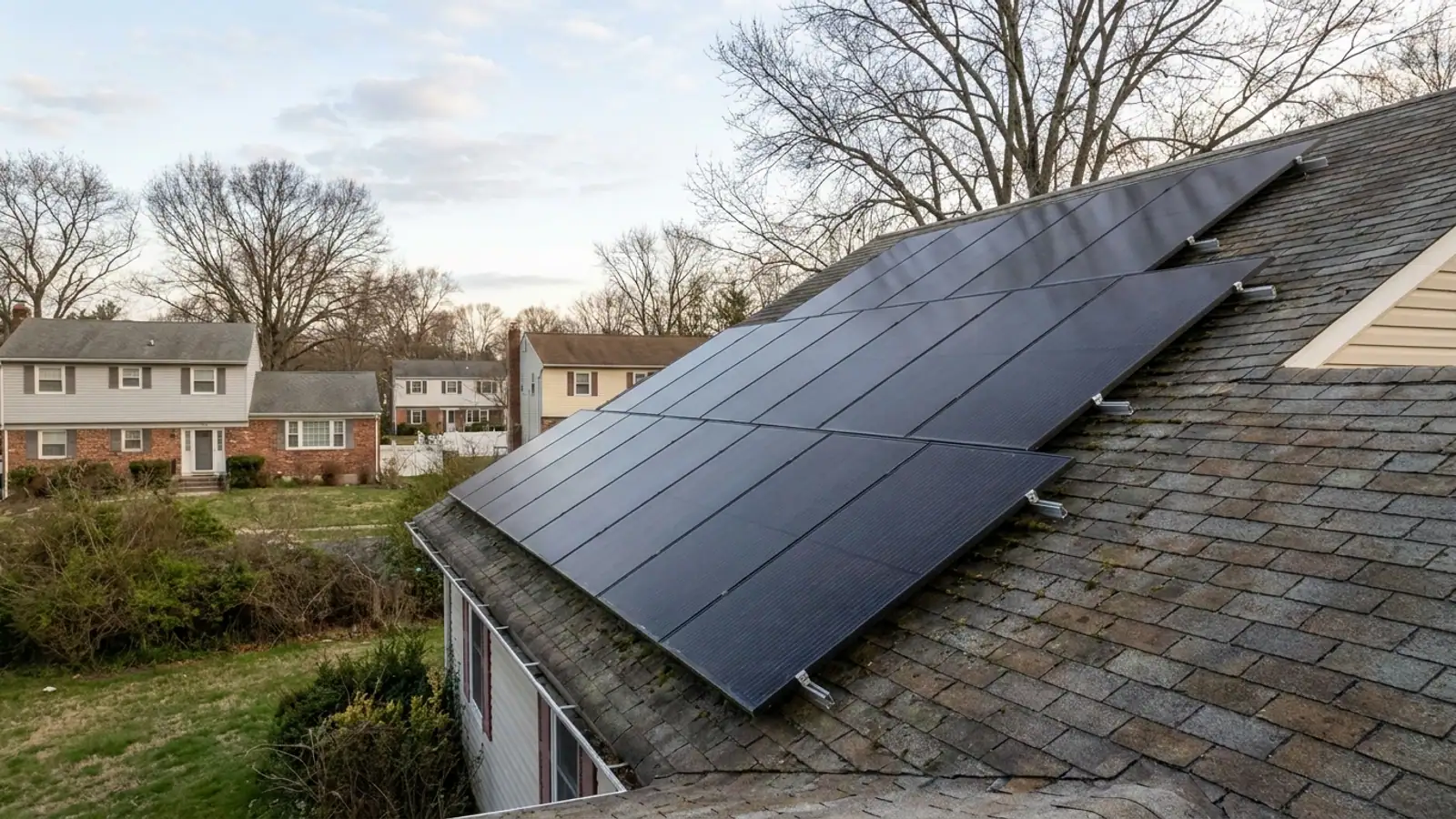
The panels come off before the tear-off and go back on after the new roof is finished. A roofing crew does not do that part. The solar company that installed the array, or another licensed solar contractor, disconnects the system, removes the panels and racking, stores them, then reinstalls and recommissions everything once the roof is done. That one division of labor drives the schedule, the cost and the order of the phone calls you need to make.
Here is how the job actually runs on a New Jersey house with an existing array, and where homeowners get surprised.
Why the panels cannot stay on during a roof replacement
Racking for a residential array is lag-bolted through the shingles and into the rafters, and each bolt gets a flashed mount. The mounts are part of the roof, not part of the panels. A tear-off strips everything down to the decking, which means every one of those penetrations gets removed and re-made.
Roofing around a panel field is not a real option either. It leaves the oldest shingles on the roof directly under the array, keeps the original mount flashings in place, and hides the section of decking you are least able to inspect. When that band fails in eight years, the array has to come off anyway, and you pay for the removal twice.
If a contractor offers to shingle up to the panels and leave them, that is a discount you will repay with interest.
Who removes the panels, and who pays for it
You hire the solar work separately. It is normally billed as a detach and reset, and it covers the electrical disconnect, panel and rail removal, on-site or off-site storage, reinstallation on the new roof, and bringing the system back online with the monitoring working again.
That cost is not in a roofing estimate, and any roofer who folds it into one is subcontracting it and marking it up. Ask your solar company for a written price for the detach and reset before you schedule anything. Two things change that number more than anything else: how many panels you have, and whether the array is on one clean slope or spread across three planes with separate strings.
If your system is leased or on a power purchase agreement, stop and call the leasing company first. They own the hardware. They decide who is allowed to touch it, and unauthorized removal can void the agreement.
The order of operations
- Get a free roof inspection and a written roofing estimate, so you know the roof actually needs replacing and what it costs.
- Get a written detach and reset quote from your solar contractor, or from the leasing company's authorized installer.
- Pick the roofing date first, then have the solar crew schedule removal for the day before or the morning of.
- Panels and racking come off. The roof is now bare in the array area for the first time since the system went in.
- Lightning pulls the roofing permit, tears off, replaces any bad decking, and installs the new roof. Most asphalt roofs are done in a single day.
- The municipal roofing inspection happens, with Lightning attending it.
- The solar crew returns, installs new flashed mounts into the new roof, sets the panels, reconnects and verifies production.
Do not let the solar crew reinstall on the same day the shingles go down unless both companies have agreed to it in writing. New sealant, new flashing and a crew of people walking a fresh roof with rails and panels is how a good install gets scuffed.
Replace the roof now, or wait
This is the decision most homeowners with solar are actually trying to make. The detach and reset is a real cost, so the question is whether the roof under the array has enough life left to justify paying that cost later instead of now.
| Situation | The honest call |
|---|---|
| SituationRoof is 20+ years old, array is newer | The honest callReplace now. You are going to pay for a detach and reset anyway, and the longer you wait the higher the chance of deck damage under the panels. |
| SituationRoof is 10 to 15 years old, no leaks, shingles intact | The honest callUsually wait. Get it inspected, keep the gutters clear, and revisit in a few years. |
| SituationOne active leak, roof otherwise sound | The honest callRepair it. A targeted repair on a slope with no panels does not require touching the array at all. |
| SituationLeak is under or beside the array | The honest callInspect first. Sometimes a partial removal of a few panels is enough; sometimes it is the flashing at a mount. |
| SituationStorm damage with an insurance claim open | The honest callDocument everything before anything moves, and read the claim guide before you authorize removal. |
The signs you need a new roof guide goes through what failure actually looks like from the ground and from the attic, and it applies the same way whether or not there are panels up there.
What the crew finds under an array
Two things show up regularly once panels come off.
The first is decking that has been quietly wet at a mount. A mount flashing that was slipped under one course instead of properly integrated leaks slowly, and nobody notices because the panel above it hides the stain and the attic side is often over insulation. Soft or delaminated sheathing gets replaced before anything new goes down.
The second is shingles in better shape than the rest of the roof. Panels shade the area under them, and shade slows granule loss and UV aging. That does not mean the section is reusable. It means the aged slopes around the array set the timeline for the whole roof.
Because Lightning takes no deposit and writes no change orders, decking and flashing conditions get identified at the free inspection and priced into the written estimate. The number on the estimate is the number at the end. That matters more on a solar job than a plain one, because you are already coordinating a second contractor and a second bill.
Permits, inspections and who files what
Lightning pulls the roofing permit from your municipality's own construction office under the New Jersey Uniform Construction Code and attends the inspection. You file nothing for the roof. The New Jersey roof permit guide covers what that involves and why it is not optional.
The electrical side of the solar work is the solar contractor's responsibility, including any permitting or utility notification that disconnecting and reconnecting the system requires. Ask them in writing who files it and who attends. Two contractors each assuming the other handled a filing is the most common way these projects stall.
What to get in writing from both companies
From the roofer: total price, scope including decking and flashing, the shingle line and color, the underlayment, whether gutters are included, and the workmanship coverage. The roof warranty guide explains the difference between what the manufacturer covers and what the contractor covers, and which one you will actually use.
From the solar company: the detach and reset price, whether new mounts and flashings are included or reused, who is responsible if a panel is damaged in storage, and a written confirmation that reinstalling on a new roof does not affect your equipment or production warranty. Reused mount hardware on a new roof is worth questioning.
Ask both parties to confirm the dates to each other, not just to you.
What a solar roof replacement costs in New Jersey
The roofing side falls in the same bands as any other asphalt replacement. Most run $9,000 to $22,000 in standard-value towns, $14,000 to $35,000 in higher-value towns, and $25,000 to $60,000 for large or luxury homes, with the band set by the municipality's median home value from ACS 2024 five-year estimates. Roof size, pitch, the number of penetrations and existing layers move the number within that range. The New Jersey roof cost guide breaks down what drives it.
The detach and reset is separate and comes from your solar contractor. Add the two together before you decide anything. Financing is available through GreenSky and FTL, including 24 months at 0% interest and 120-month terms with no prepayment penalty, if spreading the roofing portion helps.
If anyone tells you the work qualifies for a tax credit, confirm current programs with a tax professional yourself rather than taking a contractor's word for it.
What to do next
Start with the roof, because that determines whether any of this is necessary. Book a free inspection and written estimate through the roofing page or the free estimate page. It is genuinely no-obligation, and a salesperson does come to the house. Bring your solar contractor's contact information to the appointment so the sequencing can be worked out while someone is standing in your driveway looking at the array.