Short answer
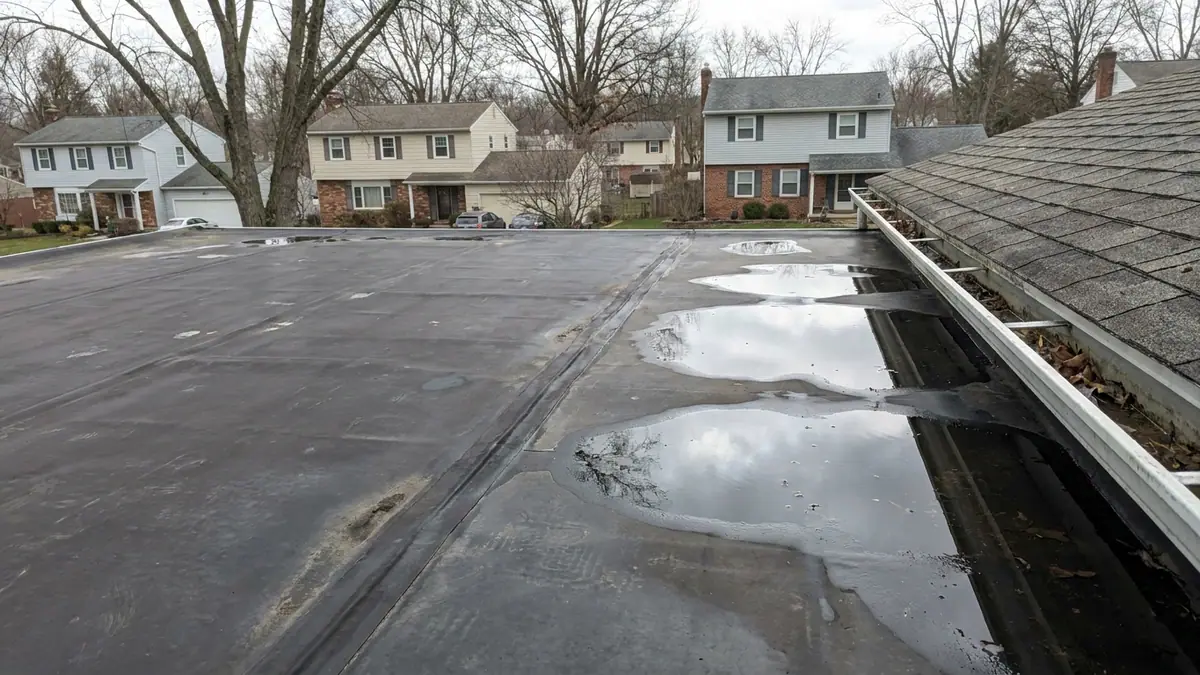
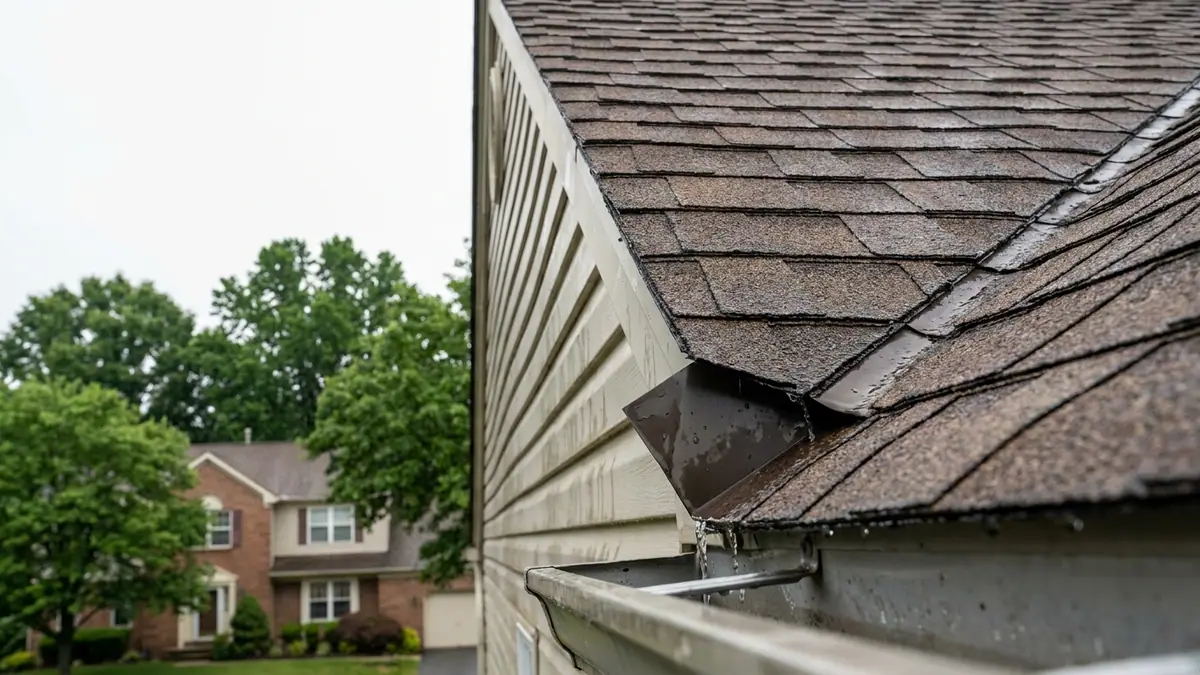
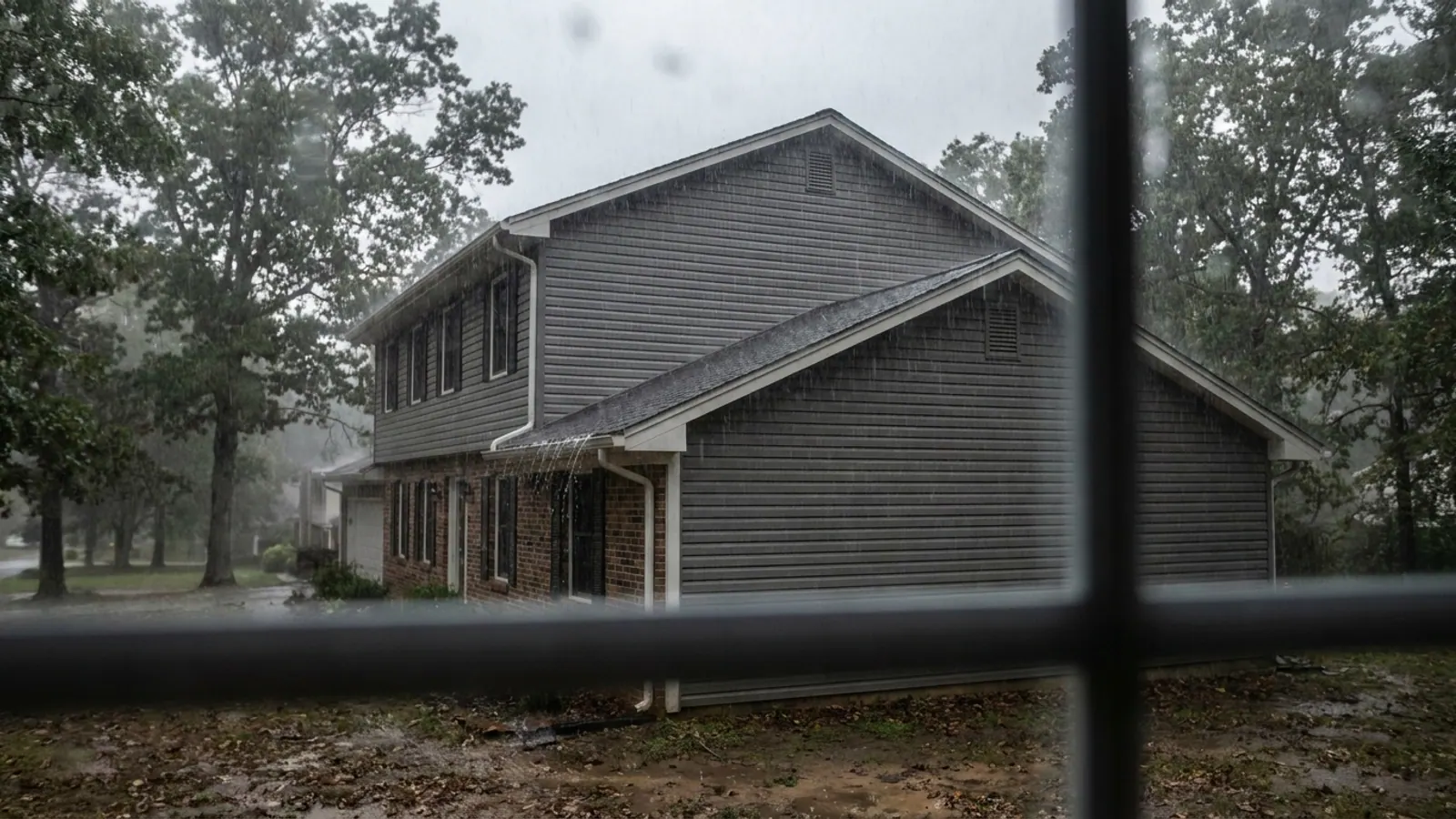
A leak that only appears in hard, windy rain is almost never a hole in the field of the shingles. Wind pushes water sideways and uphill into openings that gravity alone never reaches, so the suspects narrow to flashing laps, siding and trim joints, roof vents and ridge vents, and the gaps where wind pressure drives water under the shingle course. Because it needs specific wind direction and volume to show up, the only reliable way to find it is to reproduce those conditions or to read the water path from inside the attic.
On this page
- What wind-driven rain does that ordinary rain does not
- The places a wind-only leak actually starts
- Use the wind direction, because it is free evidence
- Why the stain is not under the hole
- How a roofer should test for it
- Whether this is a repair or a replacement
- Coastal and exposed houses get this more often
- What to do next
A leak that shows up only in hard, windy rain is telling you something useful: the roof is not holed. Water is being pushed sideways and uphill into a lap, a joint or a vent that works fine when rain falls straight down. Gravity leaks drip in every rain. Pressure leaks need wind.
That distinction cuts the suspect list down to a handful of places. Here is what they are, how the wind direction points at them, and what a roofer should actually do to confirm it before anyone starts pulling shingles.
What wind-driven rain does that ordinary rain does not
Three things change when the wind picks up.
First, water stops falling and starts traveling horizontally. A shingle roof, a siding wall and a piece of counterflashing are all designed as a series of overlaps that shed water downward. Turn the water sideways and every one of those overlaps is being attacked from a direction it was not built for.
Second, wind creates a pressure difference across the roof and wall assembly. Higher pressure outside and lower pressure in the attic or wall cavity pulls water through openings that would otherwise just hold a drop and let it evaporate. This is why a pinhole gap can pass a cup of water in a nor'easter and nothing at all in a summer shower.
Third, volume concentrates. Gusts sheet water off one plane of the roof onto a lower one, or dump it against one gable end while the rest of the house stays comparatively dry. Two inches of rain does not land evenly.
The places a wind-only leak actually starts
| Suspect | What it looks like inside | Why wind sets it off |
|---|---|---|
| SuspectStep flashing at a sidewall | What it looks like insideStain where a wall meets a lower roof, often at a ceiling corner | Why wind sets it offDriven rain runs down the wall and behind the vertical leg of a short or reused piece of flashing |
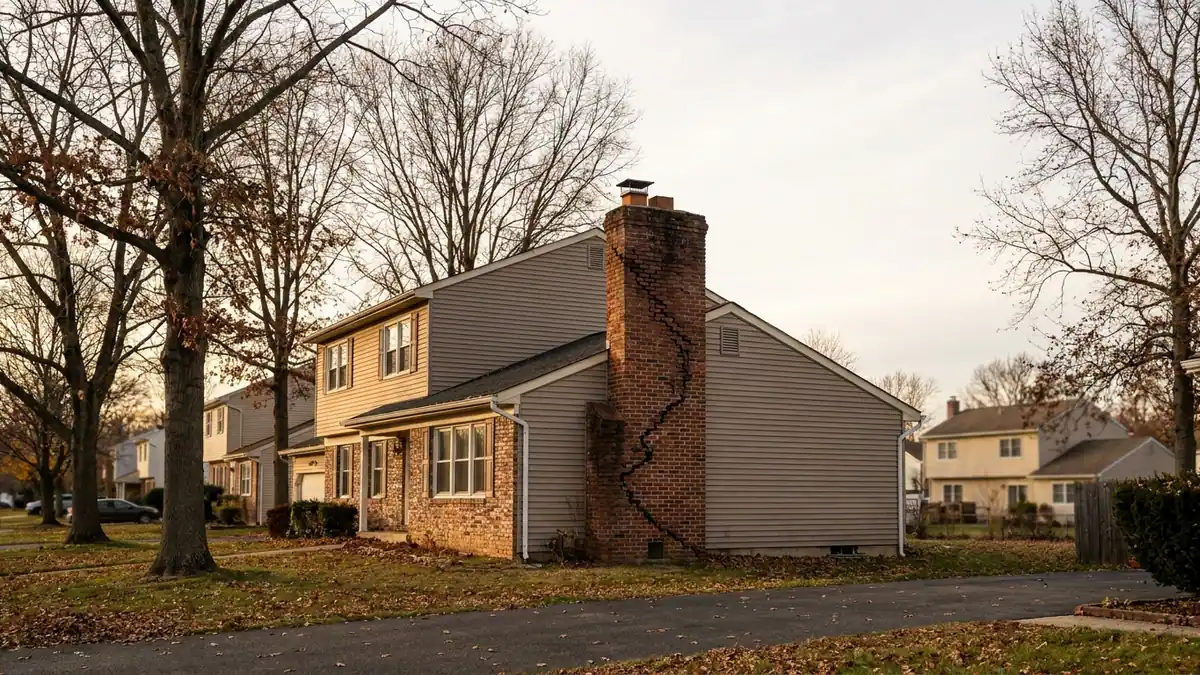
| SuspectChimney counterflashing | What it looks like insideStain around the chimney chase, sometimes two rooms away | Why wind sets it offWater is pushed into an open reglet joint or a failed sealant bead at the masonry |
| SuspectRidge vent or roof vents | What it looks like insideDrip near the ridge, or wet insulation directly under a vent | Why wind sets it offExternal baffles and filters handle falling rain; horizontal rain with pressure behind it gets past a poorly installed or undersized vent |
| SuspectSiding and trim above a roof line | What it looks like insideCeiling stain that appears below an upper wall, not below open roof | Why wind sets it offWind gets behind siding laps and corner trim, runs down the sheathing and enters at the roof-to-wall junction |
| SuspectRake and eave edge | What it looks like insideWater at the perimeter, sometimes running down inside the wall | Why wind sets it offUplift at the roof edge lifts the first course and drives water back under it where drip edge is missing or short |
| SuspectValleys | What it looks like insideStain along the line of the valley, well below the roof | Why wind sets it offDebris or a tight cut shingle pushes water sideways out of the valley in volume |
Notice what is not on that list: the open field of the shingles. A wind-only leak in the middle of a sound shingle plane is rare unless shingles have been lifted or torn, and if that happened you would usually be able to see it from the ground.
Use the wind direction, because it is free evidence
The next time it happens, write down two things: which direction the wind was coming from, and which part of the ceiling got wet. Then photograph the stain with a date on the photo.
If the leak only appears when the wind comes out of the northeast, the entry point is almost certainly on a northeast-facing plane, wall or chimney face. If it shows up on the wind from two directions, you probably have a vent or a ridge detail that is exposed from both. If it appears regardless of direction but only in heavy rain, it is more likely a volume problem, which puts valleys, a clogged gutter backing water under the shingle edge, or an undersized downspout in play instead.
New Jersey gets nor'easters most winters and the tail of tropical systems most summers, and those two weather patterns come from different directions. A leak that only appears in winter storms and never in August is a strong directional clue by itself. The storm damage guide covers what to do in the hours after a storm, including documentation that matters if a claim follows.
Why the stain is not under the hole
Water entering at a flashing joint does not fall straight to the ceiling below it. It runs along the underside of the sheathing, down a rafter, across the top plate of a wall, and drips wherever the framing stops carrying it. A stain three feet to the left of a chimney can easily be fed from the chimney. A stain in a second-floor hallway can be fed from a gable end wall.
That is why a real diagnosis starts in the attic, not on the roof. A roofer with a flashlight looks for dark tracking on rafters, rusted nail shanks, matted or stained insulation and daylight at penetrations. Water tracking dries into a visible trail even when the leak is months old, and that trail runs uphill to the entry point. If the attic is finished and there is no access, the search gets harder and usually moves to controlled water testing from outside.
How a roofer should test for it
A leak that only shows itself in a storm has to be reproduced or read. Reproducing it takes patience and two people.
- Someone sits inside the attic or under the stain with a light and watches.
- Someone outside starts low, well below the suspected area, and runs water on one small zone for several minutes.
- The tester works upward one detail at a time, holding each zone long enough to matter, and spraying up into laps rather than down onto them, because that is what the wind does.
- When water shows inside, the zone that was running is the answer. Stop there. Do not keep going.
Running a hose over the whole roof at once proves nothing except that the roof leaks, which you already knew. If nobody offers to test and someone immediately quotes a full replacement off a ceiling photo, get another opinion.
Whether this is a repair or a replacement
Sometimes a repair is the right answer and a contractor should say so. One bad step flashing lap on a ten-year-old roof is a repair. A ridge vent installed without the right fasteners or baffle is a repair. Water getting behind siding on an upper wall is a siding problem, and replacing shingles will not fix it.
Replacement becomes the honest recommendation when the shingles are near the end of their life anyway, when the same wind-driven leak has been chased and sealed more than once, or when the attic shows staining in several separate locations. At that point you are paying repeatedly to keep a roof that is going to be torn off soon. Most New Jersey asphalt roof replacements run $9,000 to $22,000 in standard-value towns, $14,000 to $35,000 in higher-value towns, and $25,000 to $60,000 for large or luxury homes, with the band set by the municipality's median home value from ACS 2024 five-year estimates.
One more thing worth checking before you commit to either: attic ventilation and intake. Wind pressure interacts with how the attic breathes, and a vent arrangement that pulls hard in a storm can draw water in through details that would otherwise hold. The attic ventilation guide explains how intake and exhaust are supposed to balance.
Coastal and exposed houses get this more often
A house on an open lot, on a rise, or near the water takes driven rain at full force with nothing breaking it up. Salt air also shortens the life of fasteners and metal flashing, so a detail that was sound at installation can open up years earlier than the same detail inland. If your house sits in that kind of exposure, the Jersey Shore roofing guide covers the fastening, flashing and material choices that hold up to it.
What to do next
Get it looked at before the next storm, not after. Bring your notes on wind direction, your stain photos and the dates. Ask the inspector to go in the attic, to show you photographs of what he found, and to tell you plainly whether he is looking at one failed detail or a roof that is finished.
At Lightning Construction the inspection and the written estimate are free with no obligation, and a salesperson does come to the house. There is no deposit, nothing is due until the work is finished and you have inspected it, and there are no change orders, because the conditions that normally trigger one are found at the inspection and priced into the quote. Lightning pulls the permit and attends the municipal inspection under the New Jersey Uniform Construction Code, and most asphalt replacements are torn off and finished in a single day.
Start with the roofing page to see what the work covers, or request a free estimate and have someone in the attic with a flashlight before the wind turns again.