Short answer
A real roof inspection covers the roof surface, every flashing point, the roof edge and gutters, and the attic underneath. The inspector photographs what he finds, shows you the photos, and explains which items are failing now and which are simply aging. At Lightning Construction the inspection and the written estimate are free with no obligation, and a salesperson does come to the house.
On this page
- What gets checked on the roof surface
- What gets checked where the roof meets something else
- What gets checked at the roof edge and gutters
- What gets checked in the attic
- What should be photographed, and what you should be shown
- What happens during the visit, in order
- Free, no obligation, and honest about who is coming
- When to have the roof inspected
A roof inspection covers four areas: the roof surface itself, every point where the roof meets something else, the roof edge and gutter line, and the attic underneath. If someone looked at your roof from the driveway for ten minutes and handed you a number, that was a bid, not an inspection.
Here is what actually gets looked at, what gets photographed, and what you should insist on being shown before anyone writes you an estimate.
What gets checked on the roof surface
The surface tells you how much life is left, not usually where the leak is.
The inspector is looking at granule loss, which is the sandy coating that protects the asphalt underneath. Bare black patches, or a gutter full of granules, mean the shingle is past its useful service. He is looking at curling and cupping at the shingle edges, cracking across the face, and shingles that have lifted or gone missing entirely after a wind event. He is checking whether the shingle still lies flat and whether the seal strip is still holding the course below it down.
He is also checking for soft spots underfoot. A deck that flexes when it is stepped on is telling you the plywood or plank sheathing below has taken water. That is a decking issue and it changes the scope of the job, which is exactly the kind of thing that needs to be found before a contract is signed rather than after the old roof is off.
What gets checked where the roof meets something else
This is where the leaks are. Shingles shed water across an open plane reliably. The failures are at the junctions.
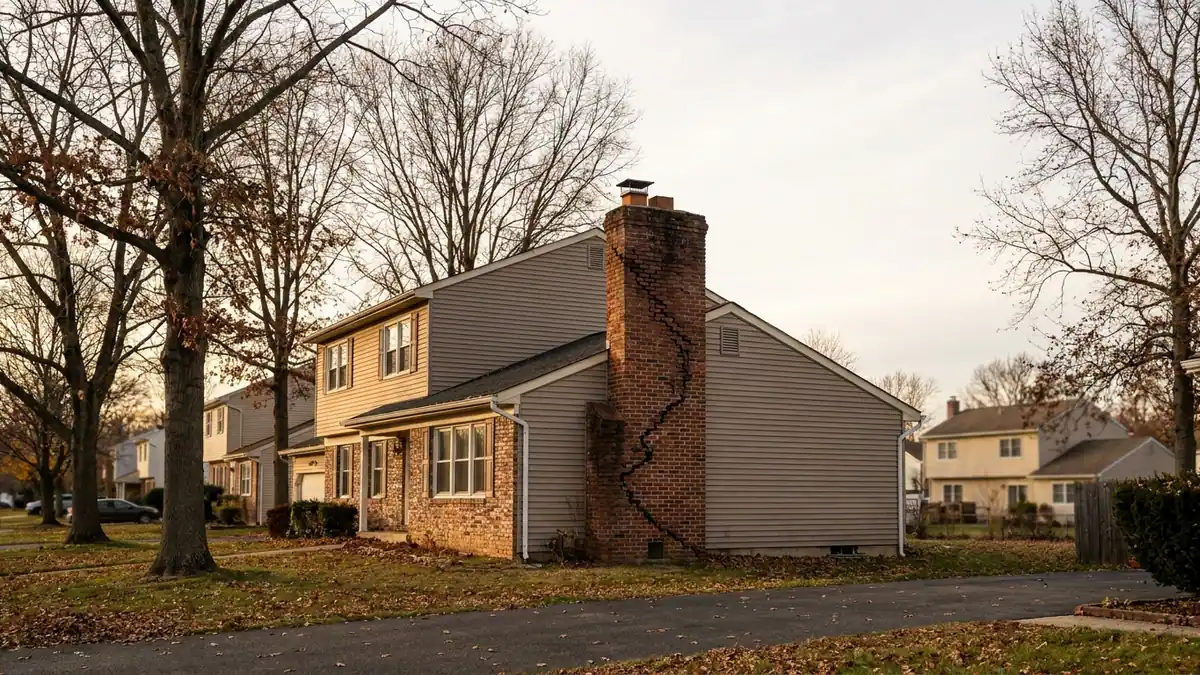
- Chimneys. Step flashing up the sides, counterflashing let into the mortar joints, and the cricket or saddle on the uphill side if the chimney is wide enough to need one.
- Sidewalls and dormers. Step flashing woven into each shingle course, and whether it was reused from the last roof.
- Valleys. Whether they are open metal or closed-cut, whether debris has built up, and whether the shingles at the cut are worn through.
- Skylights. The flashing kit, the curb, and the condition of the seal around the glass.
- Pipe boots and vents. The rubber collar on a plumbing vent cracks and splits long before the shingles fail, and it is a very common source of a ceiling stain.
What gets checked at the roof edge and gutters
The eave is where water leaves the roof, and it is where slow damage hides.
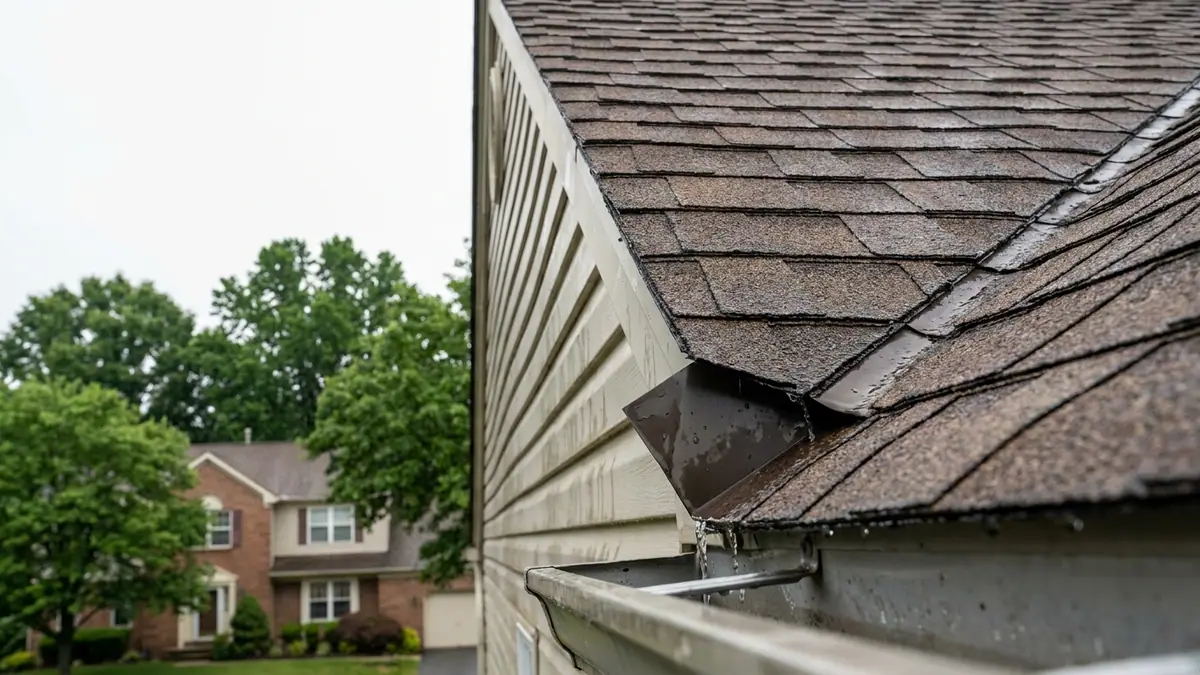
The inspector checks whether there is drip edge at all, whether it sits over the gutter or behind it, and whether the fascia board behind the gutter is sound. He looks at the first course of shingles for the staining that means water has been backing up under them. He checks gutter pitch and whether the downspouts discharge away from the foundation. He looks at soffit vents to see if they are open or painted shut.
If you have had ice at the eave in winter, that gets connected to what is found in the attic. The ice dam guide covers why that happens and what fixes it.
What gets checked in the attic
Skipping the attic is the most common shortcut in this trade, and it is the part that most often changes the recommendation.
From inside, the inspector is looking for daylight through the deck, dark staining on the underside of the sheathing, rusted nail shanks, wet or compressed insulation, and frost or condensation on the roof deck in cold weather. He is checking whether there is actual intake at the soffits and actual exhaust at the ridge, and whether a bathroom fan is dumping moist air into the attic instead of outside.
An attic can show you that a roof is failing from underneath while the shingles still look acceptable from the street. Ventilation problems are covered in the attic ventilation guide, and they get priced into the roof work rather than treated as a separate visit.
What should be photographed, and what you should be shown
You should not have to take anyone's word for what is on your roof. Ask for photos, and ask to see them on the spot.
| What is photographed | Why it matters to you |
|---|---|
| What is photographedShingle surface, close and wide | Why it matters to youShows granule loss and curling in context, not one cherry-picked shingle |
| What is photographedEvery flashing point | Why it matters to youChimney, sidewalls, valleys, skylights, pipe boots |
| What is photographedAny soft or damaged decking | Why it matters to youJustifies sheathing replacement in the scope |
| What is photographedRoof edge, drip edge and gutter line | Why it matters to youShows fascia condition and water backing up |
| What is photographedAttic sheathing and insulation | Why it matters to youDocuments leaks, staining and ventilation |
| What is photographedStorm damage, if that is why you called | Why it matters to youDated documentation for your carrier |
A reasonable request: ask for a wide shot of each roof plane along with the close-ups. A close-up of one bad shingle proves nothing about the other 2,000. The wide shot tells you whether the problem is general or local, and that is the difference between a repair and a replacement. The signs you need a new roof guide goes through where that line usually falls.
What happens during the visit, in order
- Walkthrough of the outside, including the gutter line and any spot where you have seen water.
- Roof access where it is safe, plane by plane, with photos as he goes.
- Attic, with a light, checking sheathing, insulation and ventilation.
- Inside the house at any ceiling or wall stain you have pointed out.
- Sit down and go through the photos with you, item by item.
- Written estimate covering the full scope, including anything found in steps two and three.
Step five is the one that matters. If nobody shows you the photos and explains what each one means, you have no way to judge the number on the estimate.
Free, no obligation, and honest about who is coming
The inspection and the written estimate from Lightning Construction are free and carry no obligation. A salesperson comes to the house. That is a sales appointment as well as an inspection, and you should hear it said plainly rather than discover it at the door. You can end it with a written estimate and no commitment.
What the inspection is for, on Lightning's side, is pricing the whole job before the contract is signed. Extra shingle layers, rotted decking and unusable flashing are the three things that normally turn into change orders once the tear-off starts. They get found at the inspection and written into the quote instead, because there are no change orders — the written estimate is the final price. There is also no deposit; nothing is due until the work is finished and you have inspected it yourself.
Lightning is GAF Certified, licensed and insured, New Jersey Home Improvement Contractor registration 13VH12437000, and works across all 21 New Jersey counties. Lightning pulls the permit from your municipality's construction office and attends the inspection under the New Jersey Uniform Construction Code, so you file nothing.
When to have the roof inspected
Have it looked at after any wind or hail event that dropped branches or shingles in the yard, when you see a ceiling stain, when the gutters fill with granules, when you are buying or selling, and when the roof reaches an age where you would rather plan the replacement than react to it. If your roof is fine, a straight answer that it is fine costs you nothing.
You can see the full scope of the work on the roofing page, or book a free inspection and written estimate.