Short answer
Moss by itself is not a reason to replace a roof. On shingles that still have their granules and lie flat, moss is a shade and moisture problem you treat and then prevent. Replace the roof when what is under the moss has already failed, meaning bare asphalt, curling or broken shingles, soft decking, or an age that puts the roof near the end of its life anyway.
On this page
Moss by itself does not condemn a roof. If the shingles under it still have their granules, still lie flat, and the deck underneath is solid, you have a shade and drainage problem that gets treated and then prevented. If the moss has been there long enough that the shingles beneath it are bare asphalt, curled at the edges, or soft when you press on the deck from the attic, the moss stopped being the issue a while ago.
So the first job is not killing the moss. It is finding out what is under it.
Moss, algae and lichen are not the same problem
Homeowners use the three words interchangeably and they behave very differently on a roof.
| What it looks like | What it does | How serious | |
|---|---|---|---|
| Algae | What it looks likeFlat black or dark gray streaks running down the slope | What it doesStains the granule surface, holds a little heat | How seriousCosmetic in almost every case |
| Lichen | What it looks likeFlat crusty gray-green patches, tightly bonded | What it doesGrips the granules and pulls them off when removed | How seriousModerate, and hard to remove cleanly |
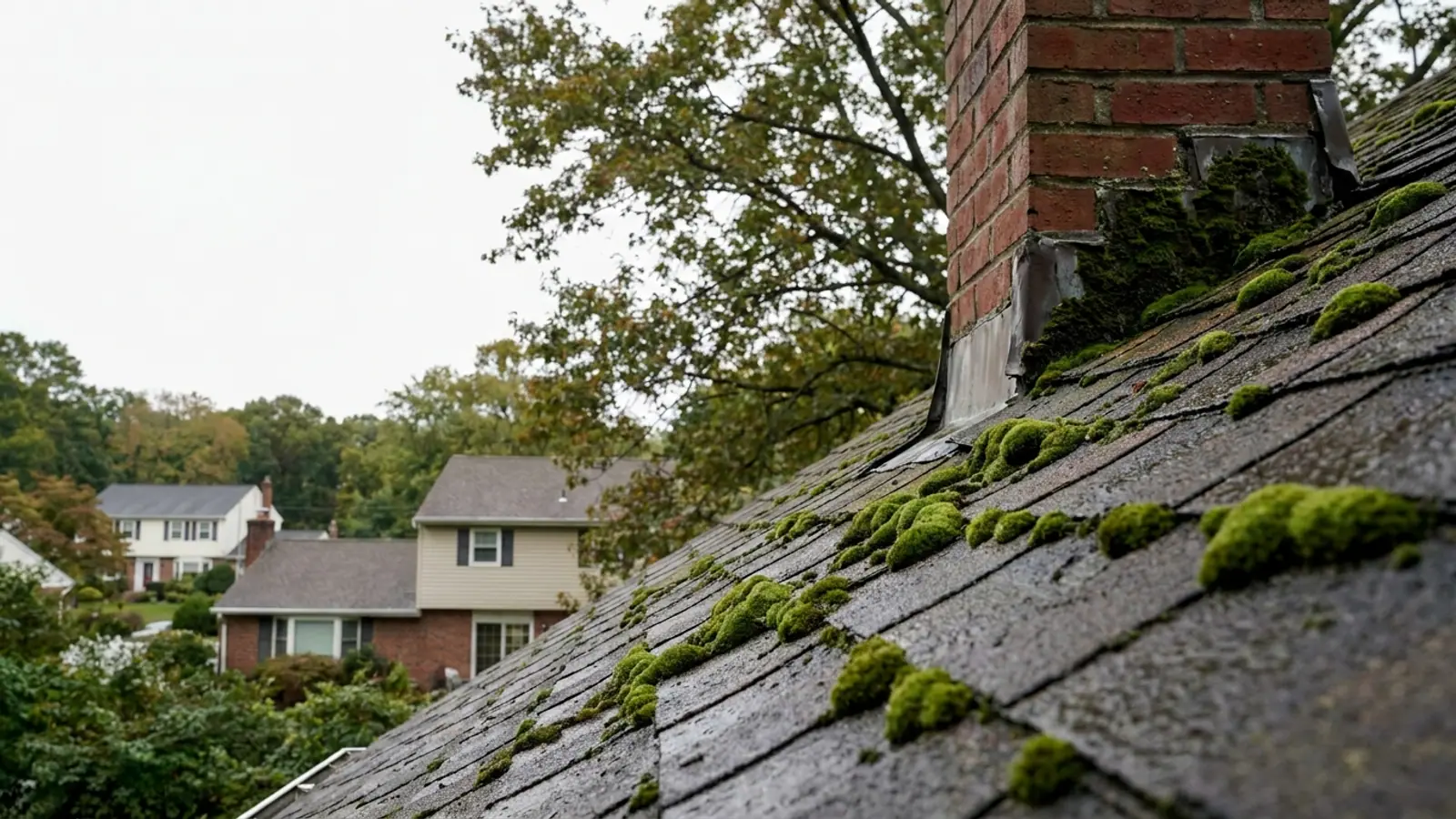
| Moss | What it looks likeThick green clumps with visible height, usually along shingle butts | What it doesHolds water, lifts shingle edges, traps debris | How seriousThe one that causes real damage |
Moss is the one worth acting on. It is a plant with rhizoids that work into the seam between shingle courses. Every clump is a sponge sitting on your roof, and a sponge against asphalt in New Jersey means freeze-thaw all winter. Water gets into the lap, freezes, expands, and works the shingle loose a fraction at a time.
Why it grows where it grows
Moss shows up on the north slope first, then under tree canopy, then along the bottom courses above the gutter. All three have the same cause: that part of the roof stays wet longer than the rest of it.
A south-facing slope in New Jersey dries within an hour of a summer rain. A north slope shaded by a mature oak can stay damp for two days. Add leaf litter that never blows off, and you have soil. That is the actual sequence — debris collects, breaks down, and gives moss something to anchor in.
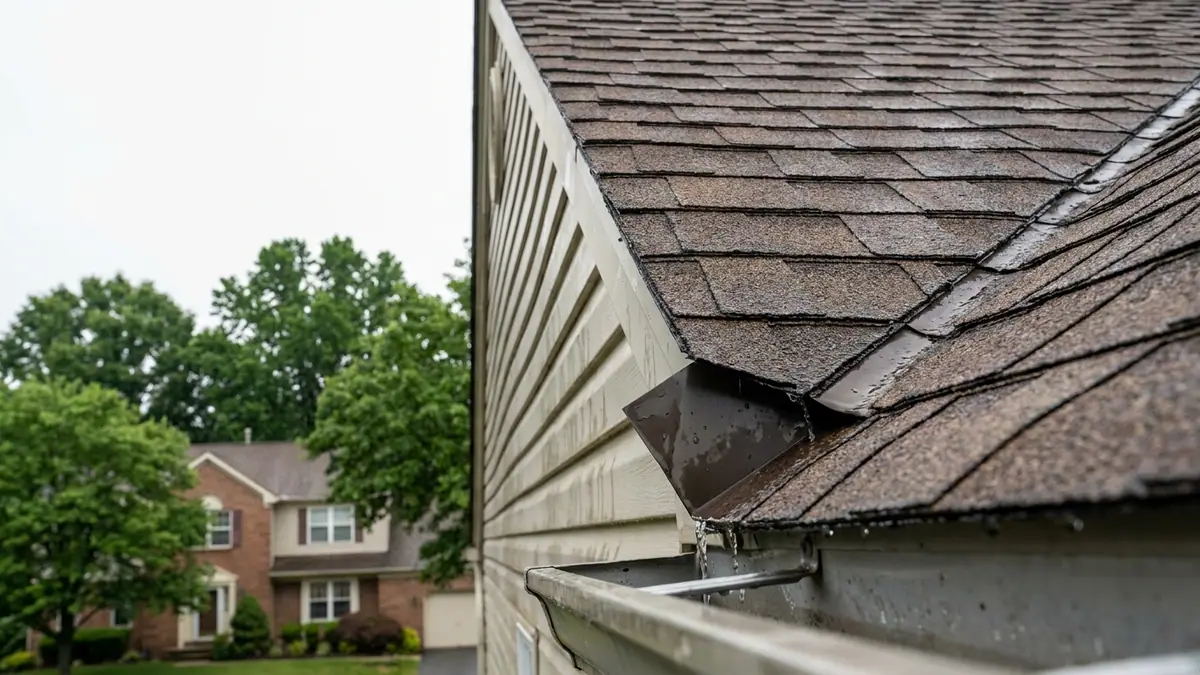
This is why moss so often starts right above a clogged gutter. Standing water and packed leaves at the eave wick back under the first course of shingles. If your gutters are full every fall, the moss line above them is a symptom of that, not of a bad roof. The gutter maintenance guide covers the seasonal side of that.
What tells you the roof is still fine
Go up on a ladder at the eave, or have someone do it, and look at the shingles in and around a moss clump after it has been lifted.
- The surface is still granulated, not shiny black asphalt.
- The shingles lie flat and the corners are not curling up or cupping.
- Nothing is cracked across the face, and no tabs are missing.
- From inside the attic, the deck above the mossy slope shows no dark staining and feels firm.
- Your gutters are not full of granules after a hard rain.
If all five are true, treat the moss and keep the roof. That is a few hundred dollars of work and some tree trimming against a five-figure replacement.
What tells you the moss is a symptom, not the problem
These are the findings that move the conversation from treatment to replacement.
- Bare asphalt under the moss. Once the granule layer is gone the shingle is being broken down by UV, and no cleaning brings that back.
- Curled, cupped or brittle shingles that crack when flexed. That is age, and moss only accelerated it.
- Moss growing in the valleys and around the chimney flashing. Those are the places that leak first in New Jersey, and plant growth at a flashing joint means water is sitting there.
- Spongy decking underfoot or daylight visible at the deck seams from the attic.
- A roof already in its third decade. Cleaning a roof that is nearly done just delays the same decision by a season.
The signs you need a new roof guide runs through the full list and the repair-versus-replace line in more depth.
How moss gets removed without wrecking the shingles
The method matters more than the product. Most of the damage blamed on moss was done by whoever removed it.
- Pick an overcast day with no rain in the forecast for the rest of it. Cleaners dry too fast in direct sun to work.
- Wet the plants down and soak the gutters and plantings below so runoff does not burn them.
- Apply a moss treatment rated for asphalt shingles. Zinc sulfate products and oxygen bleach solutions both work. Chlorine bleach kills fast but is hard on plants and metal.
- Let it sit for the full dwell time on the label. The moss dies in place over days to weeks and loosens.
- Rinse at garden hose pressure, working downslope so water runs the way the shingles are laid. Never spray uphill under the laps.
- Brush only what is already loose, with a soft brush, down the slope. Anything that needs scraping is still holding granules.
- Clear the gutters and downspouts of the debris that comes down with it.
What not to do: pressure wash. It strips granules, forces water under the shingles and can void manufacturer coverage. The same goes for a stiff wire brush and for walking a steep or wet mossy roof, which is as slippery as ice.
Keeping it from coming back
Killing moss without changing the conditions means doing it again in two or three years.
Trim back the branches overhanging the slope. More sun and more air movement on that plane does more than any product. Keep the gutters clear so the eave is not sitting wet. Make sure the attic is actually venting, because a slope over a cold, damp attic dries slower on the outside too, and poor ventilation is behind several other New Jersey roof problems besides this one, as the attic ventilation guide explains.
A zinc or copper strip installed near the ridge helps the slope below it, since rain carries trace metal down the surface. It is a maintenance item, not a cure, and it does nothing about the shade.
If the roof is being replaced anyway, algae-resistant shingles with copper-containing granules are standard on most current GAF lines and are worth specifying on a shaded house.
What to do next
Get eyes on the shingles under the moss before you spend money either way. Lightning Construction's inspection and written estimate are free with no obligation, and a salesperson does come to the house — that is a sales appointment, and it is also the point where decking condition, flashing and existing shingle layers get found and priced in, so there are no change orders later. There is no deposit; nothing is due until the work is finished and you have inspected it. If the answer is replacement, Lightning pulls the permit from your municipality's construction office and attends the inspection under the New Jersey Uniform Construction Code, and most asphalt roofs are torn off and replaced in a single day.
If the answer is that your roof is fine and needs the tree cut back, you will be told that too. See the roofing services page for what a replacement includes, or book the free estimate and have someone look at the slope before another winter of freeze-thaw works on it.