Short answer
Usually not. A metal roof is bought for a 50-plus-year material life, and on a five-year hold you pay the full premium over asphalt and leave most of that life to the next owner. It still makes sense in a few specific situations: a coastal house, a complicated low-slope section, a street where metal is already the norm, or a homeowner who simply wants it and is not treating the roof as an investment.
On this page
- Why the five-year horizon changes the answer
- What a metal roof does and does not do for your sale price
- The five-year comparison, side by side
- When a metal roof still makes sense before you sell
- If the roof is failing now and you are leaving anyway
- The paperwork a buyer's attorney will ask for
- What to do next
If you are moving in five years, a metal roof is usually the wrong purchase. You pay the full premium over asphalt and hand roughly 90 percent of the roof's service life to whoever buys the house. That is the whole argument in two sentences, and most contractors will not say it to you.
There are real exceptions, and they are worth knowing before you decide. Below is what actually changes on a short hold, where metal still earns its price, and what to do if the roof is failing now and the move is not certain.
Why the five-year horizon changes the answer
Metal roofing is bought for duration. The material life on a standing-seam or metal shingle system is 50-plus years, and almost all of the value in that number sits in decades two through five. You are planning to be there for one tenth of it.
The cost gap is not small either. In New Jersey, metal roofing runs $18,000 to $35,000 in standard-value towns, $28,000 to $55,000 in higher-value towns, and $45,000 to $120,000 for large or luxury homes. Asphalt over the same bands runs $9,000 to $22,000, $14,000 to $35,000 and $25,000 to $60,000. The band is determined by the municipality's median home value from ACS 2024 five-year estimates, not by the material you pick. Whichever band your town falls in, metal starts where asphalt is finishing.
That gap has to come back to you somehow, and on a five-year hold there are only two routes: lower ownership cost while you are there, or a higher sale price when you leave. Neither one is reliable over five years.
What a metal roof does and does not do for your sale price
We are not going to quote you a resale percentage. There is no number we can stand behind, and the ones that get thrown around in roofing ads are usually national averages for a different housing stock.
Here is what we can tell you from how New Jersey sales actually go. The roof affects a transaction at one specific moment: the buyer's home inspection. An inspector writes up the roof, the buyer's agent reads it, and anything described as near the end of its life becomes a line in the negotiation. A new roof removes that line. A new asphalt roof removes that line exactly as completely as a new metal roof does.
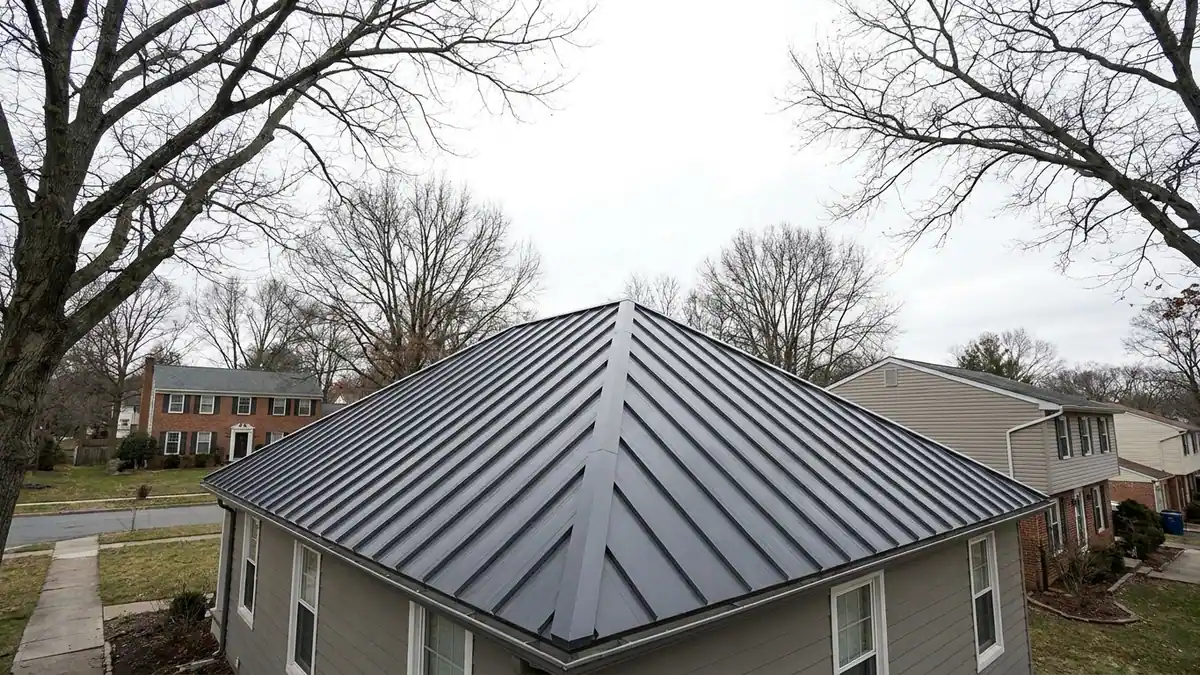
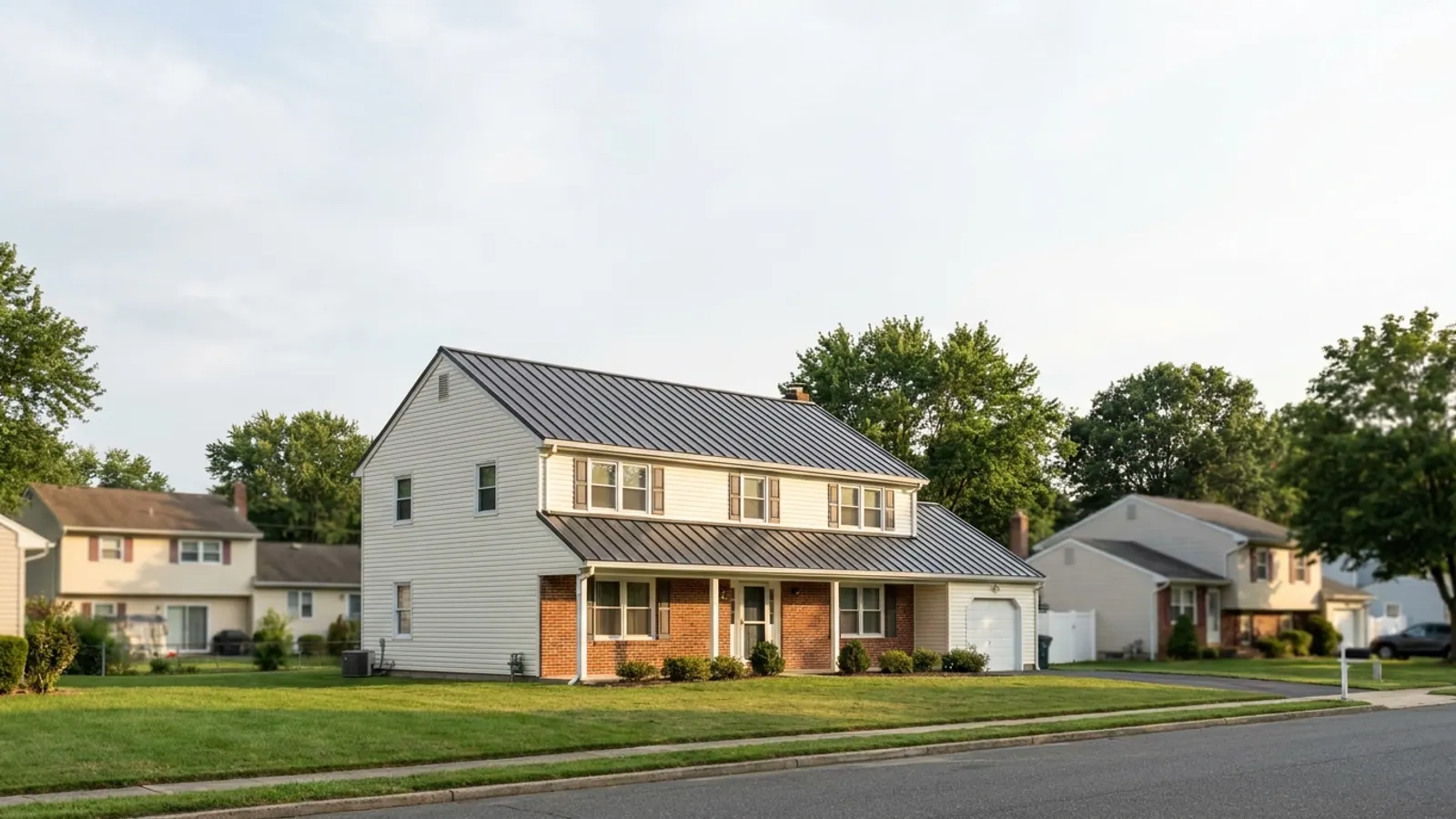
What metal can do is sit well with a certain buyer on a certain street. If the neighborhood already has standing seam on several houses, if the house is a modern or farmhouse style where the seam lines read as intentional, or if it is a coastal property where buyers have already been burned by wind damage, metal is a genuine selling point in the listing photos. On a 1960s colonial in a development where every other roof is architectural shingle, it is money spent on a detail most buyers will not price.
The five-year comparison, side by side
| Asphalt shingle | Standing-seam metal | |
|---|---|---|
| Starting cost, standard-value town | Asphalt shingle$9,000-$22,000 | Standing-seam metal$18,000-$35,000 |
| Install time | Asphalt shingleMost roofs in a single day | Standing-seam metalTwo to four days |
| Material life | Asphalt shingleDecades, replaced at least twice in a metal roof's span | Standing-seam metal50-plus years |
| Life you use on a five-year hold | Asphalt shingleA meaningful share | Standing-seam metalA small fraction |
| Effect on the buyer's inspection report | Asphalt shingleClean | Standing-seam metalClean |
| Best argument for it | Asphalt shingleLowest cost to remove the roof from the negotiation | Standing-seam metalYou are keeping the house, or the house genuinely suits it |
When a metal roof still makes sense before you sell
Four situations change the math, and they are specific.
- The move is soft. Five years is a plan, not a closing date. Jobs change, parents move in, kids change schools. If there is a real chance you stay ten or fifteen years, you are no longer in the short-hold case and the duration argument comes back.
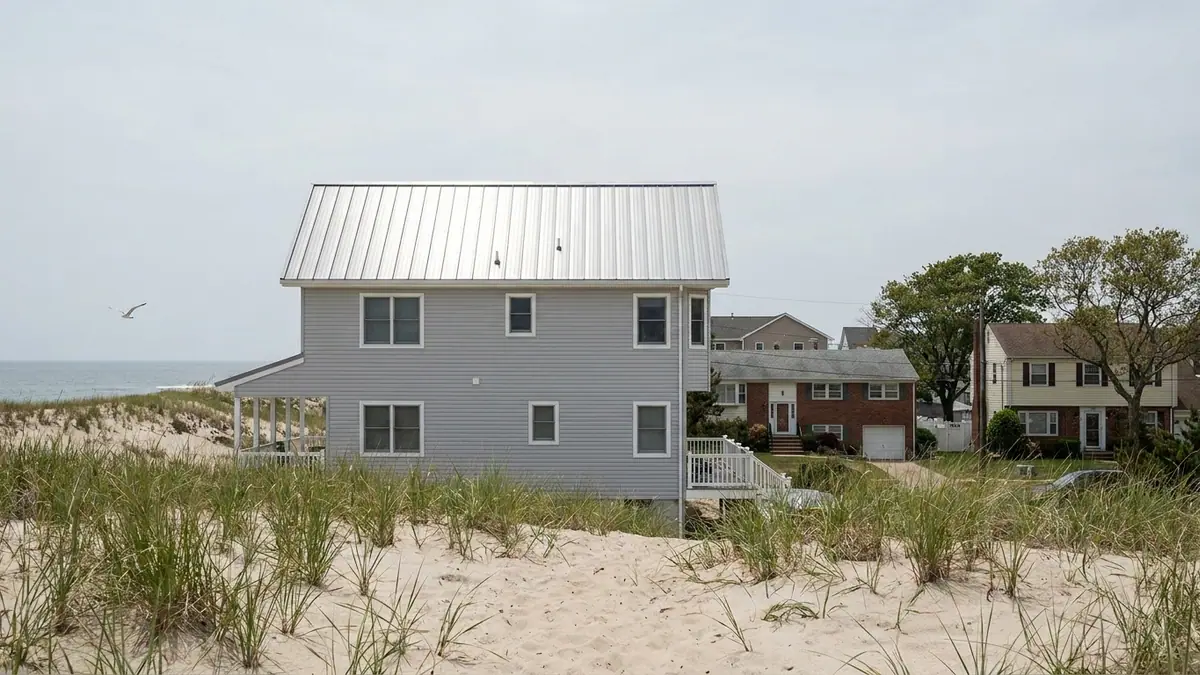
- The house is on or near the water. Salt air and sustained wind are hard on a roof, and a properly specified metal system with the correct fasteners handles both. If you have already replaced an asphalt roof once because of wind, the next one is a different conversation.
- There is a section that keeps failing. Low-slope porch roofs, sunroom roofs and shallow additions tied into a steeper main roof are chronic leak points. Metal over that section while the rest of the house stays asphalt is a common and sensible split, and it costs a fraction of a whole-house metal job.
- You want it. That is allowed. If you like how it looks and the cost does not strain anything, you do not need a spreadsheet to justify the roof over your own head for the next five years. Just do not call it an investment.
If you are weighing the two materials in general rather than against a move date, the asphalt vs. metal roofing guide runs the full comparison, and the standing-seam metal roofing guide covers panel profiles, fastening and what a correct New Jersey installation includes.
If the roof is failing now and you are leaving anyway
Replace it, and replace it with the material that fits the hold.
A leaking roof does not wait for your closing date. It stains ceilings, wets insulation and eventually gets into the decking, and every one of those shows up in the inspection report as a bigger problem than the roof itself. Letting it run until you list is the most expensive version of this decision.
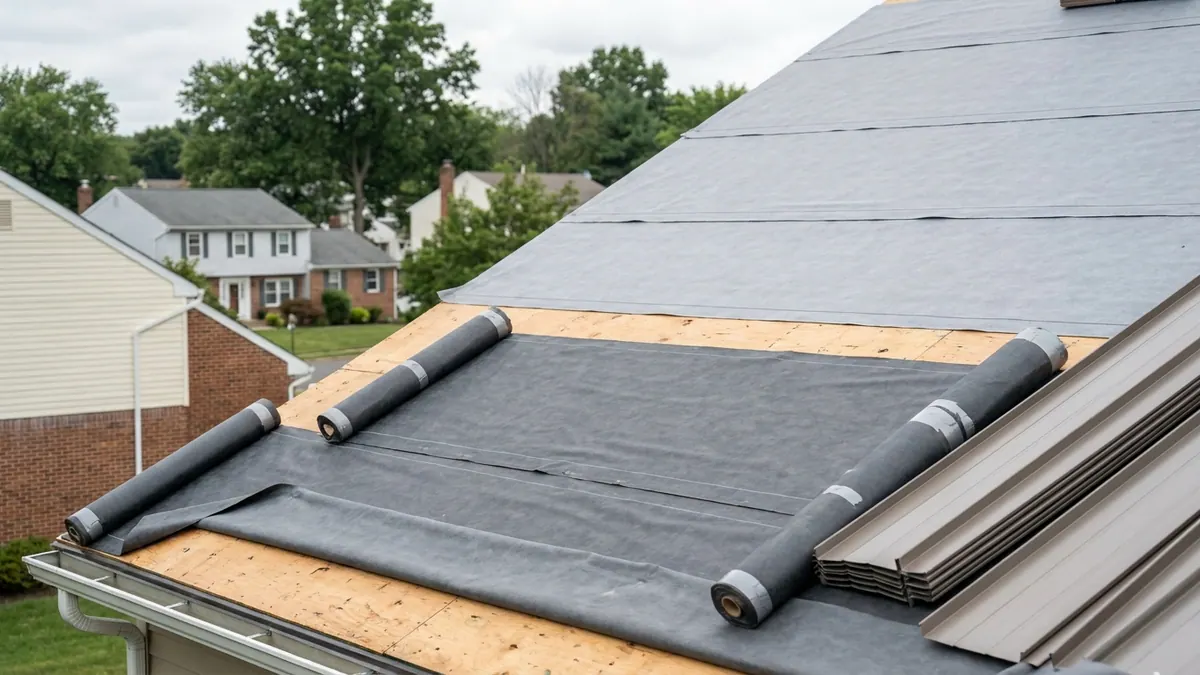
If the roof has to be done and you are genuinely going, asphalt is the honest recommendation on most houses. It clears the inspection, it photographs fine, and most replacements are torn off and finished in a single day, which matters when the house has to be show-ready on short notice. Standing seam takes two to four days with staging and trim work, during which your driveway is a work site.
The paperwork a buyer's attorney will ask for
Whatever you install, the value at resale lives in the documents, not the material.
- The permit and the final inspection. Lightning pulls the permit from your municipality's own construction office under the New Jersey Uniform Construction Code and attends the inspection. You file nothing. An unpermitted roof is a title-level headache at closing, and buyers' attorneys now look for it.
- The manufacturer warranty and its transfer terms. Transferability is usually conditional, with a window and sometimes a fee. Read it when the job is done, not when you are under contract.
- The workmanship warranty in writing. It is separate from the manufacturer's coverage and it is the one that matters early in a roof's life. The roof warranty guide explains the difference and what to ask for.
- The written estimate and the final invoice. With no deposit taken and no change orders written, those two numbers match, which is a short and easy conversation to have with a buyer.
On incentives: do not assume any roofing material qualifies for a tax benefit. Ask a tax professional about current programs before you factor anything into the decision.
What to do next
Get the roof looked at before you decide the material. A free inspection tells you whether you are replacing now or in three years, and that single fact decides more than any comparison table. Lightning's inspection and written estimate are free with no obligation, and a salesperson does come to the house. Extra shingle layers, soft decking and failed flashing are found at that visit and priced into the quote, so the number you sign is the number you pay.
If metal is still on the table, ask for both quotes on the same visit and look at the gap against your actual timeline. See what a correct system includes on the metal roofing page, or book the free estimate and get a real number for your house instead of a range for your town.