Short answer
A residential metal roof installed over solid decking, underlayment and an insulated attic is not noticeably louder inside the house than asphalt shingles. The loud metal roofs people remember are bare panels screwed to open framing on a barn, a shed or a porch, with nothing between the metal and the air below it. The panel material is a small part of what you hear; the assembly under it decides almost everything.
On this page
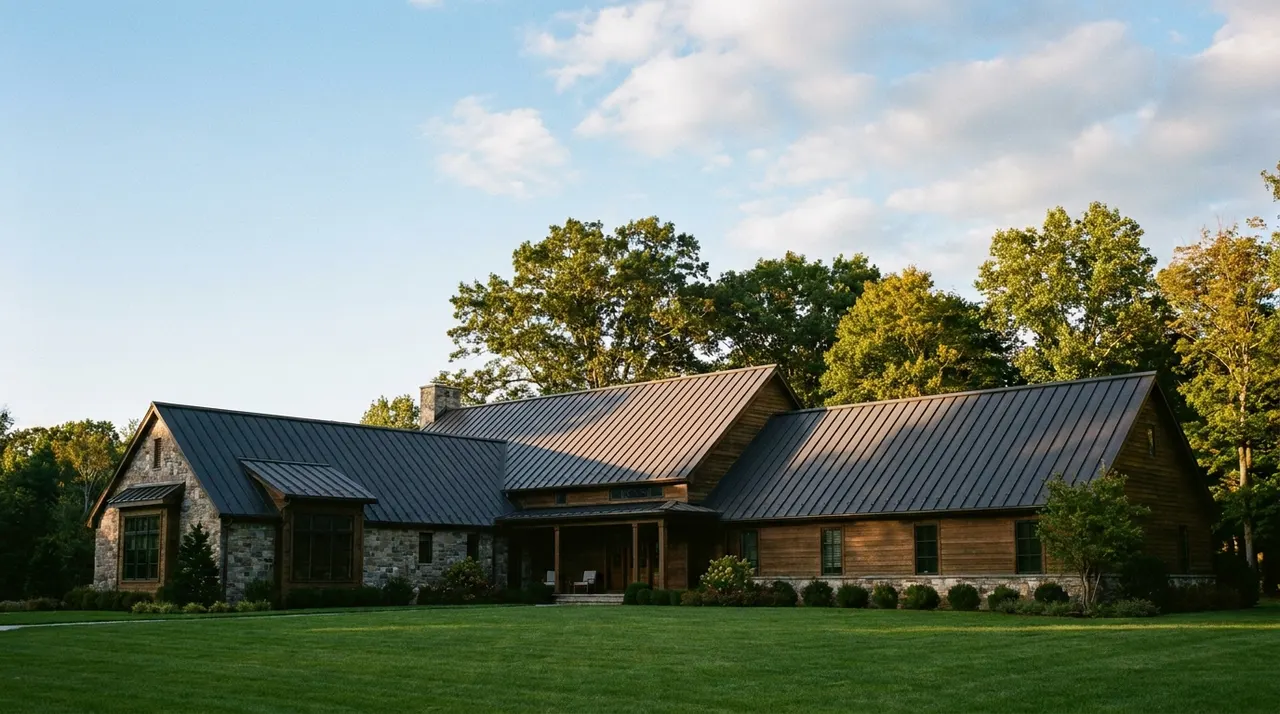
A metal roof installed on a house — over solid decking, over underlayment, with an insulated attic under it — is not meaningfully louder in the rain than asphalt shingles. The loud metal roof people remember is a barn, a shed, a carport or a porch overhang: bare panels screwed straight to open framing with nothing but air between the metal and your ears.
That difference is the whole answer. The panel is the thinnest, least important part of what you hear. What decides rain noise is everything stacked underneath it.
Why metal roofs got the reputation for being loud
Almost everyone who says a metal roof is loud is describing a building where the metal was the only layer. Agricultural and utility buildings use exposed-fastener panels screwed to purlins — horizontal framing members spaced a couple of feet apart — with nothing in between. Rain hits the panel, the panel vibrates, and the sound goes straight into an open, uninsulated space that reflects it back.
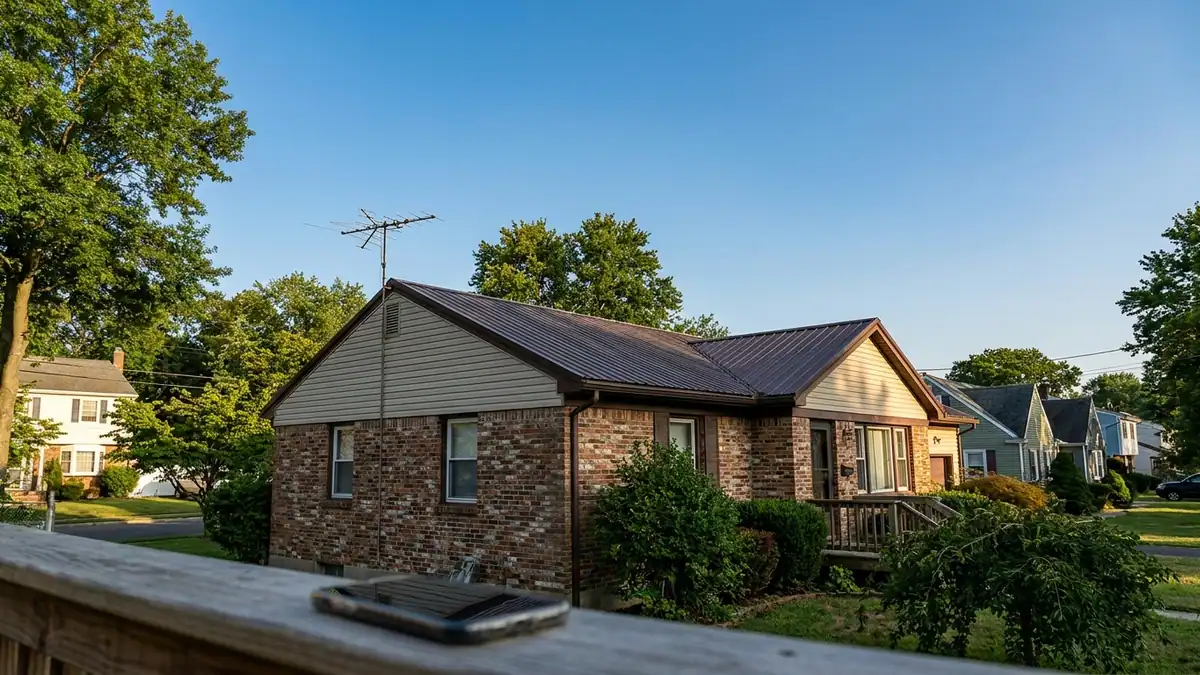
A residential roof is not built that way. In New Jersey a metal roof goes over the same plywood or plank decking that carried the shingles, with underlayment between the deck and the panel, and in most houses a vented attic with insulation on the floor below that. Each of those layers takes energy out of the sound before it reaches a room.
If you have only ever heard rain on a pole barn, you have not heard a residential metal roof.
The layers that actually decide how much you hear
Think of the roof as a sequence of layers, from the sky down. Each one matters more than the one above it.
- The panel. Metal, steel or aluminum, a fraction of an inch thick. It moves when a raindrop hits it. On its own it makes noise.
- The underlayment. A synthetic or self-adhered membrane over the deck. A self-adhered membrane bonded directly to the plywood adds damping the panel does not have on its own.
- The decking. Solid plywood or board sheathing. This is the single biggest change from a barn roof. Instead of vibrating over open air, the panel is separated from the interior by a continuous rigid layer.
- The attic air space. Distance is the cheapest sound reduction there is.
- The insulation on the attic floor. Depth and mass here absorb what got through. A house with a thin, patchy insulation layer will hear more of everything — including rain on asphalt shingles.
- The ceiling. Drywall below the attic, which reflects and blocks.
By the time rain has gone through six layers, what reaches a bedroom is a soft, broad sound rather than an impact.
Where the decking matters most
If your existing decking is soft, delaminated or broken in places, it gets replaced before the new roof goes on regardless of noise — it will not hold a fastener. But it also affects sound, because a solid, well-fastened deck does not resonate the way a loose or damaged one does. This is one reason the condition of the deck belongs in the written estimate rather than being discovered on the day.
Where the attic matters most
The rooms where homeowners notice metal roof noise are the ones with no attic above them: a finished room under a cathedral ceiling, a converted attic, a dormer bedroom, an addition with the roof deck directly over the ceiling. In those spaces the number of layers drops from six to two or three, and rain becomes audible on any roofing material. That is a good conversation to have before you pick a system, not after.
How different metal systems compare for sound
| Assembly | Where you find it | Rain noise inside |
|---|---|---|
| AssemblyExposed-fastener panel on open purlins | Where you find itBarns, sheds, carports, porch roofs | Rain noise insideLoud — this is the sound people remember |
| AssemblyExposed-fastener panel over solid decking | Where you find itSome outbuildings, some houses | Rain noise insideQuiet; close to shingles with an attic below |
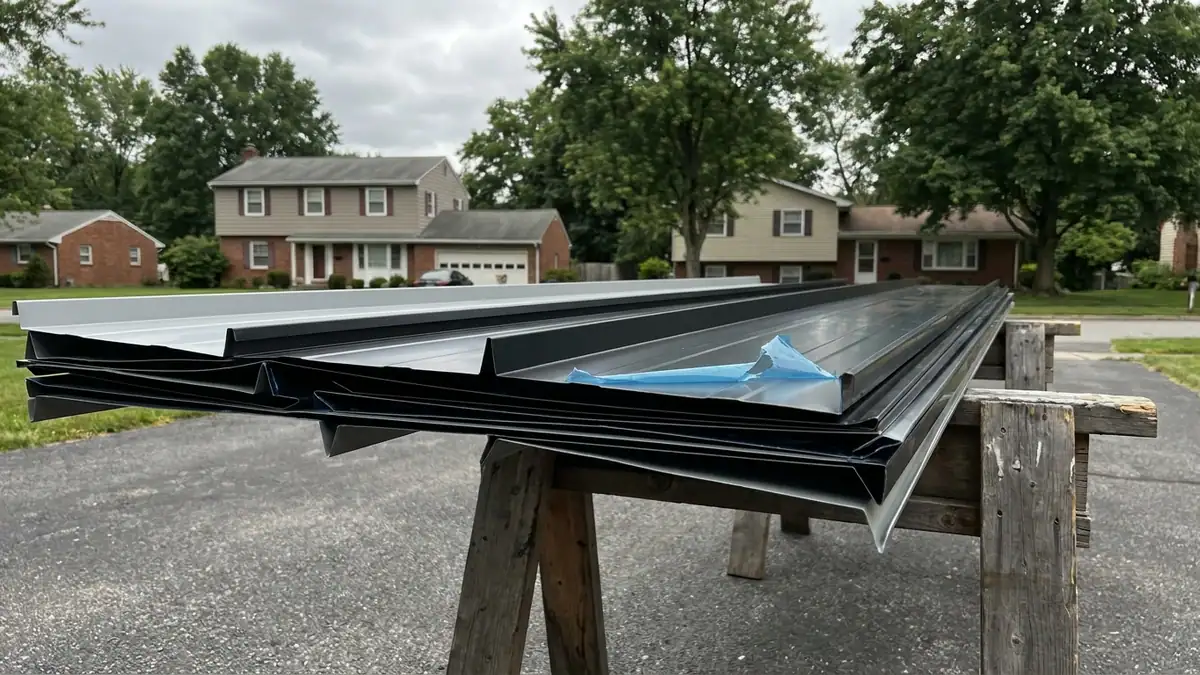
| AssemblyStanding seam over decking and underlayment | Where you find itResidential | Rain noise insideQuiet; clip attachment also reduces movement noise |
| AssemblyMetal shingles over decking and underlayment | Where you find itResidential, traditional-looking homes | Rain noise insideQuiet; more overlaps, no meaningful difference in rain |
The useful line in that table is the top row against every row below it. The gap between an open-framed panel and a decked one is far larger than the gap between any two residential metal systems. The choice between panel styles is about appearance, roof lines and detailing, not noise — the standing-seam metal roofing guide covers those trade-offs in detail.
Noises a metal roof makes that are not rain
Rain is the question people ask. Thermal movement is the one they should ask about.
Metal expands when it heats and contracts when it cools, and a roof in New Jersey does that every clear day of the year. If panels are fastened rigidly so they cannot slide, that movement shows up as ticking or popping in the afternoon and again after sunset. Standing seam systems use concealed clips specifically so the panel can move against the deck without binding. That is a detail of installation, not of the material, and it is worth asking a contractor to explain how the panels are attached.
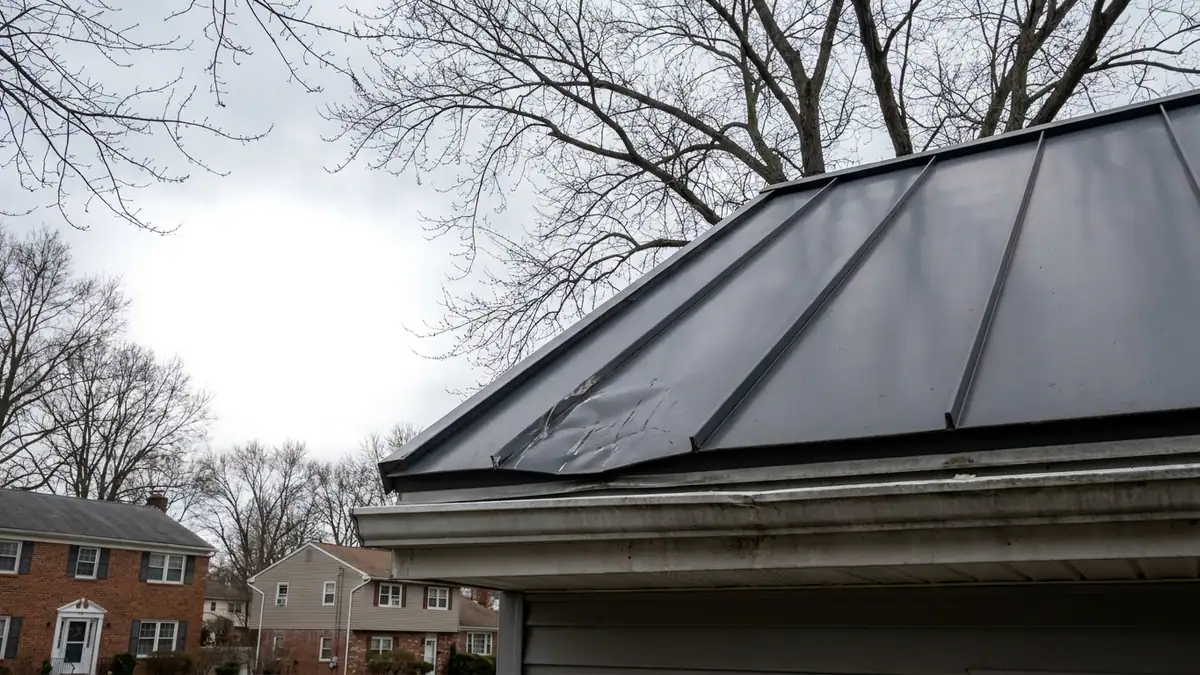
Hail is louder on metal than on asphalt, honestly. It is a short event, a few times a life of the roof in most of the state, and the trade-off is that a metal panel handles impact and wind better than a shingle does. Wind itself is quieter on metal than people expect, provided the edges, hems and eave details are installed tight — loose trim at a rake or a ridge is what rattles.
What to ask for in writing before you sign
Noise is decided by things that either appear in the estimate or do not. Ask for these on paper:
- The decking condition and what gets replaced, priced.
- The underlayment type, and where a self-adhered membrane is used versus a synthetic.
- The panel attachment method — concealed clips or exposed fasteners.
- Any rooms without an attic above them, and how the roof is detailed over them.
- Ventilation at the ridge and soffit, which affects deck temperature and the movement noise that comes with it. The attic ventilation guide explains why that matters year-round.
If you are still weighing the two materials generally, cost and life expectancy usually decide it rather than sound — the asphalt vs. metal comparison lays that out side by side.
Getting a straight answer for your house
The honest version is this: on a standard New Jersey house with an attic, metal will not change what you hear in the rain. On a house with finished space directly under the roof deck, you should expect to hear more weather than a neighbor with an attic does, on any roof, and the assembly should be designed with that in mind.
Lightning Construction installs standing seam, metal shingle and panel systems across all 21 New Jersey counties. The inspection and written estimate are free and no-obligation — a salesperson comes to the house, looks at the decking, the attic and the rooms under the roof, and puts a number in writing. There is no deposit, nothing is due until the work is finished and you have inspected it, and there are no change orders, because the conditions that normally cause one are found at the inspection and priced into the quote. Lightning pulls the permit from your municipality and attends the inspection under the New Jersey Uniform Construction Code. Plan on two to four days for standing seam.
You can see the full scope of the work on the metal roofing page or request a free estimate.