Short answer
The finish system matters more than the color itself, because a PVDF paint holds its color and gloss far longer than a polyester-based one on the same panel. Pick the color against the fixed materials on your house — brick, stone, and the trim you are not replacing — and view large samples outdoors at different times of day. A dark metal roof does get hot, but with proper attic ventilation and a reflective pigment it is a workable choice in New Jersey.
On this page
- Paint systems: PVDF versus SMP
- What fading and chalking actually look like
- Choosing a color against brick, stone and existing siding
- Do dark metal roofs make a New Jersey house hotter?
- Gloss, texture and profile change how a color reads
- How to actually pick the color
- Getting the color and the finish specified in writing
The finish on a metal roof matters more than the color you pick, because the paint system decides how long that color survives on a New Jersey roof. Two panels can look identical in the showroom and look nothing alike after a decade of sun, and the difference is which resin the coating is built on.
Here is what actually drives the decision, in the order it should drive it.
Paint systems: PVDF versus SMP
Metal roof panels are coil-coated at the factory, not painted on site. The coating is baked onto the steel or aluminum before it is formed into a panel, and there are two families of coating in residential use.
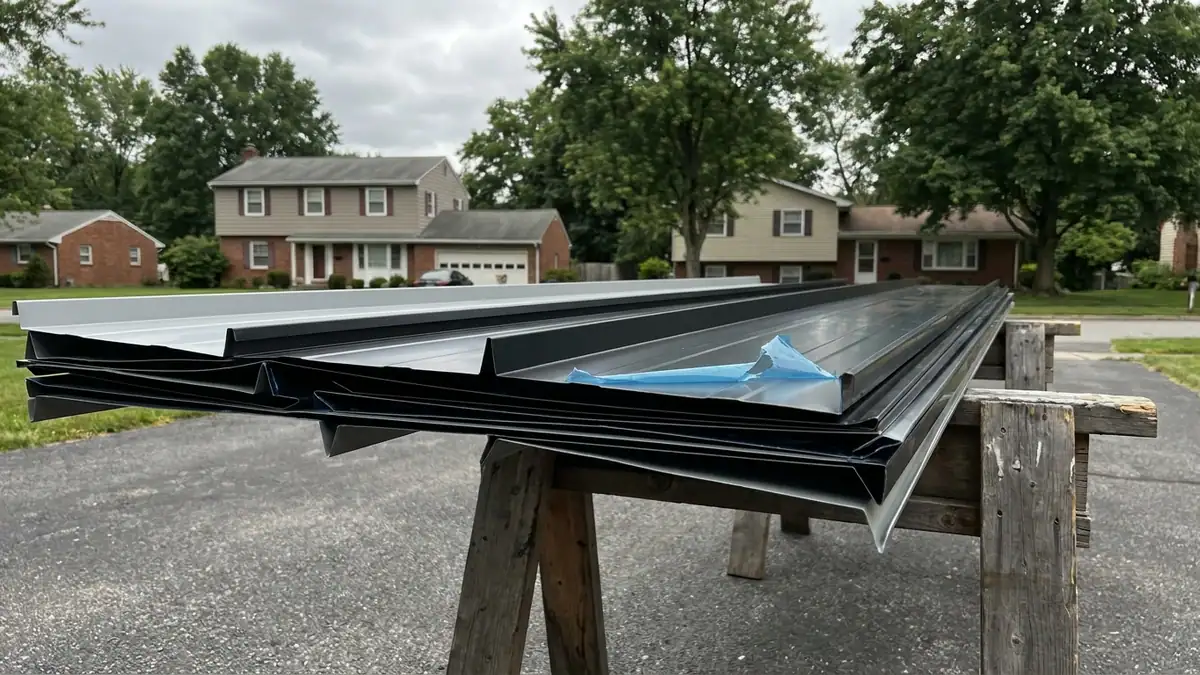
PVDF, often sold under the Kynar 500 or Hylar 5000 trade names, uses a fluoropolymer resin. It resists ultraviolet breakdown, holds gloss, and chalks slowly. It is the standard on architectural standing seam.
SMP, silicone-modified polyester, is harder and more scratch-resistant out of the box but breaks down faster in sunlight. It is common on agricultural and budget panel systems.
| PVDF (Kynar/Hylar) | SMP | |
|---|---|---|
| Resin | PVDF (Kynar/Hylar)Fluoropolymer | SMPSilicone-modified polyester |
| Color and gloss retention | PVDF (Kynar/Hylar)Best available in residential metal | SMPNoticeably shorter |
| Chalking | PVDF (Kynar/Hylar)Slow | SMPFaster, especially on dark and saturated colors |
| Scratch hardness | PVDF (Kynar/Hylar)Softer surface | SMPHarder surface |
| Typical use | PVDF (Kynar/Hylar)Architectural standing seam, metal shingles | SMPExposed-fastener panels, outbuildings |
| Cost | PVDF (Kynar/Hylar)Higher | SMPLower |
If a quote does not say which coating is on the panel, ask. On a roof with a 50-plus year material life, spending the money on the panel and saving it on the paint is the wrong trade.
What fading and chalking actually look like
Two different things happen to a painted metal roof over time, and homeowners often lump them together.
Fade is pigment loss. The color shifts lighter or duller. Manufacturers measure it in Delta E units and publish a limit in the finish warranty.
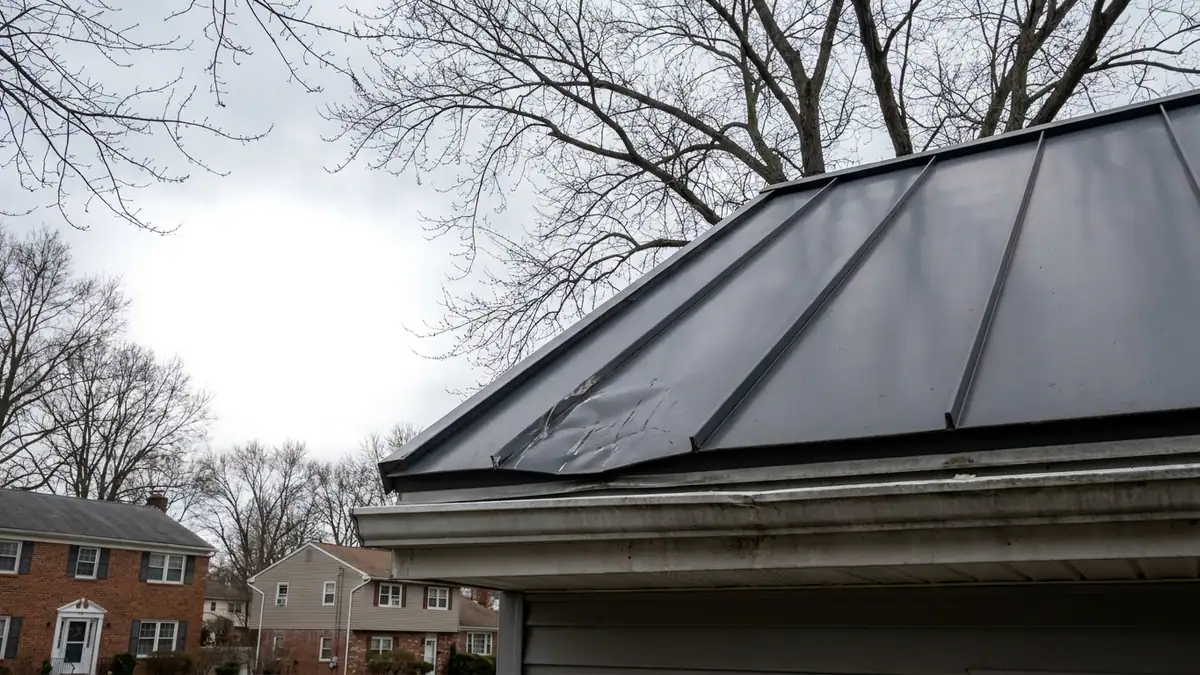
Chalk is resin breakdown at the surface. It shows up as a fine white powder that dulls the panel and streaks down it after rain. Chalking is measured on its own scale and warranted separately from fade.
Some colors are harder on the coating than others regardless of the system. Bright reds, saturated blues and deep greens use pigments that are inherently less stable in sunlight. Grays, blacks, bronzes, charcoals and earth tones are the most durable performers. If you want a strong color, the finish system choice stops being optional.
Ask for the manufacturer's finish warranty document itself, not a summary. It will state the fade and chalk limits, whether it is prorated, and what is excluded — coastal exposure within a set distance of salt water is a common exclusion, and that matters along the Jersey Shore. The standing-seam metal roofing guide covers the system side of that decision in more depth.
Choosing a color against brick, stone and existing siding
The roof is the largest single plane on most houses, but it is rarely the material you should design around. Choose it against whatever you are not replacing.
Brick
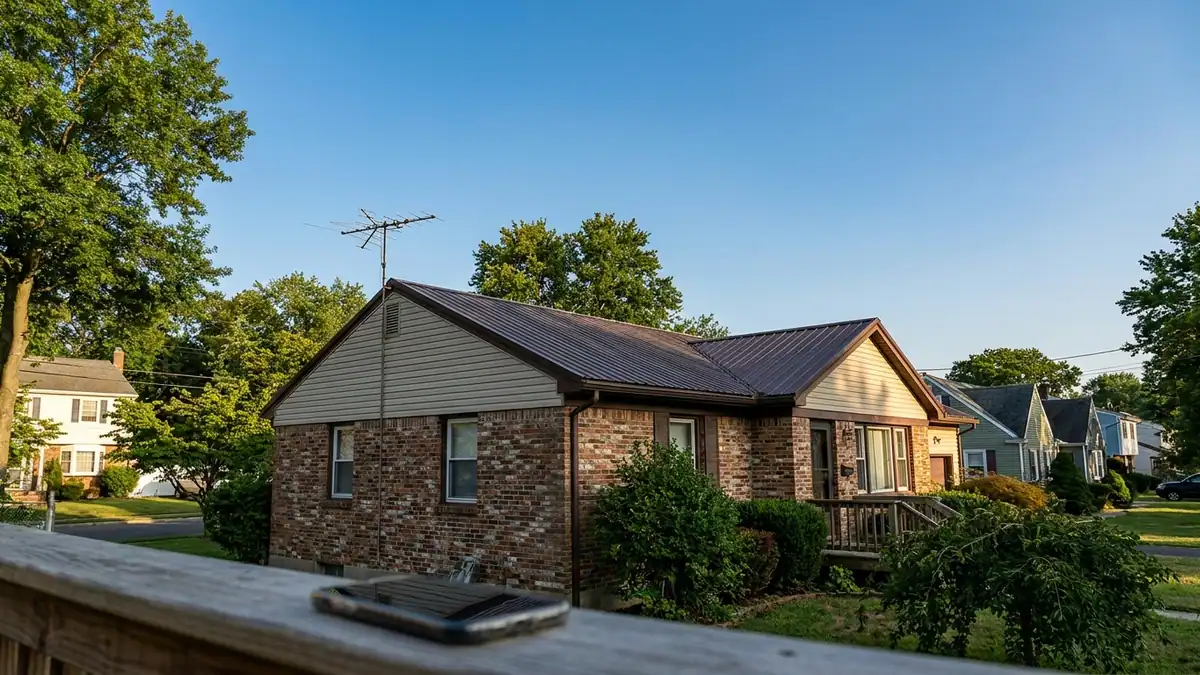
Red brick carries orange and pink undertones that clash with warm browns and fight with true reds. Charcoal, black and darker grays sit against red brick without competing. Bronze works when the brick runs more brown than red. Hold the sample against the actual wall — brick color varies enough between batches and eras that a general rule fails on specific houses.
Stone
Fieldstone and cultured stone usually contain gray, tan and rust together, which gives you more room. Pull the roof color from the least dominant tone in the stone rather than trying to match the dominant one. Matching exactly reads as a mistake; relating clearly reads as deliberate.
Vinyl and fiber cement siding
If the siding stays, the roof has to work with it in full sun and in shade, because vinyl in particular shifts noticeably between the two. If the siding is also being replaced, pick the roof first. There are far more siding colors available than roof colors, so the roof is the harder constraint.
Trim, gutters and fascia
Roof panels, gutter coil and trim coil are separate products with separate color systems. A bronze roof and a bronze gutter are not automatically the same bronze. Decide at the estimate which components are matched and which are a stated contrast, and get it written down.
Do dark metal roofs make a New Jersey house hotter?
A dark roof absorbs more solar energy than a light one. That part is simple physics and no finish changes it.
What changes the outcome is two things. First, many dark metal colors are made with reflective infrared pigments, which reflect a large share of the heat-carrying part of sunlight while still reading as dark to the eye. Second, metal has very low thermal mass. It heats fast, but it also gives up that heat quickly once the sun moves off it, instead of holding it into the evening the way a thick dark asphalt roof does.
The part that actually decides whether your second floor is comfortable is the air gap and the attic. A vented standing seam assembly with continuous intake at the soffit and exhaust at the ridge moves hot air out from under the panel. Without balanced ventilation, no roof color saves you. That is worth reading up on in the attic ventilation guide before you argue about color at all.
If anyone tells you a particular roof color earns you a federal tax credit, do not take their word for it. Confirm current programs with a tax professional.
Gloss, texture and profile change how a color reads
The same color looks different depending on how the panel is finished and formed.
- Low gloss hides oil-canning — the slight waviness visible in flat metal — better than high gloss, and looks less industrial on a house.
- Matte and textured finishes scatter light and read softer, which suits older New Jersey housing stock better than a mirror-like panel.
- Standing seam creates strong vertical shadow lines every 16 to 18 inches, and those shadows darken the perceived color of the whole roof. A midtone gray panel can read nearly charcoal on a steep plane.
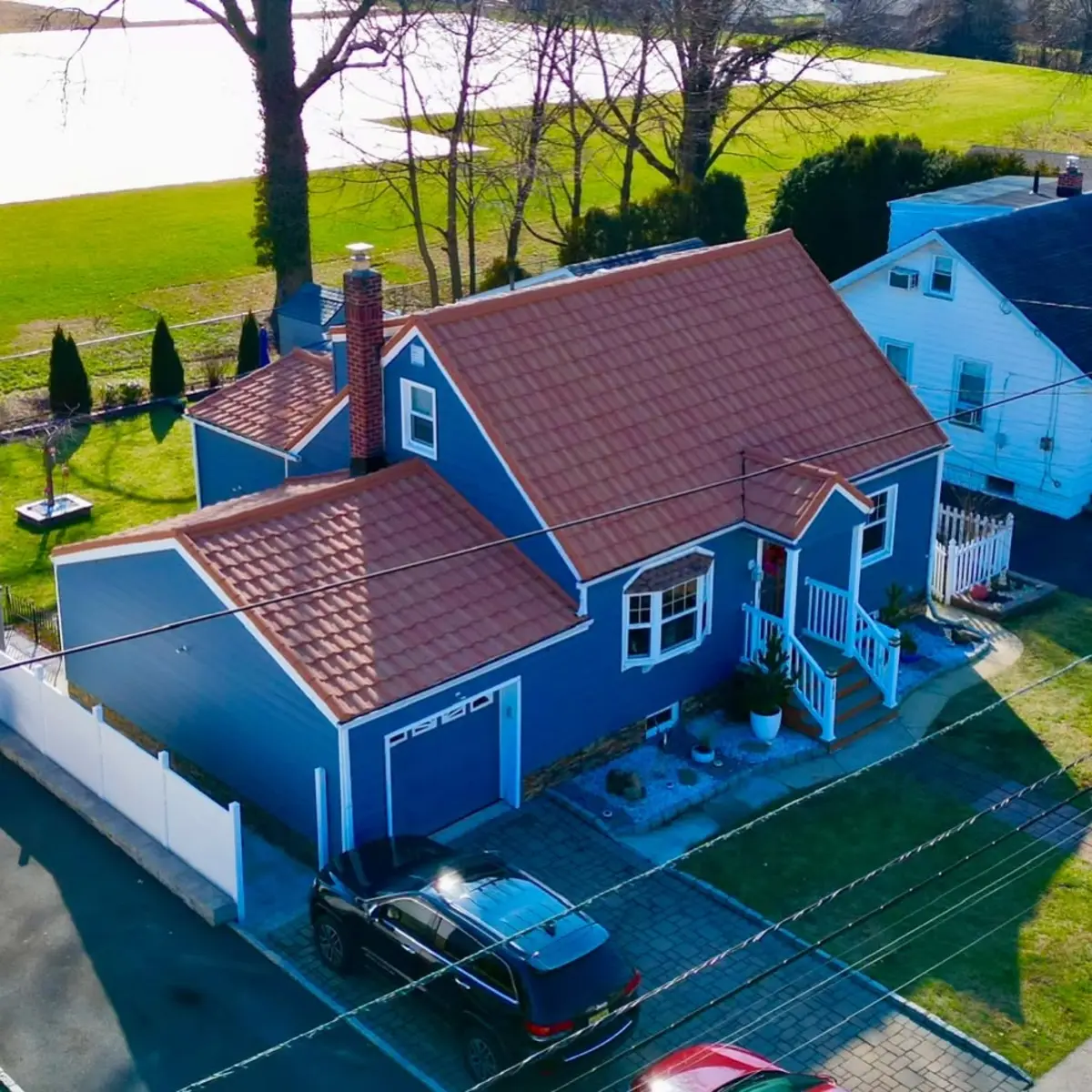
- Metal shingles break the plane into small units, which lightens the perceived color and reads more traditional. The trade-off between the two profiles is covered in the asphalt versus metal comparison.
Roof pitch matters too. On a steep roof you see the plane from the street and the color dominates the house. On a low-slope roof you barely see it, and the color choice is largely for the neighbors and anyone with a second-story window.
How to actually pick the color
- Get large painted metal samples, not a printed color chip. Printed cards are not accurate and do not show gloss.
- Hold each sample flat against the house near the roof line, at the angle the roof sits, not upright on the ground.
- Look at them three times in a day — morning, midday and late afternoon — and once on an overcast day.
- Check them against the fixed materials: brick, stone, stonework on the chimney, front door surround, driveway.
- Narrow to two, then leave them outdoors on the house for a few days before choosing.
- Confirm in writing the exact color name, the coating system, and the color of every trim, ridge cap and gutter component.
If your municipality has a historic district or your neighborhood has an association, check for a color list before you get attached to something. Lightning pulls the permit either way, but an association approval is on you.
Getting the color and the finish specified in writing
Lightning Construction installs standing seam, metal shingle and panel systems across all 21 New Jersey counties and 544 municipalities. Metal roofing runs $18,000-$35,000 in standard-value towns, $28,000-$55,000 in higher-value towns, and $45,000-$120,000 on large or luxury homes, with the band set by the municipality's median home value. Standing seam takes two to four days on site.
The inspection and the written estimate are free and carry no obligation, and a salesperson comes to the house — bring the color question to that visit, with your brick and stone in front of you. There is no deposit, nothing is due until the work is finished and you have inspected it, and there are no change orders, so the written number is the final number. Lightning pulls the permit and attends the municipal inspection under the New Jersey Uniform Construction Code.
See the full scope of the work on the metal roofing page, or request a free estimate and get samples in your hand.