Short answer
Gutter heat cable melts a narrow drainage channel through ice at the roof edge so meltwater has somewhere to go. It helps on a roof where the ice keeps coming back and the real cause cannot be fixed cheaply, such as a finished cathedral ceiling with no attic to insulate. It hides a problem when it is used instead of fixing air leakage, insulation, ventilation or gutters that no longer drain, because the ice dam is still forming and the water is still finding a way in.
On this page
Gutter heat cable works, but only at the one job it actually does. It melts a narrow channel through ice at the roof edge and down the downspout so meltwater coming off the upper roof has a path off the house instead of backing up under the shingles. It does not stop an ice dam from forming, it does not reduce the heat loss that created the dam, and it does not fix gutters that no longer drain.
That distinction is the whole decision. On a house where the cause is fixable, cable is a workaround you will be paying for every winter. On a house where the cause is not reasonably fixable, cable is the honest answer.
What gutter heat cable actually does
An ice dam forms when heat escaping from the living space warms the roof deck above the heated part of the house. Snow on that warm section melts, the water runs down to the cold overhang past the exterior wall, and it refreezes there. The ice builds up along the eave, water pools behind it, and because shingles shed water rather than seal against standing water, that pool finds the nail holes and the laps and gets into the house.
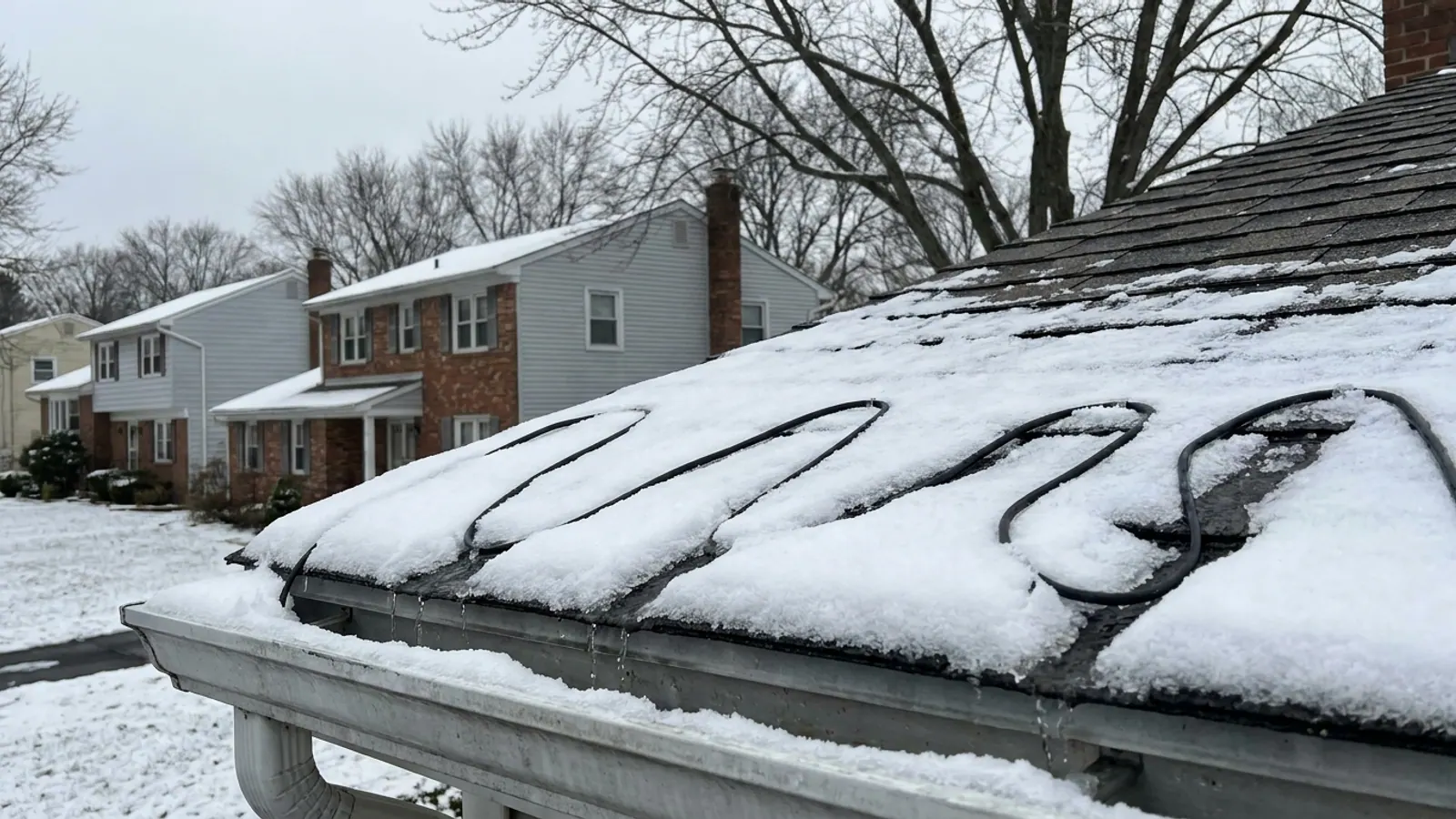
Heat cable is a resistance or self-regulating element you run in a zigzag along the lowest courses of shingle, through the gutter, and down the downspout. Energized in icing conditions, it opens a continuous melted channel from the roof surface through the gutter and out the bottom of the leader. The dam stays. The water drains.
That is useful. It is also a much smaller promise than most homeowners think they are buying. The full mechanism of why New Jersey roofs ice up, and the order to attack it in, is covered in the ice dams guide.
When heat cable is the right call
There are real cases where cable is the sensible option:
- A cathedral or vaulted ceiling with no accessible attic above it, where adding insulation and a vent channel means opening the ceiling or rebuilding the roof assembly.
- A short problem section only, such as one north-facing eave below a dormer valley that dumps snowmelt into a two-foot gutter run.
- A low-slope porch or addition roof tucked under a taller wall, where drifting and shade keep ice there after the main roof has cleared.
- A house where the attic work is already scheduled but you need to get through this winter without water in a bedroom ceiling.
- An eave over a walkway or a basement stair, where the hazard is falling ice and standing water on concrete, not a leak.
In those cases, cable is not a cover-up. It is the cheapest thing that works on a roof geometry that is not going to change.
When heat cable is hiding a problem
Cable is hiding a problem any time it is sold as a substitute for one of these four things.
Air leakage into the attic. Recessed lights, bath fans vented into the attic instead of outside, open chases around plumbing stacks, and a gappy attic hatch all push warm, moist air straight onto the underside of the deck. That is the heat melting your snow.
Insulation that stops short at the eave. Batts shoved tight into the eave block the vent path and leave the top plate of the exterior wall uninsulated. The warmest strip of roof ends up right where the overhang begins.
Ventilation that does not move air. Intake at the soffit and exhaust at the ridge keep the deck close to outside temperature. Painted-shut soffit panels, blocked baffles, or a ridge vent with no intake feeding it all produce a warm deck. The attic ventilation guide explains how the intake and exhaust have to be balanced to do anything.
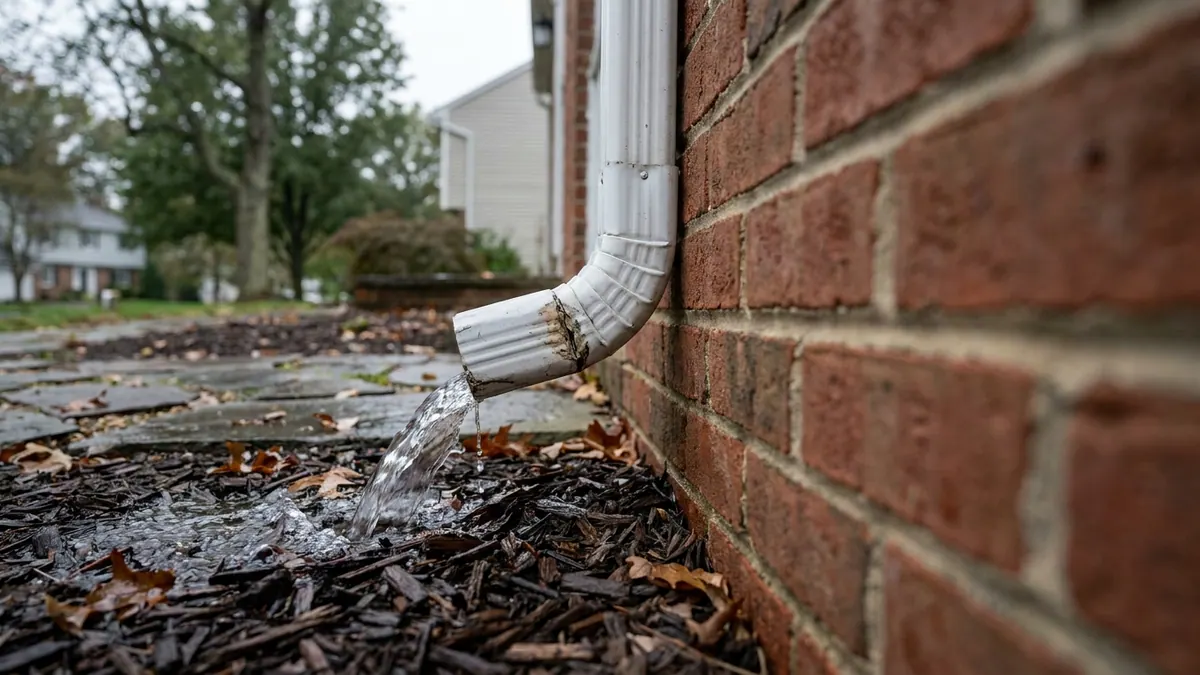
Gutters that cannot drain. This is the one that gets mistaken for an ice problem most often. A gutter pitched flat or backward holds water year round. In December that standing water freezes first, the trough fills with ice, and the next melt has nowhere to go. Running cable through a gutter that holds water is pointless, because you are melting ice into a container with no outlet.
Heat cable compared with fixing the cause
| Gutter heat cable | Air sealing, insulation and ventilation | |
|---|---|---|
| What it addresses | Gutter heat cableThe ice already formed at the edge | Air sealing, insulation and ventilationThe heat that forms the ice |
| Up-front cost | Gutter heat cableLower, plus an electrician for the circuit | Air sealing, insulation and ventilationHigher, and sometimes requires opening finished space |
| Ongoing cost | Gutter heat cableElectricity every icing event, cable replaced as it ages | Air sealing, insulation and ventilationNone after the work is done |
| Needs you to remember something | Gutter heat cableYes, it has to be energized before the storm | Air sealing, insulation and ventilationNo |
| Helps in summer | Gutter heat cableNo | Air sealing, insulation and ventilationYes, a vented attic runs cooler |
| Effect on gutters | Gutter heat cableNeutral at best, debris trap if installed loose | Air sealing, insulation and ventilationNeutral |
| Right choice when | Gutter heat cableNo attic exists above the problem area | Air sealing, insulation and ventilationThere is an attic to work in |
How heat cable should be installed if you use it
- Fix the drainage first. The gutter has to be clean, pitched to the outlet, and solidly hung, or the cable has nothing to drain into.
- Map the run to the problem, not the whole house. Cable belongs where ice actually forms, typically the lowest two to three feet of roof plus the valley above it.
- Clip the cable to the shingle edge with the manufacturer's clips. Never nail or screw through a shingle to hold cable. Every fastener is a hole in the roof covering.
- Carry it into the gutter and all the way down the downspout to the discharge point. A cable that stops at the top of the leader melts water into a frozen pipe.
- Have a licensed electrician run a dedicated, GFCI-protected exterior circuit. Extension cords through a window are a fire and shock problem, and electrical work is permitted work under the New Jersey Uniform Construction Code.
- Add a thermostat or moisture-sensing control. Cable left on all winter costs money for nothing; cable switched on after the ice is already two inches thick does nothing either.
Check the gutters before you buy cable
Before spending anything on heat cable, have someone look at the roof edge in daylight and tell you what it is doing. The things that matter are whether the gutter holds water when it is clean, whether the hangers are still tight to the fascia, whether there is a gutter apron or drip edge directing water into the trough instead of behind it, and whether the fascia behind the gutter is soft. A gutter that is sagging, seam-split or pitched wrong will keep producing ice no matter how much cable you hang on it.
Re-pitching, seamless aluminum replacement, guards and downspout work are all part of what Lightning Construction does on gutters. Gutter work in New Jersey runs $1,200 to $3,500 in standard-value towns, $2,500 to $6,500 in higher-value towns, and $4,000 to $12,000 on large or luxury homes, with the band set by the municipality's median home value from ACS 2024 five-year estimates. Keeping the trough clear through the fall is what keeps the winter manageable, and the gutter maintenance guide lays out the seasonal order.
What to do next
Get the roof edge and the attic looked at together, because that is the only way to tell whether you have an ice problem or a drainage problem. The inspection and the written estimate are free with no obligation, and a salesperson does come to the house. There is no deposit, nothing is due until the work is finished and you have inspected it, and there are no change orders, because the conditions that normally trigger one are found at the inspection and priced into the quote. Lightning pulls the permit and attends the municipal inspection on the work it does.
If the gutters are the reason ice keeps forming at your eaves, start there. Book a free estimate and get the drainage right before you wire anything to the roof.