Short answer
A ceiling water stain means water has been sitting above that drywall, but it does not prove the water came through the roof. Roof leaks, failed flashing, ice dams, attic condensation, a plumbing line and an HVAC condensate pan all leave the same brown ring. The location, the shape and the timing tell you which one you have, and an attic look from underneath usually settles it in ten minutes.
On this page
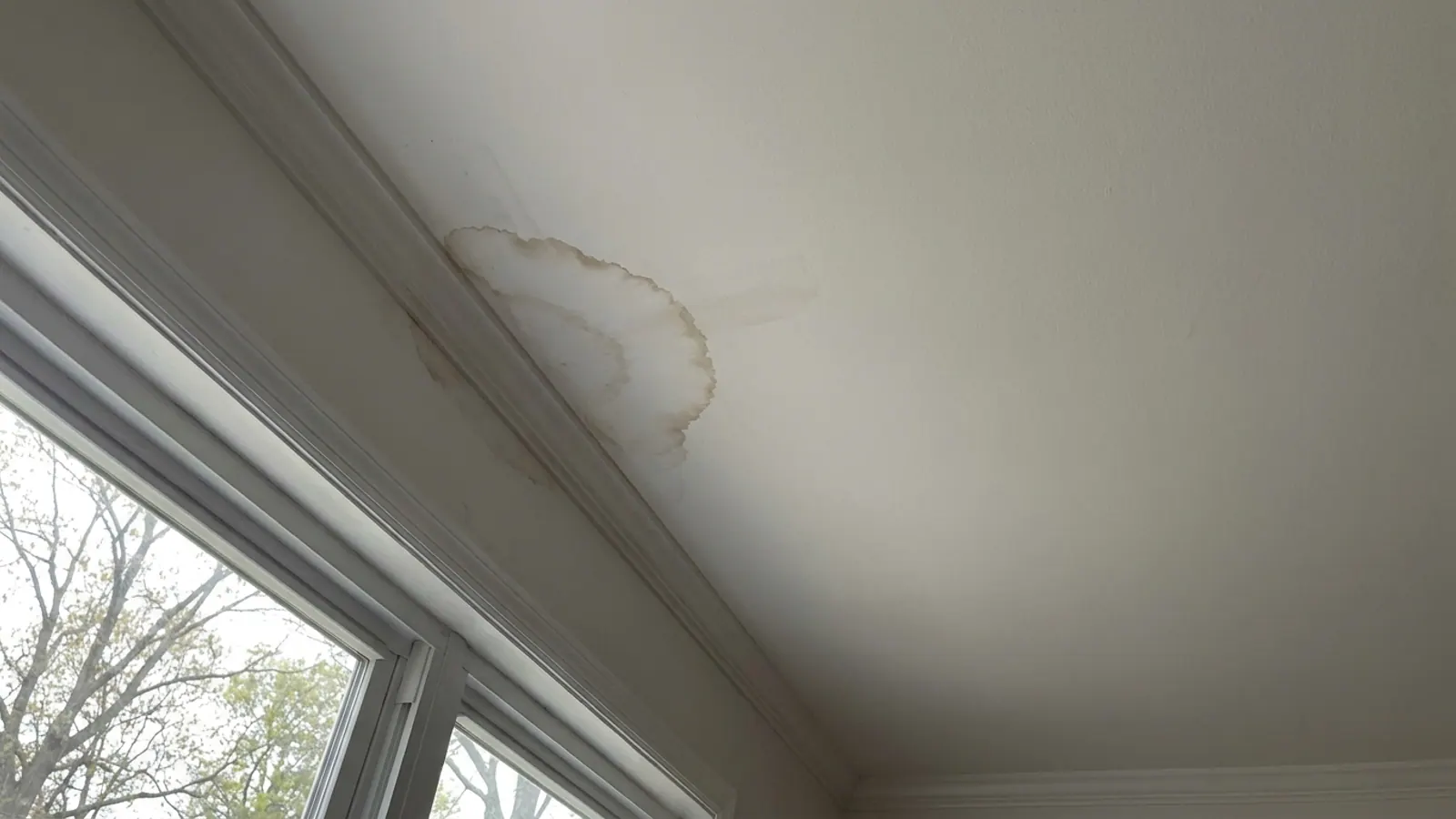
A brown ring on your ceiling means water sat above that drywall long enough to carry dissolved dirt and tannins to the painted surface. It does not tell you where the water came from. Roof leaks, failed flashing, ice dams, attic condensation, a supply line in a wall and a clogged air conditioning condensate pan all produce the same stain, and homeowners regularly pay for roof work when the problem was a $40 pan or a $12 vent boot.
Before you call anyone, you can narrow it down considerably yourself.
What the ceiling stain actually proves
It proves three things and nothing more: water was present, it came from above, and it has been there long enough to dry at least once. That is why the ring has a dark outer edge. Each wetting cycle pushes the water out to a new perimeter and leaves minerals behind when it dries, so a stain with several concentric rings has been wet on several separate occasions.
What the stain does not prove is location. Water entering a roof at a chimney corner runs down the underside of the plywood, follows the low edge of a rafter, and drops off wherever the framing stops it, which can easily be eight or ten feet away and on the other side of a room. Chasing the leak from directly above the stain is the most common wasted afternoon in this trade.
The five things that cause ceiling stains in New Jersey houses
A roof leak at a penetration or flashing point
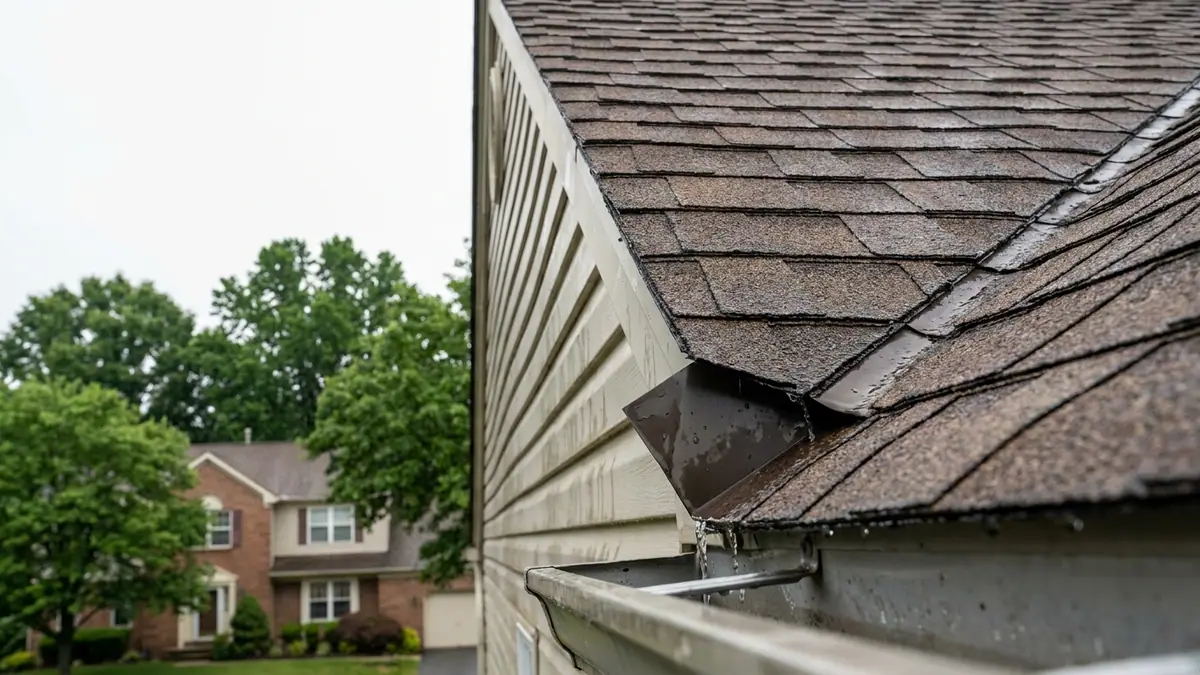
Most roof leaks are not holes in the field of the shingles. They are at the joints: chimney flashing, sidewall step flashing, valleys, plumbing vent boots and skylight curbs. The rubber collar on a plumbing vent boot cracks and splits after roughly a decade of sun, and that failure alone accounts for a large share of the ceiling stains found in bathrooms and hallways.
The tell is timing. The stain darkens or grows during or shortly after rain, especially wind-driven rain from one direction, then stops.
An ice dam from the previous winter
If the stain first appeared in January or February, sat near an exterior wall, and has not moved since, an ice dam is the likely cause. Snow melts over the warm part of the roof, refreezes at the cold overhang, and the backed-up water gets under the shingles and into the wall or ceiling below. The roof can be in decent shape and still do this, because the real cause is heat and air leaking into the attic. The ice dam guide covers the fix, which is insulation, air sealing and ventilation more often than shingles.
Attic condensation
A stain that appears in cold weather with no rain, spread over a wide area rather than a defined drip point, is usually condensation. Warm moist air from the house reaches a cold roof deck, condenses on the underside of the plywood, and rains back down onto the insulation and ceiling. Look at the nail points in the attic on a cold morning. Frost on the nails is condensation, not a leak. Undersized or blocked intake at the soffit is the usual reason, and attic ventilation is where that gets solved.
Plumbing
A second-floor bathroom directly above the stain changes the odds completely. Supply lines drip whether or not it is raining. Drain and shower pan leaks show up only after someone uses that fixture. Run the shower for ten minutes with a flashlight pointed at the ceiling below and you will often see it.
HVAC condensate
Air handlers in attics produce condensate all summer. When the pan rusts through or the drain line clogs with algae, the water goes into the ceiling. The signature is a stain that grows in July and August on humid days and does nothing in the rain.
How to tell which one you have
| What you notice | Most likely cause |
|---|---|
| What you noticeStain grows during or right after rain | Most likely causeRoof leak at flashing, a vent boot or a valley |
| What you noticeOnly after wind-driven rain from one side | Most likely causeSidewall or chimney flashing, or siding above the roof line |
| What you noticeAppeared in deep winter, near an outside wall | Most likely causeIce dam |
| What you noticeWide, diffuse, cold weather, no rain | Most likely causeAttic condensation |
| What you noticeWorst on hot humid days, no rain involved | Most likely causeHVAC condensate pan or drain line |
| What you noticeComes and goes with fixture use, ceiling under a bathroom | Most likely causePlumbing |
What to do the day you find it
- Photograph it with something in frame for scale, and note the date. If this turns into an insurance conversation, the timeline matters.
- Outline the stain in pencil. Any growth past that line tells you the source is still open.
- Move furniture and put a container under it. A ceiling holding a pocket of water can let go all at once.
- Go into the attic with a flashlight and look at the underside of the decking above the stain, then uphill from it. Look for dark streaks on the wood, rusted nails, matted insulation and water tracks along rafters.
- If drywall is sagging or bulging, poke a small relief hole at the low point and drain it into a bucket. A controlled hole beats a collapsed ceiling.
- Do not paint anything until the source is fixed and the board is dry.
When it is a repair and when the roof is finished
One stain, one entry point, and a roof with shingles that still lie flat and hold their granules is a repair. Flashing gets replaced, the boot gets replaced, the ceiling gets patched, and you move on.
Several stains in different rooms is a different conversation. So is a roof where the shingles are curling at the corners, the granules are collecting in the gutters, and the decking feels soft underfoot. At that point you are patching a system that is failing in several places at once, and the signs you need a new roof guide lays out the line between the two honestly. Age alone is not the deciding factor. What the attic looks like is.
What happens when Lightning comes out
The inspection is free, there is no obligation, and a salesperson does come to the house. The crew looks at the roof surface and every flashing point, then goes in the attic, because the attic is where a ceiling stain gets diagnosed. You get photos of what was found and a written estimate.
If the answer is a repair, that is what gets quoted. If it is a replacement, the conditions that normally cause a price to change mid-job — extra shingle layers, rotted decking, flashing that cannot be reused — are found at that inspection and priced into the estimate, so there are no change orders later. There is no deposit; nothing is due until the work is finished and you have inspected it. Lightning pulls the permit from your municipality's construction office under the New Jersey Uniform Construction Code and attends the inspection. Most asphalt roof replacements are torn off and finished in a single day.
If you have a stain on your ceiling and you want to know what is actually behind it, look at our roofing work and then book the free inspection. Finding it early is the difference between one flashing repair and a rotted section of decking.