Short answer
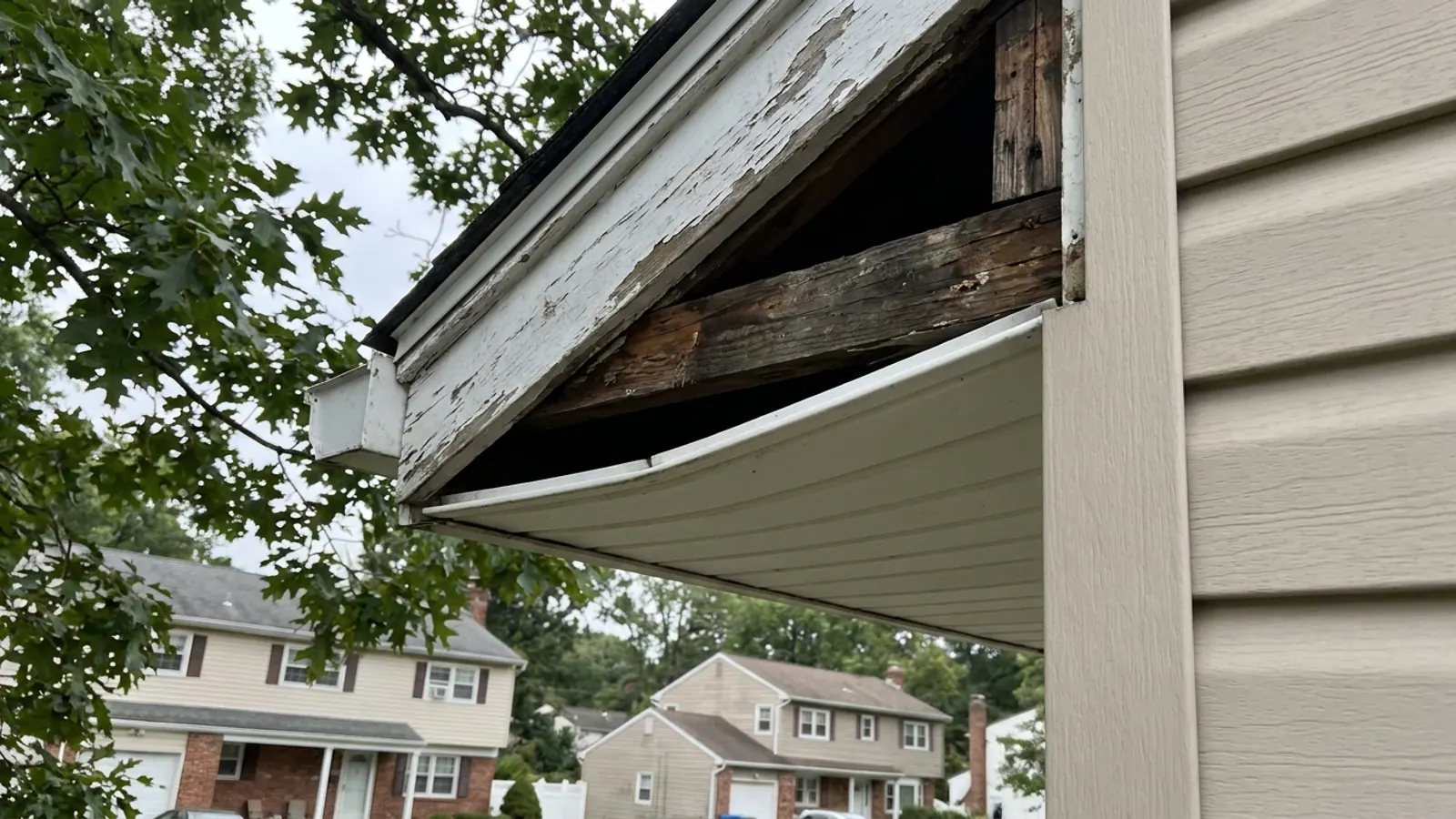
Animals get in at the roof edge, through a soffit panel that has dropped out of its channel, a rotted fascia board, a lifted drip edge or an unscreened gable vent. Closing it up permanently means removing the animals first, then rebuilding the wood and the panel so the opening no longer exists, not stuffing the hole with foam or wire. Cost depends on how much of the eave is rotted, and that is settled at the free inspection and written into the estimate.
On this page
Animals get into your roof at the edge. Not through the field of shingles, and almost never through the ridge. They get in where the roof plane stops and the soffit, fascia and gutter take over, because that is the only place on the house where there is a horizontal wood board, a lightweight panel and a cavity behind it all in the same eight inches.
Once you know that, the whole problem gets simpler. You are not chasing an animal. You are finding the opening, figuring out what rotted or slipped to create it, and rebuilding that assembly so the opening no longer exists.
Where animals actually get into a New Jersey roof
Four places account for nearly all of it.
The soffit panel that dropped out of its channel
Vinyl and aluminum soffit sits in a J-channel against the wall and a receiver behind the fascia. It is held by friction and a few fasteners. When the fascia board behind it softens, the receiver loosens, and a panel end drops half an inch. Squirrels widen that. From the ground it reads as a shadow line. From a ladder it is an open door into the soffit cavity, and from there into the attic over the top plate of the wall.
Rotted fascia at a gutter corner
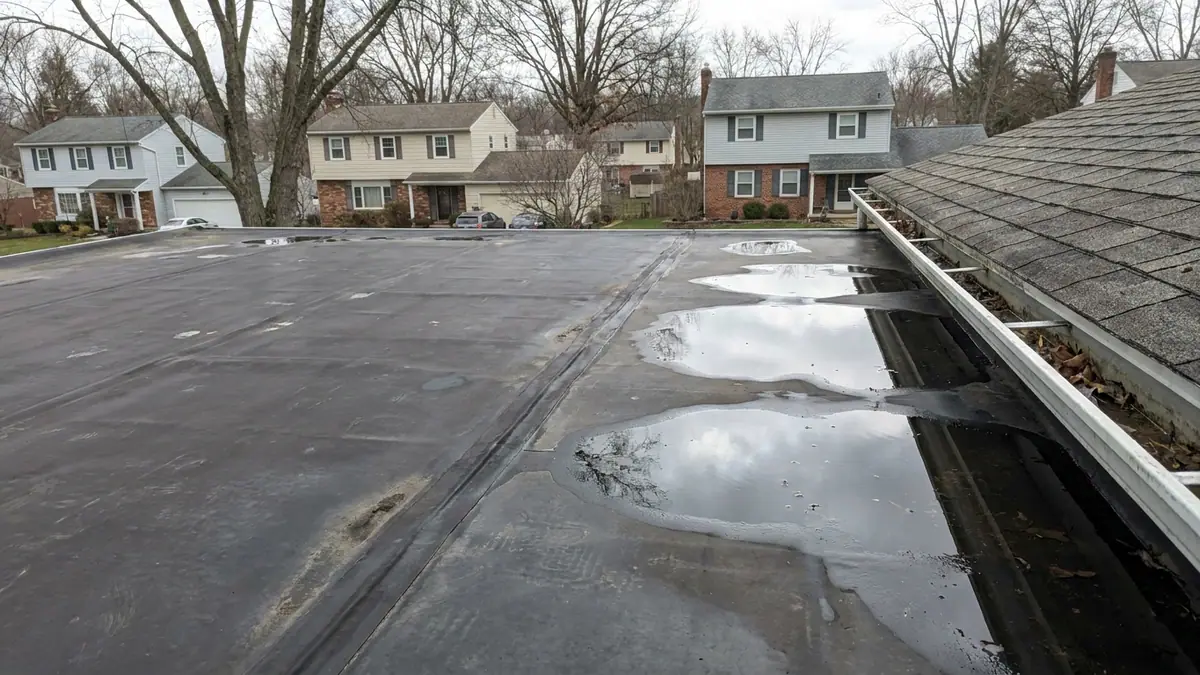
Fascia rots where water sits against it. That means behind a gutter with a bad pitch, at an inside corner where two runs meet, and under a valley that dumps a whole slope into two feet of gutter. Soft fascia is the single most common entry point, and it is the one that keeps coming back if you replace the board without fixing the water. If the gutters are overflowing, re-pitching them or moving to correctly sized seamless aluminum gutters is part of the repair, not a separate job you do later.
The roof-to-wall junction where a lower roof meets an upper wall
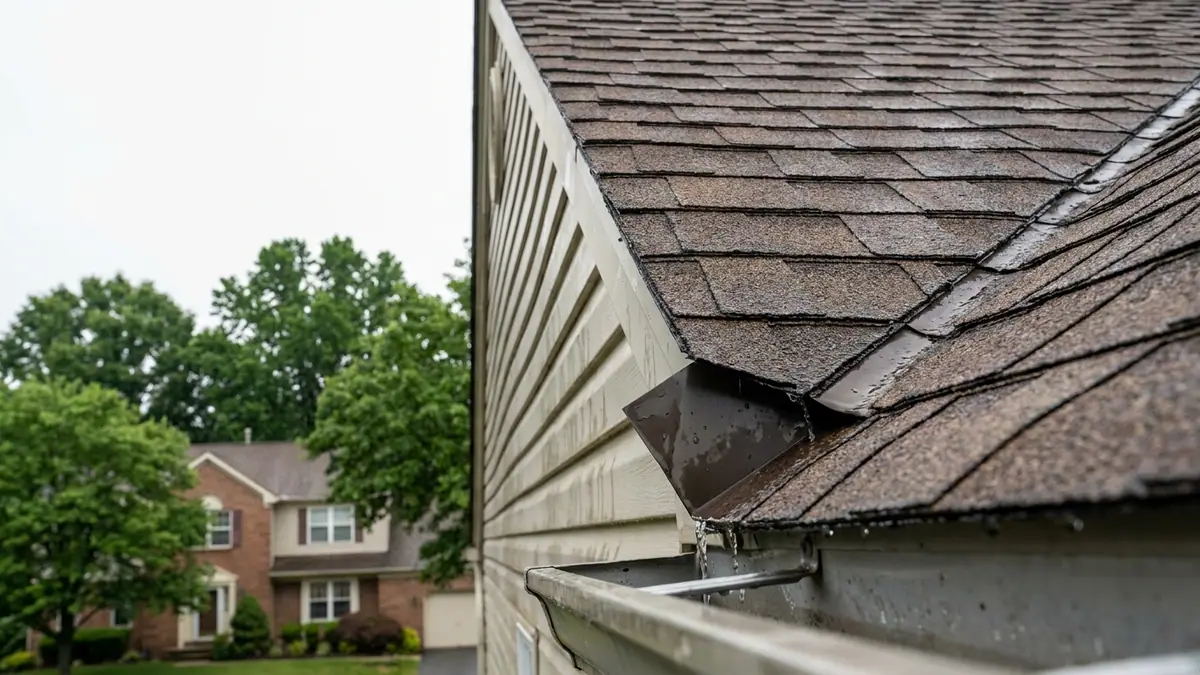
On split levels, colonials with a garage return and any house with a dormer, the lower roof runs into a wall and the shingles stop under step flashing. The end of that run, where the roof edge meets the wall corner, is a triangular gap unless it was closed with flashing and trim. Starlings and squirrels both find it.
Gable vents and unscreened ventilation
A louvered gable vent with a broken screen is a wide-open hole. So is a ridge vent with a damaged end plug, a bath fan that terminates in the soffit with a flap that no longer closes, and an unscreened attic fan housing.
What each animal does once it is in
| Animal | Typical entry | What it damages | What the repair involves |
|---|---|---|---|
| AnimalGray squirrel | Typical entryChewed or pushed soffit edge, rotted fascia | What it damagesChewed rafter tails and wiring, compressed insulation, urine-soaked ceiling drywall | What the repair involvesRebuild fascia and soffit, screen intake, repair the water source |
| AnimalStarlings and sparrows | Typical entrySoffit gap, gable vent, bath fan termination | What it damagesNest material blocking soffit intake, mites, fire risk at fan ducts | What the repair involvesClear the cavity, new screened vent or fan termination, close the gap |
| AnimalBats | Typical entryGaps at drip edge, ridge, roof-to-wall junction | What it damagesGuano accumulation, odor, contaminated insulation | What the repair involvesProfessional exclusion first, then seal every gap over three-eighths of an inch |
| AnimalRaccoons | Typical entryTorn soffit panel, lifted roof edge on a low porch roof | What it damagesRipped decking edge, torn underlayment, large openings | What the repair involvesDeck and edge repair, new drip edge, rebuilt trim |
Bats are the one to be careful with. They are protected, exclusion work is restricted during the summer maternity season, and the removal has to be done by a licensed New Jersey wildlife control operator. Nesting birds carry their own protections. Confirm the rules with a licensed operator before anyone touches the opening.
Remove first, close up second — never the other way around
The order matters more than the materials.
- Have a licensed wildlife control operator identify the entry points and confirm what is living up there.
- Let them remove the animals or install one-way exclusion devices and verify the cavity is empty.
- Have the contaminated insulation and nesting material removed and the cavity cleaned.
- Then have the roofing and trim repair done, so the opening is permanently gone.
- Correct the water problem that rotted the wood — gutter pitch, drip edge, valley, flashing — or the same board rots again.
Skipping step two is how homeowners end up with an animal chewing a new hole three feet away, or dying inside a wall.
What the carpentry actually looks like
A real close-up is not foam and hardware cloth. On a typical eave repair the crew pulls the soffit panels back, cuts out the rotted section of fascia to the nearest rafter tail, sisters or replaces the tail if it is chewed, installs new fascia, resets or replaces the soffit in a proper receiver, and reinstalls the gutter on new hangers with correct pitch. Where the roof edge is involved, that means new drip edge under the underlayment at the rakes and over it at the eaves, which is the detail that stops wind-driven water from getting behind the fascia in the first place.
Soffit, fascia and trim are siding work on most houses, and the roof edge above them is roofing work. On a single eave they are the same repair, which is why the inspection needs to cover both at once instead of two trades pointing at each other.
What it costs to close up
There is no flat price, and anyone who gives you one over the phone has not seen the eave. The cost tracks three things: how many linear feet of fascia are rotted, whether the rafter tails and roof decking edge are chewed or sound, and whether the gutters and drip edge have to be corrected to stop the water.
A short section of eave is a repair. A whole run of soffit and fascia that has been wet for years is closer to a trim and soffit replacement, and if the roof edge and decking are gone with it, you are having a conversation about the roof rather than the eave. Full asphalt roof replacements in New Jersey run $9,000 to $22,000 in standard-value towns, $14,000 to $35,000 in higher-value towns, and $25,000 to $60,000 for large or luxury homes, with the band set by the municipality's median home value from ACS 2024 five-year estimates.
The useful part at Lightning Construction is that the number does not move. The free inspection is where rotted decking, chewed rafter tails, bad flashing and extra shingle layers get found and priced in, so the written estimate is the final price. There are no change orders and no deposit — nothing is due until the work is finished and you have inspected it. Lightning pulls the permit and attends the municipal inspection under the New Jersey Uniform Construction Code when the scope requires one. An estimate appointment is free and genuinely no-obligation, and a salesperson does come to the house.
Closing the gap without choking the attic
One warning. The eave is also where your attic breathes. Solid-sealing a soffit to keep squirrels out kills the intake air that the ridge vent depends on, and an attic with exhaust and no intake gets hot in July and grows frost in January. The repair should use vented soffit panel with intact insect screening, keep the baffles at the top plate clear of insulation, and screen any gable vent that stays in service. If the attic already runs hot or damp, read the attic ventilation guide before the panels go back up, because that is the moment to fix it.
What to do next
Go outside on a bright morning and look up at the eave line from the corners of the house, not from directly underneath. You are looking for a soffit panel out of line, a dark slot behind the gutter, staining on the fascia, and shredded material on the ground below. Then check the attic at the eaves for daylight, droppings and matted insulation.
If you find an entry point, call a licensed wildlife control operator first. Once the cavity is empty, book a free inspection and written estimate so the wood, the roof edge and the drainage get fixed together and the opening does not come back next fall.