Short answer
Two houses on the same block almost never have the same roof, so the quotes are rarely comparable. Roof area, pitch, the number of valleys and penetrations, how many shingle layers are up there, and the condition of the decking all move the number before anyone talks about shingle color. The rest of the gap usually comes down to what each contractor put in writing and what they left out.
On this page
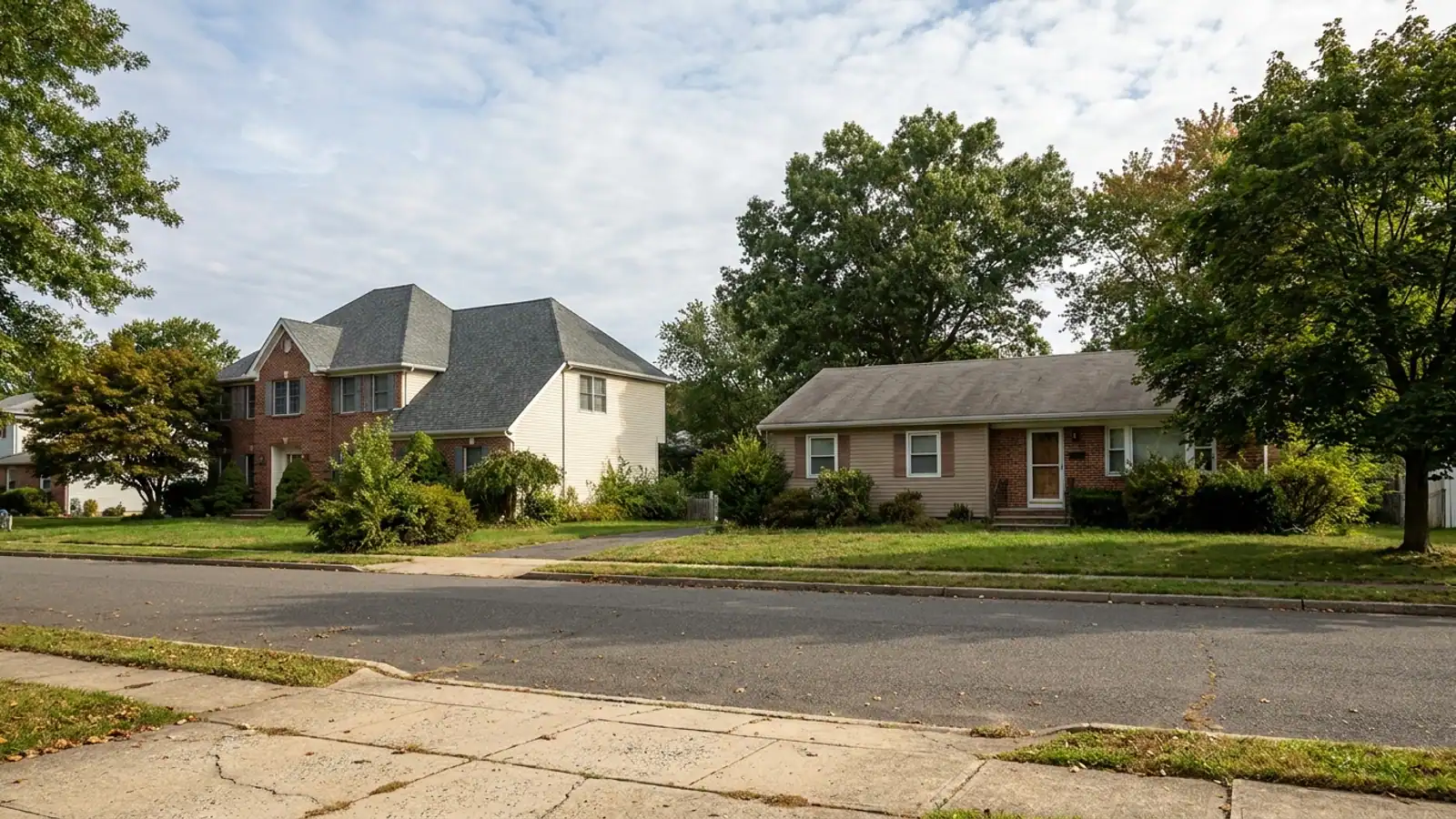
Two houses on the same street are almost never the same roof. Your neighbor's quote is different because the area, the pitch, the number of valleys, the layers up top and the condition of the wood underneath are different at each address, and because the two written estimates probably do not cover the same work. Before you decide one of you got a better deal, find out which of those things you are actually comparing.
Here is what moves a New Jersey roofing number, in roughly the order of how much it moves it.
Roof area is not the same as house square footage
A 2,000-square-foot ranch and a 2,000-square-foot colonial have very different roofs. The ranch spreads its whole floor area under one roof plane. The colonial stacks two floors, so the roof covering it can be close to half the size. Two houses that look similar from the curb can differ by several squares of material and a full crew-hour of labor.
Overhangs, attached garages, porch roofs and rear additions all add area that nobody counts when they eyeball a house from the sidewalk. If your neighbor added a family room off the back in 1998 and you did not, their roof is bigger and their quote should be.
Pitch and complexity cost more than area
Steep roofs cost more per square than shallow ones, every time. Above a certain pitch the crew works on roof jacks and planks instead of walking the slope, which slows tear-off, slows loading and slows installation. Anything steep enough to require staging also changes how material gets onto the roof.
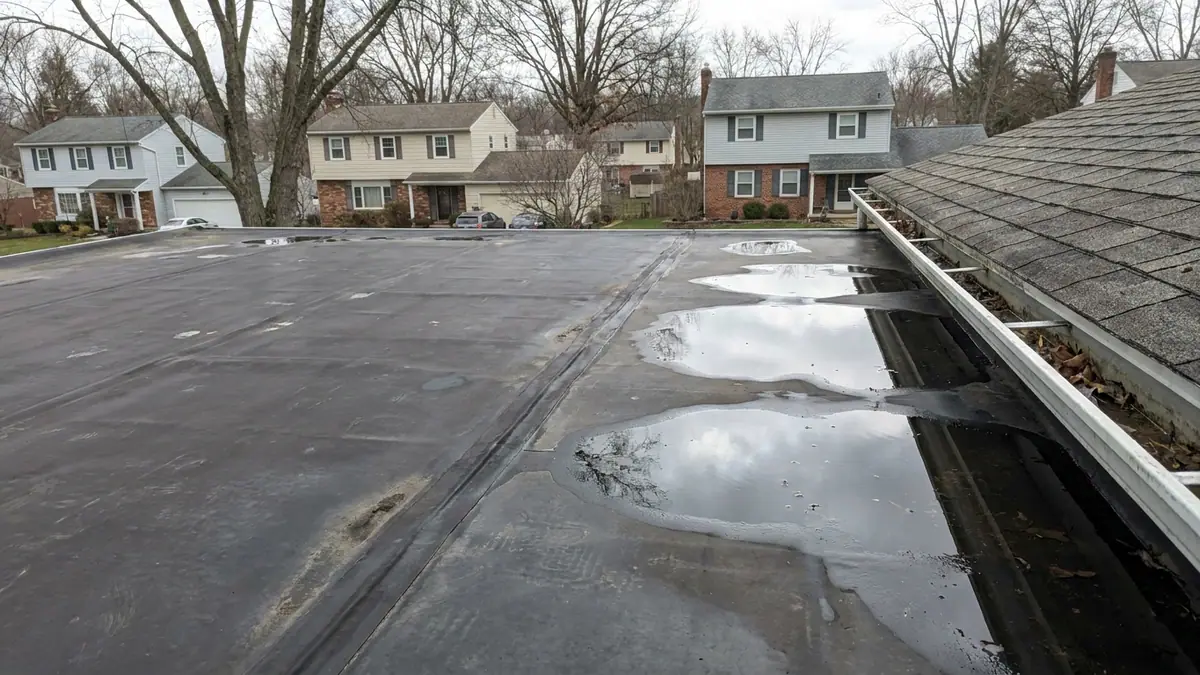
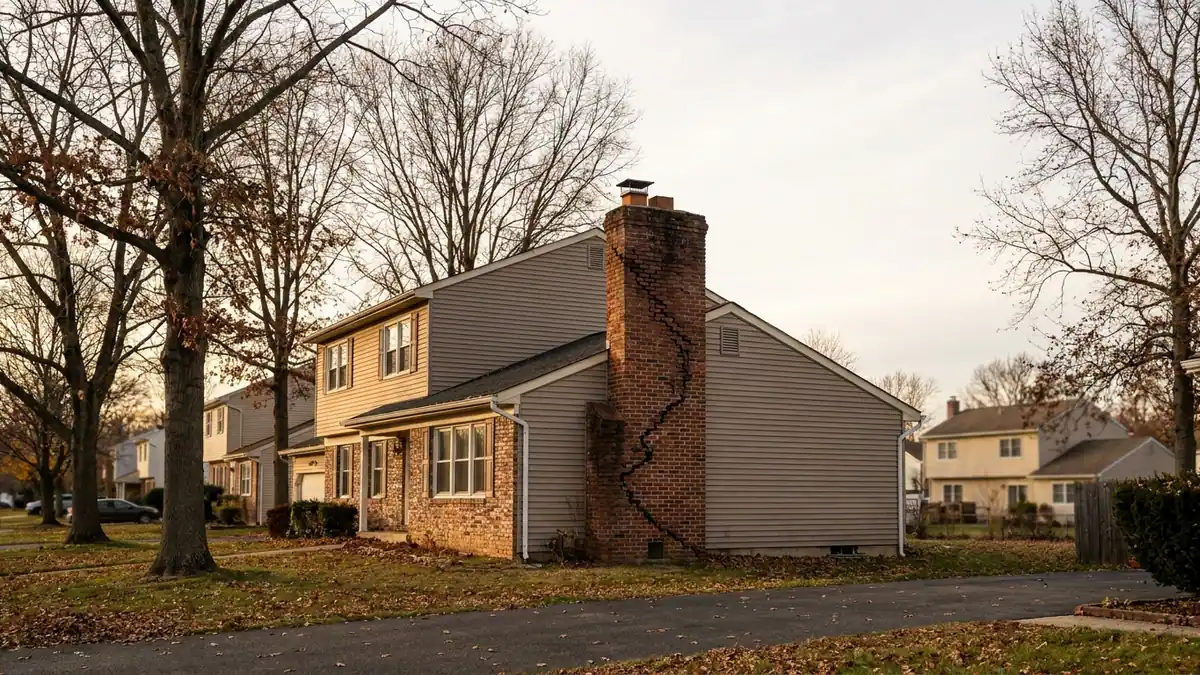
Complexity is the other half of it. A simple gable roof with two planes and one ridge is the cheapest shape to replace. Every hip, valley, dormer, chimney, skylight and plumbing stack adds cut waste, adds detail labor, and adds a place that has to be flashed correctly. A cut-up multi-gable roof can carry noticeably more labor than a plain roof of the same area, and valley work in particular is where the hours go. If your neighbor's house is a straightforward ranch and yours has three dormers and a chimney, the two quotes were never going to land in the same place.
What is under the shingles is different at each house
Two things hide under the surface and both change the price.
The first is layers. A roof carrying two layers of asphalt takes longer to strip, produces roughly twice the debris, and needs more disposal. That is real cost and it is the single most common reason a quote written from the ground turns out to be wrong.
The second is decking. Plywood or plank sheathing that has been wet at the eaves, under a bad valley, or around an old chimney flashing goes soft and stops holding a nail. It has to be cut out and replaced. Whether your neighbor's roof needed six sheets and yours needed none is not something either of you controls, and it is not something a contractor can guess from the driveway. It is found by getting on the roof and into the attic.
This is exactly the gap Lightning closes at the free inspection. Extra layers, bad decking and failed flashing are identified before the estimate is written and priced into it, because there are no change orders — the written estimate is the final price. The 10 signs you need a new roof guide covers what those conditions look like from your side of the ladder.
Your town sets the starting band
Lightning's New Jersey ranges are banded by the municipality's median home value, using ACS 2024 five-year estimates. Most asphalt replacements run $9,000-$22,000 in standard-value towns and $14,000-$35,000 in higher-value towns, with large or luxury homes at $25,000-$60,000. Metal is its own set of ranges, starting around $18,000.
If you and your neighbor are in the same municipality, that band is identical for both of you and it explains nothing about the gap. If one of you got a quote on a house in a different town, it explains a lot. The New Jersey roof cost guide lays out the bands and what pushes a job to the top or bottom of one.
The two quotes may not cover the same work
This is where most of the difference actually lives. Price means nothing without scope. Line the two estimates up against this list.
| Line item | The complete version | The version that quotes low |
|---|---|---|
| Line itemOld roof | The complete versionFull tear-off to the decking | The version that quotes lowShingles laid over the existing roof |
| Line itemDecking | The complete versionDamaged sheathing replaced, priced up front | The version that quotes lowNot mentioned, or billed later |
| Line itemIce and water shield | The complete versionAt eaves, valleys and penetrations | The version that quotes lowSkipped or reduced to a token strip |
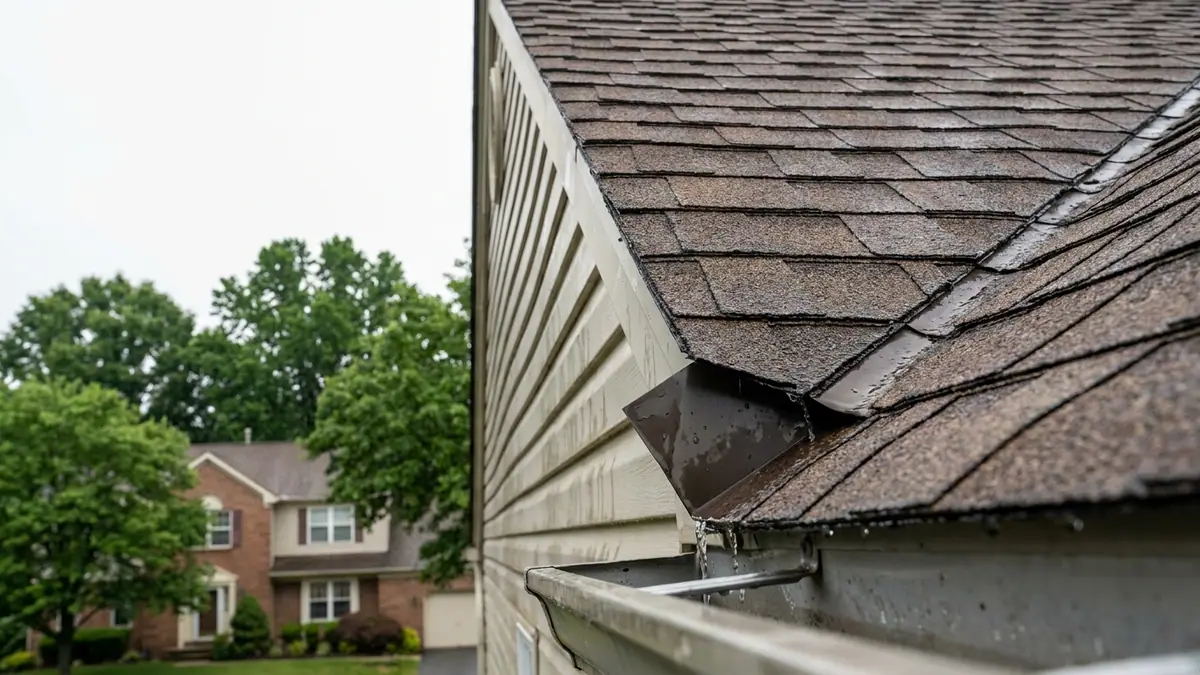
| Line itemFlashing | The complete versionNew step, chimney and valley metal | The version that quotes lowOld flashing reused and caulked |
| Line itemDrip edge | The complete versionNew metal at eaves and rakes | The version that quotes lowOmitted |
| Line itemVentilation | The complete versionIntake and exhaust addressed | The version that quotes lowOld vents reinstalled as-is |
| Line itemPermit | The complete versionPulled by the contractor, inspection attended | The version that quotes lowLeft to the homeowner, or skipped |
| Line itemCleanup | The complete versionDebris hauled, property swept for nails | The version that quotes lowVague |
A quote that reuses flashing and skips drip edge will always be cheaper than one that does not. It is not a better deal; it is a smaller job. Reused step flashing is one of the most common reasons a replacement leaks at a sidewall two winters later.
Shingle line matters too, though less than people expect. An architectural shingle upgrade changes the material cost and the warranty terms, not the labor. GAF shingles explained covers what actually changes between lines.
What to ask before you compare totals
- Ask both contractors how many squares they measured and how they measured it. Two numbers that differ by more than a square mean somebody guessed.
- Ask what happens if there is a second layer or rotted decking. A price for it should already be in the contract, not promised for later.
- Ask who pulls the permit and who meets the inspector. Lightning pulls it from your municipality's construction office under the New Jersey Uniform Construction Code and attends the inspection; you file nothing. The roof permit guide explains why that matters at resale.
- Ask for the New Jersey Home Improvement Contractor registration number and proof of insurance. Lightning's is 13VH12437000, and the company is licensed and insured and GAF Certified.
- Ask when money is due. Lightning takes no deposit — nothing is due until the work is finished and you have inspected it.
What to do next
Stop comparing your quote to your neighbor's and start comparing quotes on your own house, line by line. Get a written estimate that names the tear-off, the decking, the ice and water shield, the flashing, the ventilation, the permit and the cleanup, so you know what the number buys.
Lightning Construction's inspection and written estimate are free with no obligation, and a salesperson does come to the house — that is a straight sales appointment, and there is nothing to pay to have it. Most asphalt replacements are torn off and finished in a single day. See the roofing service page for what a replacement includes, or request an estimate and get the number for your roof rather than the one next door.