Short answer
Sometimes, but it is a smaller saving than homeowners expect and the color almost never matches. Replacing one elevation makes sense when that wall has real damage or rot and the other three sides are sound, and when the new siding can stop at a corner where the eye expects a change. If the whole house is the same age and the only problem on the weather side is fading, you are usually paying setup costs twice to end up with a two-tone house.
On this page
Sometimes it is worth it, and often it is not. Replacing siding on a single elevation makes sense when that wall has a specific problem the others do not have, such as impact damage, rot behind the panels or siding that has melted or cracked. It makes much less sense when all four walls went up the same week in 1998 and the only difference is that the sunny side looks tired.
The reason is not craftsmanship. It is arithmetic and ultraviolet light. Here is how both work.
Why one side of your house wears out before the others
Siding fails where the weather hits it hardest, and that is not evenly distributed around a house.
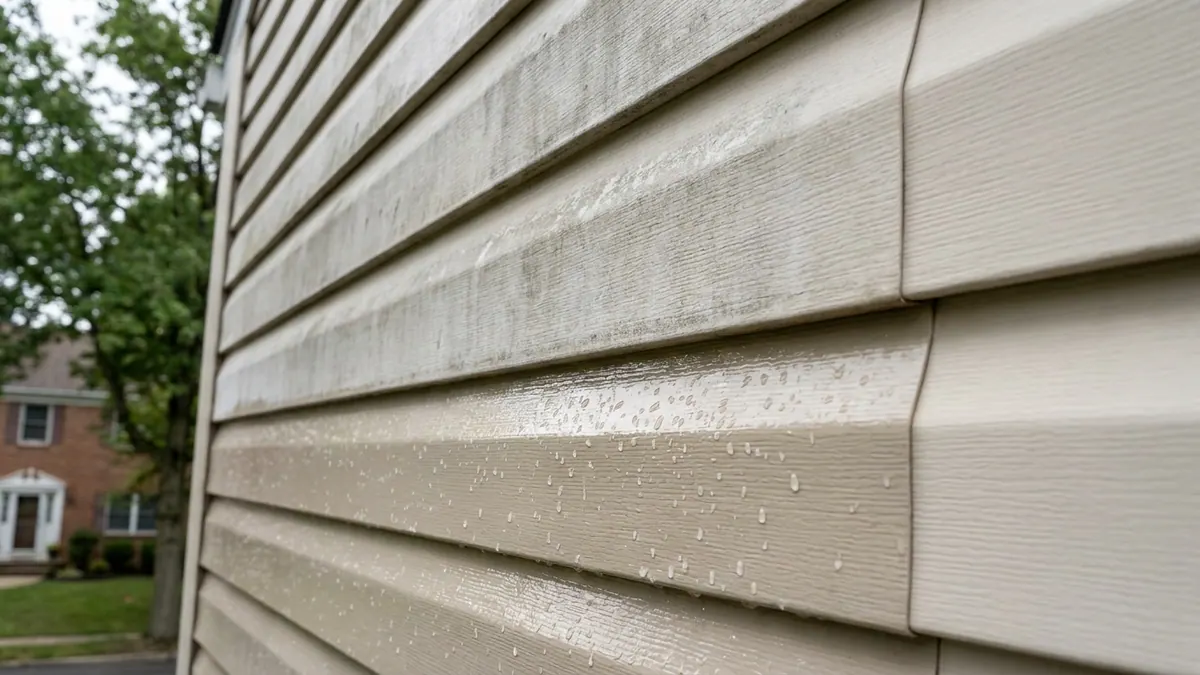
The south and west elevations take the most hours of direct sun per year. Ultraviolet exposure breaks down the surface of vinyl, which is what produces chalking, the fine white powder that comes off on your hand. Color pigment fades on the same schedule. Darker colors show it sooner because they absorb more heat and started with more pigment to lose.
Wind-driven rain is the second factor and it picks a different wall. Summer thunderstorms in New Jersey generally push rain from the southwest. Coastal nor'easters drive it from the northeast, which is why a Shore house can have a beaten-up ocean-facing wall and three others that look almost new. Wind-driven rain finds gaps at J-channel, around penetrations and at the bottom course, and over years it is what wets the sheathing behind the panels.
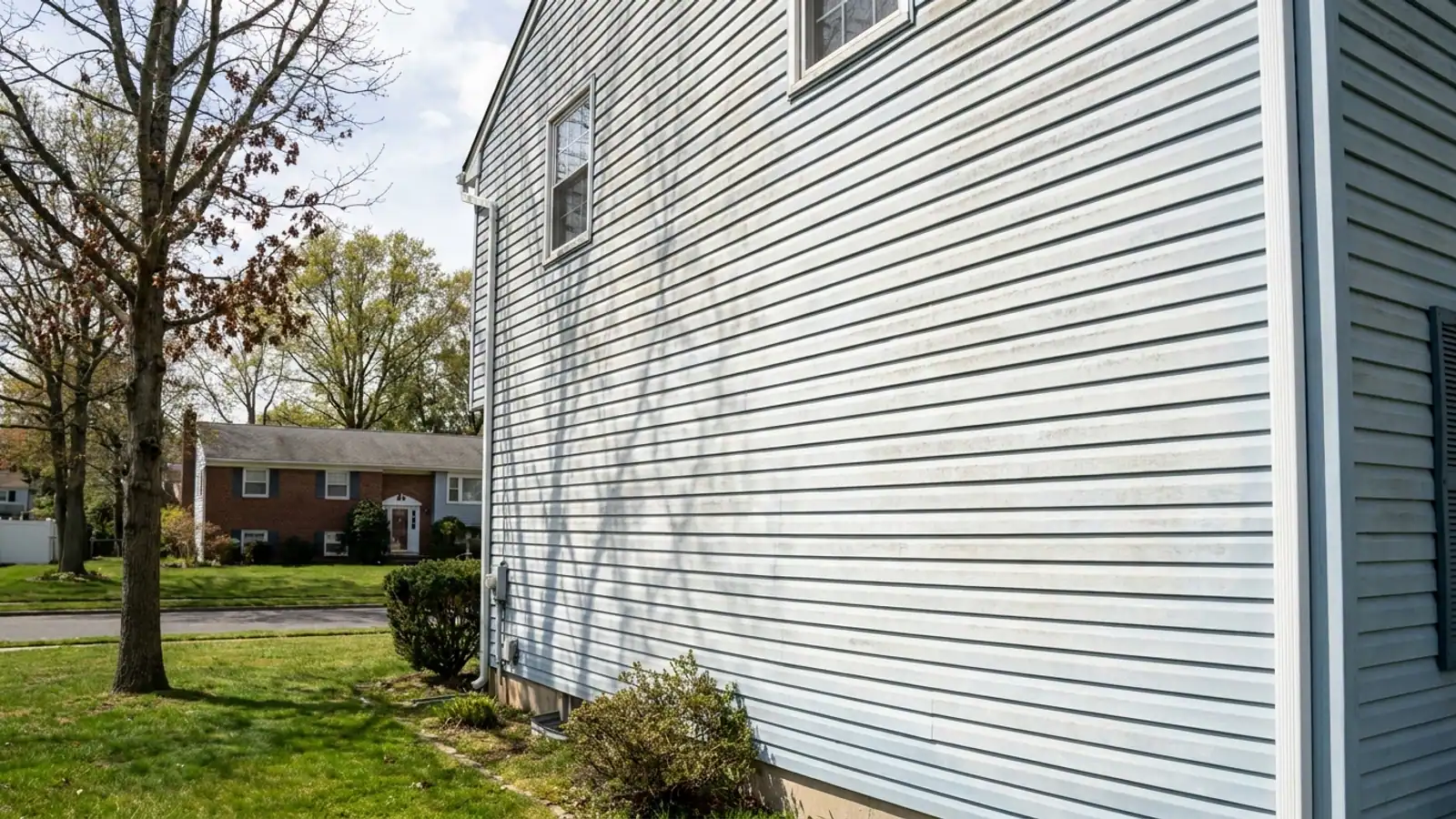
Shade matters too. A wall under a mature tree stays damp longer and grows more mildew, while the wall across the house bakes. Two walls, same product, same installer, twenty years apart in appearance.
When replacing one side is the right call
There are real cases, and a contractor who will not name them is selling rather than advising.
- One elevation took physical damage. A tree limb, a vehicle, a grill that melted a section, hail on one face of the house.
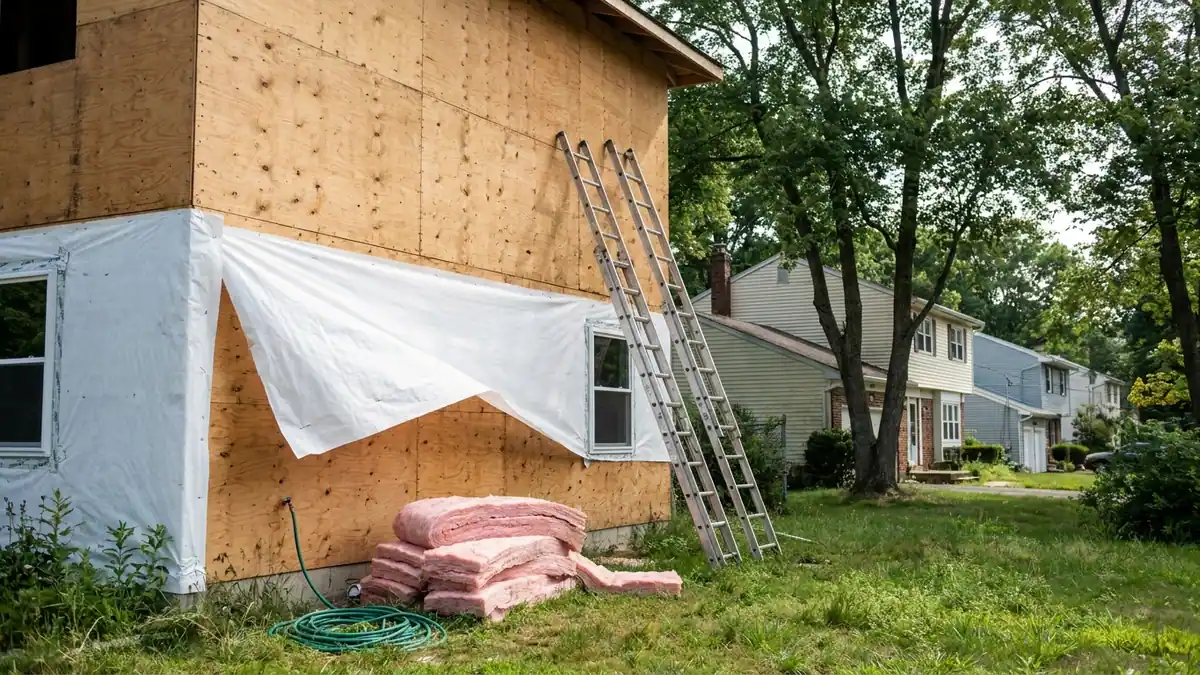
- There is rot in the sheathing on one wall and the others probe solid. That wall has to come off regardless, and once it is open you are already paying for the hard part.
- The elevation is architecturally separate. A gable end, an addition, a dormer face or a wall that is already a different material stops the change at a line the eye accepts.
- The siding on three sides is genuinely healthy and five to ten years from replacement, and you want to buy time rather than spend the full budget this year.
- The wall faces a side yard with no sightline from the street, so a color difference nobody sees costs you nothing.
In those cases, do the one wall. Correct the detail that caused the failure while it is open, especially the house wrap, flashing above the openings and the drainage at the bottom course. Then plan the rest on a schedule you choose instead of one a leak chooses for you.
When one-side replacement is a mistake
If every wall is the same age and the same product, replacing one is usually buying a visible problem.
Fading is not failure. Chalked vinyl with intact panels, tight locks and sound sheathing behind it is still doing its job. It looks worse than it performs. You are spending real money on appearance and getting a result that looks worse than what you started with, because one bright wall next to three faded ones reads as a repair from the curb.
The other mistake is scope creep. You open one wall, find the house wrap was never lapped correctly, and now the same detail exists on the other three. Tearing off a quarter of the house tells you something about the rest of it that you then have to act on.
The color match problem, plainly
New vinyl will not match old vinyl. That is the single most common disappointment on a partial siding job.
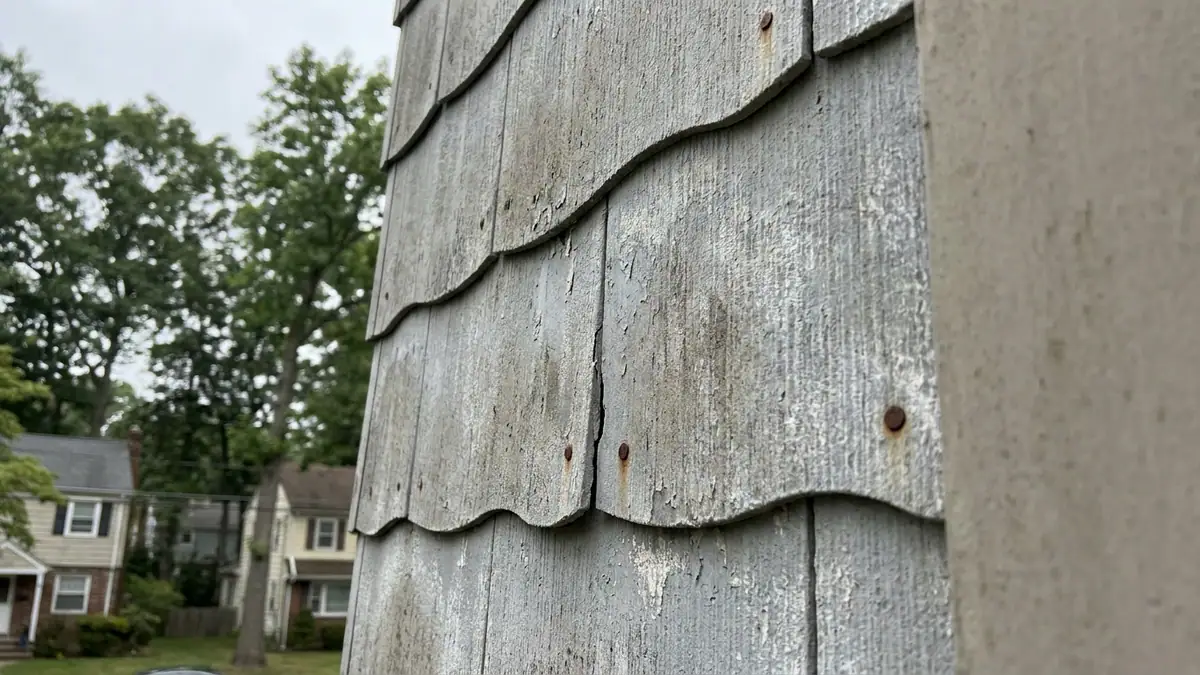
Three things work against you at once. Vinyl lightens under years of sun, so the aged panels are no longer the color on the sample chip. Manufacturers discontinue colors and profiles, so a twenty-year-old panel may have no current equivalent in width, lock style or texture. And color formulations shift between production runs even within the same name.
The workable answers are limited. Stop the new material at an outside corner, where a change of plane already breaks the eye. Use a deliberately different but complementary material on that elevation, such as fiber cement or a different profile, so it reads as a design decision rather than a patch. Or accept the mismatch on a wall nobody sees. What does not work is hoping a fresh panel will weather into the old ones within a year. It will not.
If you are weighing a material change on that one wall, the siding options guide walks through how vinyl and fiber cement differ in cost, thickness, maintenance and how each handles New Jersey weather.
What a one-wall job actually costs
It is not a quarter of a whole-house price, and anyone who quotes it that way is guessing.
A siding job has fixed costs that do not shrink with the scope. The crew still mobilizes. Staging still goes up. A dumpster still gets dropped and hauled. Material still gets delivered with a minimum order, and trim, starter, J-channel and corner posts still have to be bought in full lengths. Spread those across one elevation instead of four and the cost per square foot rises sharply.
Full siding replacement in New Jersey runs $10,000 to $22,000 in standard-value towns, $16,000 to $38,000 in higher-value towns and $30,000 to $70,000 on large or luxury homes. The band comes from the municipality's median home value in the ACS 2024 five-year estimates, not from your wall count. A single elevation is quoted on its own at the inspection, against what that specific wall needs. Ask for both numbers on the same visit, the one wall and the whole house, and compare them before you decide. The gap is often smaller than homeowners assume, and the whole-house number comes with a uniform color across every elevation.
What has to be checked before anyone quotes it
Nobody can price a partial siding job honestly from the driveway. A few panels have to come off.
- Pull panels low on the wall, where water collects, and at the corners.
- Look at the sheathing for staining, softness and delamination.
- Check whether house wrap exists at all and whether it is lapped shingle-style over the course below.
- Check the nailing on the remaining panels, since over-driven nails on the old work tell you how the rest of the house was installed.
- Look at the window and door head flashing, because that is where wind-driven rain gets in on an exposed wall.
- Confirm the profile, width and lock style of the existing siding so the crew knows whether a transition is even possible.
At Lightning Construction that inspection and the written estimate are free and carry no obligation, and a salesperson does come to the house. What is found during it gets priced into the quote, which is why there are no change orders later. There is also no deposit on any job, so nothing is due until the work is done and you have inspected it. That model is explained further on the about page.
What to do next
Get the exposed wall opened and looked at before you decide anything. If there is rot or a failed water barrier, the decision is made for you and that wall comes off this year. If the panels are sound and only faded, get the whole-house number anyway, because the setup costs you would pay twice may close most of the gap.
See what Lightning Construction does on siding work across New Jersey, then book the free inspection and written estimate for a real number on your wall, your profile and your town's price band.