Short answer
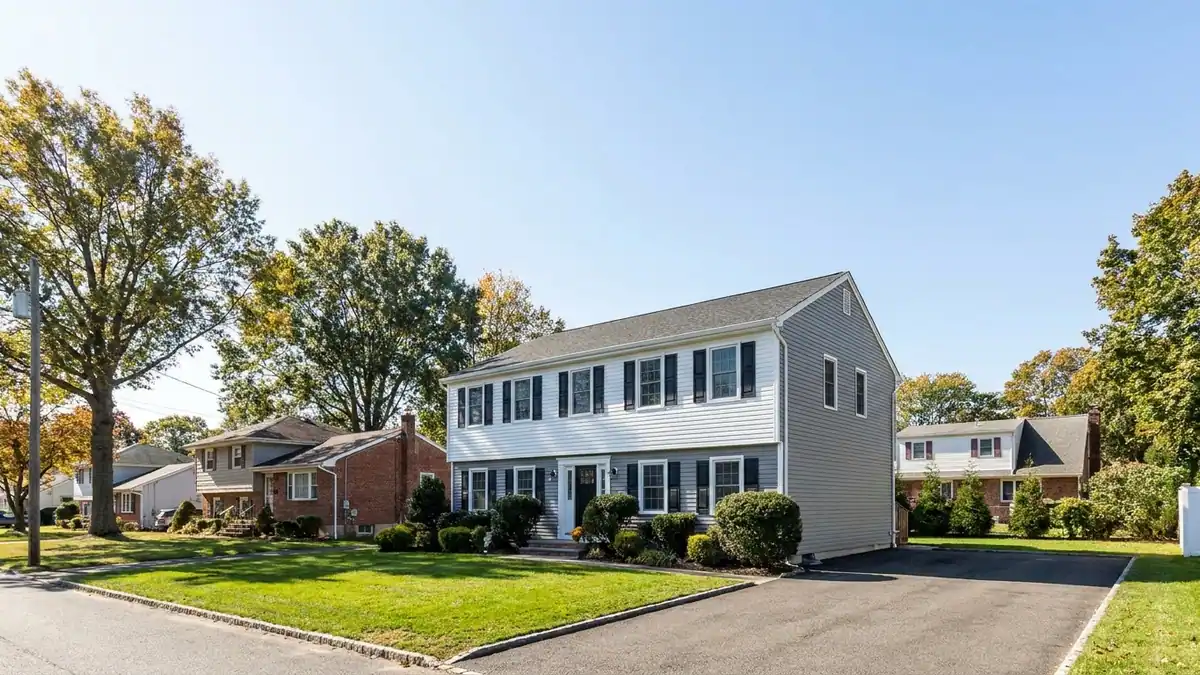
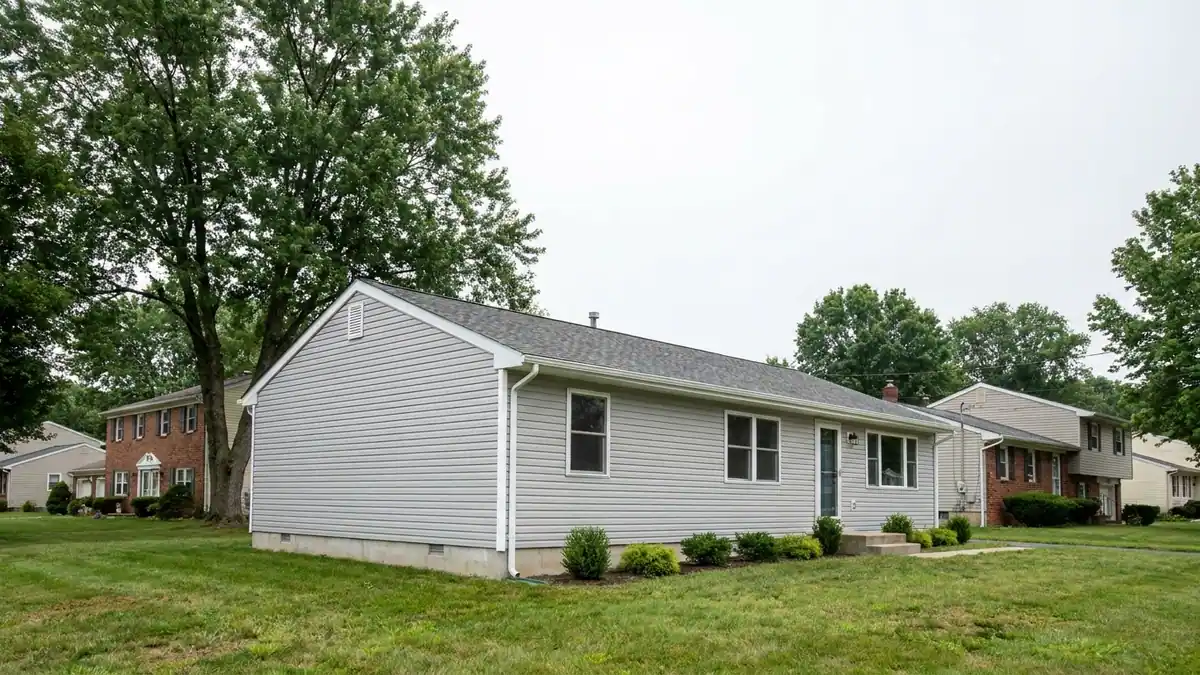
Most Monmouth County siding jobs run $10,000 to $22,000 in standard-value towns, $16,000 to $38,000 in higher-value towns, and $30,000 to $70,000 on large or luxury homes. The band is set by your municipality's median home value from ACS 2024 five-year estimates. Where you land inside that band depends on wall area, material, trim work and what is behind the old siding.
On this page
- The siding price bands, and which one applies to you
- What actually moves the number on your house
- Material choice and what the step up costs
- Monmouth County housing stock and why it matters for siding
- What is behind the siding is the real variable
- What should be itemized on a Monmouth County siding estimate
- How to get a real number for your house
Siding on a Monmouth County house runs $10,000 to $22,000 in standard-value towns, $16,000 to $38,000 in higher-value towns, and $30,000 to $70,000 on large or luxury homes. Those are Lightning Construction's own New Jersey ranges, and the band your town falls into is set by its median home value from the American Community Survey 2024 five-year estimates.
That is the frame. The rest of this post is about where inside the band your specific house lands, and why two homes on the same street can come back with numbers that are thousands of dollars apart.
The siding price bands, and which one applies to you
| Band | New Jersey range | What falls here |
|---|---|---|
| BandStandard-value town | New Jersey range$10,000 to $22,000 | What falls hereMost ranches, capes, split levels and modest colonials |
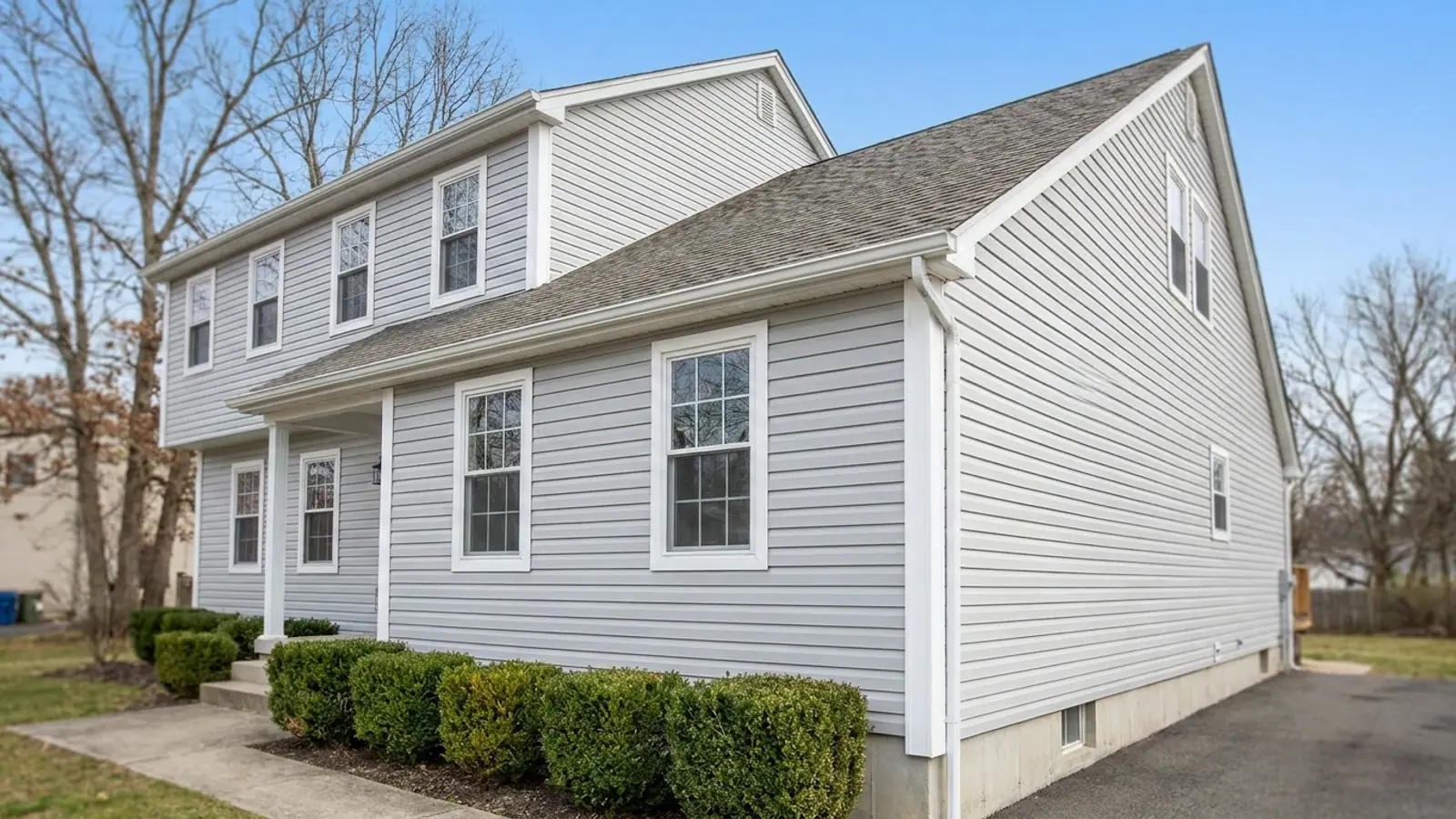
| BandHigher-value town | New Jersey range$16,000 to $38,000 | What falls hereLarger two-story homes, more complex wall layouts |
| BandLarge or luxury home | New Jersey range$30,000 to $70,000 | What falls hereBig wall areas, three stories, heavy custom trim |
Monmouth County has 51 municipalities and roughly 264,490 housing units, and the median home value is not the same in any two of them. That is why there is no single Monmouth County siding price. A quote is a measurement of your walls, not a lookup in a table.
Treat the range as a range. Anyone who gives you an exact figure over the phone, before anyone has measured the house or opened a corner, is guessing and will correct the guess later at your expense.
What actually moves the number on your house
Siding is priced on the area of wall you are covering and on how complicated that area is to cover. Square footage is the first input. Complexity is the second, and it is the one homeowners underestimate.
Things that push the price up:
- More corners. Every outside corner needs a corner post and every inside corner needs a channel. A boxy two-story with four corners is cheaper per square foot of wall than an L-shaped house with ten.
- More openings. Each window and door gets cut-in trim and flashing. A wall with six windows takes longer than a blank gable of the same area.
- Height. Second and third story walls mean staging, longer ladder setups and slower handling of twelve-foot panels.
- Gables and dormers. Angled cuts produce more waste and more labor per piece.
- Existing material. Removing one layer of old vinyl is fast. Removing cedar shake, stucco or layered material takes longer and fills more dumpster.
- Trim scope. Wrapping soffit and fascia in aluminum, replacing rake boards or adding new window surrounds are real line items, not rounding.
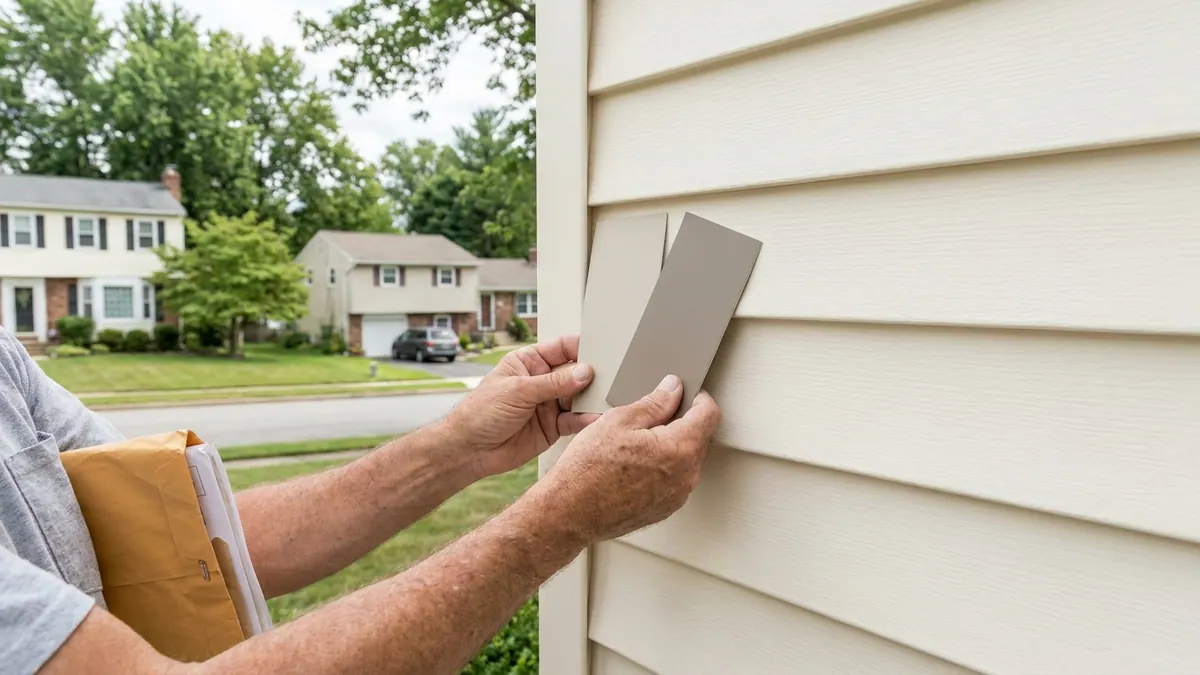
Things that do not move it as much as people expect: color, and whether you pick a slightly thicker vinyl panel within the same product family. The labor to hang a panel is the same either way.
Material choice and what the step up costs
The three materials that come up on nearly every Monmouth County estimate are standard vinyl, insulated vinyl and fiber cement.
Standard vinyl is the floor of the range. Insulated vinyl has rigid foam bonded to the back of each panel, which gives a flatter wall, better impact resistance and a quieter house, and it sits above standard vinyl in price. Fiber cement is the heaviest and most labor-intensive of the three, it has to be cut and fastened differently, and it carries the highest installed cost of the common options.
If you want the full comparison of how those materials behave over twenty years in New Jersey weather, the siding options guide covers it properly. The short version for budgeting: the material decision can move your total by a meaningful percentage, but wall area and complexity still decide the order of magnitude.
Monmouth County housing stock and why it matters for siding
Monmouth County has a wide spread of housing ages. Middletown's median home was built in 1970 and Howell's in 1985, which is a fifteen year gap in construction practice, sheathing, house wrap and window detailing. That gap shows up on the estimate.
A house from the early 1970s is likely on its second siding job. There may be an original layer underneath. The house wrap may be old asphalt felt or nothing at all. Window openings were often flashed with a bead of caulk and good intentions. A mid-1980s house is more likely to have a sheet wrap and a cleaner nailing base, which makes the tear-off faster and the wall behind it more predictable.
County location matters too. Monmouth County fronts the Atlantic, and homes closer to the water take sustained wind and salt-laden air that homes further inland do not. Wind exposure affects which panel and fastening pattern is appropriate, not just how the wall looks.
If you want the county level picture of what Lightning works on locally, the Monmouth County service area page lists the municipalities, and there are town pages for siding in Middletown and siding in Howell with that town's own housing data.
What is behind the siding is the real variable
This is where siding quotes go wrong. Nobody can tell you the condition of your sheathing from the driveway. Water gets in at window heads, at kickout points where a roof meets a wall, and at the bottom course where splash and grade meet the wall. The siding can look fine while the plywood behind it is soft.
So the question to ask every contractor who quotes your house is simple: what is your price for replacing sheathing, and is it in this number or added later?
A contractor who has not opened a section will answer with a per-sheet adder and a shrug. That adder becomes a change order on day two, when your walls are open and you have no leverage.
Lightning Construction does it the other way. The free inspection is where rot, failed house wrap and bad flashing are found, and they are priced into the written estimate. There are no change orders. The written estimate is the final price, and there is no deposit, so nothing is due until the work is finished and you have inspected it.
What should be itemized on a Monmouth County siding estimate
Before you sign anything, confirm these are written down:
- The siding product by manufacturer, line and panel profile, not just "vinyl siding."
- Whether new house wrap is included, and which product.
- Tear-off and disposal of the existing material, including how many layers.
- Soffit, fascia and trim scope, stated piece by piece.
- Corner posts, J-channel and window surround detail.
- Any sheathing replacement, with the price already included.
- Who pulls the permit and attends the inspection.
On that last one: Lightning pulls the permit from your municipality's own construction office under the New Jersey Uniform Construction Code and attends the inspection. You file nothing. Lightning Construction is licensed and insured, with New Jersey Home Improvement Contractor registration 13VH12437000, and is based in Manalapan in Monmouth County.
How to get a real number for your house
Measure or have it measured. A siding price is wall area, complexity, material and condition, and three of those four require somebody standing at the house.
The inspection and the written estimate are free with no obligation, and a salesperson does come to the house. You get a number that is the number, and financing is available through GreenSky and FTL, including 24 months at 0% interest and 120-month terms with no prepayment penalty, if spreading the cost makes more sense than writing one check.
Start with the siding page to see what is covered, then request a free estimate and get your Monmouth County house measured.