Short answer
Vinyl siding installed correctly on a New Jersey home generally lasts 20 to 40 years, and where it lands in that range is decided by sun exposure, wind and impact rather than the brand name on the panel. South and west walls chalk and fade first, while walls sheltered under deep eaves can still look close to new at the same age. Faded siding is a cosmetic problem, but cracked, loose or water-stained siding is a failure, and only the second one has to be replaced on a schedule.
On this page
Vinyl siding on a New Jersey house typically lasts 20 to 40 years, and the spread is that wide because exposure and installation matter far more than which brand is stamped on the back of the panel. Most of the vinyl that gets torn off walls in this state is not broken. It is faded, chalky and out of style, on a wall that is still perfectly dry underneath.
That distinction is the whole decision. One of those problems is worth five figures to fix. The other one is worth a bucket of soap and a soft brush.
What decides how long vinyl siding lasts
Four things do most of the work, and they act on different walls of the same house at different speeds.
Sun exposure
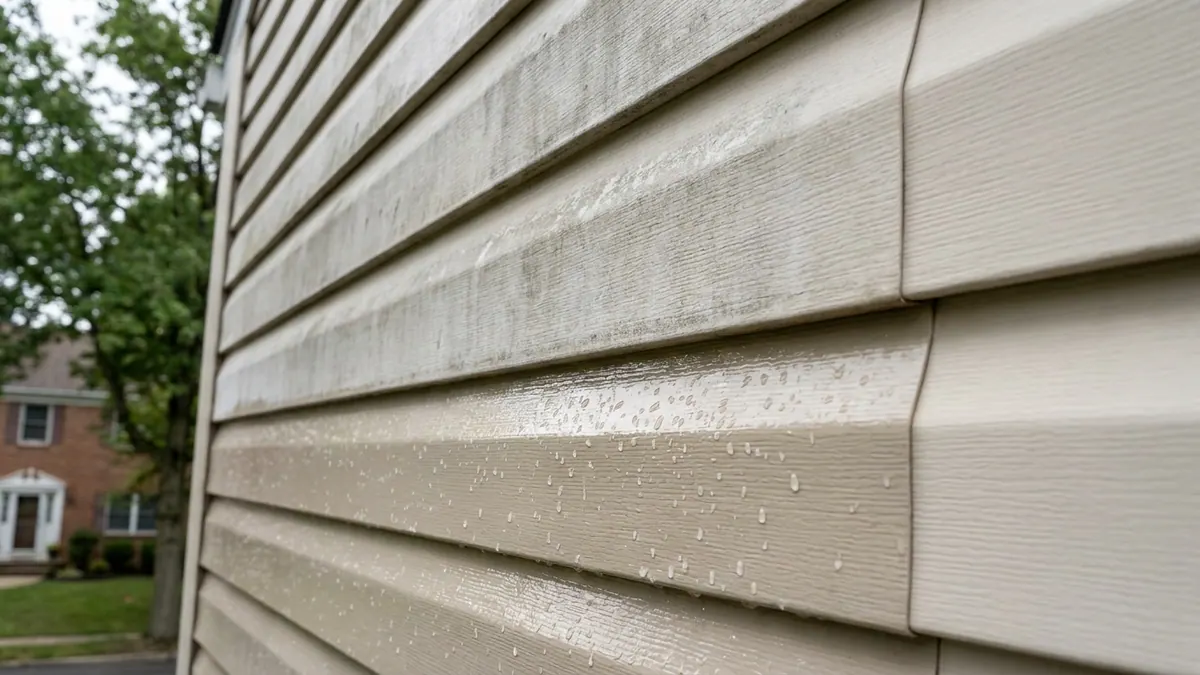
UV is the main reason vinyl reaches the end of its life. Sunlight breaks down the surface of the panel, the pigment loses saturation, and the plastic gives off a fine white powder when you rub it. That is chalking, and it is the standard aging pattern for vinyl.
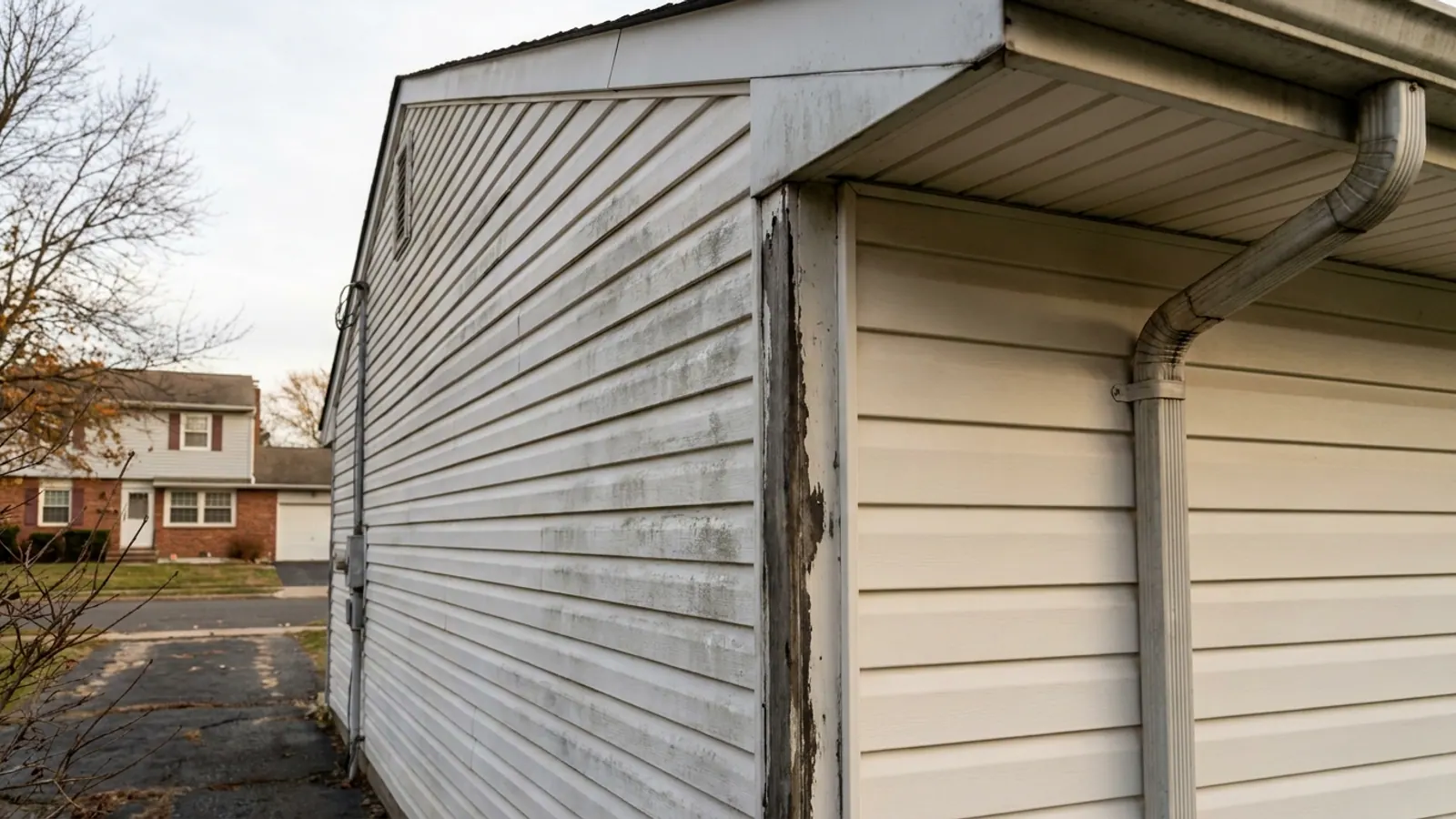
South and west walls get it first and worst. A wall shaded by mature trees, or a run tucked under a deep eave or a porch roof, can look years newer than the wall around the corner. Darker colors show fade sooner because there is more pigment to lose, though modern dark vinyl holds color better than the dark siding sold in the 1990s.
Wind
Vinyl is designed to hang, not to be pinned. Each panel locks into the one below and is nailed through a slotted hem with the fastener left slightly loose so the panel can move sideways as it heats and cools. When siding is nailed tight, the panel cannot move and the nail hole eventually tears out. When panels are given too little overlap at the joints, wind lifts the lap and works it loose.
Both of those show up as rattling, wavy courses, and panels that unzip in a storm. On a well-hung wall, wind rarely ends the life of the siding. On a badly hung wall, it does it in a fraction of the time.
Impact and cold
Vinyl gets more brittle as the temperature drops. A ball, a ladder foot or a piece of gravel from a mower that would only dent a panel in July can crack it clean through in January. Low walls near driveways and play areas collect this damage, and it accumulates because nobody fixes one cracked panel.
Heat and reflected light
Panels distort when they get hotter than the material can take. The usual causes are a grill or a fire pit too close to the wall, a dryer vent blowing against it, or sunlight bouncing off a low-E glass surface and concentrating on one section. Warped, rippled or melted vinyl in one localized area almost always has a heat source nearby, not a manufacturing defect.
Faded siding versus failed siding
A faded wall is a cosmetic call you make on your own schedule. A failed wall is water getting behind the cladding, and that runs on the water's schedule.
| Looks dated | Actually failed | |
|---|---|---|
| Color | Looks datedChalky, uneven fade between walls | Actually failedFade plus visible cracks or splits |
| Panels | Looks datedSound, locked, tight to the wall | Actually failedLoose, rattling, unzipped at laps |
| Joints | Looks datedWide seams, visible overlaps | Actually failedGaps at corners, trim pulling away |
| Around windows | Looks datedOriginal trim, tired caulk | Actually failedStaining below sills, soft wood at corners |
| Inside | Looks datedNothing | Actually failedDamp drywall, musty smell on an outside wall |
| Right answer | Looks datedWash it, or replace when you want to | Actually failedOpen a section and find out why |
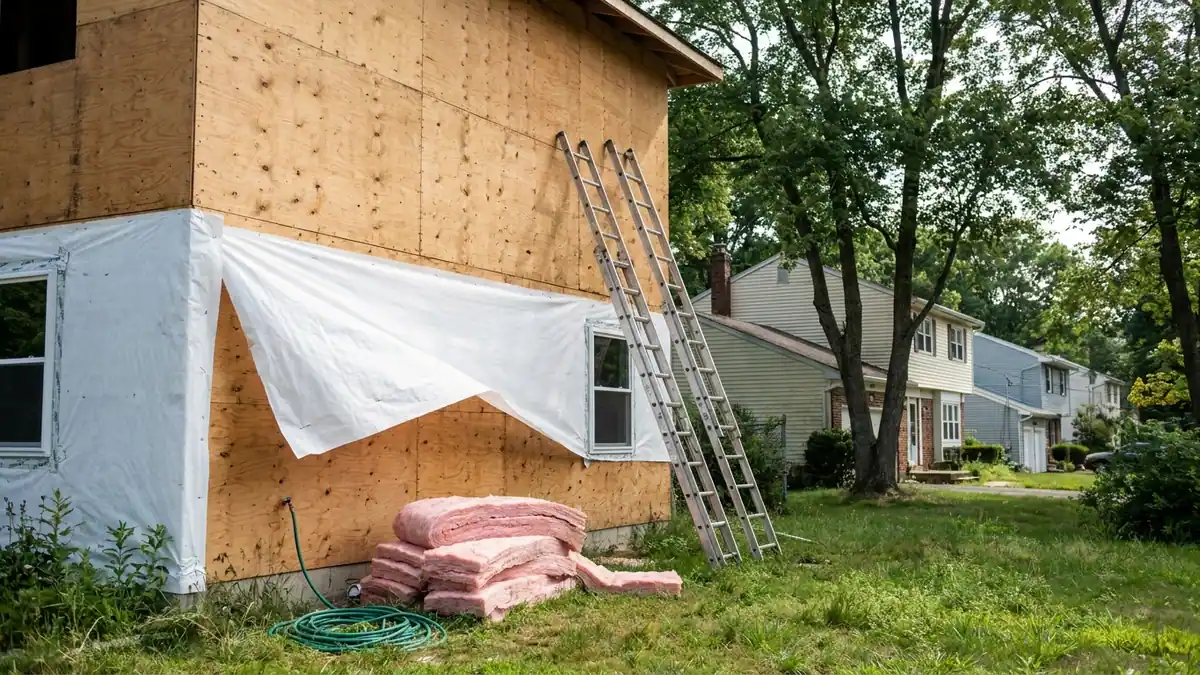
The left column can wait. The right column cannot, because vinyl is a rain screen, not a waterproof layer. Water is expected to get past it and is supposed to be stopped by the house wrap and flashing behind it. When those have failed, the sheathing goes first and you will not see it from the driveway.
How to check your own siding in ten minutes
- Walk each elevation and compare the sheltered sections to the exposed ones. That difference is your fade, and it tells you the wall's real age.
- Rub a white cloth on a sunny wall. Heavy chalk means the surface has given up its UV protection.
- Push gently on a few panels at chest height. They should have a little give and then stop. A panel that flexes far, or crunches, is brittle.
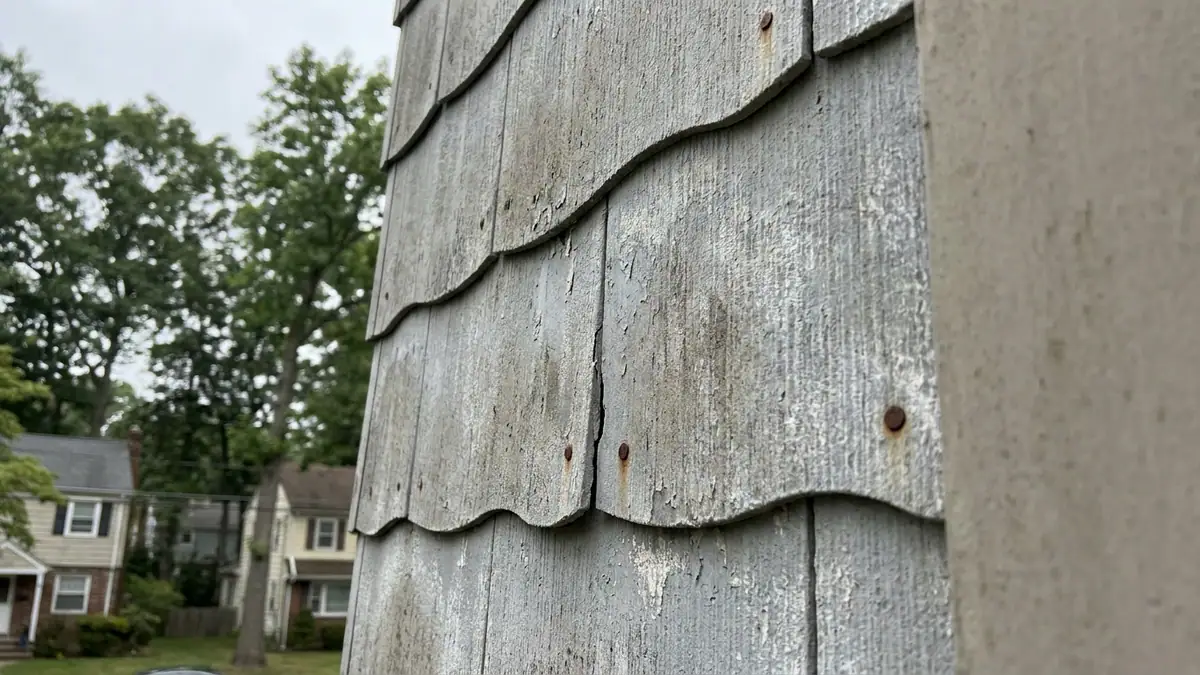
- Look up under the laps at a few random spots for splits radiating out of nail holes.
- Check the corners, the trim around openings, and where siding meets the roofline. That is where water gets in.
- Walk inside and look at the drywall on the outside corners of rooms, especially below windows.
If steps 5 and 6 turn up anything, the age of the vinyl stopped being the important question.
When replacing makes more sense than repairing
Spot repairs are legitimate work. Vinyl profiles are not universal, so the first question is whether the exact profile is still made, and the second is color. Siding that has been on a wall for twenty years has lightened, and a new panel in the same nominal color will read as a patch, particularly on a south wall.
Replacement is the better call when the panels are brittle enough that removing one to fix another breaks two more, when the fade is bad enough that repairs will never blend, or when the wall has to be opened anyway for a moisture problem. If you are choosing materials, the trade-offs between standard vinyl, insulated vinyl and fiber cement are laid out in the siding options guide.
On cost, Lightning Construction's siding work runs $10,000-$22,000 in standard-value New Jersey towns and $16,000-$38,000 in higher-value towns, with the band set by the municipality's median home value. Coastal towns, including much of Cape May County, tend toward the wind-driven failures rather than the sun-driven ones, so the inspection there looks harder at fastening and overlap than at color.
What makes a new siding job last the full 40 years
The panel is the cheap part of the decision. What buys you the long end of the range is what happens behind it and how it is hung.
- Nails driven to leave the panel able to slide, never snugged down.
- Proper overlap at every joint, with the laps oriented away from the main sightline.
- A continuous, correctly lapped weather barrier, with flashing at every opening.
- Rotted sheathing and trim replaced, not covered.
- J-channel and corner posts sized so panels can expand into them on a hot day.
That last one is why a wall installed in January and a wall installed in July are cut to different lengths. A crew that ignores it produces siding that buckles the first summer.
What to do next
If your siding is chalky but tight, wash it and decide on your own timeline. If panels are cracked, loose, or there is staining below the windows, get the wall looked at before another winter.
Lightning Construction installs fiber cement, insulated and standard vinyl siding, along with trim, soffit and fascia, in all 21 New Jersey counties. The inspection and the written estimate are free with no obligation, and a salesperson does come to the house. There is no deposit, nothing is due until the work is finished and you have inspected it, and there are no change orders, because the conditions that usually trigger one are found at the inspection and priced into the quote. Lightning pulls the permit and attends the municipal inspection.
See the full scope of the work on the siding page, or request a free estimate.