Short answer
You can replace the roof on your half of a twin without your neighbor's permission, because you own your side of the party wall and the roof above it. The work that needs care is the termination at the center seam, where the new roof has to be flashed and sealed against the old one so the joint does not leak. Doing both halves at the same time removes that seam entirely and is the better job when the neighbor is willing.
On this page
- Who owns the roof over the party wall
- Where the new roof stops at the shared wall
- Doing both halves at once versus one side alone
- Access, dumpster placement and no side yard
- Attic ventilation stops at the party wall
- Gutters at the center line
- What replacement day looks like on a twin
- What it costs and what to get in writing
You can replace the roof on your half of a twin without waiting for your neighbor. You own your side of the party wall and the roof above it, and the permit, the contract and the warranty all belong to your address alone. The part that needs real attention is the center seam, where your new roof meets their old one and the two have to be joined so water does not get between them.
New Jersey has a lot of this housing. Twins, semi-detached pairs and row homes fill large parts of Trenton, Camden, Bayonne and Union City, and they show up in older neighborhoods in almost every county. The roofs are usually narrow, the side yards are usually narrow or nonexistent, and the job runs differently than it does on a detached colonial with a driveway on both sides.
Who owns the roof over the party wall
In a twin, two separately owned houses share one wall. Your deed covers your half of the lot and your half of the structure. There is no association, no shared maintenance fund and usually no written agreement about the roof unless the original developer recorded one. Check your title documents if you want certainty, because a small number of older pairs do carry a recorded party wall agreement that says how shared repairs get handled.
Absent that, the practical rule is simple. You pay for your side. Your neighbor pays for theirs. If their roof fails and water tracks along the party wall into your attic, that is a conversation with them and their insurer, not something your roofer can fix from your side.
Tell the neighbor before work starts anyway. The crew will be at the seam, ladders may need to sit near the line, and a heads up prevents the call to the police on a Tuesday morning.
Where the new roof stops at the shared wall
This is the detail that separates a good twin roof job from a leaky one. There are two common conditions.
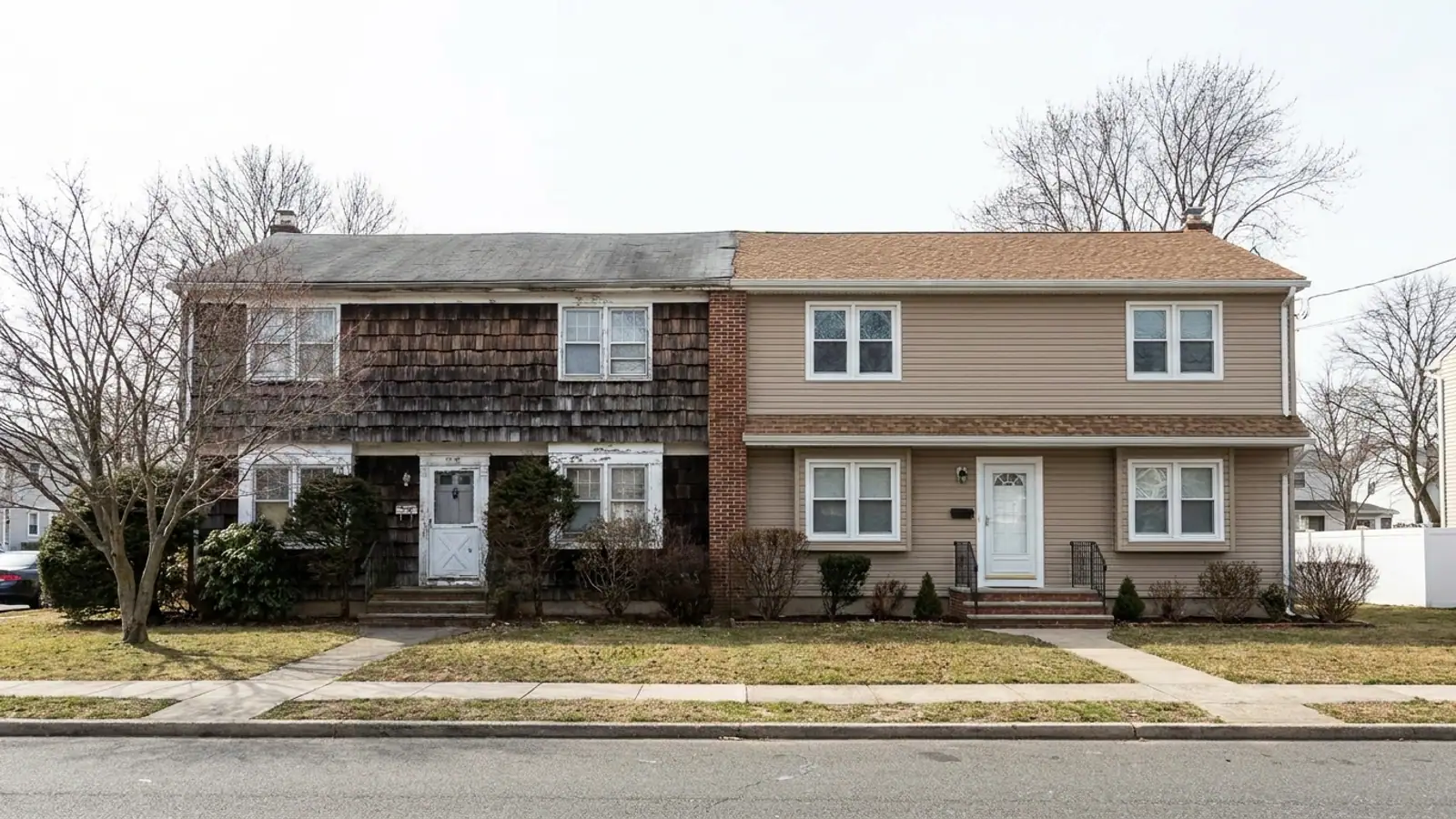
The first is a continuous roof plane with no break. The shingles simply run across the party wall from one house to the other, and the only thing marking the line is the wall below. Here the crew cuts the old roof back to the property line, runs new underlayment and ice and water shield up to and slightly over the seam, and finishes with a sealed joint where the new course laps the existing. Done right, the lap is made so water running down the slope crosses the seam on top of material, never into it.
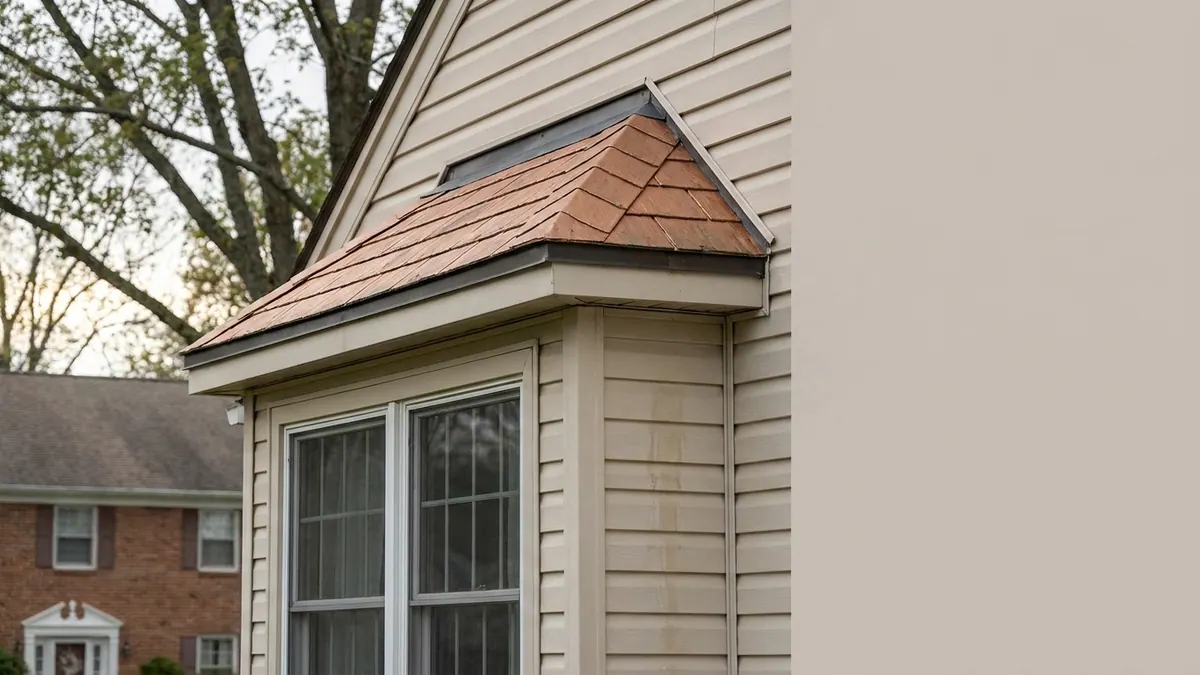
The second is a masonry firewall that projects above the roof deck. Many older row and twin homes have one. That wall gets counterflashing, and the flashing has to be cut into a reglet or a mortar joint rather than smeared with sealant across the brick face. Reused old flashing at a party wall is one of the most common reasons an otherwise new roof leaks a year later.
Ask the estimator directly what happens at the seam and have the answer written into the estimate. If the quote says "tie into existing" and nothing more, that is not an answer.
Doing both halves at once versus one side alone
If your neighbor's roof is the same age as yours, and it almost always is, raise it with them. Two separate contracts and two separate permits can still be scheduled for the same day with one crew, one setup and one dumpster.
| Both halves together | Your half alone | |
|---|---|---|
| Center seam | Both halves togetherNo seam, one continuous roof | Your half aloneSeam has to be cut, flashed and lapped |
| Appearance from the street | Both halves togetherMatched shingle, matched weathering | Your half aloneVisible color and texture line down the middle |
| Gutter run | Both halves togetherReplaced as one continuous run | Your half aloneCut and capped at the property line |
| Permits | Both halves togetherOne per address, filed together | Your half aloneOne, for your address |
| Contracts and payment | Both halves togetherSeparate, each owner pays for their own side | Your half aloneOne contract |
| Cost per side | Both halves togetherLower, because setup and disposal are shared | Your half aloneHigher per square of roof |
The honest downside is coordination. You need the neighbor to agree to a date, a contractor and a scope, and a free estimate that works for your budget may not work for theirs. If they are not ready, do your half. A roof that is failing does not get to wait on somebody else's finances.
Access, dumpster placement and no side yard
On a detached house the dumpster goes in the driveway and the tear-off debris falls into the yard. On a twin in an older urban block, there may be no driveway and no side yard at all. That changes the setup.
The crew plans the drop zone before anything comes off the roof. Tarps go down over the front walk, the steps, the plantings and the neighbor's side of the shared path if debris could reach it. The dumpster may need to sit on the street, and a number of New Jersey municipalities require their own street or right of way permit for that. Lightning pulls the construction permit from the municipality's own office under the New Jersey Uniform Construction Code and attends the inspection, so the paperwork side is handled, and the permit guide explains what that process covers.
Ask where the dumpster is going before the day. If parking on your block is tight, you may need to move cars and give the neighbors notice.
Attic ventilation stops at the party wall
The firewall between the two attics usually runs full height to the roof deck. That means your attic is its own sealed box, and it needs its own intake at the soffit and its own exhaust at the ridge. A ridge vent that runs across both halves does nothing for your side if the party wall blocks airflow at the center.
This matters on twins because the roof is narrow and the ridge run is short. There is less linear footage of ridge to vent with, so the intake at the eaves has to be clear and the exhaust has to be sized for the space it actually serves. Blocked soffits and a short ridge run produce the same result every winter: moisture on the sheathing and ice at the eave. The attic ventilation guide covers how the intake and exhaust balance is figured.
Gutters at the center line
A single gutter often runs the full width of both houses with one downspout at each far end. Replace half of it and you have cut a drainage system in two.
Your side needs an end cap at the property line and a downspout that actually carries the water off your half. If the only downspout on that run was on the neighbor's end, you are adding one. Settle this in the estimate rather than discovering it in the first heavy rain. The same applies at the rear, where twins commonly have a low-slope roof over a kitchen addition draining into one shared gutter.
What replacement day looks like on a twin
Most asphalt roof replacements are torn off and finished in a single day, and a twin half is smaller than a typical detached roof.
- The crew arrives early and protects the walk, the steps, the plantings and the neighbor's entrance.
- The old roof is stripped to the decking, with the tear-off stopped cleanly at the property line.
- Decking is checked. Anything soft, delaminated or broken gets replaced. On a twin, the sheathing at the party wall is the spot that most often needs it.
- Ice and water shield goes at the eaves and valleys, underlayment over the field, new drip edge at the perimeter.
- Flashing is installed new at the chimney, the sidewalls and the party wall. Counterflashing is cut into masonry, not surface sealed.
- Shingles, starter strip, ridge cap and ventilation go on.
- The property is cleaned and swept for nails, both sides of the walk.
- Lightning attends the municipal inspection.
What it costs and what to get in writing
Most New Jersey asphalt roof replacements run $9,000 to $22,000 in standard-value towns, $14,000 to $35,000 in higher-value towns, and $25,000 to $60,000 for large or luxury homes. The band is set by the municipality's median home value from ACS 2024 five-year estimates. A twin half is a smaller roof, but setup, disposal, the permit and crew mobilization do not shrink with it, so do not expect the number to scale down with the square footage. The New Jersey roof cost guide explains what actually moves the total.
Get the seam detail, the flashing at the party wall, the gutter termination and the ventilation written into the estimate as line items. Lightning Construction takes no deposit and writes no change orders, so the conditions that normally produce a surprise bill, extra shingle layers, bad decking and unusable flashing, are found at the free inspection and priced into the quote. Nothing is due until the work is finished and you have inspected it.
Start with a free inspection and written estimate. It is genuinely no obligation, and a salesperson does come to the house. You can also read more about how roof replacement is handled across all 21 New Jersey counties.