Short answer
You can get close, but you cannot get an exact match on a roof that has already weathered, because granules fade and the manufacturer's color blend shifts over the years. The practical goal is to put the new shingles on a separate roof plane so the eye never compares them side by side on the same slope. When the addition ties into the main roof on the same plane and the color difference will be obvious from the street, reshingling the whole roof is usually the better money.
On this page
You can get close on an addition or garage roof, but you cannot get an exact match to shingles that have been on a New Jersey roof for a decade. The sun has already taken color out of the granules on the old roof, and the manufacturer has almost certainly tweaked or retired the blend you started with. The useful question is not "can we match it" but "where will the difference be visible, and does that matter."
That answer changes the whole plan. Sometimes it means one bundle of the closest available color and nobody ever notices. Sometimes it means reshingling the main roof at the same time, because a two-tone slope on the front of the house is going to bother you every time you pull into the driveway.
Why new shingles never match an old roof exactly
There are three separate reasons, and they stack.
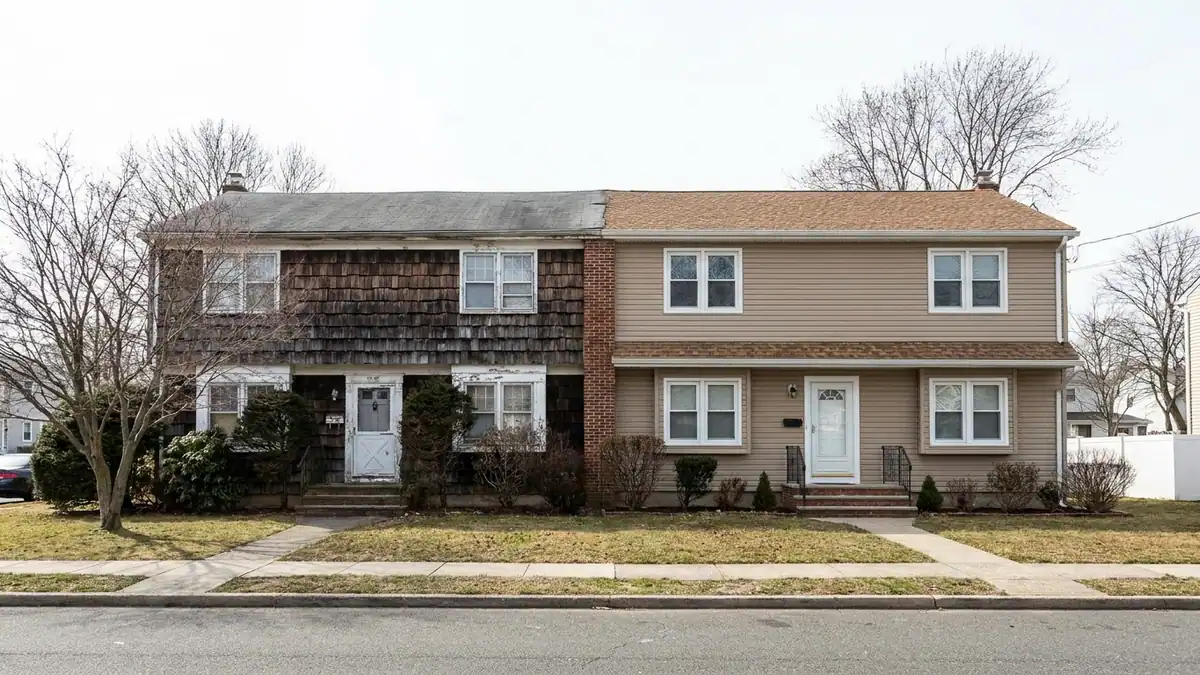
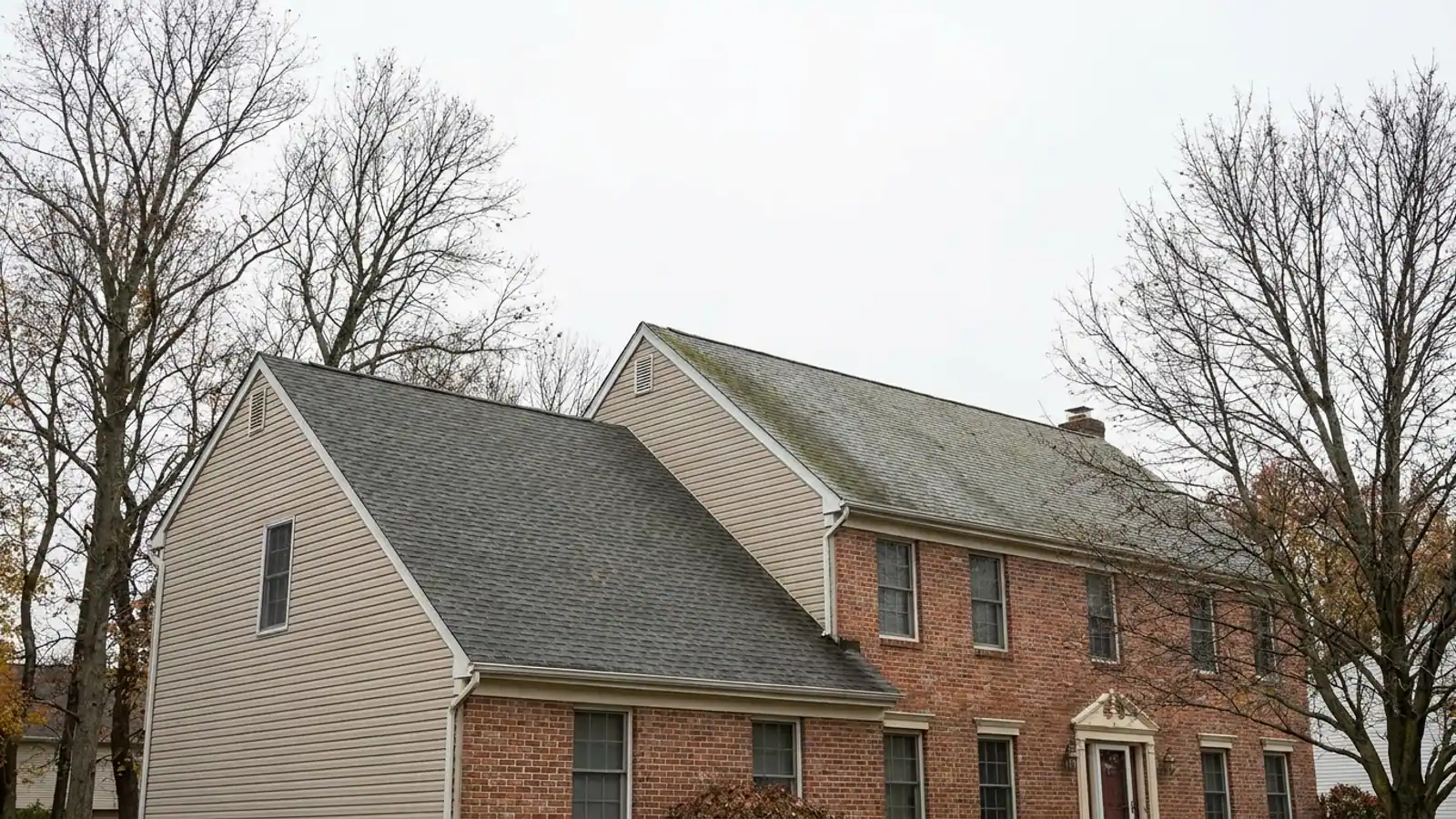
The first is weathering. An asphalt shingle gets its color from the ceramic-coated granules on the surface. Ultraviolet light, rain, freeze and thaw cycles and foot traffic all wear those granules down and dull them. A shingle that has been through fifteen New Jersey winters is a lighter, flatter version of the color that came out of the wrapper.
The second is the blend itself. Architectural shingles are not one color. They are a blend of several granule colors laid down in a pattern to create depth and shadow. Manufacturers adjust those blends over time, change granule suppliers, and discontinue colors outright. A color name that still exists today may not be mixed the same way it was when your roof went on.
The third is production variation. Shingles are made in runs, and two bundles of the same color from different runs can differ slightly. That is why installers mix bundles across a slope rather than working one bundle at a time. On a new roof it averages out. On a patch, there is nothing to average against.
Find out what is actually on your roof now
Before anyone guesses at a color, find the product. In order of how useful they are:
- Look in the attic, the garage and the crawlspace for a leftover bundle or a wrapper. The wrapper carries the manufacturer, the product line and the color name.
- Dig out the paperwork from the last roof. A contract, an invoice or a warranty registration will usually name the shingle.
- Check the municipal construction office records if a permit was pulled, and check old real estate listing photos for the roof before it weathered.
- If none of that turns up, have a roofer remove one shingle from an inconspicuous spot and hold it against current samples from the same manufacturer. A sample taken from a sheltered area under an overlap shows closer to the original color than one off the open field.
The GAF shingles guide walks through the product lines and color families, which is what you will be comparing against once you know what you have.
Where the mismatch shows, and where nobody sees it
The rule is simple: the eye compares colors that sit on the same plane, and largely forgives colors that sit on different planes.
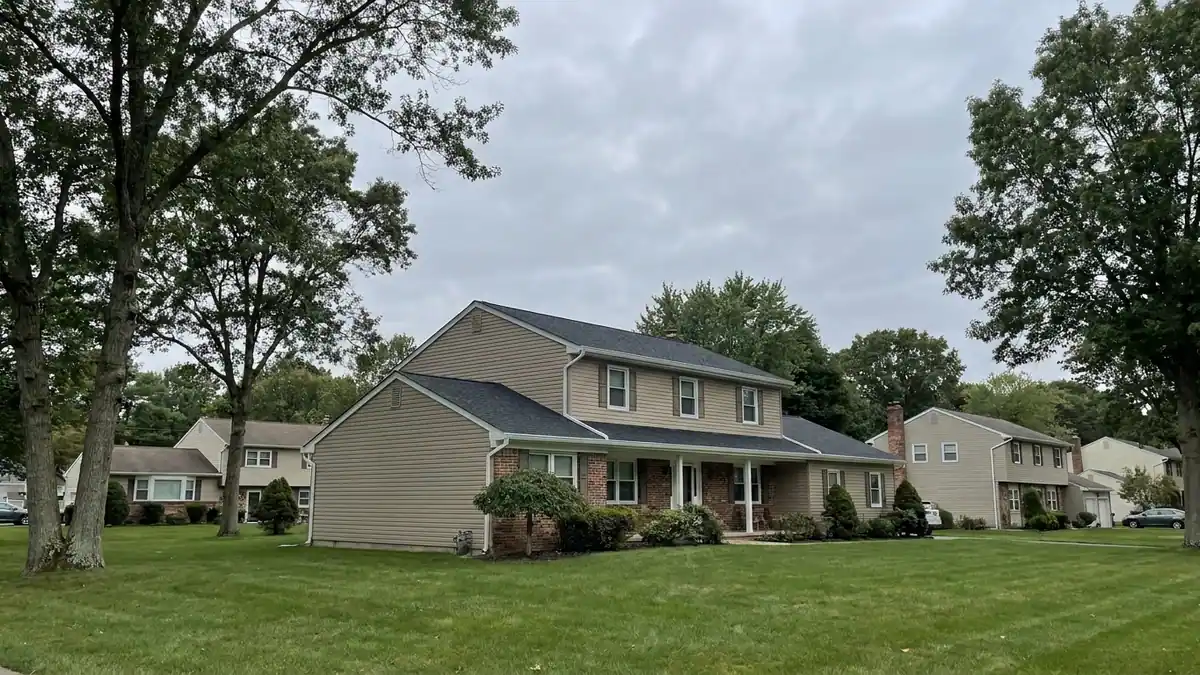
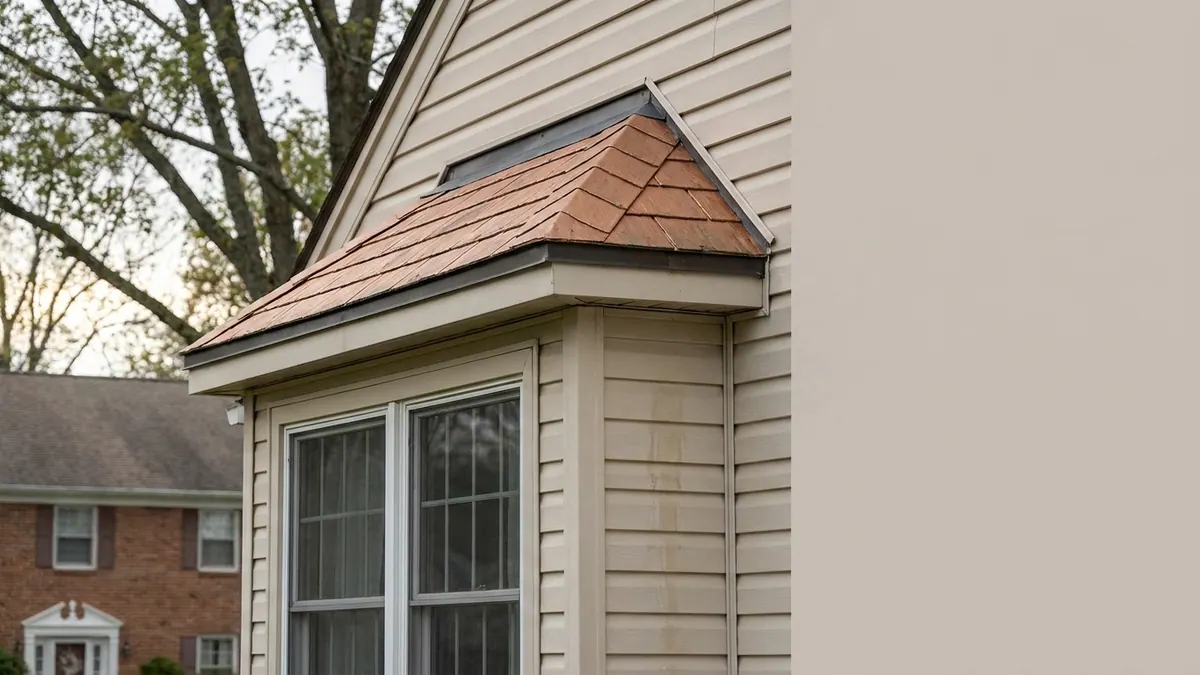
A detached garage twenty feet from the house is a separate building with its own light, its own angle to the sun and its own sightline. A noticeably different shingle on it reads as a different roof, not as a patch. The same is true of a rear addition with its own gable, a sunroom roof below the main eave, or a porch roof under a different pitch.
What does not work is a patch in the middle of a slope. If the addition's roof continues the main roof plane with no ridge, valley or wall between them, the line where old meets new will be a straight horizontal or vertical seam across a field of shingles, and straight seams are exactly what people notice. On the front elevation, that is permanent.
So before you talk about color, ask the roofer where the break is. A tie-in that lands at a ridge, in a valley or against a sidewall gives you a natural stopping point. A tie-in that lands mid-field does not.
Four ways to handle the color difference
| Approach | When it works | What you give up |
|---|---|---|
| ApproachClosest available match | When it worksSeparate plane, separate building, or a rear elevation nobody sees | What you give upStill visible up close and on a clear day |
| ApproachDeliberate contrast | When it worksDetached garage, shed, outbuilding, a sunroom already different in style | What you give upNothing, if the choice looks intentional |
| ApproachShingle the new section plus the one adjoining slope | When it worksThe break can land at a ridge or valley on the same elevation | What you give upCost of a slope you did not plan to replace |
| ApproachReshingle the whole roof | When it worksThe old roof is near the end of its life anyway, or the tie-in is mid-plane on the front | What you give upLarger project now, one roof age later |
The fourth row is more common than homeowners expect. If the existing roof is already fifteen or twenty years old, spending real money on a partial match buys you a mismatch that you then replace in a few years anyway. The signs you need a new roof guide covers how to judge where the old roof actually is in its life, which is the number that decides this.
What to put in writing before the crew shows up
Get the following on the estimate, in writing, before anything is ordered:
- The manufacturer, product line and exact color name of the shingle going on, not just "match existing."
- Where the tie-in line falls, described by ridge, valley or wall, not by a vague area.
- Matching starter strip at eaves and rakes and a hip and ridge cap made for that shingle line, rather than cut-up field shingles.
- New flashing at the junction between the addition roof and any wall above it, including step flashing and kickout flashing where the roof edge meets a wall.
- A clear statement that the color is a close match and not an exact one, so there is no argument on the day.
That last item sounds like fine print. It is the single most common source of friction on these jobs, because "match" means something different to a homeowner looking at a sample in a showroom and a roofer looking at a weathered roof from a ladder.
What this costs, and the project terms that matter
A garage or addition roof is a smaller job than a full replacement and is priced on its own scope. Full New Jersey asphalt replacements run $9,000 to $22,000 in standard-value towns, $14,000 to $35,000 in higher-value towns and $25,000 to $60,000 for large or luxury homes, with the band set by the municipality's median home value from ACS 2024 five-year estimates. The roof cost guide explains what drives the total on a real house. Do not accept a per-square number over the phone for a tie-in job, because the flashing work at the junction is where the labor actually is.
Three things on the Lightning side are worth knowing when you are weighing a partial against a full replacement. There is no deposit, so nothing is due until the work is finished and you have inspected it. There are no change orders, so extra shingle layers, soft decking and bad flashing found at the free inspection are priced into the written estimate rather than sprung on you mid-job. And Lightning pulls the permit and attends the municipal inspection under the New Jersey Uniform Construction Code, in every municipality, so you file nothing.
Most asphalt roof replacements are done in a single day, and a garage or addition roof on its own is smaller than that.
What to do next
Find the old shingle wrapper or paperwork if you can, then have someone look at the roof and tell you where the tie-in line falls. That one piece of information decides whether you are buying a bundle of close-enough shingles or planning a full roof replacement. Both are legitimate answers, and the difference is geometry, not sales pressure.
Lightning Construction's inspection and written estimate are free with no obligation, and a salesperson does come to the house. Request an estimate and ask specifically for the color name on paper and a photo of where the new shingles will stop.