Short answer
Do not sign anything at the door. A knock after a storm can be a legitimate local roofer or an out-of-area crew working the neighborhood, and the only way to tell is to check the registration, the insurance and the paperwork before anyone touches your roof. Get your own inspection, in writing, from a contractor you chose, then compare.
On this page
- What the pitch usually sounds like
- The two documents you get handed, and what each one does
- Why you should not let a stranger on your roof the same day
- How to check the storm damage claim yourself first
- What to verify before anyone writes you a contract
- The deposit question settles most of it
- Sometimes the door knocker is right about the roof
- What to do next
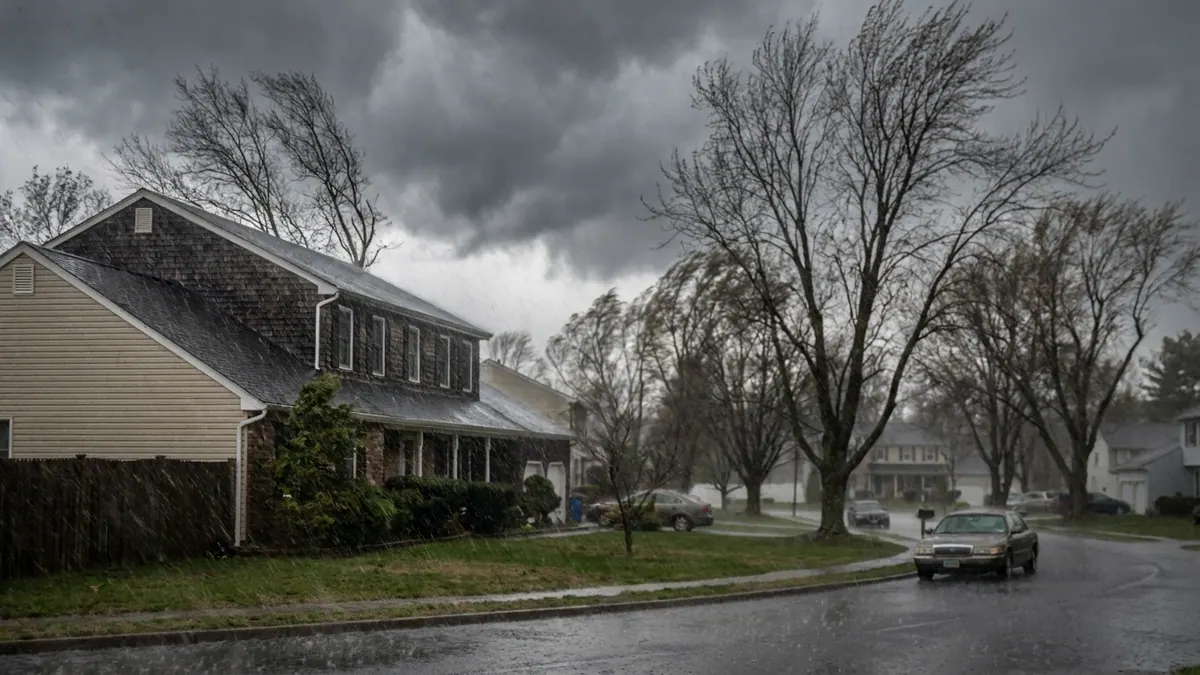
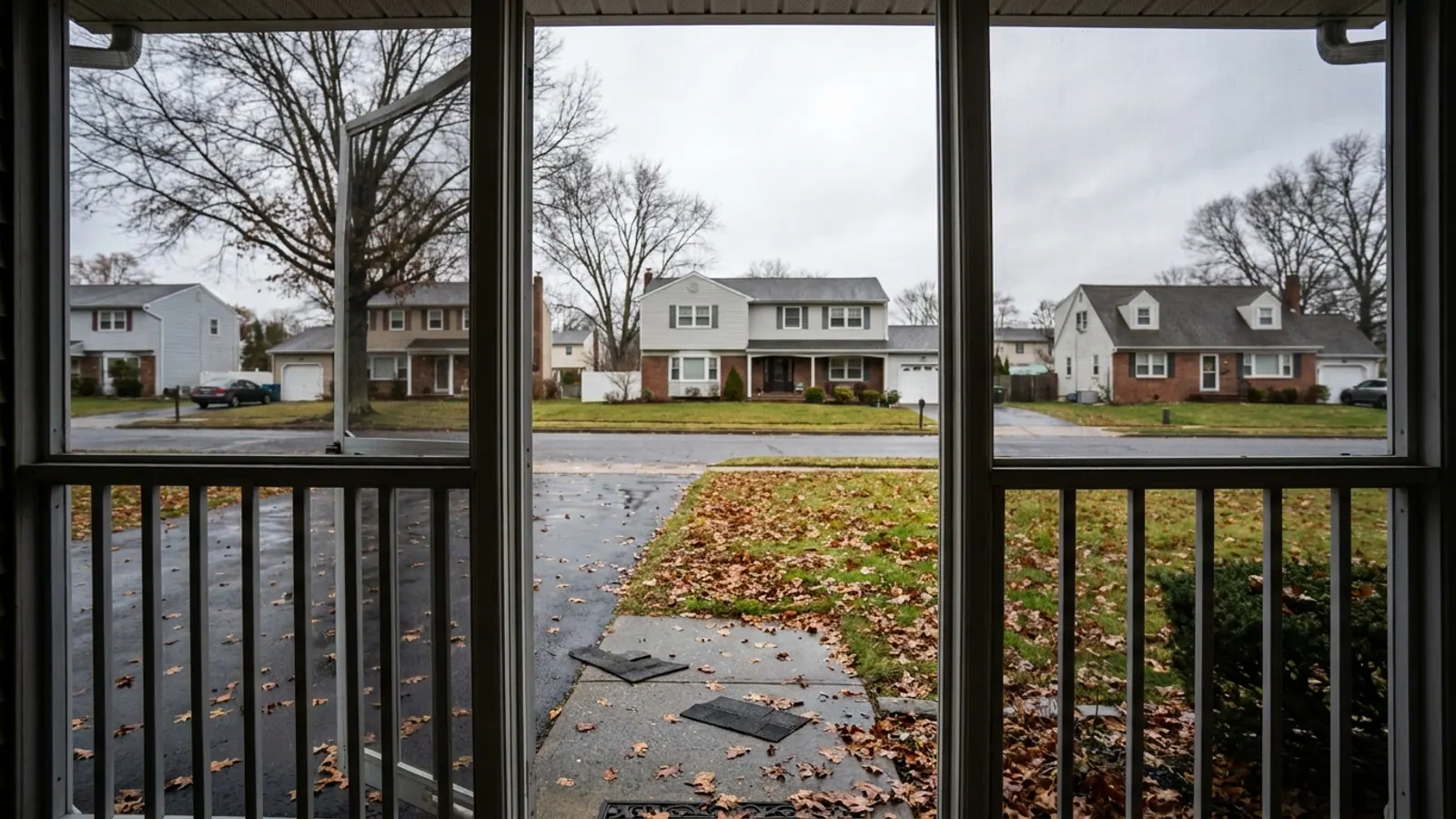
Do not sign anything at the door. Not an estimate, not a contract, not an "authorization to inspect," not a contingency agreement. After a hail line or a wind event moves across New Jersey, crews work the affected neighborhoods door to door, and some of them are good contractors and some of them will be out of the state by spring. The knock tells you nothing about which one is standing on your step.
Here is how to handle the conversation, what the paperwork actually does, and how to check your roof before you let anyone up on it.
What the pitch usually sounds like
The script is consistent because it works.
He was already working in the neighborhood. He noticed damage on your roof from the street. He can get the whole roof paid for by your insurance company. He only needs you to sign a quick form so he can get up there and document it. The adjuster is coming through this week and you need to move fast.
Every one of those lines is designed to do one thing, which is to get a signature while he is standing there. Urgency is the tool. A roof that has real storm damage today will still have real storm damage next Tuesday, and a claim deadline is set by your policy, not by his schedule.
The two documents you get handed, and what each one does
The "authorization to inspect"
Sometimes this is exactly what the name says. Often it is a one page form with contract language on the back or below the signature line, and signing it assigns him the job if the claim is approved. Read every line, including anything in small type under the signature block. If you are not willing to read all of it on your porch, you are not willing to sign it on your porch.
The contingency agreement
This one commits you to use that contractor if your insurer approves the claim. It is frequently signed before anyone has written a price, which means you are agreeing to a job with no number attached to it. You do not need to sign one to file a claim, and you can hire any registered contractor you want to do the work regardless of who found the damage. Our guide to filing a roof insurance claim in New Jersey walks through how the process actually runs, including what the adjuster looks at and where homeowners lose money.
Why you should not let a stranger on your roof the same day
Once someone has been on your roof alone, you cannot prove what it looked like before he went up. Lifted tabs, scuffed granules and creased shingles can all be created by a boot. That is not an accusation against everyone who knocks. It is a reason to be present.
Set the inspection for a time you can be home. Stand in the driveway while he is up there. Ask for photographs of every item he calls damage, with enough of the surrounding roof in frame that you can tell where on the house it is. A real inspector hands you the photos and explains which items are failing now and which are simply aging. If the photos never arrive, or they are generic, or they show a roof that is not yours, you have your answer.
How to check the storm damage claim yourself first
You can do a credible first pass from the ground in fifteen minutes.
- Walk the full perimeter of the house. Use binoculars or your phone camera zoomed all the way in, and photograph each slope.
- Look for missing shingles, tabs folded back, bare dark patches where granules are gone, and shingles that sit out of line with the course around them.
- Look at the flashing. Bent or lifted metal at a chimney, a sidewall or a valley is the kind of thing wind actually does.
- Check the gutters and the splash zone at the downspouts for a heavy load of granules, and check for dents on gutters, downspouts and metal vent caps, which is where hail shows up first.
- Go into the attic with a flashlight. Look for daylight at the sheathing, dark staining on the rafters, and wet insulation under the deck.
- Walk the yard. Shingle fragments on the lawn, a tree limb down, or a damaged fence all support a storm claim and all belong in your photo file.
Date the photos. If you end up filing, you want a record that starts before any contractor was on the roof. The storm damage guide covers what to do in the first 48 hours, including temporary tarping and documenting interior damage.
What to verify before anyone writes you a contract
Ask for these and check them yourself. A contractor who is annoyed by the questions has told you something useful.
| What to ask for | What you are checking |
|---|---|
| What to ask forNew Jersey Home Improvement Contractor registration number | What you are checkingThat the company is registered to do this work in this state, and that the name on the registration matches the name on the contract |
| What to ask forCertificate of insurance sent directly from the carrier | What you are checkingGeneral liability and workers compensation, current dates, your address as certificate holder |
| What to ask forA local address and phone number | What you are checkingWhether there is somewhere to go in year three when a seam opens up |
| What to ask forWho pulls the permit | What you are checkingThe contractor should pull it from your municipality's construction office and attend the inspection |
| What to ask forThe full written price, with decking and flashing addressed | What you are checkingWhether the number can change after the tear-off |
| What to ask forManufacturer certification | What you are checkingWhether the crew is certified by the shingle manufacturer, and at what level |
Lightning Construction is registered in New Jersey under Home Improvement Contractor number 13VH12437000, is licensed and insured, and is GAF Certified. The company pulls the permit in every municipality under the New Jersey Uniform Construction Code and attends the inspection, so you file nothing. There is no deposit, so nothing is due until the work is finished and you have inspected it. For the rest of the vetting questions, including the red flags that should end a conversation, read how to choose a roofing contractor in NJ.
The deposit question settles most of it
The single fastest filter is money up front. A crew that needs a large check before any material is delivered has a business model that depends on that check. Lightning takes no deposit on any job, and writes no change orders, because the conditions that normally trigger one, extra shingle layers, rotted decking and unusable flashing, are found at the free inspection and priced into the written estimate. That estimate is the final price.
Ask the door knocker what happens if the crew finds two layers up there. If the answer involves a per sheet charge to be determined later, you have a quote that is not a price.
Sometimes the door knocker is right about the roof
That part is worth saying plainly. Wind does lift shingles that look fine from the street, and a roof can be genuinely finished without a drop of water reaching your ceiling yet. The claim that you have damage may be true even when the person making it is not someone you want working on your house.
So separate the two questions. Question one is whether your roof is damaged. Question two is who fixes it. Get your own inspection from a contractor you chose, in writing, and compare it against whatever the knocker told you. If both say the same thing, you have confirmation. If only one of them found $20,000 of damage, you know which to trust.
What to do next
Take the card, say you will call after you have had the roof looked at, and close the door. Then photograph your roof from the ground, check the attic, and book an inspection on your own schedule. Lightning Construction covers all 21 New Jersey counties, the inspection and written estimate are free with no obligation, and a salesperson comes to the house, so you will know exactly what the appointment is.
When you are ready, see what is included in a full roof replacement or request a free estimate. Most asphalt roof replacements are torn off and finished in a single day, which means the real decision in front of you is who you hire, not how long you will be living under tarps.