Short answer
Standing seam uses long vertical panels joined by raised seams with the fasteners hidden underneath, giving a clean modern line and the fewest points where water can get in. Metal shingles are smaller panels pressed to look like slate, shake or tile, and they suit traditional New Jersey houses where a standing seam roof would look out of place.
On this page
Metal roofing is not one product. The two systems New Jersey homeowners actually choose between look different, install differently and suit different houses, and the decision is usually settled by the house rather than by the specification sheet.
What standing seam actually is
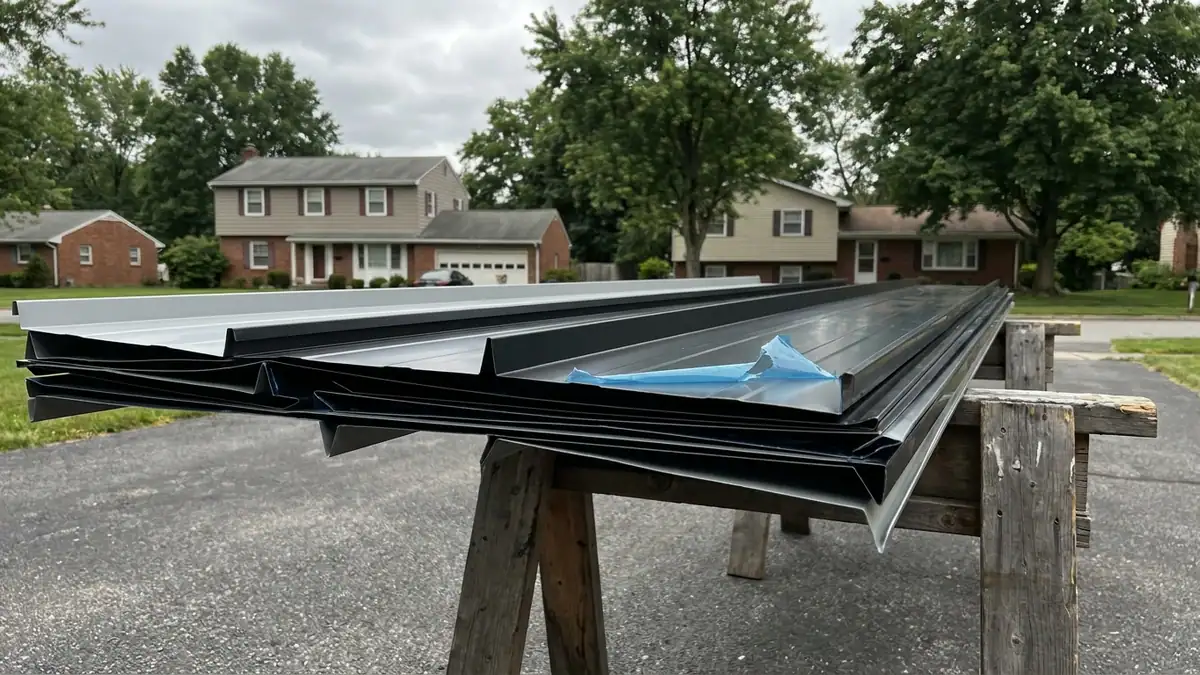
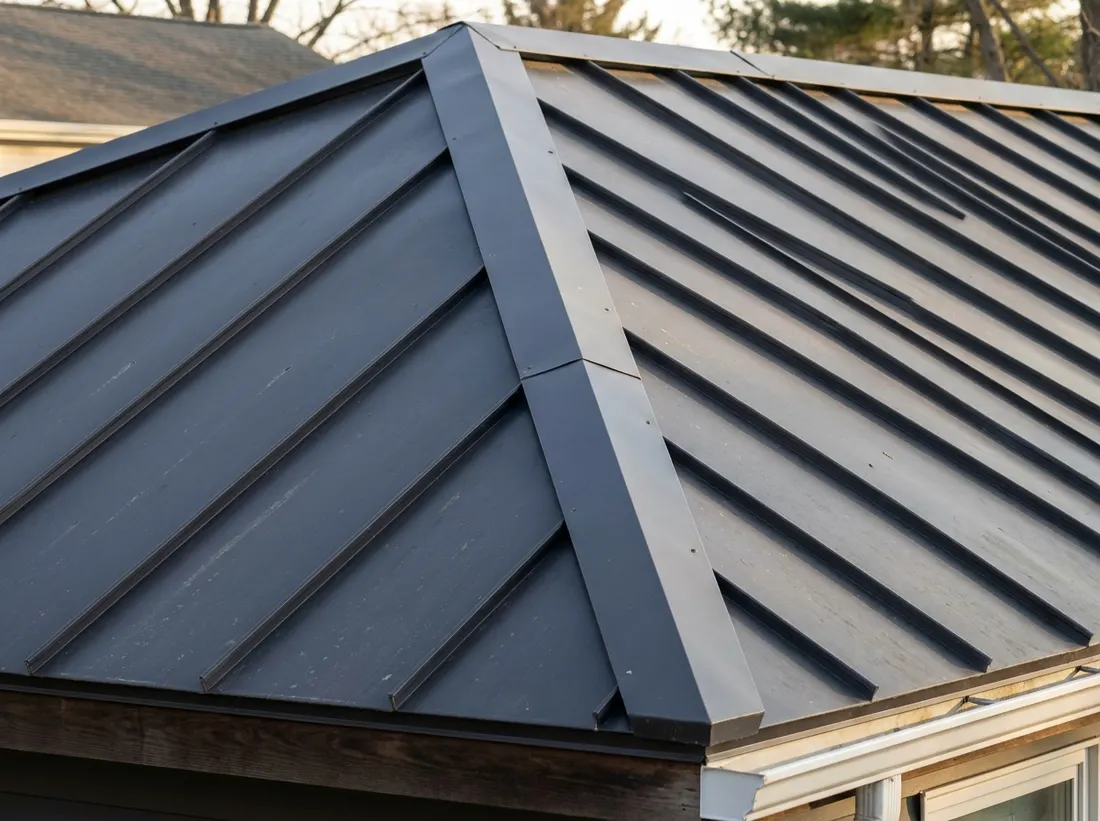
Standing seam is made of long vertical panels that run from the ridge down to the eave in one continuous piece. Where two panels meet, the edges are turned up and locked together into a raised seam — the "standing" seam that gives the system its name.
The important part is where the fasteners are. They sit under the seam, clipped to the decking and then covered when the next panel locks over them. Nothing that holds the roof down is exposed to weather.
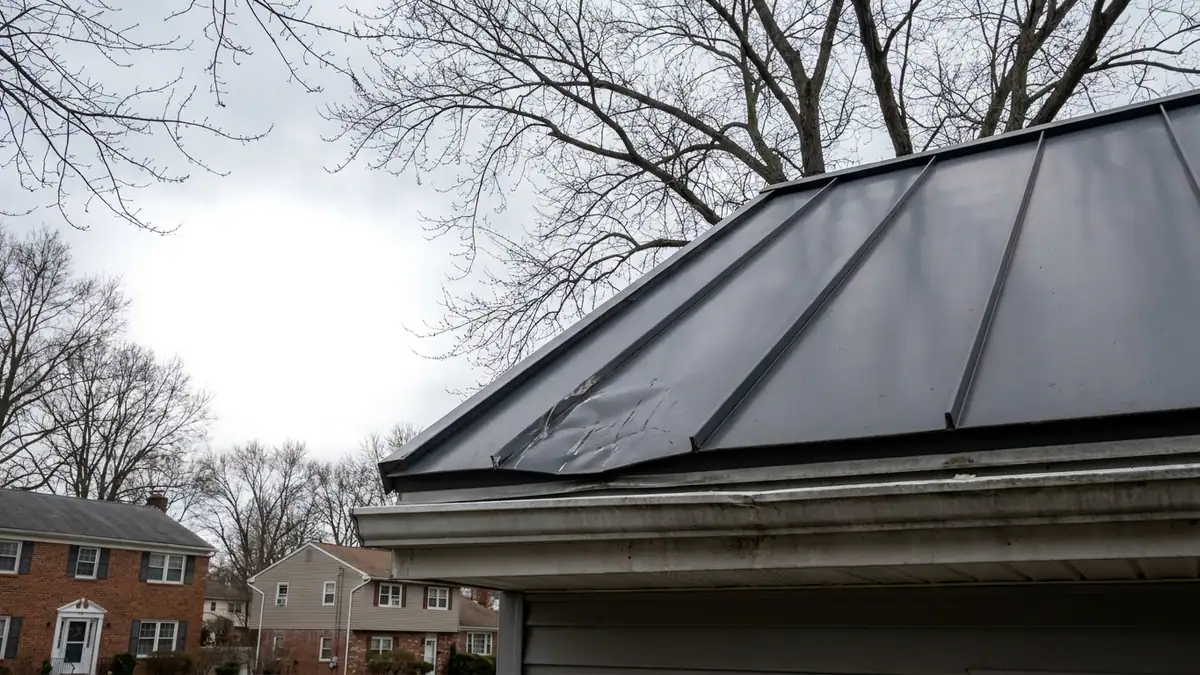
That matters because exposed fasteners are the part of a metal roof that fails first. Every screw through the surface is a hole with a rubber washer in it, and rubber washers age. A concealed-fastener system removes that failure mode entirely.
The look is clean, linear and modern. Long unbroken lines, strong shadow from the seams, no visible pattern repeat.
What metal shingles are
Metal shingles, sometimes sold as metal panels or stone-coated steel, are smaller pressed pieces that interlock. They are stamped and finished to read as slate, wood shake or tile from the street.
You get the same underlying material advantages — metal does not rot, does not absorb water, and is not going to lose granules — in a form that does not announce itself as a metal roof. On a colonial, a Cape Cod or a Victorian, that is frequently the deciding factor. A standing seam roof on a traditional center-hall colonial can read as wrong in a way that is hard to undo once it is up.
Metal shingles also handle complicated roofs more gracefully. A roof with a lot of hips, dormers and direction changes has few long straight runs for standing seam panels to exploit, and the smaller pieces work around those breaks with less cutting and less waste.
Comparing the two
| Standing seam | Metal shingles | |
|---|---|---|
| Fasteners | Standing seamHidden under the seam | Metal shinglesConcealed by the overlapping course |
| Look | Standing seamModern, linear, strong vertical lines | Metal shinglesTraditional, reads as slate, shake or tile |
| Best roof shape | Standing seamLong simple planes | Metal shinglesComplex roofs with hips and dormers |
| Snow behavior | Standing seamSheds readily off a smooth slope | Metal shinglesHolds more, releases gradually |
| Material life | Standing seam50-plus years | Metal shingles50-plus years |
| Relative cost | Standing seamHigher | Metal shinglesGenerally lower than standing seam |
What both of them cost in New Jersey
Metal roofing in New Jersey runs $18,000 to $35,000 in standard-value towns, $28,000 to $55,000 in higher-value towns, and $45,000 to $120,000 on large or luxury homes. Which band applies is driven by the median home value of the municipality, because that tracks the size and complexity of the houses in it rather than the value itself.
Those are wide ranges on purpose. Roof size, pitch, how many direction changes there are, and the finish specified all move the number substantially, which is why the only figure worth acting on is one somebody produced after measuring your roof.
It is more than asphalt, which runs $9,000 to $22,000 in the same standard band. The straightforward comparison of the two materials over their lifespans is in the asphalt vs metal guide, and the full picture of standing seam specifically is in the metal roofing guide.
The things that decide it in practice
Your roof's shape
Look at your house from the street and count the direction changes. Two or three large clean planes favor standing seam, which is at its best and its most economical over long uninterrupted runs. Six dormers, three hips and a turret favor shingles.
Your neighborhood and your house's age
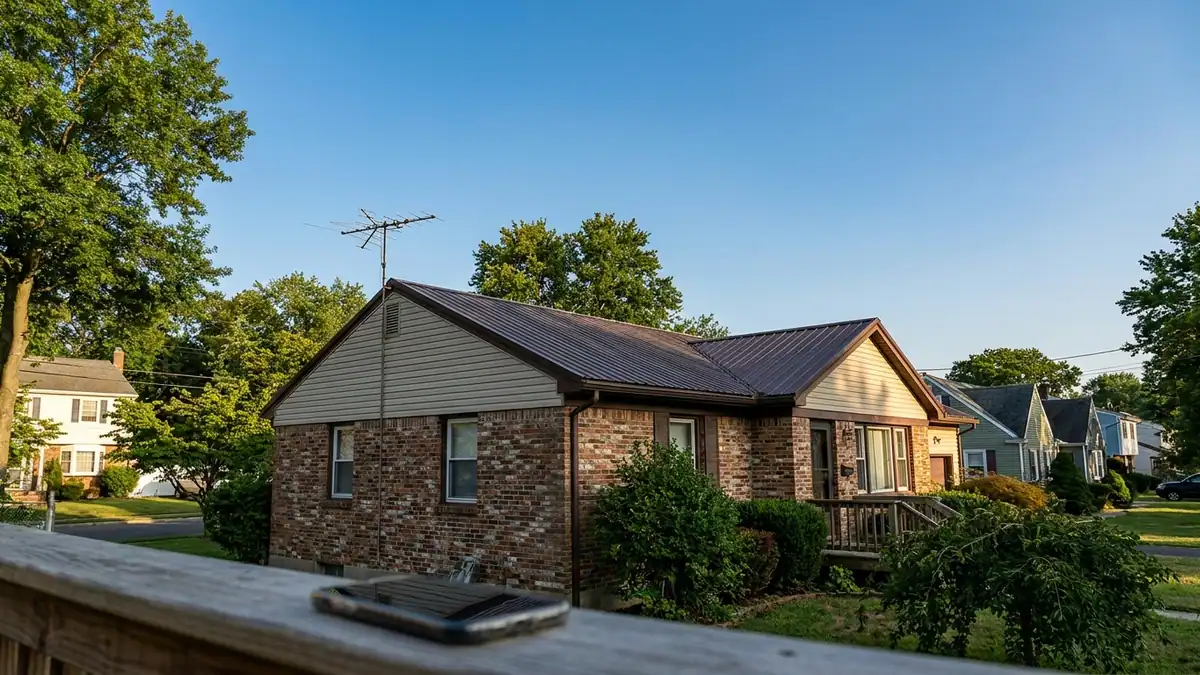
This is not about rules, it is about whether the result looks intentional. A modern build, a barn-style house, a farmhouse or a shore home often carries standing seam beautifully. A 1960s colonial in a street of colonials usually does not.
Some New Jersey municipalities have historic districts with review requirements that affect what can go on a visible roof plane. Worth checking before falling in love with a profile.
Snow
New Jersey's ground snow loads run from 30 psf in Somerset County up to 50 psf in Sussex, per New Jersey DCA Bulletin 19-1, with Passaic at 40 and Warren, Hunterdon and Morris at 35. Standing seam sheds snow off a smooth slope readily, which is usually welcome — but on a steep roof above a doorway, a walkway or a driveway, it can release in a single sheet. Snow guards solve it, and they are much easier to plan for than to retrofit.
How long you are staying
Both systems will outlast most people's time in the house. If you are five years from selling, the resale question matters more than the fifty-year one, and that argument runs differently in different markets.
Installation is not the same job
Metal is not asphalt with different material. Panels are formed to length, and standing seam panels for a large roof are often rolled on site because they are too long to transport. Fastening allows the metal to expand and contract with temperature, which is why a metal roof cannot simply be nailed down flat.
Most asphalt roof replacements are finished in a single day. Standing seam takes two to four. That is a real difference in disruption and it is worth knowing before you plan around it.
Underneath, the decking still has to be sound. A metal roof fastens to the same wood everything else fastens to, and a fifty-year roof over questionable plywood is a fifty-year roof on a foundation that will not last that long.
Getting a real number for your house
Lightning Construction installs standing seam, metal shingle and panel systems across all 21 New Jersey counties. The inspection and the written estimate are free with no obligation, there is no deposit, and there are no change orders, so the written estimate is the final price.
If you are weighing the two, the most useful next step is having someone look at your actual roof planes and tell you which system your house is asking for. See the metal roofing page or request a free estimate.