Short answer
Siding price is driven by the wall area being covered, the material and profile you pick, whether the old siding comes off, and how much trim, soffit and fascia work rides along with it. The shape of the house matters as much as its size, because gables, dormers, corners and second-story access all add labor without adding much square footage. Siding in New Jersey runs $10,000-$22,000 in standard-value towns, $16,000-$38,000 in higher-value towns and $30,000-$70,000 for large or luxury homes.
On this page
- Wall area is not the same as house square footage
- Shape and complexity cost more than size
- The material, and what it changes besides the panel
- Tear-off, disposal and what is behind the wall
- Trim, soffit, fascia and the accessories
- Where New Jersey siding prices land
- How to compare two siding quotes
- What to do next
Siding price comes down to four things: how much wall there is, what material goes on it, whether the old siding comes off first, and how much trim, soffit and fascia work is included. Everything else is a variation on those four. A quote that looks high next to another one is usually including something the cheap one left out, and the gap is almost never the panel itself.
Here is what each of those actually costs you, and how to see it in a written estimate before you sign anything.
Wall area is not the same as house square footage
A 2,000-square-foot house does not have 2,000 square feet of wall. Siding is measured in squares of wall surface, so a two-story colonial with a small footprint can have more siding on it than a sprawling ranch with the same interior area. Gable ends, dormer cheeks, knee walls above a porch roof and the wall behind an attached garage all count.
That is why the first thing a real estimator does is measure the elevations, not look up the property record. If a contractor quotes you a siding job over the phone from your address, he is guessing, and the guess gets corrected later at your expense.
Shape and complexity cost more than size
Two houses with the same wall area can be thousands apart because of shape. Every one of these adds labor without adding much surface:
- Outside and inside corners, each of which needs a corner post cut and set plumb
- Windows and doors, each of which needs trim and cut panels on four sides
- Gables and dormers, where every course is a angled cut and waste goes up
- Bump-outs, bay walls and cantilevers
- Porch ceilings and soffit returns
- Wall behind a deck, which may need the deck partly disassembled to reach
A plain rectangular ranch with four corners and eight windows is the cheapest wall area to cover in New Jersey. A center-hall colonial with two dormers, a bay window and a wraparound porch is the most expensive per square foot, and nothing about that is a markup.
The material, and what it changes besides the panel
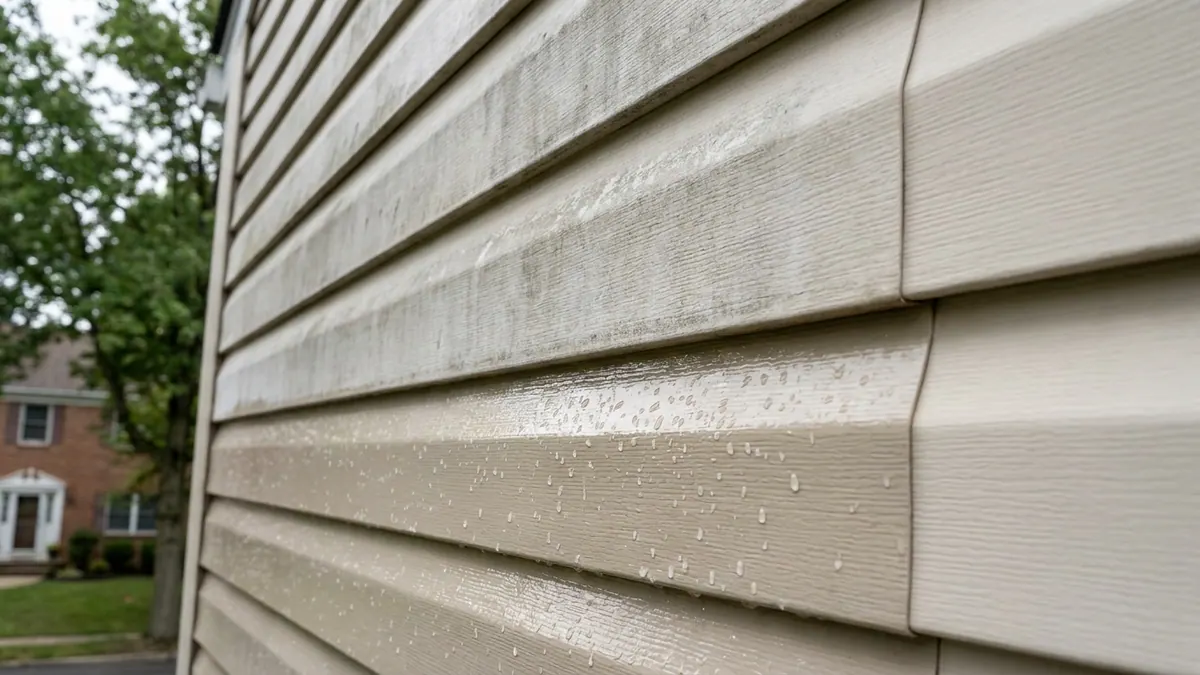
Standard vinyl, insulated vinyl and fiber cement sit at three different price levels, and the gap is not only the material cost. Fiber cement is heavier, cuts slower, needs different fasteners and usually takes a larger crew and more days. Insulated vinyl has foam bonded to each panel, so it is thicker, needs its own trim details, and is less forgiving of a wall that is out of plane.
Profile matters too. Dutch lap and clapboard in a common exposure are the least expensive to install. Board-and-batten, shake panels, scallops and any accent field mixed into a wall all add cut time and material waste. The siding options guide compares the materials themselves in depth, including how each one holds up in New Jersey weather.
Color can affect lead time more than price. Common colors are stocked; a specialty color or a discontinued profile may be a special order, which affects scheduling, not the labor.
Tear-off, disposal and what is behind the wall
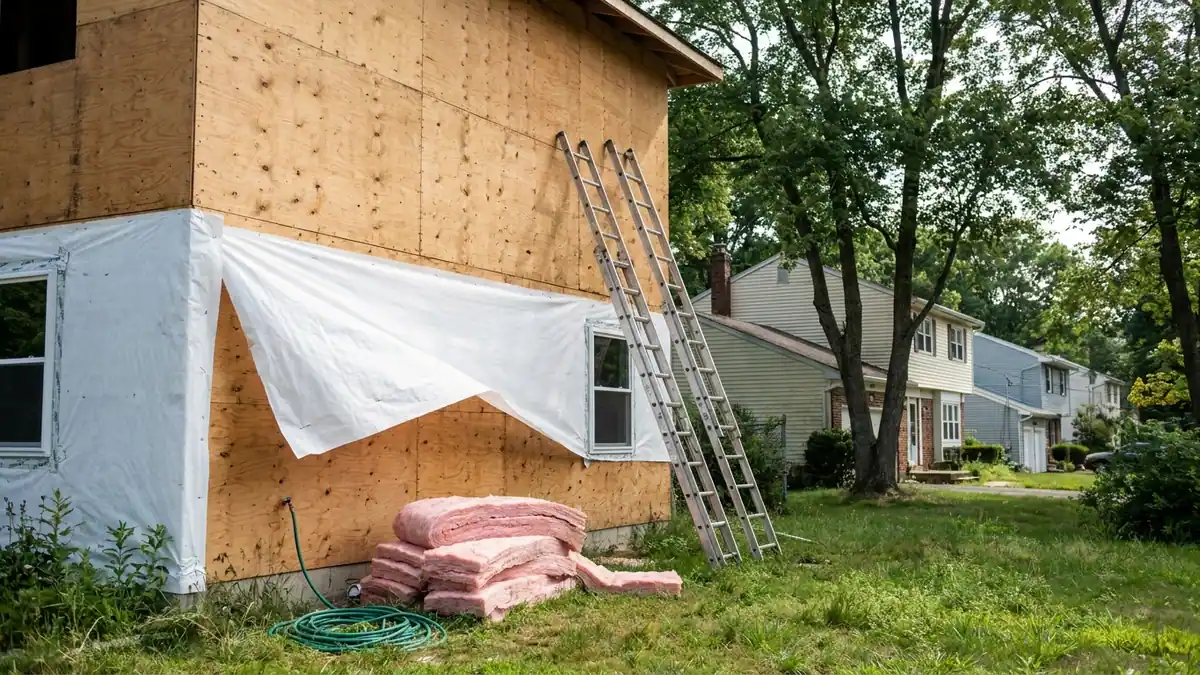
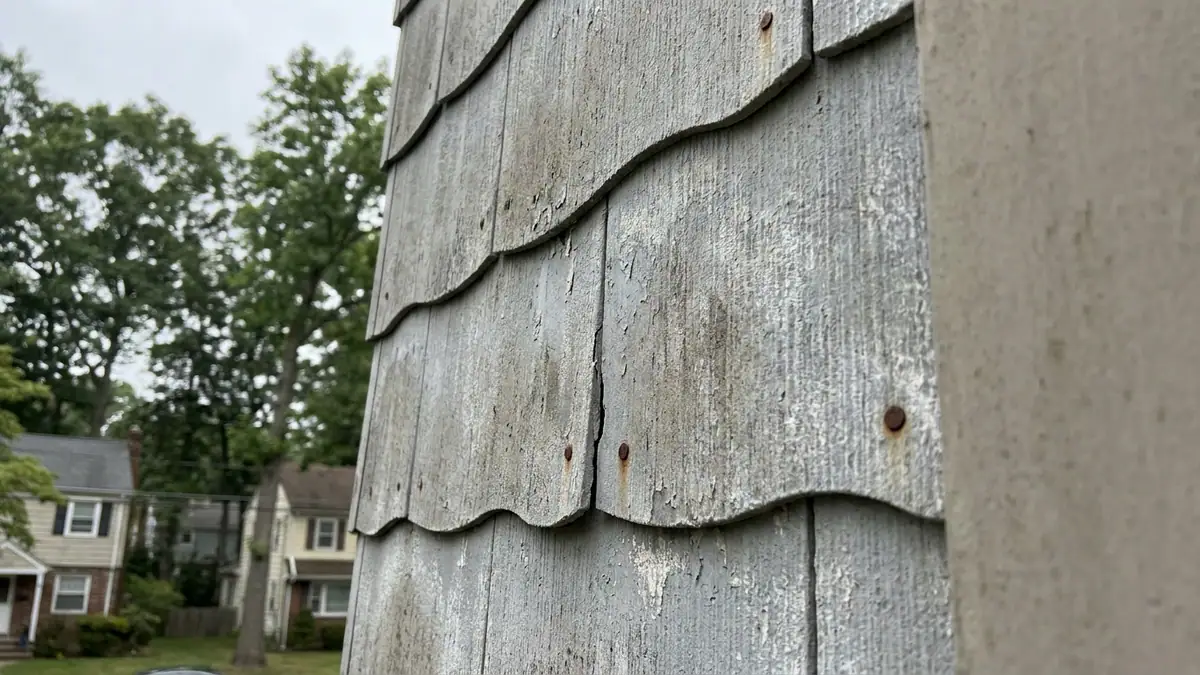
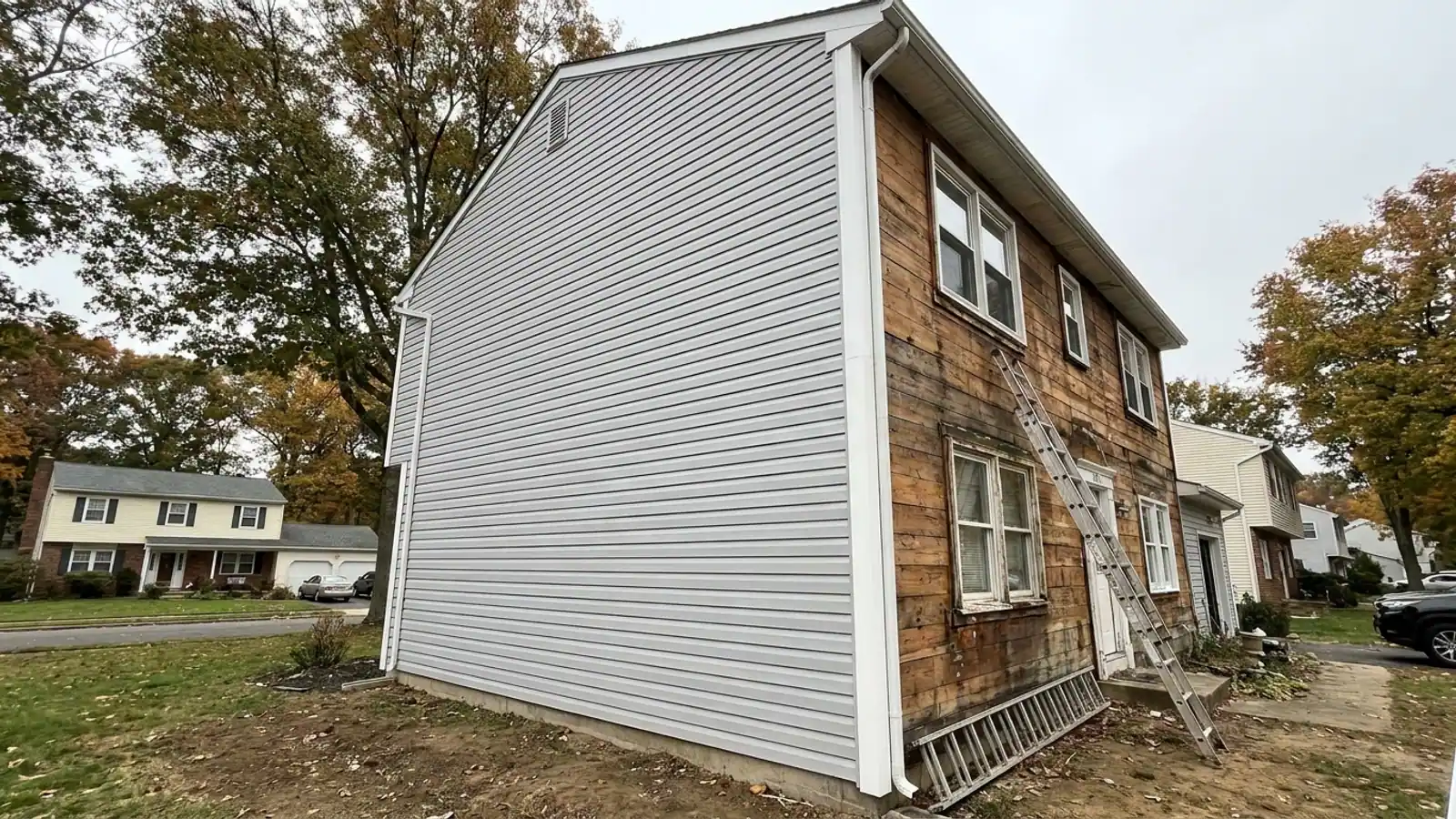
Removing the old siding is real labor and a real dumpster, and it is the single biggest line a low quote leaves out. Cedar shakes and older fiber-cement products come off slower than vinyl. Multiple layers come off slower still.
What matters more than the removal cost is what the removal exposes. Once the wall is open, the crew can see the sheathing, the house wrap and the flashing at every window head and wall-to-roof junction. Soft sheathing has to be replaced. Missing or torn house wrap has to be replaced. Those are the conditions that turn into a change order on most jobs.
Lightning Construction does not write change orders. The conditions that normally trigger one are found at the free inspection and priced into the written estimate, so the number you sign is the number you pay, and nothing is due until the work is finished and you have inspected it.
Trim, soffit, fascia and the accessories
This is where two quotes for the same house diverge most. Ask specifically whether each of the following is in the price:
- Wrapping window and door trim in aluminum coil, or replacing it
- New soffit and fascia, or reusing the existing
- Frieze board, rake board and corner posts
- Housewrap over the full wall, taped at seams
- Mounting blocks for lights, hose bibs, dryer vents and electrical outlets
- Removing and reinstalling shutters, or new shutters
- Detached garage or shed, which is a separate structure and a separate number
Coil-wrapping trim on a house with a lot of windows can be a significant part of the job. So can soffit and fascia, especially on a house where the fascia is already soft behind the gutters.
Gutters usually have to come down for the fascia work and go back up after. Old aluminum bends when it is pulled, so plenty of homeowners replace them in the same visit rather than reinstalling a set that is near the end of its life. If that applies to you, look at seamless gutters while the crew is already on the wall.
Where New Jersey siding prices land
Lightning Construction bands its ranges by the municipality's median home value, from ACS 2024 five-year estimates.
| Band | Siding range | What is typically in it |
|---|---|---|
| BandStandard-value towns | Siding range$10,000-$22,000 | What is typically in itVinyl or insulated vinyl, full tear-off, wrap, trim and accessories |
| BandHigher-value towns | Siding range$16,000-$38,000 | What is typically in itLarger walls, more complex elevations, more fiber cement |
| BandLarge or luxury homes | Siding range$30,000-$70,000 | What is typically in itHigh wall area, heavy trim packages, multi-material elevations |
These are ranges, not quotes. Where your house lands inside a band depends on the wall area, the material and the trim scope described above. No one can price a siding job accurately without measuring the elevations in person.
How to compare two siding quotes
- Check that both list the same material, manufacturer line and profile, not just "vinyl siding."
- Check the wall area each one measured. If they differ by more than a few squares, one of them measured wrong.
- Confirm whether tear-off and disposal are in the price, and whether new house wrap is included.
- Confirm trim: window and door wrap, soffit, fascia, corners and mounting blocks, item by item.
- Ask what happens if rotted sheathing is found, and get the answer in writing.
- Confirm who pulls the permit and who attends the municipal inspection.
On that last point, Lightning pulls the permit from your municipality's own construction office under the New Jersey Uniform Construction Code, and attends the inspection. You file nothing.
What to do next
Get the walls measured before you compare anything. Lightning Construction is veteran-owned, GAF Certified, licensed and insured under New Jersey Home Improvement Contractor registration 13VH12437000, and rated 4.9 out of 5 from 264 Google reviews. The inspection and the written estimate are free with no obligation, and a salesperson does come to the house.
See what is covered on the siding page, or book the free estimate and get a real number for your walls.