Short answer
In most New Jersey municipalities, yes. A full siding replacement is generally treated as permitted building work under the New Jersey Uniform Construction Code, while small patch repairs are often handled as ordinary maintenance, and the local construction office makes that call. Lightning Construction pulls the permit and attends the inspection in every municipality, so you file nothing.
On this page
- Does siding work need a permit in New Jersey?
- Who pulls the permit, and who should
- What the inspector is actually looking at
- Repairs versus a full replacement
- HOA or historic approval is not a building permit
- If the roof is going too, permit both together
- What happens when siding was installed without a permit
- What to ask for in writing
- What to do next
In most New Jersey towns, replacing the siding on your house requires a municipal permit. Siding is generally treated as building work under the New Jersey Uniform Construction Code, and a full-house replacement is not the same thing as swapping a cracked panel. Small repairs are frequently handled as ordinary maintenance with no permit at all. The line between the two is drawn by your municipal construction office, not by the contractor and not by a blog post, which is why the contractor should be the one making that call with the town before anything comes off the wall.
The practical answer for a homeowner is simpler than the code question. If Lightning Construction is doing the siding, Lightning pulls the permit from your municipality's construction office and attends the inspection. You do not file an application, you do not stand in line at town hall, and you do not schedule an inspector.
Does siding work need a permit in New Jersey?
Assume yes for a replacement, and let the construction office confirm it.
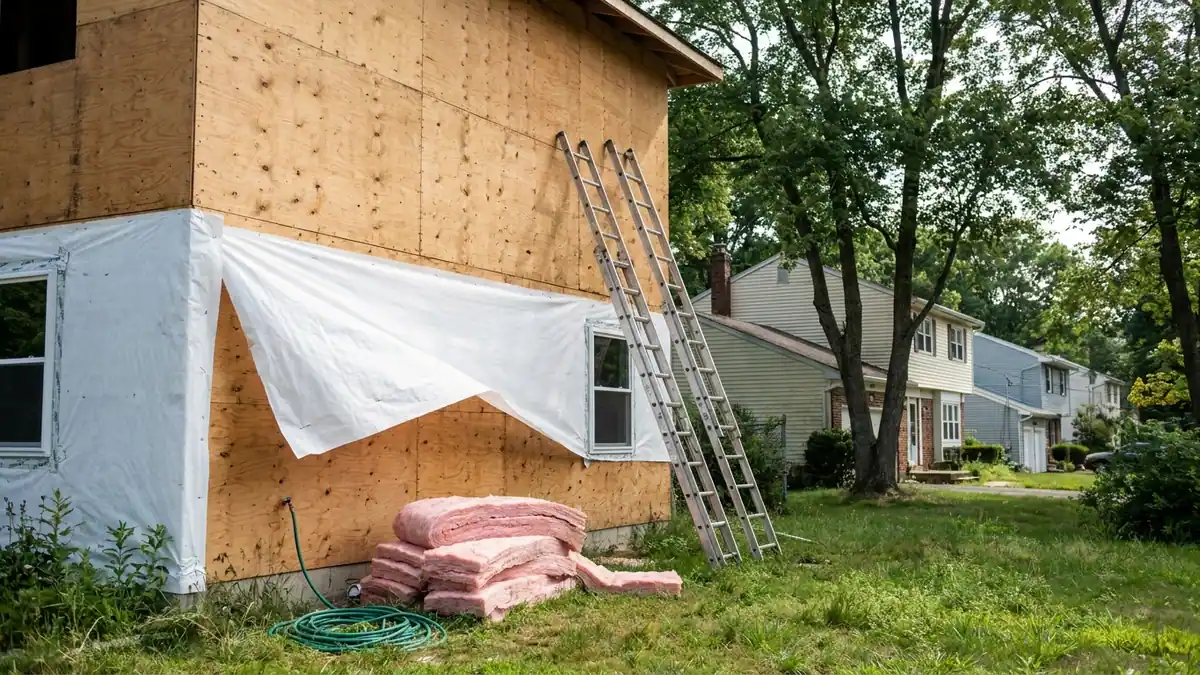
A reside touches things the code cares about. The crew opens up the wall assembly, exposes or replaces house wrap, and re-flashes penetrations. On many houses it also involves trim, soffit and fascia. Those are all building-subcode items. That is why a full replacement is normally permitted while a patch is normally not.
Requirements are not identical across all 21 counties. New Jersey has 544 municipalities and each one runs its own construction office, with its own application forms, fee schedule and inspection scheduling. Some towns treat a like-for-like reside as a straightforward building permit. Some add review if the property sits in a historic district or a flood-prone area. A contractor who works statewide already knows the local desk; a contractor who tells you "siding never needs a permit anywhere" is guessing, and you should notice that.
Where a permit is more likely, not less
- The sheathing or house wrap is being replaced, not just covered.
- The job includes trim, soffit and fascia work at the roof edge.
- Rot is found and framing or sheathing has to be repaired.
- The property is in a designated historic district, where a separate design review can apply on top of the building permit.
Who pulls the permit, and who should
The contractor should. When a homeowner files as an owner-builder, the homeowner becomes the responsible party for the work in the municipality's file. That is a bad trade on a five-figure job, and it is a red flag when a contractor asks for it. It usually means the contractor does not want their registration number attached to the permit.
Here is the sequence on a Lightning siding job:
- Free inspection at the house. A salesperson comes out, walks the walls, and prices the work. There is no obligation and nothing is due.
- Written estimate. It is the final price. Conditions that normally trigger a change order midway through a siding job, like rot behind the old panels or failed house wrap, are found at the inspection and priced into the quote.
- Lightning files the permit application with your municipal construction office under the New Jersey Uniform Construction Code.
- The crew works. Old siding off, wall assembly checked and corrected, house wrap and flashing, then new siding, trim and accessories.
- Lightning attends the municipal inspection.
- You inspect the finished work, and then you pay. There is no deposit on any job.
What the inspector is actually looking at
Not your color choice. The inspection is about the assembly behind the finish and how it is fastened.
| What the inspector checks | Why it matters on your wall |
|---|---|
| What the inspector checksWeather-resistive barrier | Why it matters on your wallHouse wrap has to be continuous and lapped correctly or water gets to the sheathing |
| What the inspector checksFlashing at openings and penetrations | Why it matters on your wallThis is where wall leaks start, and it is buried once siding goes on |
| What the inspector checksFastening | Why it matters on your wallPanels nailed too tight or too loose fail early, and vinyl has to be able to move |
| What the inspector checksSheathing condition and repairs | Why it matters on your wallSoft or rotted sheathing will not hold a fastener |
| What the inspector checksTrim, soffit and fascia terminations | Why it matters on your wallBad terminations at the roof edge send water behind the wall |
Every one of those items is invisible after the last panel is hung. That is the real value of the inspection. It is a second set of eyes on the parts of the job you will never see again.
Repairs versus a full replacement
A true patch is usually not permitted work. Replacing a handful of panels a fallen branch cracked, or a rotted length of fascia, sits in the ordinary maintenance category in most towns. Ask the construction office if you are unsure, because the fee for asking is nothing and the cost of guessing wrong shows up later.
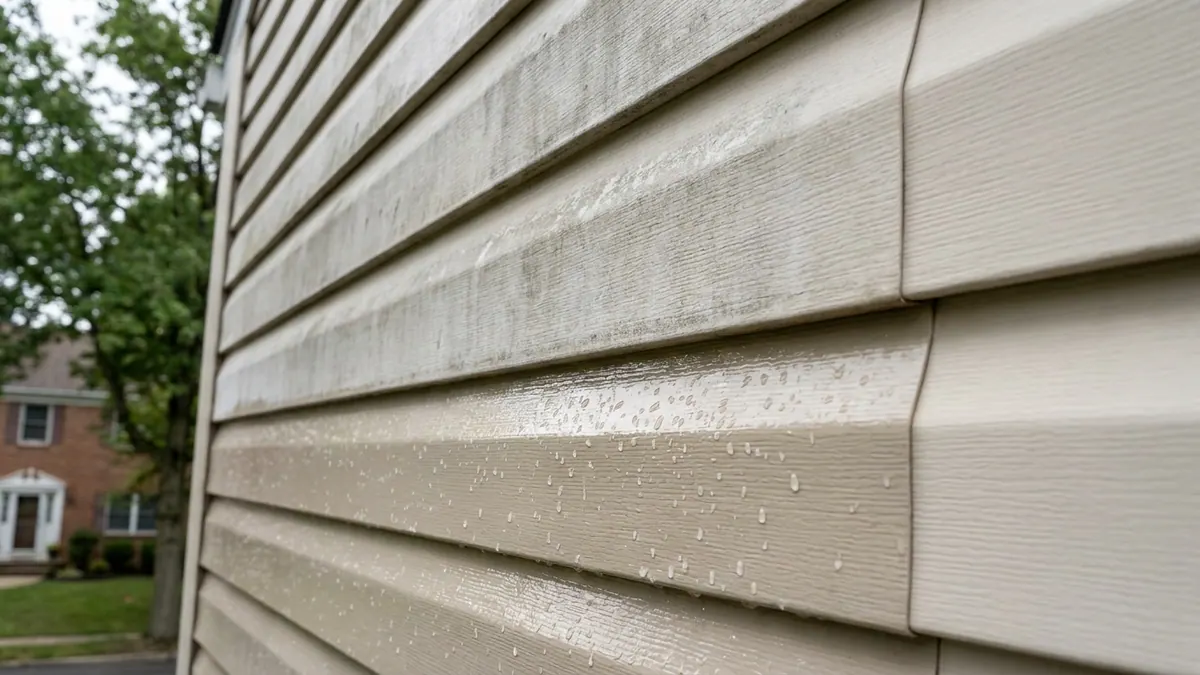
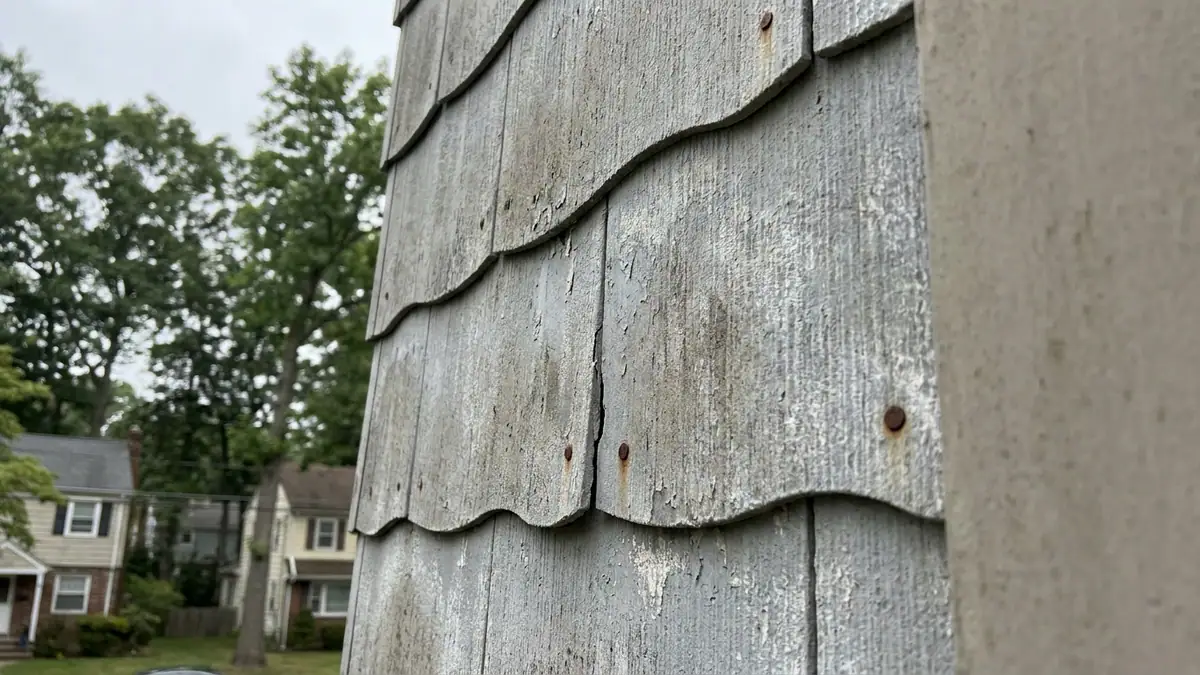
Be honest with yourself about which job you have. If the siding is chalky and brittle across every elevation, if panels crack when you press them, or if you have already patched two walls, you are not looking at a repair. The material comparison in the siding options guide for New Jersey homes is a better starting point than another round of patching.
HOA or historic approval is not a building permit
These are separate approvals and you can need both.
An HOA architectural committee controls what your house is allowed to look like: color, profile, trim details. A construction office controls whether the work is code-compliant. HOA approval does not satisfy the municipality and a permit does not satisfy the HOA. In a townhouse or condo association, get the written color and profile approval before anything is ordered, because custom-color material is not a return item.
If the roof is going too, permit both together
Siding tucks under the roof edge and behind flashing, so when both are failing, the roof goes first and the siding goes after. Doing them in the same window means the flashing details at the roof edge get built once, in the right order, rather than being cut into later. Roof permitting works the same way, and the New Jersey roof permit guide covers that side of it.
What happens when siding was installed without a permit
It tends to surface at the worst time, which is when you sell. An open or missing permit record can stall a closing while a buyer's attorney asks questions nobody has answers to. There is no way to reconstruct an inspection that never happened, so the resolution is usually about permitting the current work correctly and documenting it.
Tell your contractor at the inspection if you suspect earlier work went unpermitted. It changes how the paperwork is handled and it is much cheaper to raise before the job than after.
What to ask for in writing
Get these on the estimate, not in a text message.
- The contractor's New Jersey Home Improvement Contractor registration number. Lightning's is 13VH12437000, licensed and insured.
- A clear statement that the contractor pulls the permit and attends the inspection.
- Whether permit costs are inside the quoted price.
- What happens if rot or failed house wrap is found. On a Lightning estimate the answer is that it is already priced, because there are no change orders.
- The full scope: walls, trim, soffit, fascia and accessories, itemized.
What to do next
Siding in New Jersey runs $10,000 to $22,000 in standard-value towns, $16,000 to $38,000 in higher-value towns, and $30,000 to $70,000 for large or luxury homes. The band is set by the municipality's median home value from ACS 2024 five-year estimates, and the specifics of your house move the number inside it.
Start with the free inspection. Someone walks the walls, tells you what is behind them, and hands you a written estimate that is the final price, with the permit and the inspection handled on Lightning's side. See the siding services page for what is included, or book the free estimate and get the paperwork question settled before the first panel comes off.