
Short answer
Contractors offer siding over siding because it removes the two most expensive parts of the job, the tear-off labor and the dumpster, which lets them quote a lower number. It works only when the existing walls are dry, flat and sound underneath, and nobody can confirm that without opening a section. When there is moisture, rot or a failed house wrap behind the old siding, an overlay seals the problem in and tearing off is the only honest answer.
On this page
Siding over siding is offered because it deletes the two most expensive line items in a siding job: the labor to strip the old material and the container to haul it away. On a full house that is real money, and a contractor who quotes an overlay will almost always come in under a contractor who quotes a tear-off. That is not automatically a scam. It is a genuine method with a narrow set of conditions, and the trouble starts when it is sold as a default instead of a decision.
Here is what the method saves, what it traps, and how to tell which one your house needs.
What siding over siding actually means
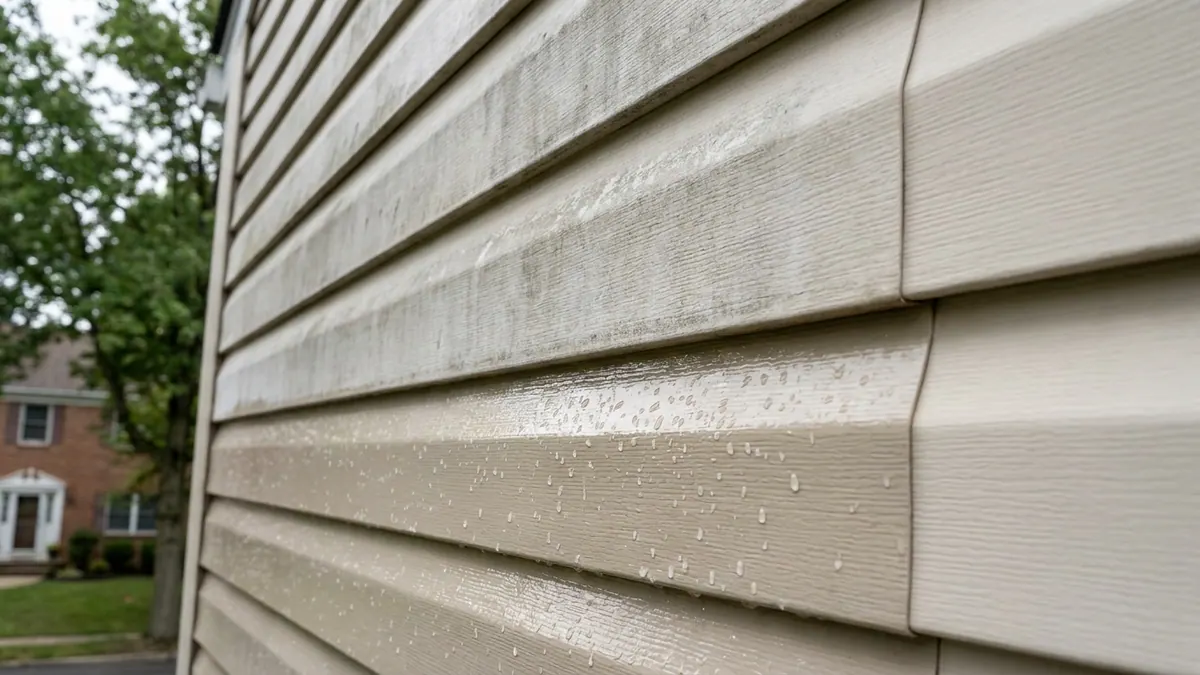
An overlay leaves the existing siding on the wall and fastens new siding on top of it. Sometimes furring strips go on first to create a flat, consistent nailing plane. Sometimes a layer of rigid foam or a fanfold board goes over the old panels to smooth out the texture. Then new corner posts, J-channel and trim are set at the new depth, and the new siding hangs off that.
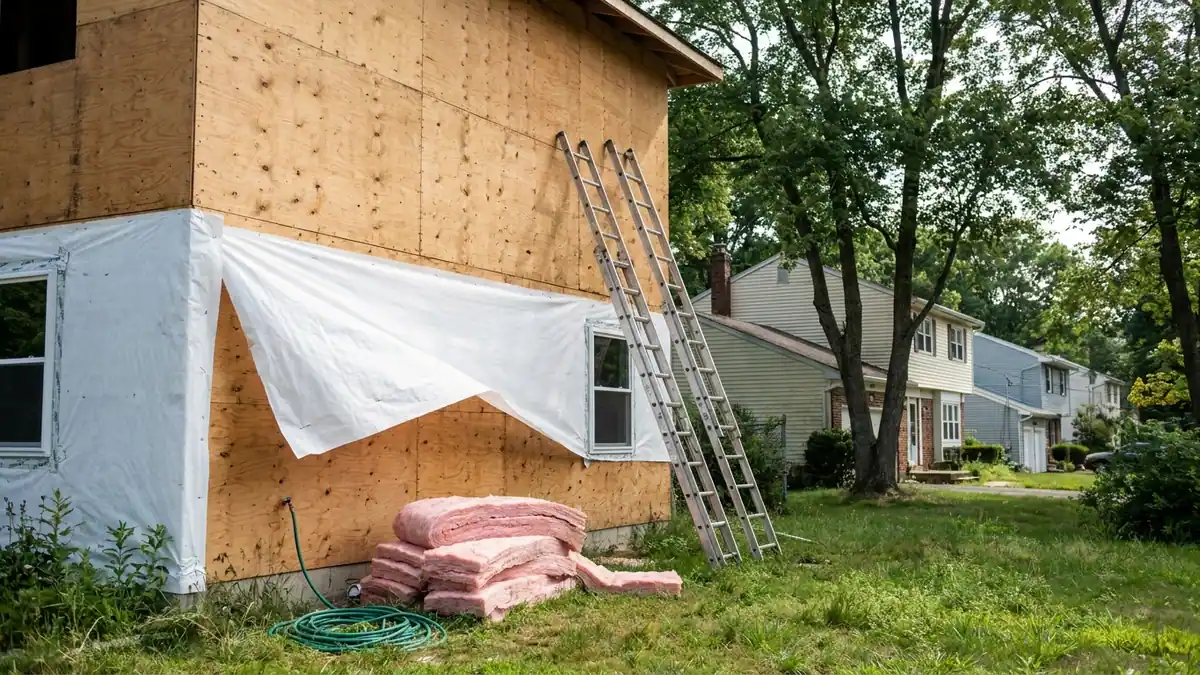
What does not happen is anyone looking at the wall sheathing. The plywood or board sheathing, the house wrap, the flashing over openings, the framing at the sill plate — none of it gets inspected, because none of it gets uncovered. Every judgment about the condition of that wall is being made from the outside of two layers of siding.
What an overlay saves
Three things, and they are worth naming plainly.
Demolition labor. Stripping a full house of siding is a day or more of crew time before a single new panel goes up. On old cedar with thousands of nails, or on a house with two existing layers already, it is longer.
Disposal. A house's worth of old siding fills a container, and asbestos-containing cementitious siding on some older New Jersey homes carries handling requirements that add cost on top of that.
Weather exposure. A wall that is never opened is never open to rain. On a tear-off, the crew strips and dries in section by section for exactly this reason, but an overlay sidesteps the risk entirely.
Those savings are real. They are also the only argument for an overlay. Everything else about the method is a compromise.
What siding over siding traps
Moisture with nowhere to go
Walls dry in two directions. When you add a layer of siding and often a layer of foam over the existing wall, you slow drying to the outside. If any water is getting in — around a failed flashing, at a deck ledger, through a gap at a corner — it now has less chance to leave. Rot proceeds quietly behind two layers instead of one, and the first sign is usually interior: a stain on drywall, a soft spot under a window, a musty smell in a closet on an exterior wall.
Damage you never see
If sheathing is already soft, an overlay covers it. Fasteners driven into compromised sheathing do not hold the way the manufacturer's method assumes, and the wall that failed is still failing under the new panels. The new siding may look perfect for years while the structure under it does not improve.
Pests and voids
Old siding that is cupped, loose or missing pieces leaves gaps between the layers. Those cavities are dry, dark and sheltered, which is exactly what carpenter bees, wasps and mice want. Furring can help, but it also creates channels if it is not detailed carefully.
Thickness at every detail
The wall moves out. Corner boards, the reveal around openings, the depth of the trim, where the siding meets the roof edge and the soffit — all of it shifts. Done well, an overlay looks like a normal siding job. Done fast, it looks like siding stacked on siding, with shallow trim and openings that read as sunken.
Overlay versus tear-off, side by side
| Siding over siding | Full tear-off | |
|---|---|---|
| Sheathing inspected | Siding over sidingNo | Full tear-offYes, every square foot |
| Rot found before it spreads | Siding over sidingNo | Full tear-offYes |
| House wrap and flashing replaced | Siding over sidingNo | Full tear-offYes |
| Labor and disposal cost | Siding over sidingLower | Full tear-offHigher |
| Wall thickness at trim and openings | Siding over sidingIncreased | Full tear-offUnchanged |
| Weight on the wall | Siding over sidingBoth layers remain | Full tear-offOnly the new siding |
| Insulation upgrade possible | Siding over sidingLimited to what goes over the old siding | Full tear-offFull, at the sheathing |
When siding over siding is a defensible choice
There is a version of this that is fine. It looks like this: the existing siding is tight to the wall with no loose or missing pieces, there is no soft sheathing anywhere the crew probes, there are no interior stains or history of leaks, the wall plane is reasonably flat or is furred out to make it flat, and the new product's manufacturer allows the method with fasteners reaching solid framing or sheathing.
When all of that is true and it has been checked by opening a section rather than assumed, an overlay can perform for decades. It is most defensible on a house where budget is the binding constraint and the alternative is leaving failing siding on the wall for another five years.
When tearing off is the only honest answer
Stop and strip if any of these are present:
- Soft or spongy sheathing anywhere the crew presses on the wall, or a screw that spins without biting.
- Interior water evidence — stained drywall, bubbled paint, a swollen baseboard on an exterior wall.
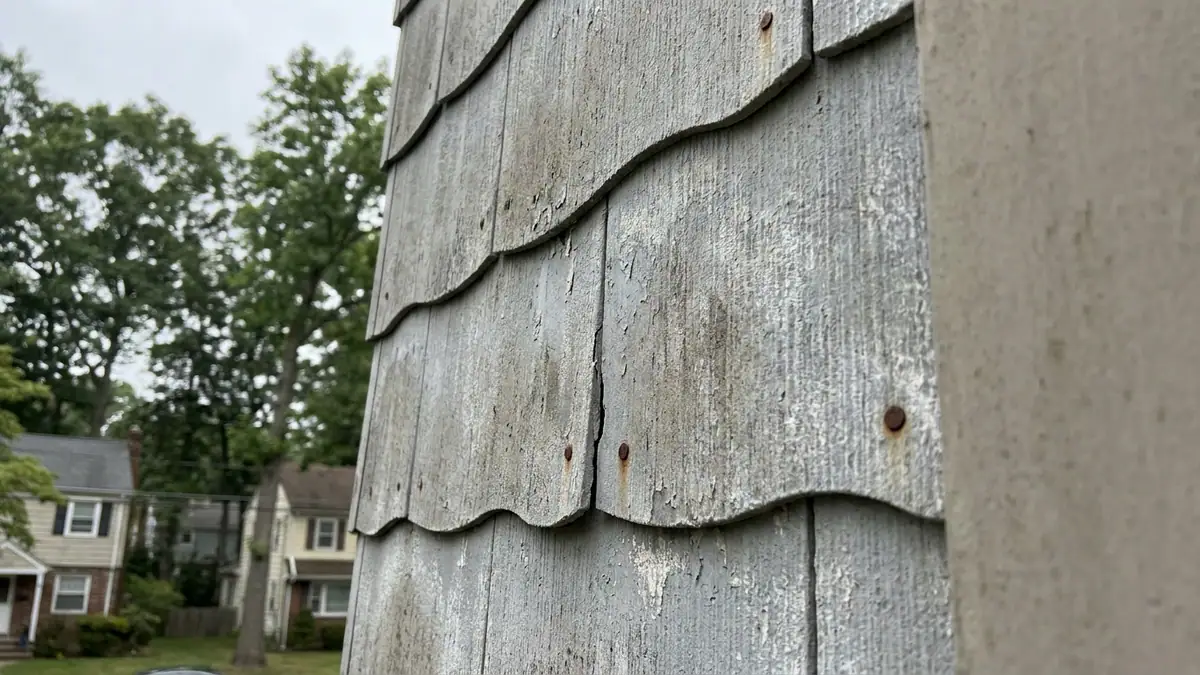
- Two layers already on the house. A third layer is too much weight and too little fastener purchase.
- Insect damage or active nesting in the existing wall.
- No house wrap, or house wrap that has torn loose. The drainage plane is the part of the wall that actually keeps water out, and you cannot replace it from the outside of the old siding.
- Old siding that is warped, buckled or missing across large areas, which means the plane cannot be made flat without more furring than the job is worth.
If you also want to add real insulation to the wall, tearing off is the moment to do it. Whether that is worth paying for is a separate question, and the trade-offs between vinyl, insulated vinyl and fiber cement are laid out in the siding options guide.
What to ask for in writing
Do not accept "we will see when we get there." Ask for these on the estimate:
- Whether the job is an overlay or a full tear-off, stated in those words.
- What was checked to reach that conclusion, and where the wall was opened.
- What happens if rot is found — and get the price for it before work starts, not after.
- Whether furring or a foam layer is included, and how thick.
- How trim, corner posts and the details around openings will be handled at the new depth.
- Who pulls the permit and who meets the inspector.
That last one matters more than homeowners expect. Lightning pulls the permit from your municipality's own construction office under the New Jersey Uniform Construction Code and attends the inspection. You file nothing.
How Lightning handles it
The wall gets checked before a price is written. Conditions that normally turn into a change order halfway through a job — rot, failed wrap, a substrate that will not hold a fastener — are found at the free inspection and priced into the estimate, because the written estimate is the final price and there are no change orders. There is also no deposit. Nothing is due until the work is finished and you have inspected it.
And if the honest answer on your house is that the existing siding is sound and an overlay will serve you well, that is what you will be told. If it is not, you will be told that instead, with the reason and the location on the wall where it was found.
Siding runs $10,000-$22,000 in standard-value New Jersey towns, $16,000-$38,000 in higher-value towns, and $30,000-$70,000 on large or luxury homes, with the band set by the municipality's median home value. A tear-off sits toward the upper end of the band for a given house; an overlay sits lower. Which one you need is a condition question, not a budget question.
See the full scope of the work on the siding page, browse the rest of the homeowner guides, or request a free estimate. It is free, there is no obligation, and a salesperson comes to the house to look at the wall and put a number in writing.