Short answer
Siding only the garage or addition costs less than wrapping the whole house, but not in proportion to the wall area, because setup, trim, corners and labor do not scale down the way square footage does. The bigger problem is usually matching: vinyl colors fade and profiles get discontinued, so new panels next to twenty-year-old panels almost never read as the same wall. The honest options are to side the mismatched section in a deliberately different material or color, or to wrap the house and be done with it.
On this page
- Why the garage or addition stopped matching
- Why matching the existing siding rarely works
- What actually drives the cost of siding one section
- Three ways to handle it, and what each one is for
- The transition detail is what sells it
- What this costs in New Jersey
- What to settle in writing before work starts
- Getting a number for your house
Siding only the garage or the addition costs less than siding the whole house. It does not cost proportionally less, and it usually does not solve the problem you actually have, which is that the two halves of your house will still not look like one house.
Here is what drives the number, when a partial job is the right call, and how to handle the seam where old meets new.
Why the garage or addition stopped matching
Three things cause it, and they stack.
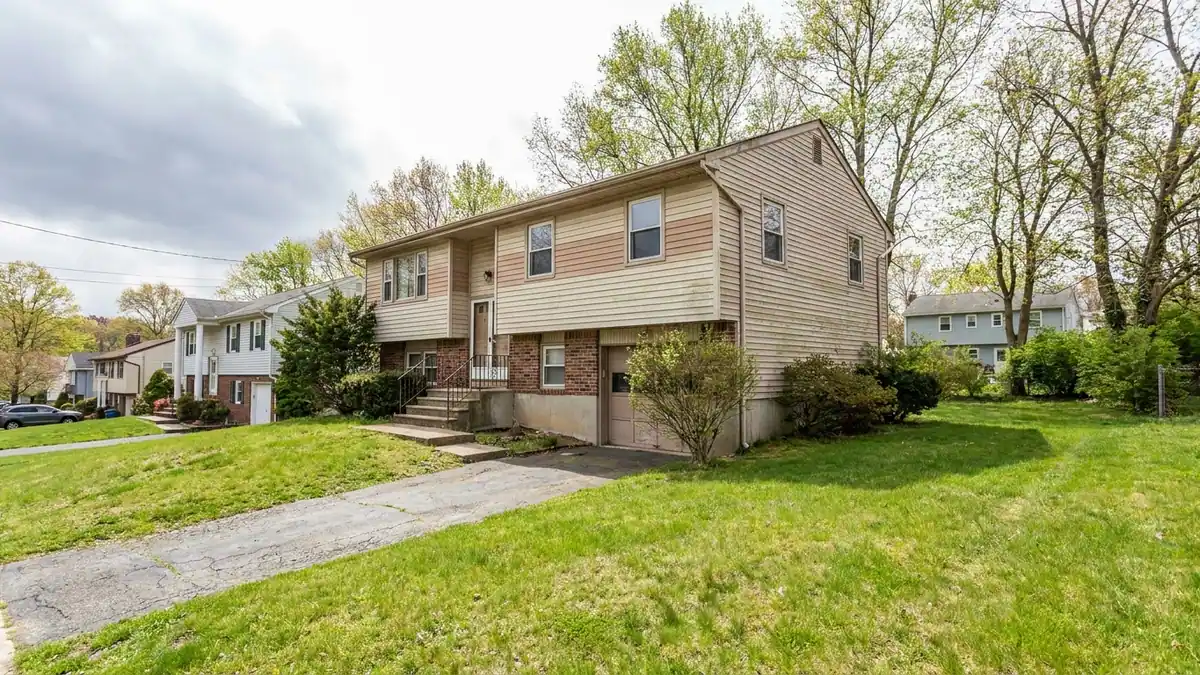
The sections were sided at different times. An addition built in 2004 got whatever vinyl was on the shelf in 2004. The main house got whatever was current when it was last wrapped. Profiles, panel widths, lock designs and color names all change across those years.
The colors drifted apart. Vinyl holds pigment far better than it used to, but a south or west wall that has taken twenty summers of New Jersey sun is not the shade it left the factory. Two walls that started identical do not stay identical if they went up a decade apart or face different directions.
The details were never the same. Corner post widths, J-channel reveals, trim depth and soffit style differ between manufacturers. Even when the color is close, the shadow lines are not, and the eye catches that from the curb before it catches the color.
Why matching the existing siding rarely works
The panel you need is often discontinued. Manufacturers retire colors and profiles on a cycle, and the exact double 4-inch clapboard in that exact shade from that exact brand may not exist to buy.
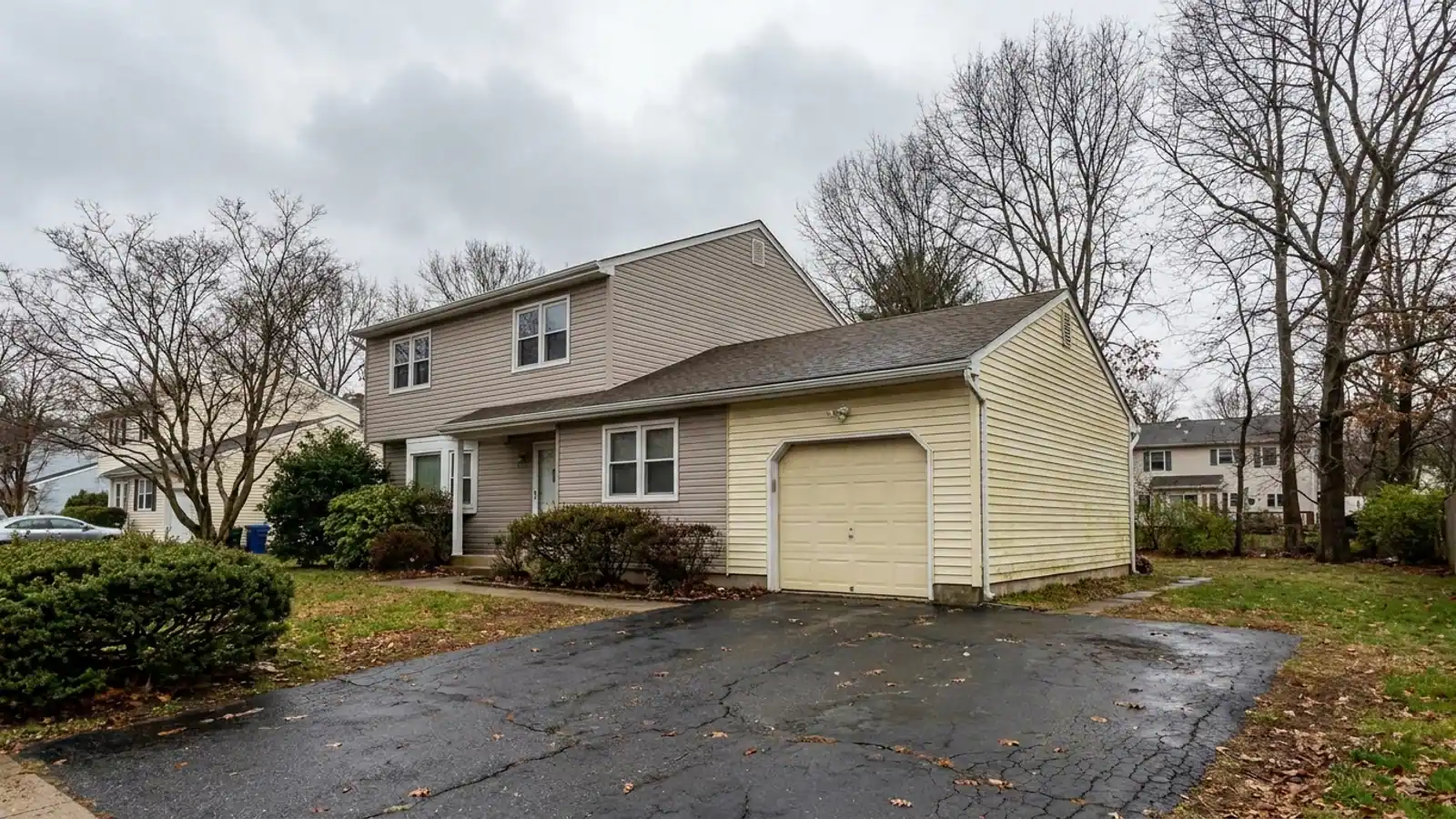
Even when it does exist, new panel against weathered panel reads as a patch. The new material is glossier, the color is a half step brighter, and the joint between them is a straight vertical line that nothing hides. On a small repair you accept that. Across an entire garage wall facing the street, you will see it every time you pull in the driveway.
There is one case where matching genuinely works: you have leftover panels from the original job sitting in the garage rafters, and they were stored out of sunlight. That happens, and it is worth checking before you plan anything else.
What actually drives the cost of siding one section
Wall area is only part of it. The things that move a partial siding price:
- Number of corners and openings. A garage wall with two windows, a service door, a garage door head and four outside corners takes far more trim, cutting and flashing labor per square foot than a flat gable end.
- Height and access. A ground-floor garage is straightforward. A second-story bonus room over the garage means staging, and staging costs time before a single panel goes up.
- Tear-off and disposal. Stripping old vinyl or aluminum, bagging it and hauling it costs money whether the wall is 400 square feet or 1,400.
- What is under it. Failed house wrap, soft sheathing at the band joist, rot under a deck ledger or missing kickout flashing at the roof-to-wall junction all have to be corrected before new siding goes on.
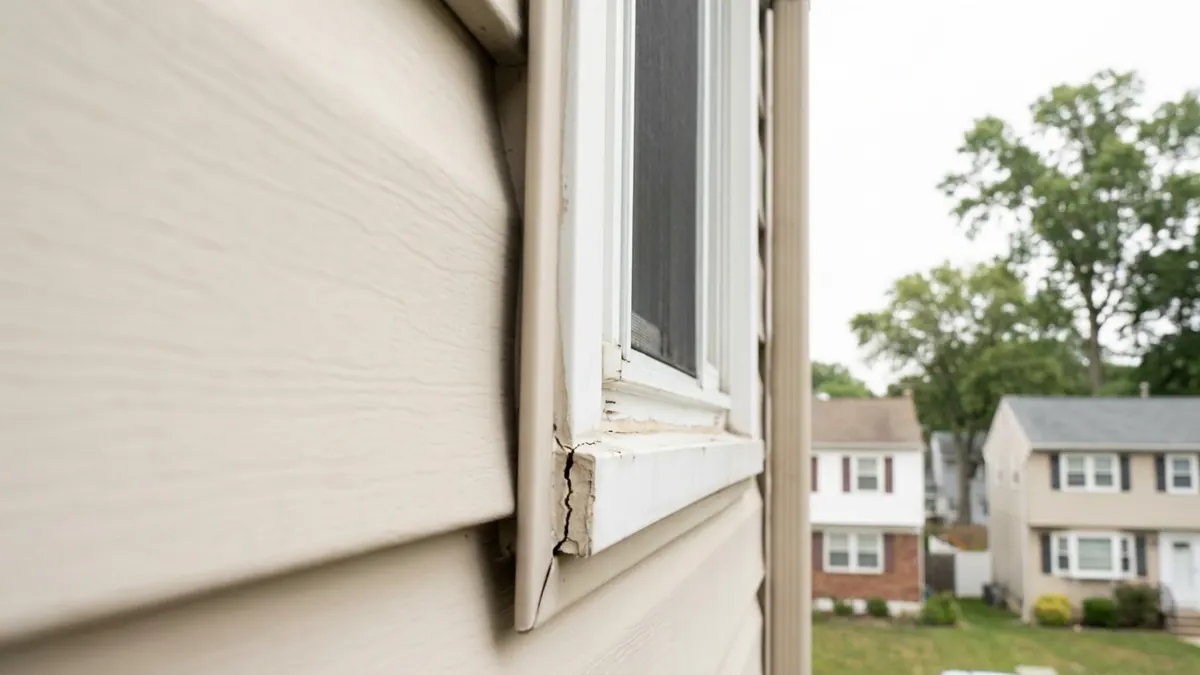
- Trim, soffit and fascia. If the garage trim is chalked and brittle, new panels against old trim looks worse than doing nothing.
- Material choice. Insulated vinyl, standard vinyl and fiber cement all carry different material and labor costs. The siding options guide lays out how vinyl and fiber cement compare on a New Jersey wall.
Mobilization is the line item nobody thinks about. Protecting plantings, setting up, the dump run and the final nail-and-scrap sweep happen on a one-wall job exactly as they happen on a whole-house job. That is why the cost per wall is always higher when you do a little.
Three ways to handle it, and what each one is for
| Approach | What it looks like | When it makes sense |
|---|---|---|
| ApproachSide the mismatched section in the closest available match | What it looks likeA visible but subtle line at the transition | When it makes senseThe section is on a side or rear elevation nobody sees from the street |
| ApproachSide it as a deliberate accent | What it looks likeBoard and batten, a shake panel, or a chosen contrasting color on the garage wing | When it makes senseThe mismatch is on the front, and the rest of the house siding is still sound |
| ApproachWrap the whole house | What it looks likeOne material, one color, one set of trim details | When it makes senseThe main-house siding is also near the end of its life, or there are three or more mismatched sections |
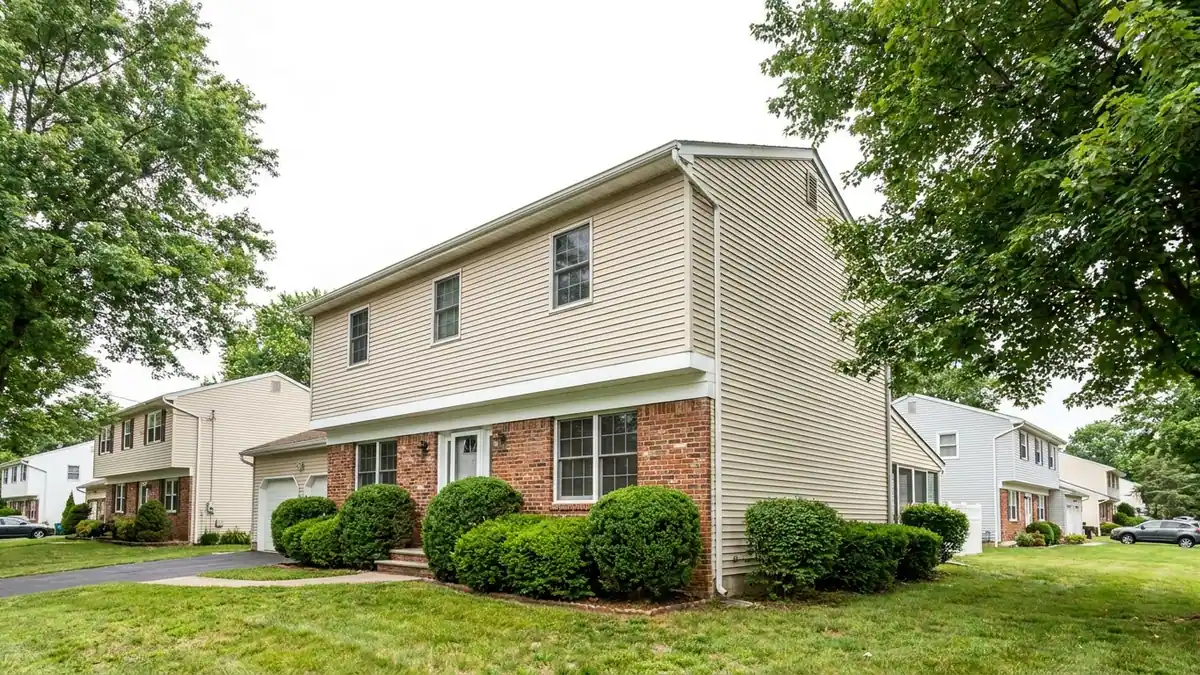
The middle row is the one most people have not considered. A garage wing in board and batten or a shake-look panel, with the same corner posts and the same trim color as the main house, reads as a design decision. A near-miss match reads as a repair.
The transition detail is what sells it
Wherever the two materials meet, there has to be a clean, intentional break. A vertical trim board at an inside corner. A corner post at an outside corner. A band board at a story break. What you do not want is two different panel profiles butting into the same J-channel in the middle of a flat wall, because that joint will telegraph forever and it is also where water gets behind the siding.
Ask the contractor to show you where the break lands before anything is ordered. Stand in the driveway and look at it. If the line falls somewhere the architecture already changes direction, it will disappear. If it falls in the middle of a blank wall, pick a different line.
What this costs in New Jersey
Full siding replacement runs $10,000 to $22,000 in standard-value towns, $16,000 to $38,000 in higher-value towns, and $30,000 to $70,000 for large or luxury homes. The band comes from the municipality's median home value in the ACS 2024 five-year estimates, not from your house specifically, and Lightning Construction works in all 21 counties and 544 New Jersey municipalities.
A garage or addition on its own lands below those ranges. How far below depends on the items above, which is why nobody can give you a real number over the phone. Get it measured.
When you do, have both priced on the same estimate: the partial job and the whole house. Homeowners regularly find the gap is smaller than they assumed once setup, trim and disposal are counted only once, and that changes the decision.
What to settle in writing before work starts
- The exact manufacturer, line, profile and color, with a physical sample you have seen outdoors against the existing wall.
- Where the transition between old and new falls, and what trim closes it.
- Whether house wrap is being replaced behind the new section, and what flashing goes in at roof-to-wall junctions and the band joist.
- Whether trim, soffit, fascia and corner posts are included or stay as they are.
- What happens if sheathing damage is found. On a Lightning estimate that is already priced in, because there are no change orders and the written estimate is the final price.
- Who pulls the permit. Lightning does, from the municipal construction office, and attends the inspection.
Getting a number for your house
The free inspection is where this gets decided. A salesperson comes to the house, measures the walls, checks the condition of the existing siding on the sections you were not planning to touch, and writes an estimate with no obligation. There is no deposit on any job, and nothing is due until the work is finished and you have inspected it.
See what Lightning Construction covers on siding, trim, soffit and fascia, or book the free estimate and get the mismatched wall measured. Lightning is veteran-owned and family-operated, licensed and insured, and holds New Jersey Home Improvement Contractor registration 13VH12437000.