Short answer
Replace the siding first. A siding job normally includes new or newly wrapped trim, soffit and fascia, and the shutters come off the wall either way, so paint you put on those now ends up in the dumpster. Painting first only makes sense when you are keeping the existing siding for several more years and the paint is maintenance rather than a step before a replacement.
On this page
- Why the paint comes off with the siding
- What actually gets replaced at the trim line
- When painting the trim first is the right call
- Should you paint the vinyl siding instead of replacing it?
- Shutters: reuse, replace, or leave them off
- The order to do the work
- What to get in writing before you sign
- What it costs and what to do next
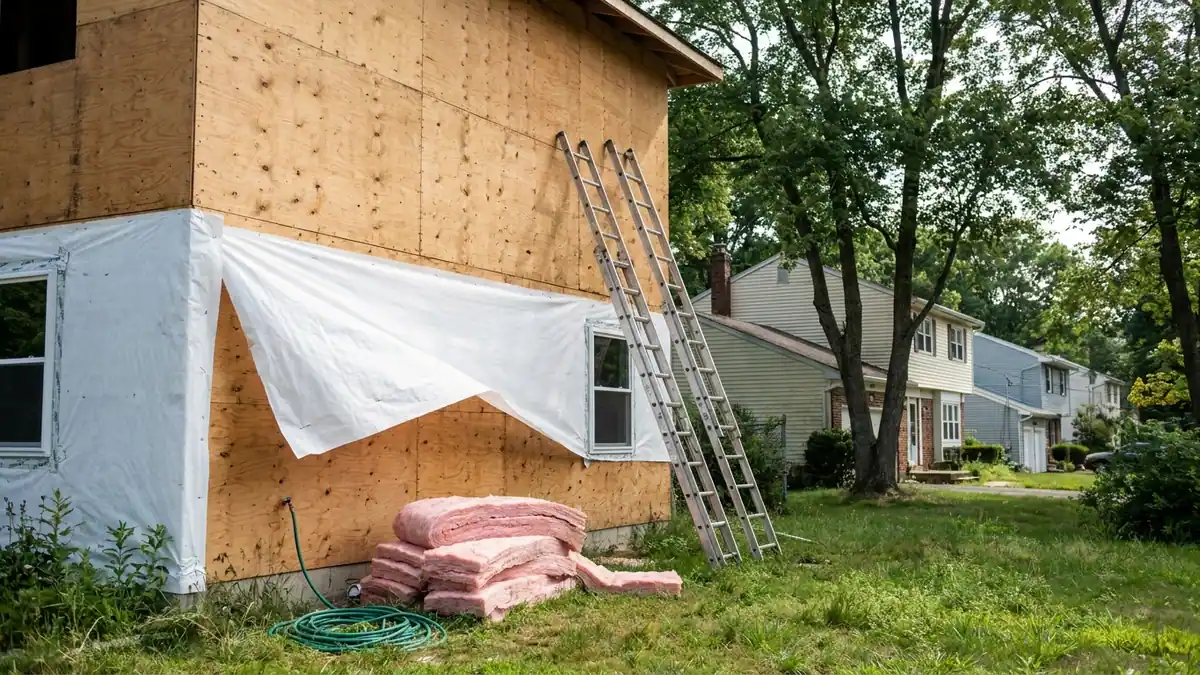
Replace the siding first. On most New Jersey houses the trim, soffit, fascia and shutters are either replaced, capped in aluminum or taken off and reinstalled during a siding job, so a fresh coat of paint applied the month before goes straight into the dumpster with the old panels.
The only version of this question with a different answer is when the siding is staying. If your walls have another five or ten years in them and the trim is just chalky and tired, painting is maintenance and you should do it. The problem is the homeowner who paints trim and shutters in October and gets a siding quote in March.
Why the paint comes off with the siding
Siding does not stop at the field of the wall. It ends at a trim detail, and every one of those details gets touched when the panels come off.
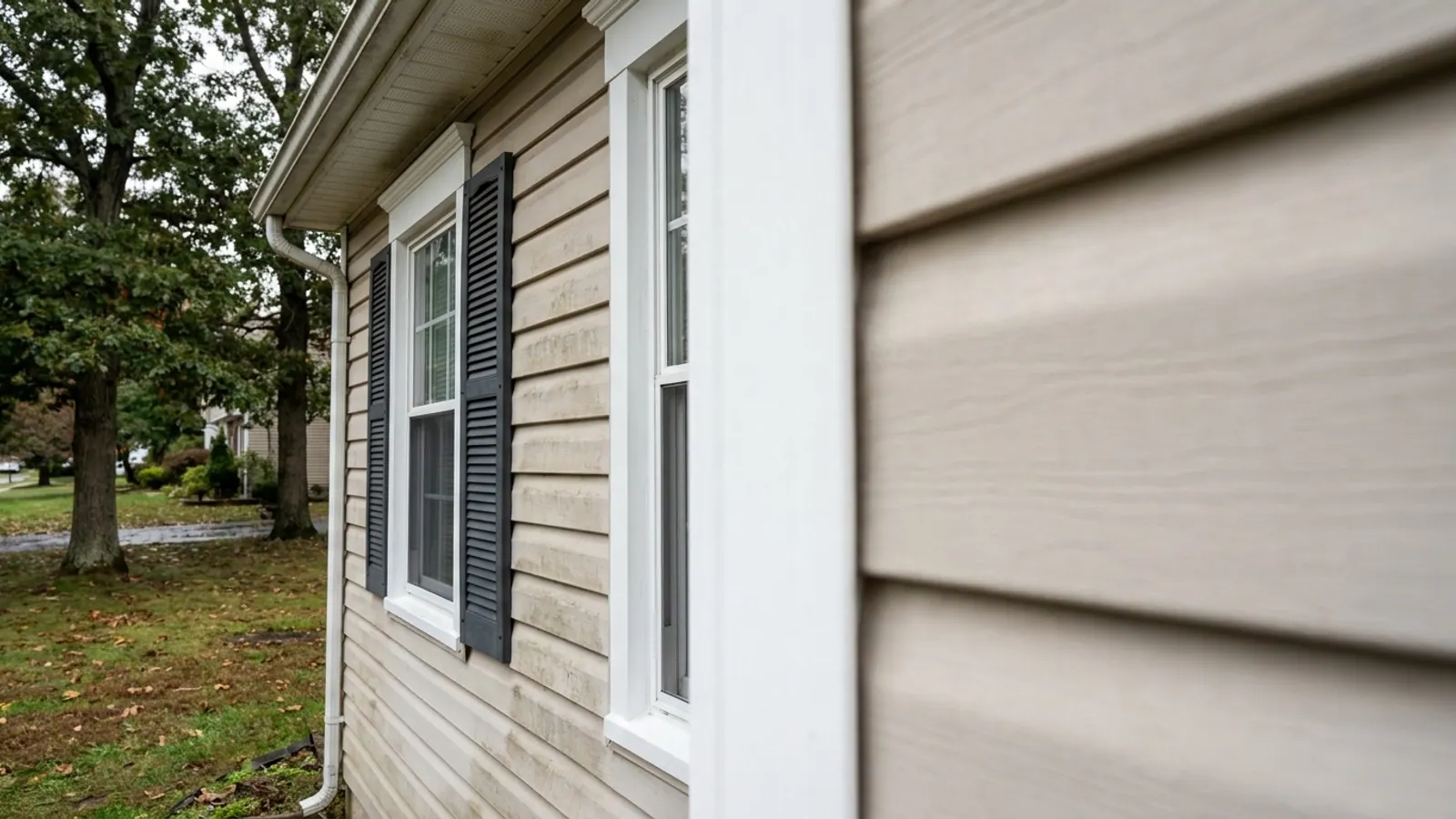
Corner posts are removed and replaced. J-channel around window and door casing is removed and replaced, because the old channel is cut to the old panel thickness and cannot be reused. Window and door casing is either replaced or wrapped in bent aluminum coil, which covers the painted surface permanently. Shutters are unscrewed before the first panel comes off, because you cannot slide siding behind them.
That is the full list of what a painter would have brushed. There is nothing left on the front of the house that still shows the paint you paid for.
What actually gets replaced at the trim line
Ask for these as separate line items, because contractors treat them differently and the word "trim" on an estimate means nothing by itself.
| Component | What usually happens during a siding job | Still worth painting first? |
|---|---|---|
| ComponentCorner posts and J-channel | What usually happens during a siding jobRemoved and replaced in the new color | Still worth painting first?No |
| ComponentWindow and door casing | What usually happens during a siding jobReplaced, or wrapped in aluminum coil | Still worth painting first?No |
| ComponentSoffit | What usually happens during a siding jobReplaced in vented vinyl or aluminum | Still worth painting first?No |
| ComponentFascia | What usually happens during a siding jobWrapped in coil, or replaced where rotted | Still worth painting first?No |
| ComponentShutters | What usually happens during a siding jobRemoved; replaced or reinstalled | Still worth painting first?No |
| ComponentPorch columns, rails, front door | What usually happens during a siding jobUsually untouched | Still worth painting first?Yes, after the siding is done |
| ComponentDetached garage not in the scope | What usually happens during a siding jobUntouched | Still worth painting first?Yes |
Capping is trim work on the outside of the opening. The window itself is not touched and is not part of the job. Lightning does roofing, metal roofing, siding and gutters.
If you are still deciding between materials before any of this, the siding options guide walks through vinyl and fiber cement in depth. Fiber cement changes the painting question specifically, because it arrives either factory-finished or primed for field paint, and that is a decision made at order time rather than afterward.
When painting the trim first is the right call
There are real cases. A contractor who tells you to replace everything right now is selling.
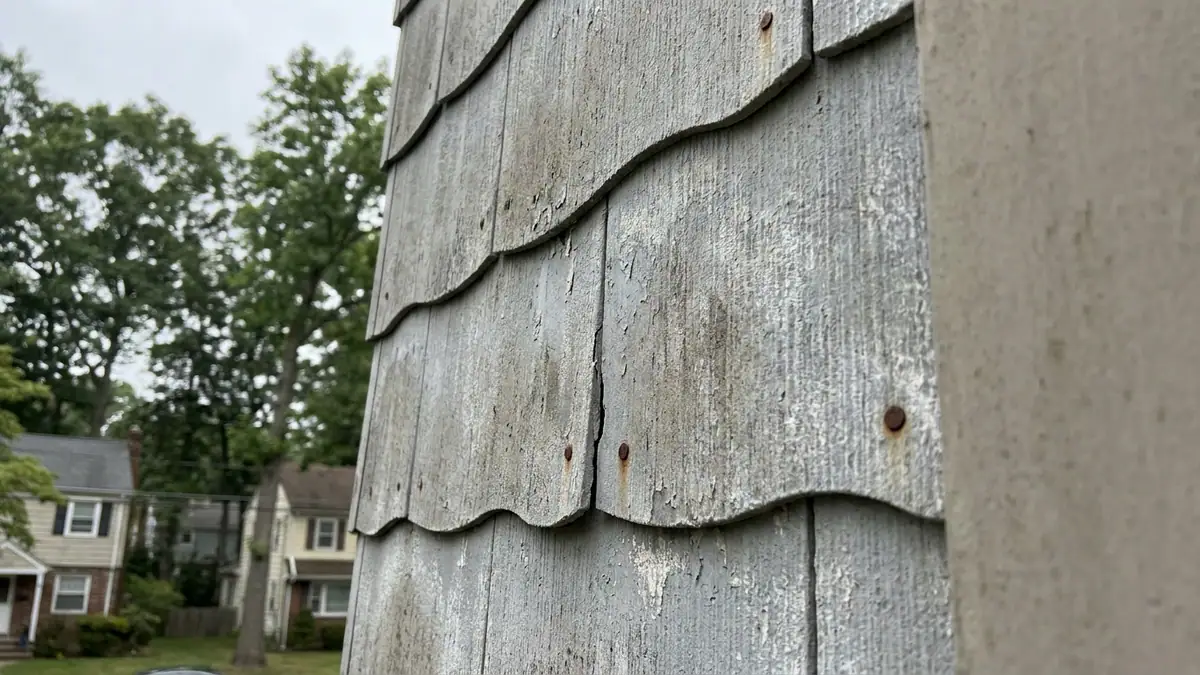
Paint first when the siding has years left. Vinyl that is chalky but flat, tight and not cracked is not failing. If the only eyesore is peeling wood casing and sun-bleached shutters, paint them and get on with your life.
Paint first when the siding work is budgeted for a later year and you are selling or refinancing before then. Paint is cheap relative to a wall replacement and it buys the curb appeal you need now.
Paint first when the trim in question is nowhere near the siding scope. A front door, porch rail, column or pergola is not in the way of a siding crew and can be painted on any schedule.
Do not paint first when you already have a signed siding contract, when you are getting estimates, or when the reason the trim looks bad is water staining. Staining at the fascia or the bottom of a casing usually means water is coming from somewhere, and paint over wet wood fails within a season.
Should you paint the vinyl siding instead of replacing it?
Generally no. Vinyl takes paint badly for three reasons that have nothing to do with the painter's skill.
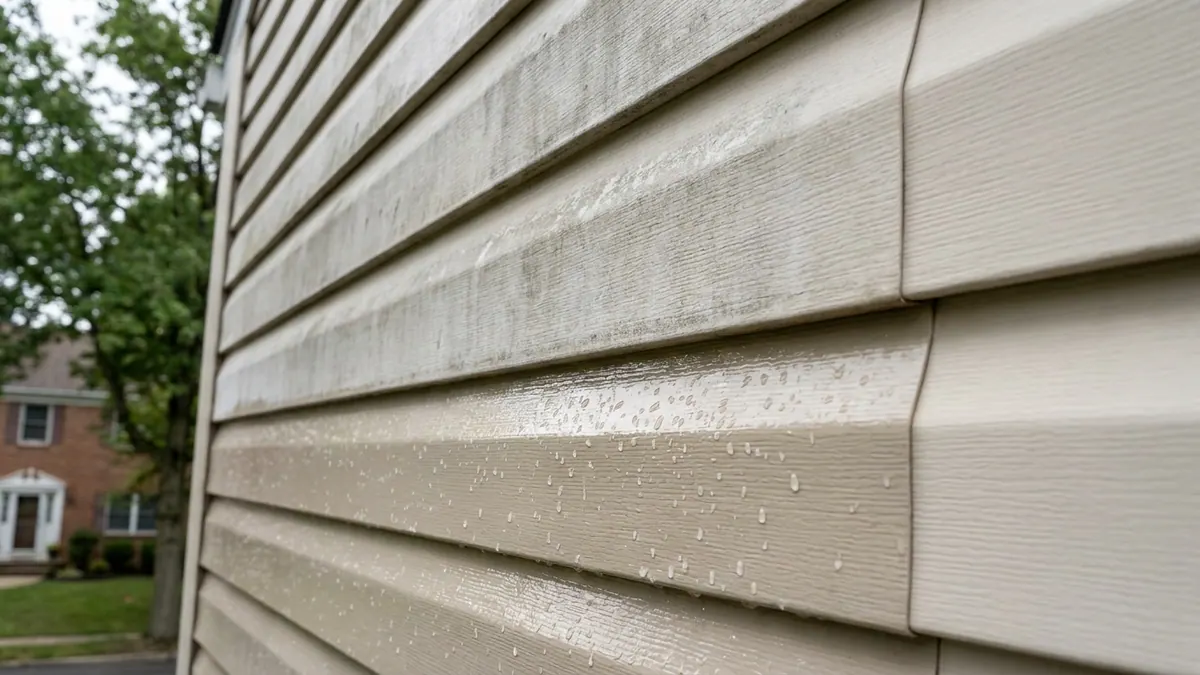
First, the color on vinyl is in the material, not on it, so the factory finish fades evenly across the whole wall. Paint sits on the surface and fails in patches, usually on the south and west elevations first.
Second, vinyl expands and contracts with temperature across its full length. That movement works at a painted film, and it shows up at the butt joints and around the nail hems.
Third, a darker paint color absorbs more heat than the panel was designed for and can warp it. Panels installed loose enough to move will cup and wave once you darken them.
Painting vinyl also ends the manufacturer's finish coverage in nearly every case. If the color is the only thing you dislike, replacement is the honest answer.
Shutters: reuse, replace, or leave them off
Shutters come off at the start of the job. Whether they go back on is a decision worth making before the crew arrives.
Old vinyl shutters are faded on the face and still dark in the louver shadows, and that contrast is obvious against brand-new siding. Old shutter locks and spikes are rarely reusable. The mounting holes also move, because new panels change where the fastener can land in solid material.
If you want shutters, buy new ones and have them installed as part of the siding job so the holes are sealed and flashed correctly. If you have been ambivalent about them, this is the one moment when removing them costs nothing — the siding goes on behind where they used to be, with no patch to hide.
The order to do the work
- Get the roof settled first if it is near the end of its life. Siding tucks under the roof edge and behind flashing, so new siding followed by a roof tear-off means cutting into finished work.
- Have the gutters taken down as part of the siding job. They have to come off anyway to replace the fascia behind them, which is the right time to decide whether to rehang the old ones or install new seamless aluminum gutters.
- Replace the siding, trim, soffit and fascia, with the permit pulled and the inspection attended by the contractor.
- Hang new shutters, or leave them off.
- Paint anything that was never in the scope — the front door, the porch columns, the rails — once the new work and the caulking are in place.
What to get in writing before you sign
Put each of these on the estimate, in words, not as an assumption:
- Whether soffit and fascia are replaced, wrapped or left alone
- Whether window and door casing is replaced or capped, and in what color coil
- Whether shutters are reinstalled, replaced or removed, and who buys them
- Who takes the gutters down and who rehangs them
- What happens if rotted sheathing or framing turns up behind the old siding
That last one is where most siding jobs go sideways. Lightning Construction finds those conditions at the free inspection and prices them into the quote, so there are no change orders on the day. There is also no deposit — nothing is due until the work is finished and you have inspected it.
What it costs and what to do next
Siding in New Jersey runs $10,000 to $22,000 in standard-value towns, $16,000 to $38,000 in higher-value towns, and $30,000 to $70,000 for large or luxury homes. The band is set by the municipality's median home value from ACS 2024 five-year estimates. Where your house lands inside the band depends on wall area, the number of stories, material, and how much trim, soffit and fascia work is in the scope.
If the trim is the part bothering you, get the siding priced before you hire a painter. Lightning is veteran-owned and family-operated, licensed and insured, with New Jersey Home Improvement Contractor registration 13VH12437000, serving all 21 counties. See the siding page for what the work includes, or book a free estimate — it is free, there is no obligation, and a salesperson comes to the house to measure and write the number down.