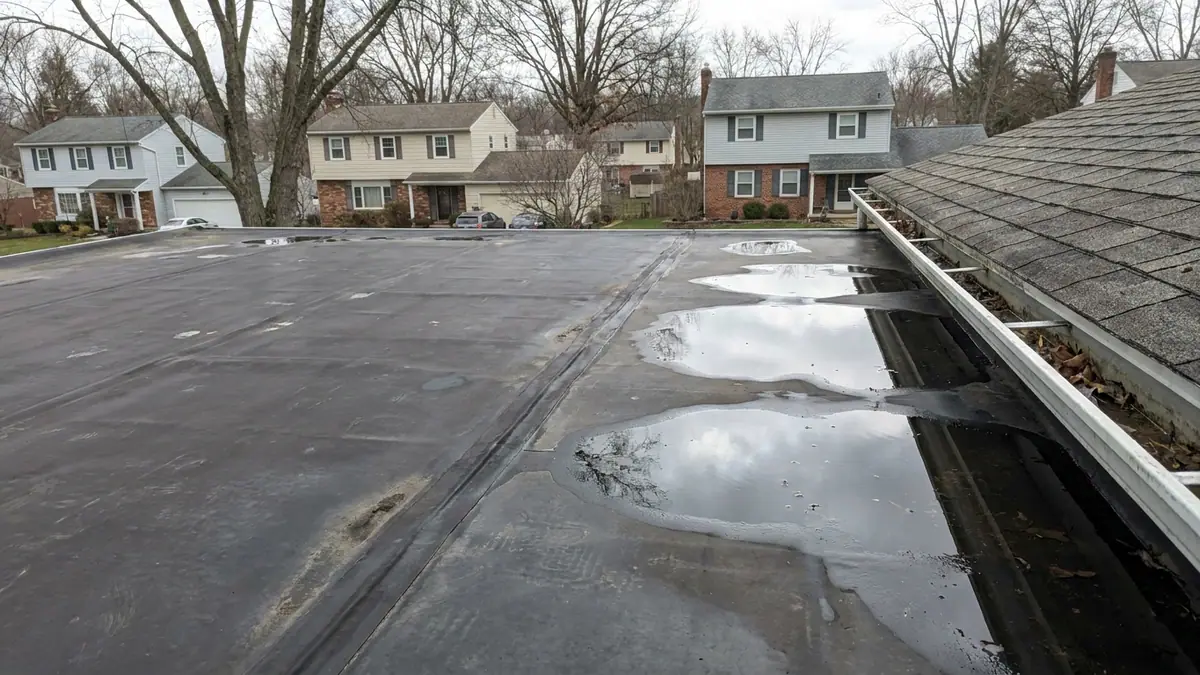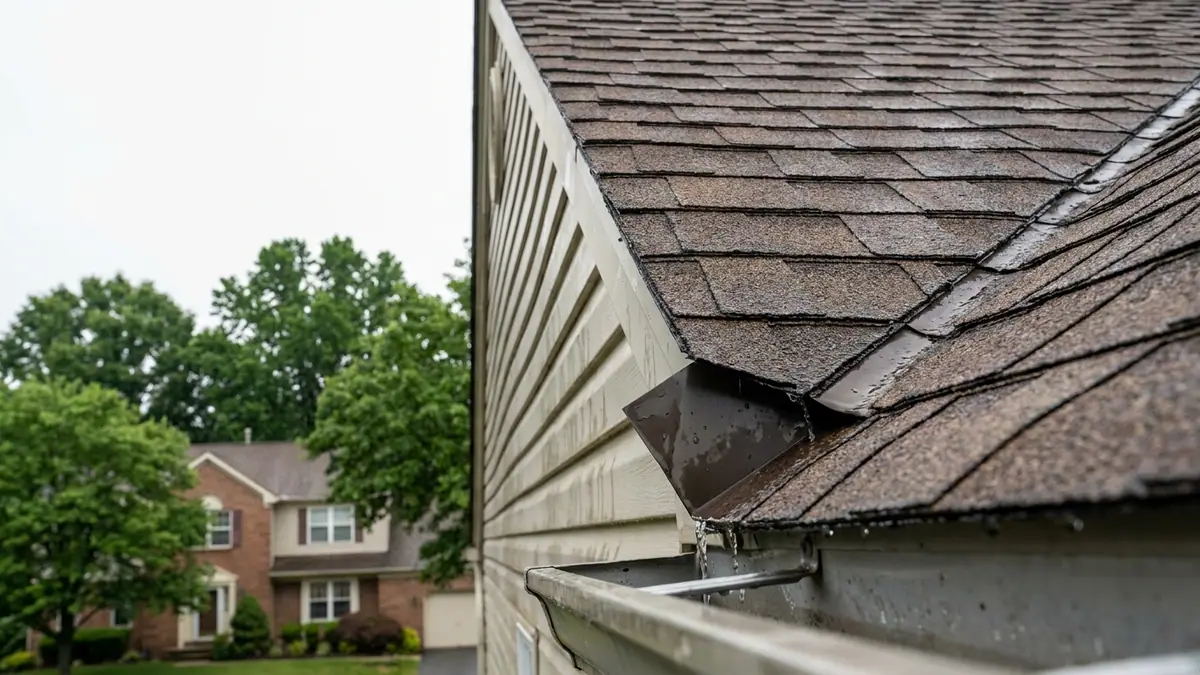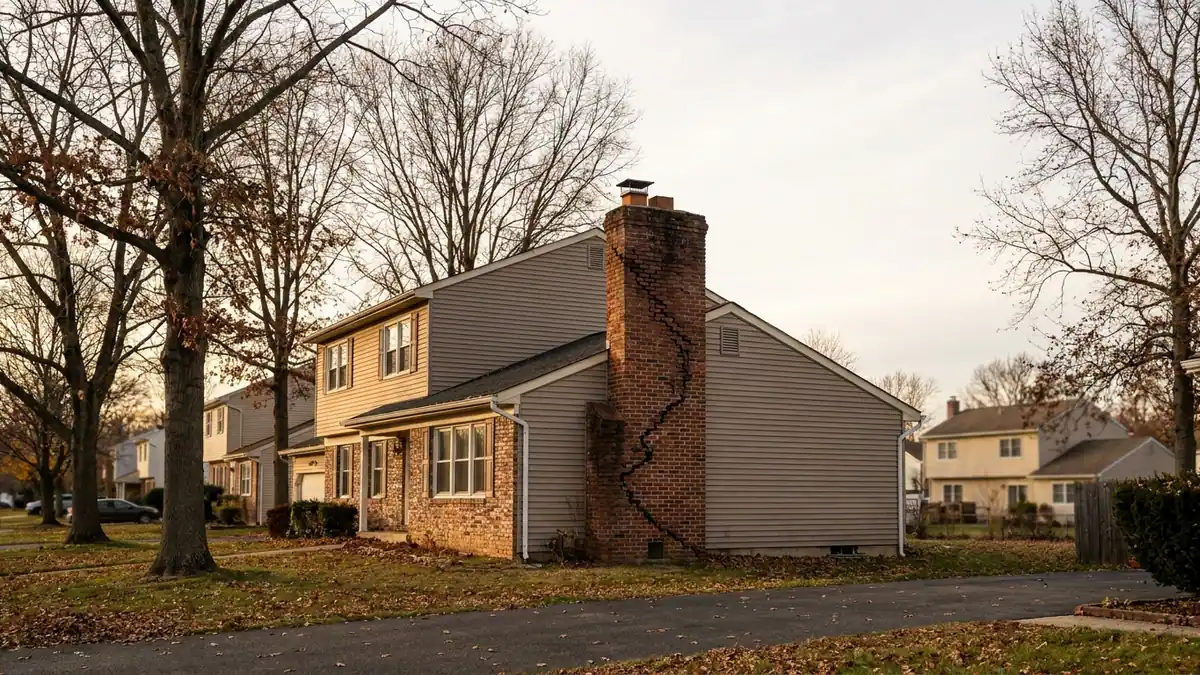
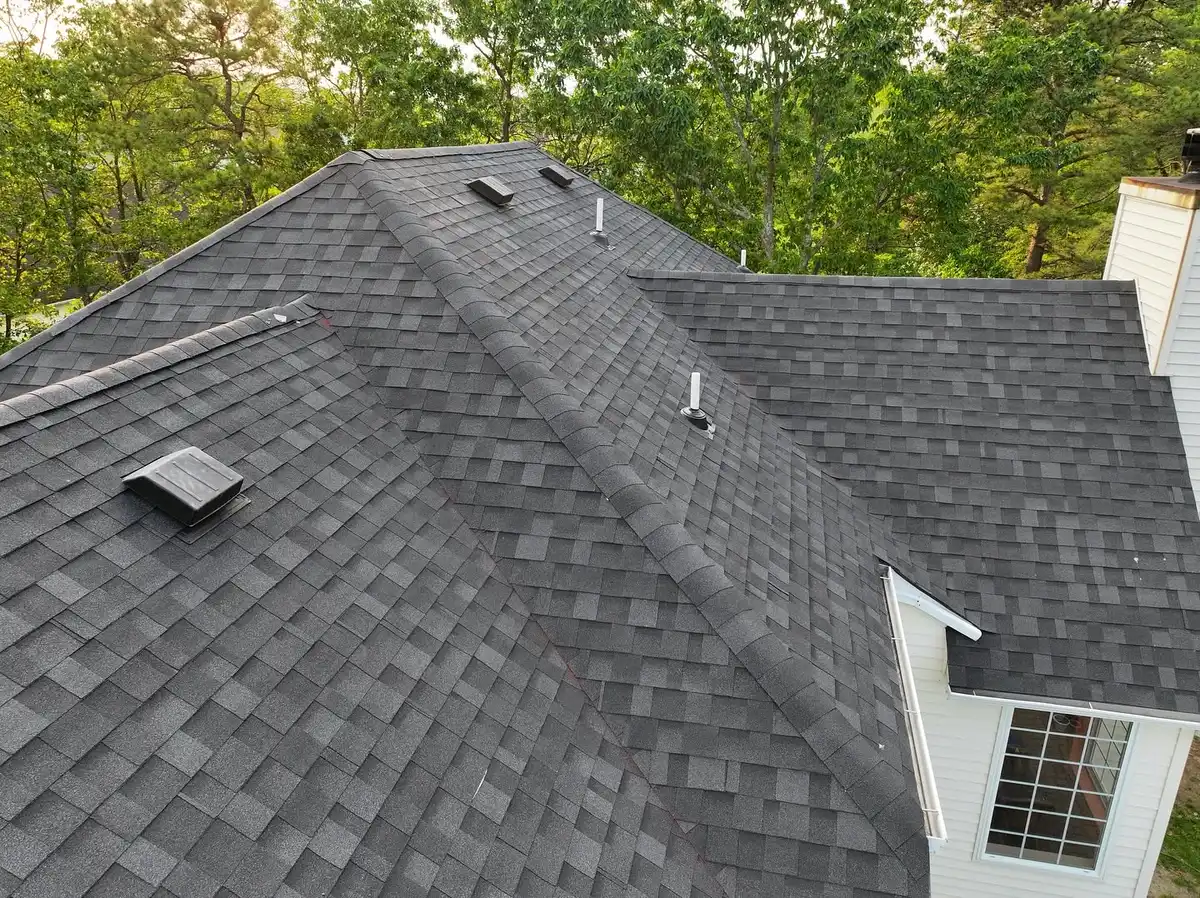
Short answer
A quote changes after tear-off when the contractor priced only what was visible from the ground. Extra shingle layers, rotted decking and unusable flashing are found once the old roof is off, and a contract with no agreed price for them turns each one into a change order at the worst possible moment for the homeowner.
On this page
There is a particular phone call that a lot of New Jersey homeowners get around eleven in the morning on the day their roof is being replaced. The old shingles are off, the crew has found something, and the price is going up.
It is worth understanding why that call happens, because it is almost never about the thing the contractor says it is about.
The quote was priced on what could be seen
A roof is a stack of layers. From the ground, or from a ladder at the edge, a contractor can see the top one. The decking underneath, the flashing behind the shingles at the walls and chimney, and how many layers are actually stacked up there are all hidden until the roof comes off.
So a quote can be written two ways. It can price what is visible and treat everything underneath as somebody else's problem later, or it can find out first and price the whole job.
The first way produces a lower number. That is the entire mechanism.
The three things that get found
Nearly every mid-job price increase is one of these.
Extra layers of old shingles
New Jersey has old housing stock, and a lot of it has been roofed over rather than torn off at least once. A quote that assumes one layer coming off and finds two has doubled the tear-off labor and the disposal weight.
This is knowable in advance. Layers can be counted at the rake edge, at the eave, and by lifting a shingle. It takes a few minutes.
Rotted or damaged decking
Plywood that has been wet for years is soft, and it cannot hold a nail. It has to be replaced, and that is legitimate work that costs real money.
What is not legitimate is having no agreed price for it. A good contract states a per-sheet rate for decking replacement up front, so if six sheets are bad you already know what six sheets cost. "We'll let you know" is not a price, it is an option the contractor holds and you do not.
Flashing that cannot be reused
Flashing is the metal at every wall, chimney, valley and skylight, and it is where most roofs actually leak. Old step flashing that has been sealed with roofing cement three times is finished. Replacing it is correct.
Reusing it is one of the cheapest ways to make a quote smaller, and nobody can see it from the driveway once the shingles are on. Where leaks really begin is worth reading in the signs you need a new roof guide.
Why the timing is not an accident
Consider where the two of you stand at the moment the call happens.
Your roof is off. Your house is open to the weather. A crew of people is standing on it. Their equipment is in your driveway and the dumpster has your old roof in it. Finding another contractor today is not a thing that exists.
The same conversation at the kitchen table a week earlier, with three quotes in front of you, goes completely differently. That is not a coincidence about scheduling. It is the reason the conversation happens when it happens.
What an honest quote does instead
The fix is not complicated. It is to find out before the contract is signed.
- Count the layers at the edge rather than assuming one.
- Inspect the decking to whatever extent is possible, and state a per-sheet replacement rate in writing for whatever cannot be seen.
- Assume the flashing is being replaced, and price it that way, because on most roofs it is.
- Look at the ventilation and include what balancing it requires.
- Put the whole thing in one written number that does not move.
That is how Lightning quotes every job. The conditions that normally produce a change order are identified at the free inspection and included in the price, and there are no change orders — the written estimate is the final price. There is also no deposit, so nothing is due until the work is finished and you have inspected it.
How to test a quote you already have
You do not need to be a roofer to pressure-test a number. Ask four questions.
- How many layers does this price assume are coming off, and what happens if there are more?
- What is your per-sheet price for replacing bad decking?
- Is new flashing included at the walls, chimney and valleys, or are you reusing what is there?
- Is this price final, or can it change once you are on the roof?
The answers matter less than whether they exist. A contractor who has thought about the job answers all four immediately and in specifics. A contractor who intends to sort it out later will be vague about all four in the same way.
Comparing two quotes that answer these differently is not comparing two prices for the same work. It is comparing a complete number to an opening bid. The hiring guide covers the rest of what to check before you sign.
The number you want
The point of a written estimate is that it transfers the risk of the unknown from you to the contractor. That is most of what you are buying when you buy from a contractor rather than hiring labor. A quote that can grow after you have signed has quietly handed that risk back to you while charging you as though it had not.
Lightning Construction is veteran-owned and GAF-certified, works across all 21 New Jersey counties, and is rated 4.9 out of 5 from 264 Google reviews. The inspection and the written estimate are free with no obligation, and a salesperson does come out to the house to do it properly. See the roofing page or request a free estimate.