Short answer
Most roof leaks start where the roof meets something else, and that junction is sealed by flashing rather than shingles. Chimneys, sidewalls, valleys and skylights are the four places New Jersey roofs leak most often. When a replacement quote comes in unusually low, reused old step flashing is one of the most common reasons.
On this page
Most roof leaks in New Jersey do not start in the middle of the shingle field. They start where the roof meets something else — a chimney, a wall, a valley, a skylight, a plumbing vent — and every one of those junctions is sealed by metal, not by shingles. That metal is flashing, and when it fails, water gets into the house through a roof that looks fine from the street.
This matters most when you are buying a roof. Flashing is the easiest part of a replacement to skip, because once the new shingles are down, nobody can tell whether the metal underneath them is new or thirty years old.
What flashing is and where it sits on your roof
Flashing is thin metal — usually aluminum, galvanized steel or copper — installed at every point where the roof plane is interrupted or ends. It works by overlapping, not by sealing. Each piece directs water onto the piece below it, and gravity does the rest. Caulk is a backup, never the system.
The pieces on a typical New Jersey house:
- Step flashing at sidewalls, where a roof plane runs up against a wall, dormer or the side of a chimney. One bent piece per shingle course, woven in as the shingles go on.
- Counter flashing on masonry, set into a cut groove in the mortar joint and lapped down over the step flashing.
- Apron and head flashing across the front and back of chimneys, dormers and wall ends.
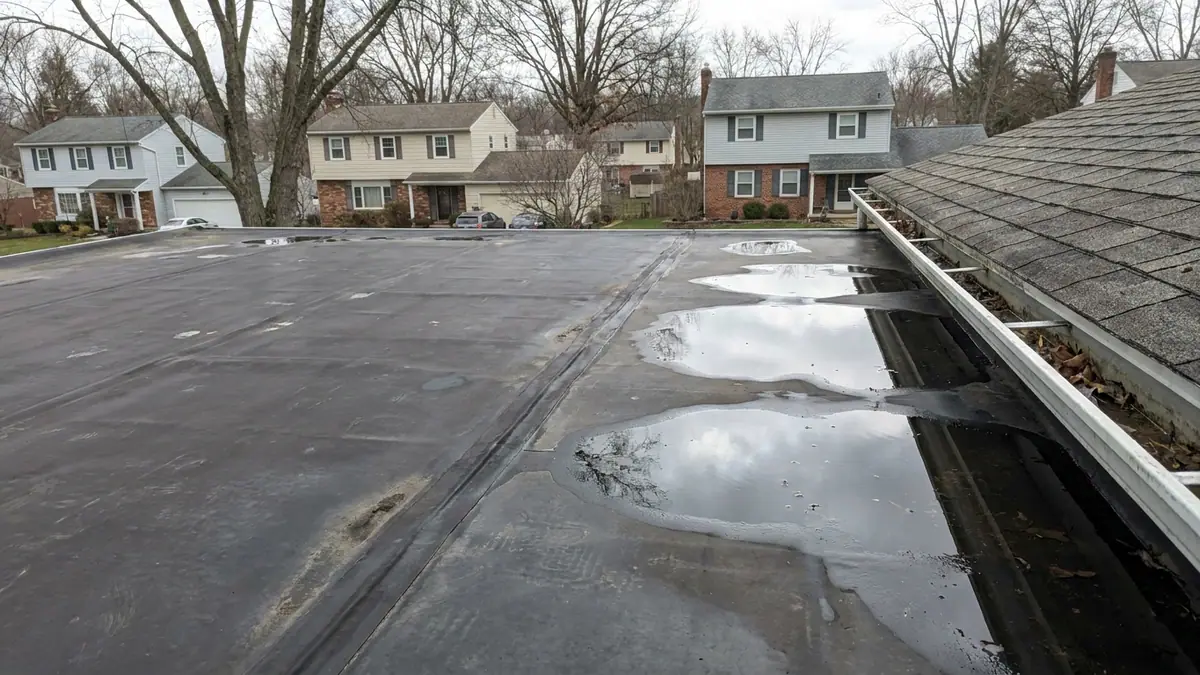
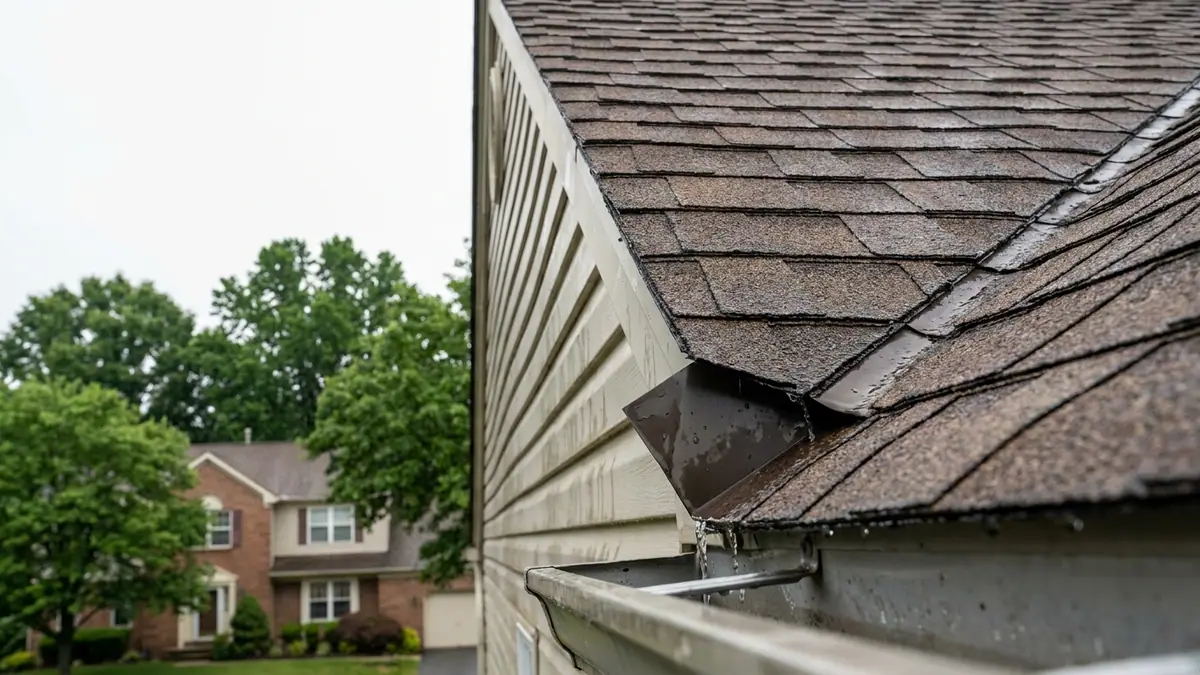
- Valley metal where two roof planes meet, in the channel that carries the most concentrated water on the roof.
- Pipe boots around plumbing vents.
- Drip edge along eaves and rakes, which also determines whether water lands in the gutter or behind it.
- Skylight flashing kits, which come matched to the unit and the roof material.
The four places New Jersey roofs leak most
Chimneys
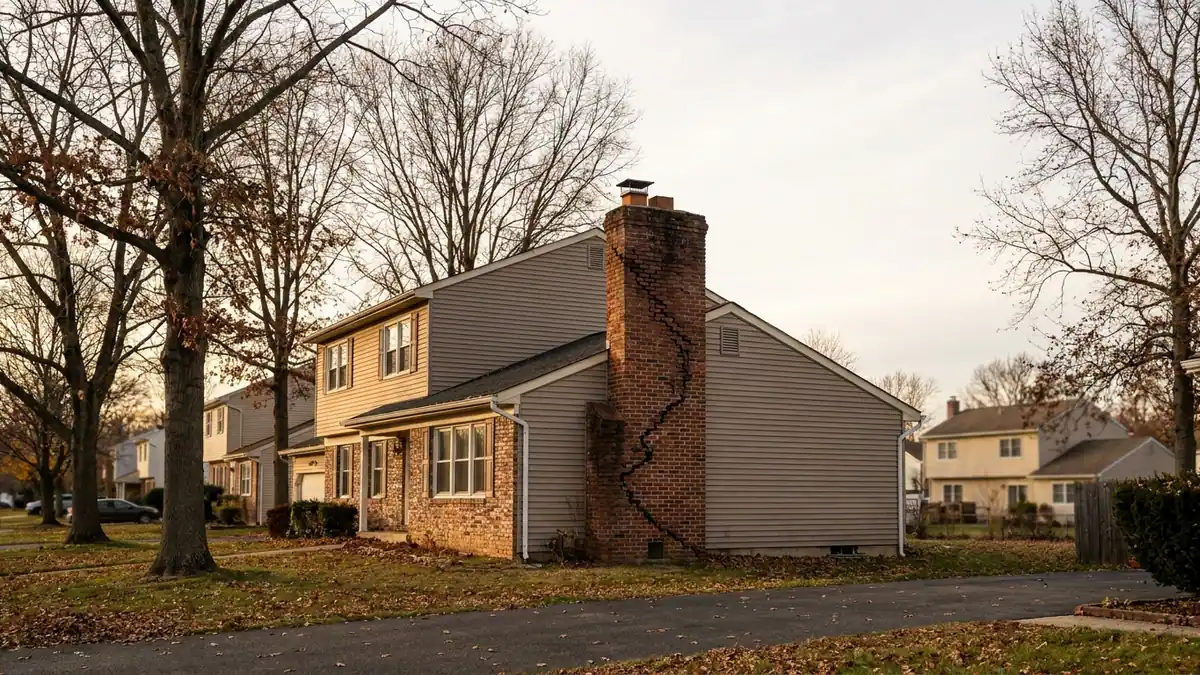
Chimneys are the single most common source of leaks in older New Jersey housing stock, and much of the state's housing stock is old. Three things fail. The counter flashing pulls out of a mortar joint that has eroded. The step flashing along the sides corrodes at the bottom edge where water sits longest. Or a previous roofer skipped flashing entirely and troweled roof cement around the whole base, which cracks within a few years and then holds water against the brick.
A chimney also needs a cricket — a small peaked structure on the uphill side — when it is wide enough that snow and debris pile behind it. Without one, the back of the chimney becomes a dam, and that is where the rot shows up in the decking.
Sidewalls and dormers
Step flashing has to be woven in course by course as the shingles are installed. It cannot be added afterward without lifting the shingles, which is exactly why so many roofers reuse the old pieces. A single continuous strip of metal run up a sidewall instead of individual steps is a shortcut, and it leaks, because water that gets under the siding has nowhere to exit.
The symptom is usually a stain on an interior wall a few feet below a dormer or a second-story wall line, showing up only in wind-driven rain.
Valleys
Valleys carry more water per foot than anything else on the roof. They can be closed, with shingles woven across, or open, with exposed metal down the center. Both work when done correctly. What does not work is nailing through the valley metal in the center of the channel, or letting debris pack the valley until water backs up sideways under the shingles.
Skylights
Skylights leak because someone caulked the perimeter instead of installing the manufacturer's flashing kit, or because the old kit was reused with a new unit. The skylights guide covers curb and deck-mounted units in more detail. The short version: a skylight installed with its correct flashing kit is not a weak point, and one installed with sealant always becomes one.
Reusing old flashing is how a quote gets cheap
Here is the part homeowners rarely see. Two estimates for the same roof can be thousands apart, and the difference is not always the shingle line. It is often flashing.
New step flashing means pulling back siding at every sidewall and weaving new metal in course by course. New counter flashing means grinding a fresh groove in the mortar. New valley metal, new pipe boots, new skylight kits — all of it is material and labor, and none of it is visible when the job is finished.
A contractor who plans to reuse it moves faster and prices lower. Six or ten years later the same junctions leak, and the leak is not covered by anything, because the metal was never new.
| New flashing | Reused flashing | |
|---|---|---|
| Visible after install | New flashingNo | Reused flashingNo |
| Effect on quoted price | New flashingHigher | Reused flashingLower |
| Sidewall work | New flashingSiding lifted, metal woven course by course | Reused flashingShingles slid back under existing metal |
| Chimney | New flashingFresh mortar groove and new counter flashing | Reused flashingOld metal re-bedded in caulk |
| Typical failure | New flashingNone for the life of the roof | Reused flashingCorrosion and separation at the same points as before |
This is one of the conditions that normally triggers a change order mid-job on a roof priced from the ground. Lightning finds it at the free inspection instead and prices it into the written estimate, which is why there are no change orders — the flashing is either in the quote or it is not, and you can read which. The questions worth asking any contractor are in the contractor selection guide.
How to tell a flashing leak from a shingle leak
From inside the house, position tells you most of it.
- Find where the stain is relative to a penetration. A stain near a chimney chase, a bathroom vent stack or an interior wall line that continues up through the attic points at flashing.
- Check whether it appears only in certain weather. Flashing leaks are often wind-dependent. Rain straight down does nothing; rain driven from one direction soaks the ceiling.
- Look at the attic side in daylight. Water tracks down rafters before it drops, so the wet spot on the sheathing is usually uphill of the stain below. Follow the run to its highest point.
- Look for rust streaks or white mineral deposits on the underside of the sheathing near a chimney. That is long-term seepage, not a new problem.
- Rule out the gutters. Water behind a gutter, at the drip edge, produces fascia rot and a stain at the top of an exterior wall rather than in the middle of a ceiling.
If the shingles are still in good condition and the leak is at one junction, a repair is genuinely the right answer. The threshold for replacing instead is covered in the signs you need a new roof guide.
What to get in writing before you sign
Ask for these as separate line items, each marked new or reused:
- Step flashing at every sidewall and dormer
- Chimney counter flashing, and whether the mortar joint is being recut
- Chimney cricket, if the chimney is wide
- Valley metal, and whether the valleys will be open or closed
- Pipe boots for every vent penetration
- Drip edge at eaves and rakes
- Skylight flashing kits, by unit
If a contractor will not put that on paper, that is the answer to the question.
Getting the flashing looked at
Lightning Construction is veteran-owned, GAF Certified, licensed and insured, and works in all 21 New Jersey counties. Every job includes a free inspection and a written estimate with no obligation — a salesperson comes to the house, gets on the roof, and looks at each junction before pricing anything. There is no deposit, nothing is due until the work is finished and you have inspected it, and Lightning pulls the permit and attends the municipal inspection under the New Jersey Uniform Construction Code. Most asphalt replacements are torn off and finished in a single day.
If you have a stain that shows up only in a driving rain, get it looked at before the next storm. See the full scope of the work on the roofing page, or request a free estimate.