Short answer
Drip edge is a bent metal strip installed along the eaves and rakes that carries water off the shingle edge and past the fascia instead of behind it. The residential code adopted in New Jersey requires it on asphalt shingle roofs, so it is not an upgrade and it should be a named line item on your estimate. If a quote does not mention drip edge, ask whether it is included and what profile is being used before you sign anything.
On this page
Drip edge is a bent strip of metal that runs along the bottom edge and the sloped side edges of your roof. It does one job: it carries water off the last inch of shingle and past the wood, instead of letting it curl back under the shingle edge and soak the fascia and the deck. The residential code adopted in New Jersey requires it on asphalt shingle roofs, which means it is not an add-on and not an upsell. It belongs on the estimate as a line item, and if it is missing from yours, that tells you something about the estimate.
What drip edge actually does
Water running off a shingle does not fall straight down. Surface tension pulls it back around the edge and along the underside, and it keeps traveling until it hits something absorbent. Without metal there, the something absorbent is the edge of the plywood deck, the fascia board, and the top of the sub-fascia behind it.
Drip edge breaks that path. The outer face of the metal has a small kicked-out lip at the bottom that forces the water to release and drop, and the metal itself covers the deck edge and the top of the fascia so nothing that does get behind can reach wood. It also does two smaller jobs that matter over 25 years: it stiffens the shingle overhang so the first course does not sag or get lifted in wind, and it closes the gap at the deck edge that squirrels and wasps use to get into a soffit cavity.
Where drip edge goes at eaves versus rakes
The two edges are installed in opposite order, and getting it backward is the most common installation error.
At the eave, the bottom edge, the drip edge goes on first, directly on the deck, and the underlayment goes over it. That way any water that gets under the shingles and runs down the underlayment ends up on top of the metal and drips clear. On roofs with an ice barrier membrane at the eave, the membrane also goes over the eave drip edge, sealing to the metal.
At the rake, the sloped gable edge, the order flips. The underlayment goes down first and the drip edge goes over it, so wind-driven rain running down the rake stays outside the assembly instead of getting pushed under the felt.
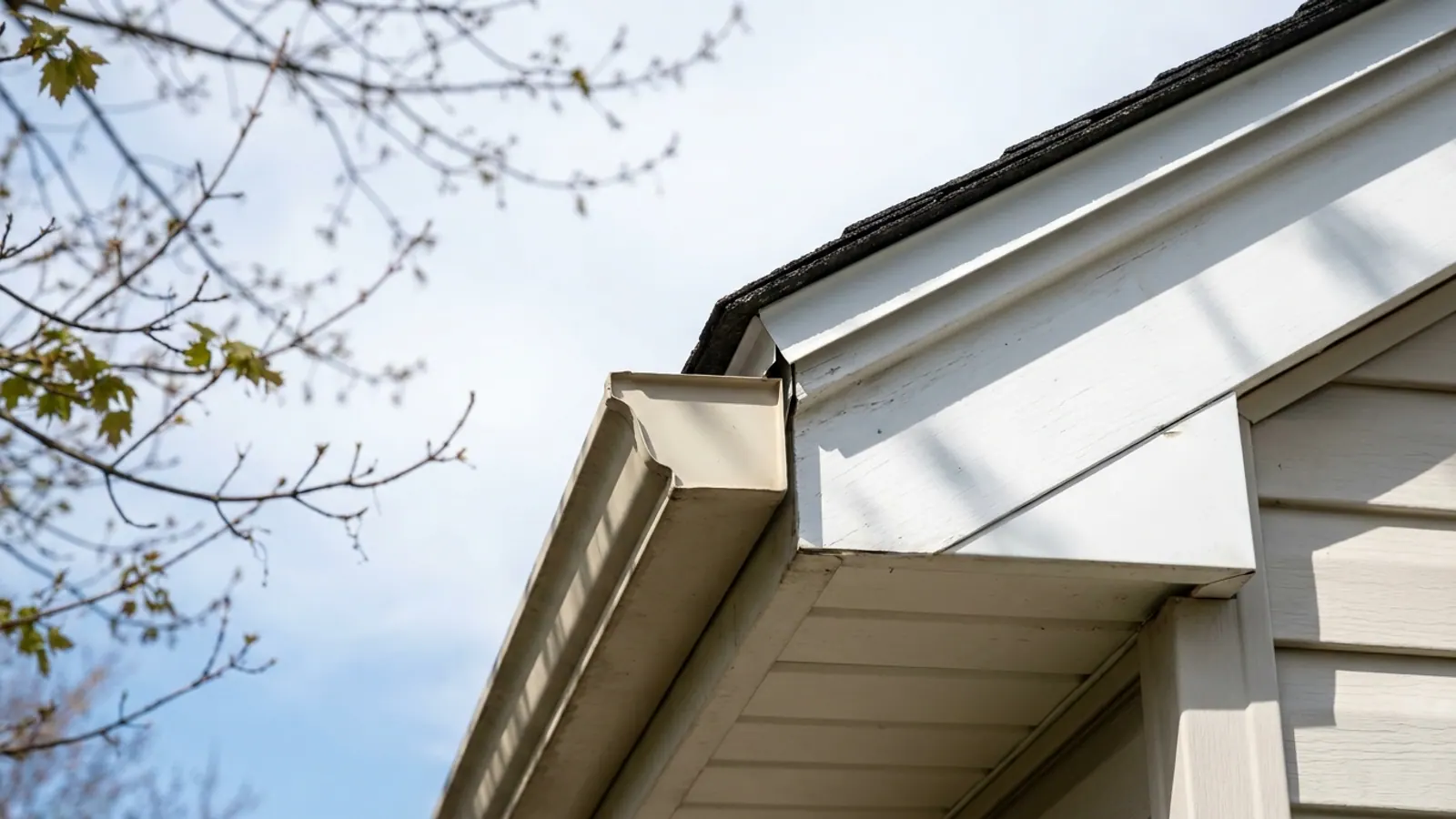
Every joint should lap the next piece by a couple of inches with the upper piece over the lower one, and the corner where a rake meets an eave should be cut and lapped so the water going down the rake lands on top of the eave metal. Corners that are simply butted together and caulked are where you see fascia rot show up first.
Drip edge profiles, and which one your roof needs
There are three shapes in common use. They are not interchangeable, and the right one depends on the fascia and whether the gutter is hung tight to it.
| Profile | Shape | Where it is used |
|---|---|---|
| ProfileType C, L-style | ShapeSimple L with a bottom kick-out | Where it is usedRakes, and eaves on homes with straight, sound fascia |
| ProfileType D, T-style | ShapeL with an extra flange that stands the metal off the fascia | Where it is usedEaves and rakes where the fascia is uneven or you want the water thrown farther out |
| ProfileGutter apron | ShapeLong leg that bends out and down into the gutter trough | Where it is usedEaves where water has been running behind the gutter, or where the gutter sits low |
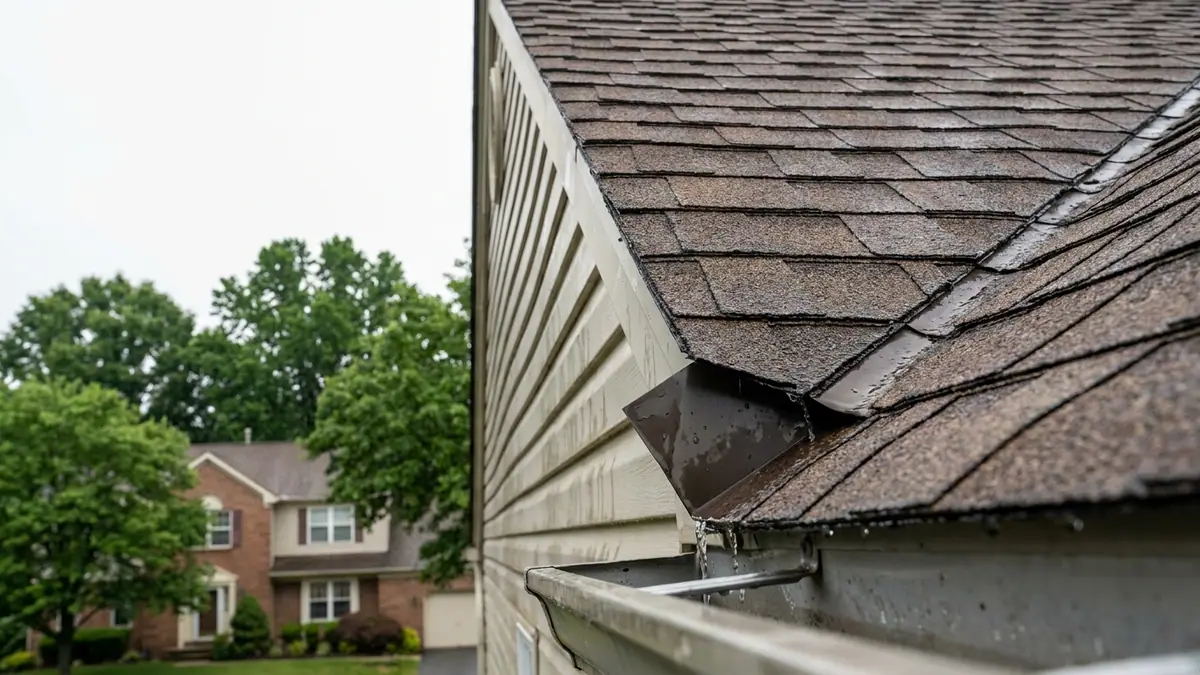
Gutter apron is the fix for a specific and very common New Jersey problem: staining and rot on the fascia directly behind a gutter that is clean and pitched correctly. The water never reaches the gutter because it is wrapping the shingle edge and going down behind it. A wider apron leg reaches past the back of the gutter and drops the water into the trough. If you are having seamless gutters installed at the same time as a roof, this is the detail to ask about by name.
What it looks like when drip edge is missing or wrong
You can check most of this from the driveway.
- Dark vertical streaks or peeling paint on the fascia under the gutter, on a house where the gutters are clean.
- Shingle edges at the rake that look soft, wavy or lifted, because there is no metal supporting the overhang.
- Rot or soft spots at the outer corners of the roof where rake meets eave.
- The first inch of plywood visible from below at the eave, dark and delaminating.
- Gutter spikes or hangers pulling loose because the fascia behind them has gone soft.
On older housing stock this is normal. Drip edge was not required on shingle roofs for most of the twentieth century, and plenty of homes across the state have original eaves that have been wicking water for decades. That damage is not repaired by installing metal over it. The soft wood comes off first, which is why the soffit and fascia side of the job sometimes gets bundled into a roof replacement.
How drip edge gets installed on replacement day
On a typical asphalt job, the sequence runs like this:
- The old roof is stripped to the deck, and the old drip edge, if there is any, comes off with it. Reused drip edge is bent, nail-holed and usually the wrong profile.
- The deck edge and fascia get inspected. Anything soft is cut out and replaced before metal goes over it.
- Eave drip edge is installed on the bare deck, lapped and fastened roughly every eight to twelve inches along the top flange.
- Ice barrier membrane and underlayment go down over the eave metal and up the slope.
- Rake drip edge is installed over the underlayment, working from the bottom up so each piece laps over the one below.
- Starter course and shingles go on, with the shingle edge overhanging the metal by a small, consistent amount rather than sitting flush.
Color matters less than fit, but it is worth choosing. White is standard. If your gutters and fascia trim are a color, matching the drip edge to them keeps a line of bright metal from showing along the whole eave.
How to check your quote
Read the materials section of every estimate you get and look for the words "drip edge" or "eave and rake metal." If the quote lists shingles, underlayment, ice barrier, ridge vent and nothing at the edge, ask directly: is drip edge included at both eaves and rakes, what profile, and is the old metal being replaced or reused. A contractor who intends to do it right will answer in one sentence. Get the answer added to the written estimate, not the email thread.
Same question applies to the corner where roofing meets gutters. If new gutters are part of the job, the estimate should make clear who is setting the relationship between the drip edge and the back of the gutter. The seamless gutters guide covers hanger spacing and pitch, which are the other two things that decide whether that edge stays dry.
One thing drip edge does not do is solve ice dams. Metal at the eave protects the wood and moves water into the gutter, but ice forms because heat is escaping into the attic and melting snow that refreezes at the cold overhang. That is an insulation and ventilation problem, and the ice dams guide explains how the two get fixed together during a roof replacement.
What Lightning Construction does at the roof edge
Drip edge is included as standard on Lightning Construction roofing replacements, at eaves and at rakes, with new metal rather than reused. Rotted fascia and soft deck edge are found at the free inspection and priced into the written estimate, so there is no change order when the crew gets the old roof off and sees the wood. The written estimate is the final price, there is no deposit, and nothing is due until the work is finished and you have inspected it. Lightning pulls the permit from your municipality's construction office and attends the inspection, where the edge detail is one of the things an inspector can look at.
If you want your roof edge looked at before you commit to anything, book a free inspection and written estimate. It is genuinely no-obligation, and a salesperson does come to the house.