Short answer
The downspouts always come off, because they run down the wall face and are strapped through the siding. The gutter trough itself only has to come down when the fascia and soffit are being wrapped or replaced, which is part of most full siding jobs in New Jersey. If the gutters are staying put and the fascia is not being touched, a careful crew can leave the trough hanging and work the siding up to it.
On this page
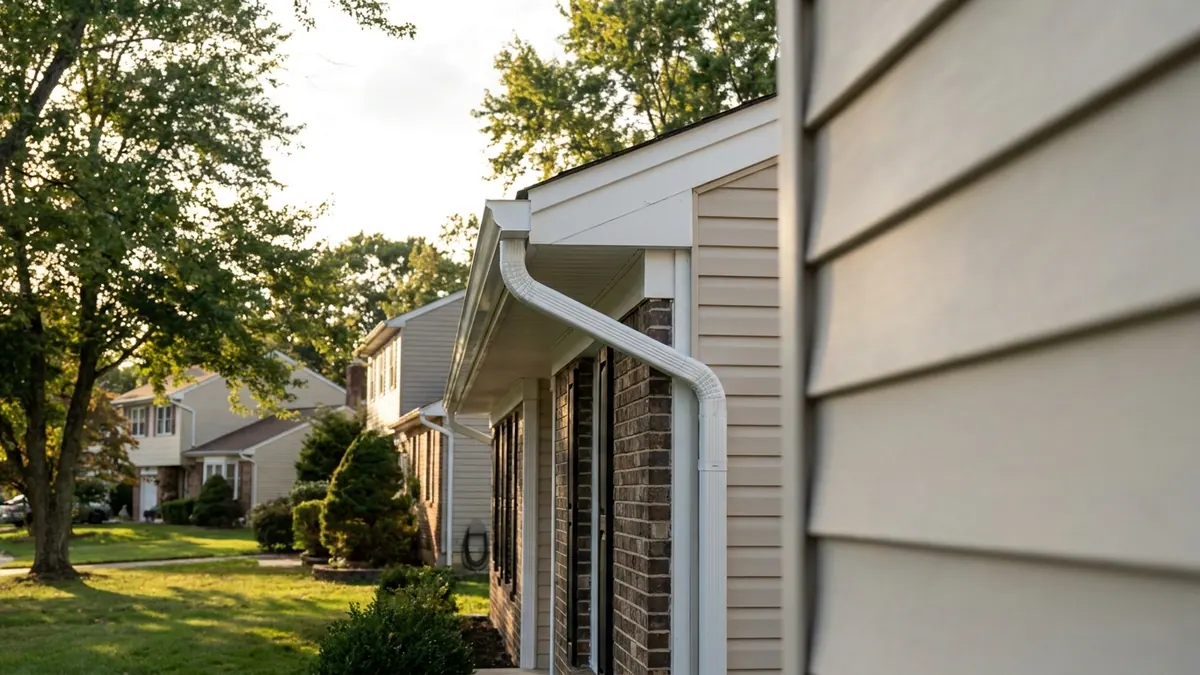
The downspouts come off every time. They run vertically down the wall face and they are strapped through the siding into the framing, so there is no way to replace a wall without taking them down. The gutter trough is a separate question, and the honest answer is that it depends on whether the fascia and soffit are part of the job.
On a full siding replacement, they almost always are. On a partial job, or a job where the roof edge was already redone, they often are not.
Why siding and gutters do not actually overlap
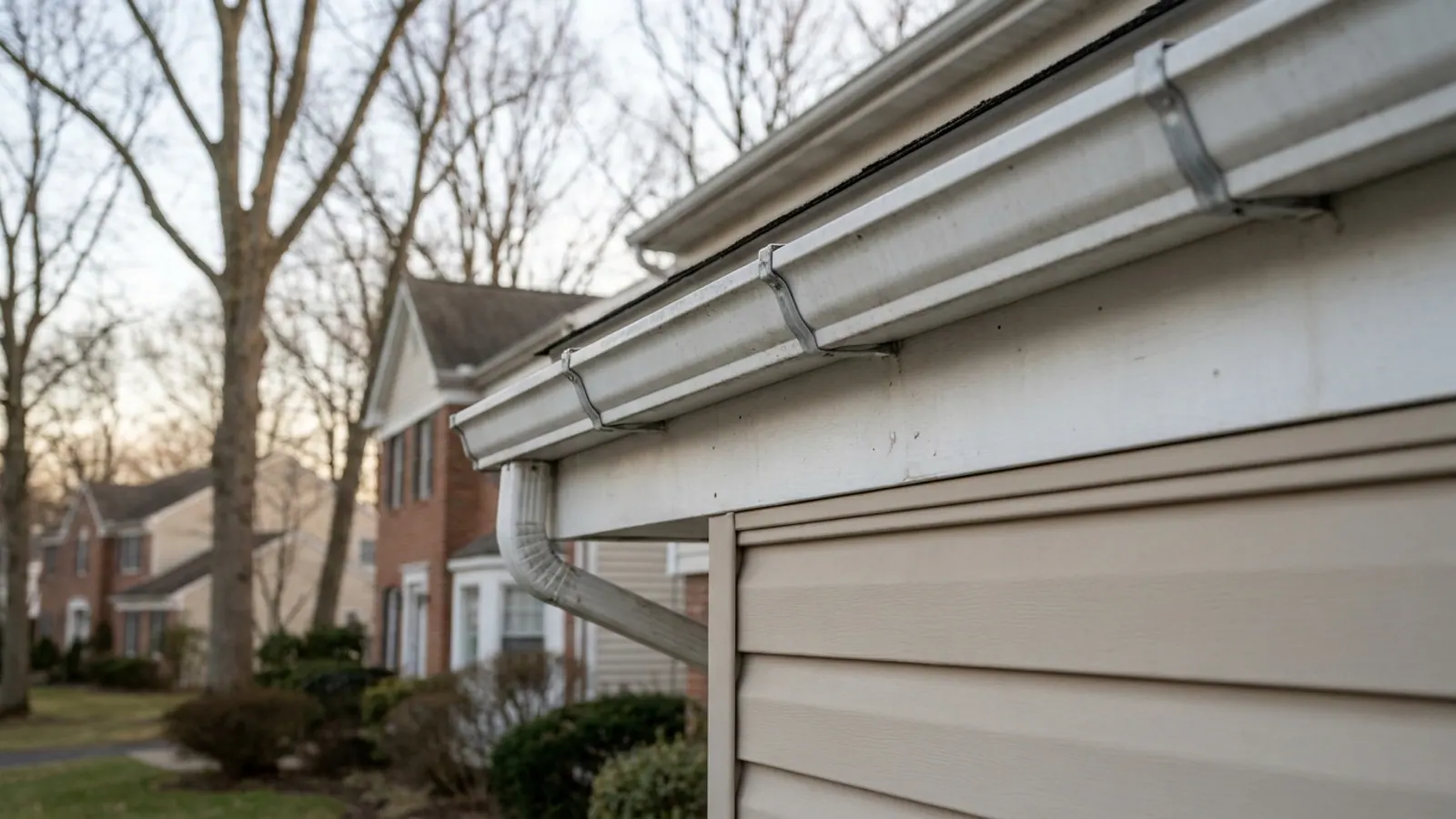
Siding stops at the top of the wall, under the soffit. The gutter hangs on the fascia board, which is the vertical board at the roof edge above that line. They are two different planes and they do not touch.
What connects them is trim. There is usually a piece of utility trim or J-channel at the top course of siding where the wall meets the soffit, and the installer needs clear access to that line to lock the final course in. If the gutter is hanging six inches above that trim, a crew can work under it. If the soffit is coming off, everything above the top course is coming down too, and the gutter goes with it.
When the gutters have to come down
The fascia is being wrapped or replaced
This is the most common reason. Aluminum fascia wrap is a coil-stock cover bent to fit over the existing fascia board, and it has to go on the bare board before anything is screwed back through it. You cannot slide wrap behind a hanging gutter. If your estimate includes fascia wrap or new fascia, the gutters are coming off and that work should be priced in.
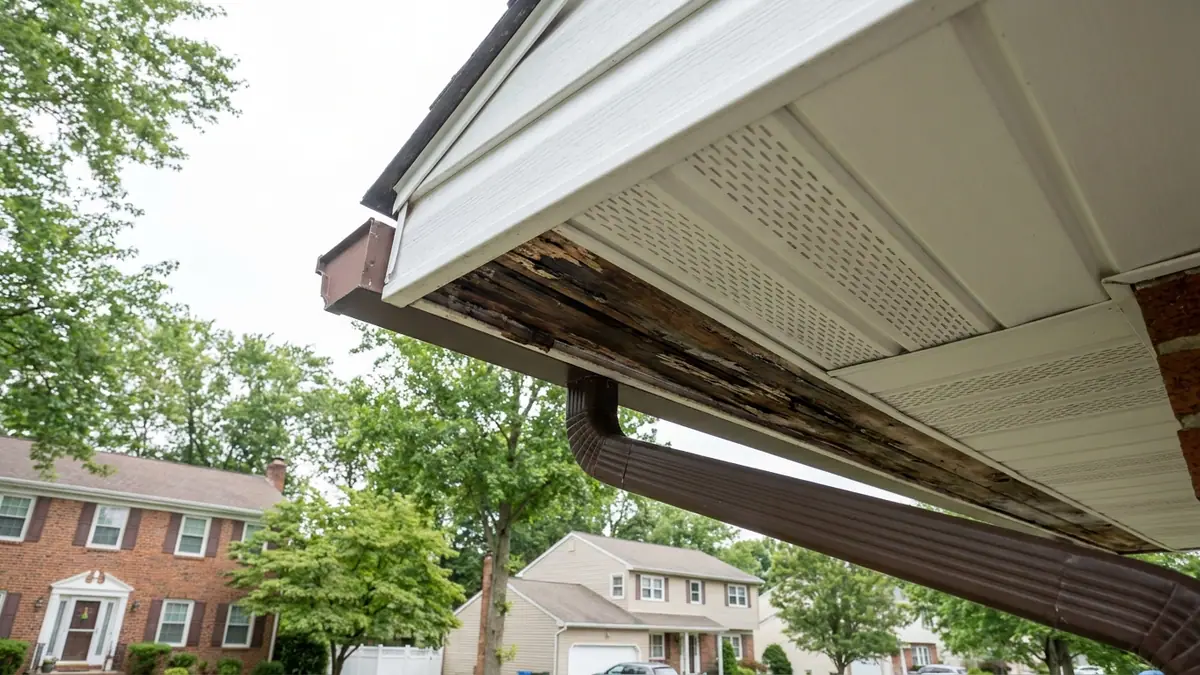
The fascia board is rotted
The gutter is bolted to the one board on the house most likely to be soft. Rotted fascia is almost always a water problem from the gutter or the roof edge above it, and the gutter has to come off to replace the board. If a crew finds this after the siding is already off, you want a contractor whose written estimate is already the final price. Lightning Construction finds those conditions at the free inspection and prices them in, which is why there are no change orders on the day.
The gutters are old enough to replace anyway
If the seams drip, the troughs hold standing water after rain, or the whole run is pulling away from the fascia, taking them down and buying new ones costs less than paying labor twice. The staging, the ladders and the crew are already there.
What removal does to a gutter that is already aging
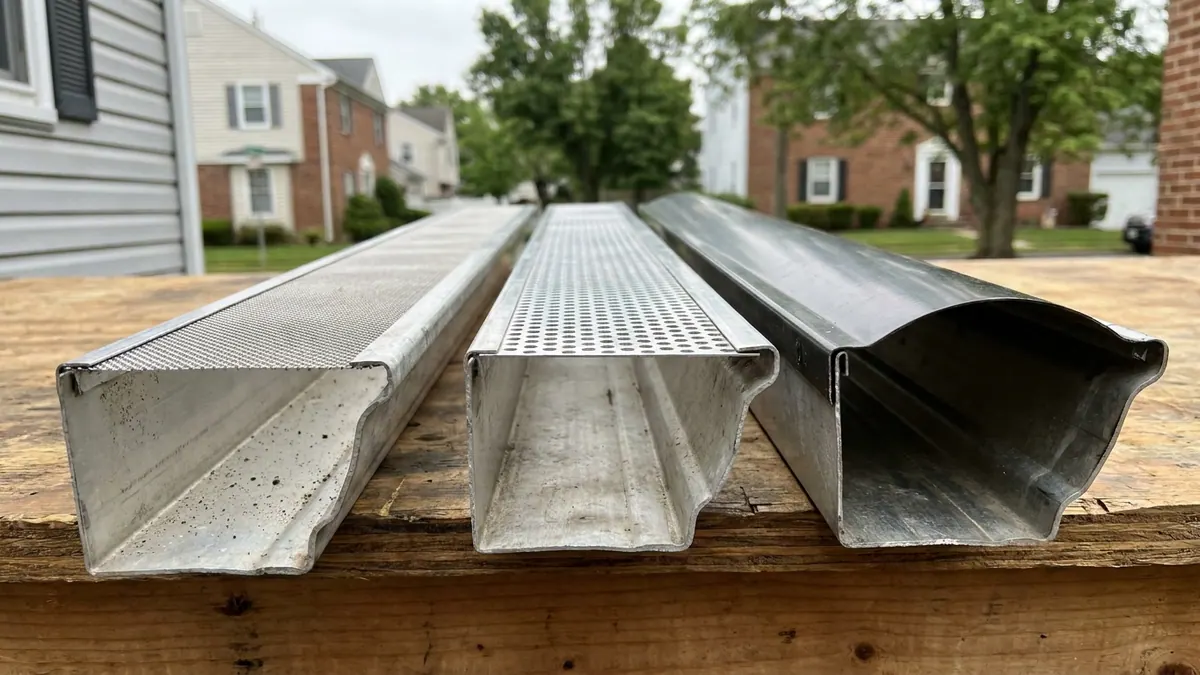
Seamless aluminum gutters are run as one continuous piece per side, which is the entire point of them. A 38-foot trough coming off a two-story wall needs support along its whole length or it kinks, and a kinked trough never pitches correctly again.
| Take down and rehang existing | Install new seamless | |
|---|---|---|
| Hanger type that survives it | Take down and rehang existingHidden hangers screwed to fascia | Install new seamlessNot applicable, all new |
| Spike and ferrule gutters | Take down and rehang existingOld spike holes rarely reseat | Install new seamlessClean fascia, new screws |
| Pitch | Take down and rehang existingReset to whatever it was | Install new seamlessSet fresh, measured to each outlet |
| Seams and end caps | Take down and rehang existingExisting sealant disturbed | Install new seamlessNew |
| Cost | Take down and rehang existingLabor to remove and rehang | Install new seamlessMaterial plus labor, no rehang |
If your gutters were hung on spikes driven through the face into the fascia, assume they are not coming back up well. The holes are already wallowed out. More on how the two hanging systems differ is in the seamless gutters guide.
Downspouts, straps and the holes left in new siding
Every downspout strap is a penetration through the wall. When old siding comes off, those holes go in the dumpster with it. When the new siding goes on, the downspouts get re-strapped, and this is where sloppy work shows up two years later.
What a correct reinstall looks like:
- Downspouts come down before the siding does, and the elbows are kept with the run they belong to.
- New siding goes on complete, with no cut-outs guessed in advance for strap locations.
- Downspout runs are laid out again on the finished wall, which is the moment to move one that has always drained badly.
- Straps are fastened through the siding into solid framing, not into the siding alone, and never nailed so tight that the panel cannot move.
- Elbows are checked for the kink at the top that causes most clogs.
Vinyl expands and contracts with temperature. A strap screwed down hard through a vinyl panel will buckle that panel by August. This is the same failure as nailing siding too tight, and it is avoidable.
The right order of operations
Roof edge first if the roof is in play, then siding, then gutters last. Gutters go up after the fascia is wrapped and the siding is finished, because both of those live behind or beside the gutter. Hanging gutters first means taking them down again.
If you are replacing the roof and the siding in the same season, the gutters should be the final item on the schedule regardless of which trade is on site. New gutters hung before the siding crew arrives will have hanger screws backed out and re-driven, and the pitch reset, which is work you paid for twice.
What to put in writing before the job starts
Ask for these as explicit line items, not as assumptions:
- Whether gutter removal and reinstallation is included, or whether new gutters are quoted.
- Whether fascia wrap and soffit are included, since that single answer determines whether the gutters come off at all.
- What happens if a trough is damaged during removal, and who pays for it.
- Whether downspout straps are new.
- Whether any downspout is being relocated and where the water goes at grade.
A written estimate that covers all five is a contractor who has actually walked the roof edge. Lightning's estimate is the final price, there is no deposit, and nothing is due until the work is finished and you have inspected it. The free inspection and written estimate come with no obligation, and a salesperson does come to the house.
What this costs in New Jersey
Gutter work runs $1,200 to $3,500 in standard-value towns, $2,500 to $6,500 in higher-value towns, and $4,000 to $12,000 on large or luxury homes. Siding runs $10,000 to $22,000, $16,000 to $38,000 and $30,000 to $70,000 across the same three bands. The band is set by the municipality's median home value from ACS 2024 five-year estimates, not by how your house looks from the curb.
If you are deciding between vinyl and fiber cement before you get to the gutter question, the siding options guide covers the material trade-off in detail.
What to do next
Have someone look at the fascia before you decide anything about the gutters. If the board is sound and the soffit is staying, the gutters can likely stay hanging and you are only paying for downspout removal and reinstall. If the fascia is soft or the gutters already leak, bundle the gutter work into the siding job and have it done once.
Book a free inspection and written estimate and get both answers in the same visit. Lightning Construction is veteran-owned, family-operated, licensed and insured, New Jersey Home Improvement Contractor registration 13VH12437000, and serves all 21 counties.