Short answer
Read an estimate for what it names, not what it totals. Two prices are only comparable when both documents state the same measured roof or wall area, the same materials by product line, and the same handling of tear-off layers, decking, flashing, underlayment and ventilation. Anything left off one sheet is either being skipped or will come back later as a change order.
On this page
- Start with the measured area, not the price
- The line items that decide whether the price holds
- What vague looks like next to specific
- Permits, inspections and who does the filing
- Payment terms, deposits and change orders
- Warranty language on the estimate itself
- Six questions to ask before you sign anything
- What to do next
Read an estimate for what it names, not what it totals. A price is only a price when the document behind it states how much roof or wall is being covered, which products are going on, and what happens to the things nobody can see until the old material comes off.
Most homeowners lay three estimates on the kitchen table, look at the bottom right corner of each, and pick. That comparison is worthless if one sheet includes a full tear-off, new flashing and new decking where needed, and another includes shingles nailed over what is already there. Both say "new roof." They are not the same job.
This post goes line by line. For the broader question of vetting the company itself, references, insurance and the warning signs at the door, read the guide on how to choose a roofing contractor in NJ.
Start with the measured area, not the price
Every roofing estimate should state the roof area in squares. One square is 100 square feet. If the number is not there, the contractor either measured and did not write it down, or did not measure.
Ask how the number was produced: walked and measured, taken off satellite imagery, or estimated from the ground. Then compare the three sheets. Small differences are normal because of how waste and hips are counted. A large difference means somebody left off the garage, a rear addition, a porch roof or a dormer, and the low bid will grow later.
Siding works the same way, in squares of wall area, with trim, soffit and fascia counted separately by linear foot.
The line items that decide whether the price holds
Tear-off and number of layers
The estimate should say tear-off to the decking, and it should say how many existing layers are being removed. Disposal should be named too. If the sheet says "remove existing shingles" with no layer count, and the crew finds two layers on the day, that is the classic point where a change order appears.
Decking
Decking is the plywood or plank sheathing under the shingles. It gets replaced when it is soft, delaminated or will not hold a nail, and it is nearly always discovered after tear-off. Either the estimate includes it based on what the inspection found, or it names a per-sheet price in writing. "Additional decking billed as needed" with no number is an open checkbook.
Underlayment and ice barrier
Synthetic underlayment over the whole deck, and a self-adhered ice-and-water barrier at the eaves and in the valleys. The estimate should name both by type and say where each one goes. On a New Jersey roof, the eave barrier is what stands between an ice dam and your ceiling.
Flashing
This is where low bids hide. Step flashing at sidewalls, counterflashing at the chimney, valley metal, pipe boots and skylight kits should each be listed as new. If flashing is not mentioned, assume the old metal is being bent back and reused, which is one of the most common reasons a brand-new roof leaks at a chimney in the first year.
Ventilation
Ridge vent, the amount of it in linear feet, and whether intake at the soffit is being opened up or added. A roof with exhaust and no intake does not ventilate. If the estimate says nothing about ventilation, nobody looked in the attic.
Shingle or siding product, by name
Not "architectural shingles." The manufacturer, the product line and the color. Lightning Construction is GAF Certified and installs GAF asphalt systems, and the line matters to both the look and the warranty. Same on siding: vinyl, insulated vinyl and fiber cement are three different jobs at three different prices.
Gutters, drip edge and cleanup
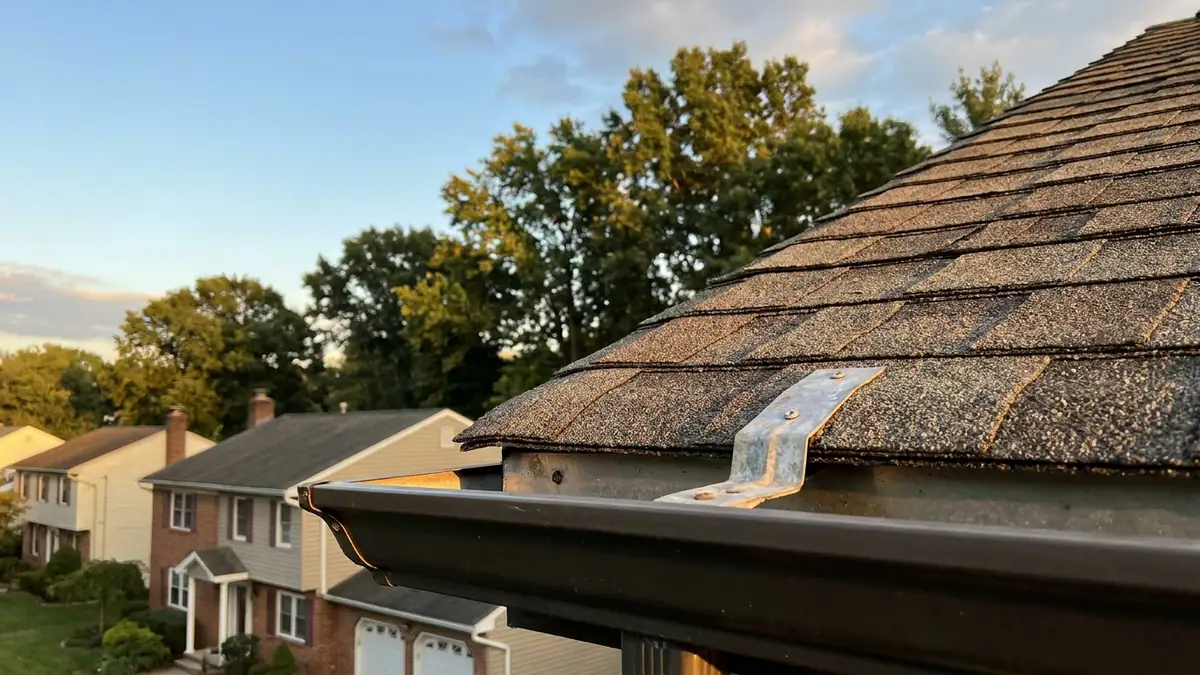
Drip edge at eaves and rakes should be listed. If gutters are being replaced, size and downspout count belong on the sheet. Cleanup should say magnetic nail sweep and dumpster removal, and the estimate should say who is responsible for landscaping protection.
What vague looks like next to specific
| Line item | Vague wording | Wording you can compare |
|---|---|---|
| Line itemScope | Vague wording"Replace roof" | Wording you can compare"Tear off 1 layer, 28 squares, main house and garage" |
| Line itemDecking | Vague wording"Replace bad wood as needed" | Wording you can compare"Replace damaged sheathing, included; additional sheets at a stated per-sheet price" |
| Line itemUnderlayment | Vague wording"Felt paper" | Wording you can compare"Synthetic underlayment full deck; ice barrier first 6 feet at eaves and all valleys" |
| Line itemFlashing | Vague wordingNot mentioned | Wording you can compare"New step and counterflashing at chimney, new valley metal, new pipe boots" |
| Line itemVentilation | Vague wordingNot mentioned | Wording you can compare"Install ridge vent, stated linear feet; open soffit intake" |
| Line itemPayment | Vague wording"50% down" | Wording you can compare"No deposit; balance due on completion after homeowner inspection" |
Permits, inspections and who does the filing
The estimate should say who pulls the permit and who attends the municipal inspection. Roof replacement in New Jersey falls under the Uniform Construction Code, and permitting is handled by your municipality's own construction office, which means the process differs slightly town to town.
Lightning Construction pulls the permit and attends the inspection in every municipality it works in. The homeowner files nothing. If an estimate is silent on permits, or the salesperson suggests you pull it yourself as the owner, understand what that shifts onto you. The roof permit guide covers what the inspector actually looks at.
Payment terms, deposits and change orders
Read the payment schedule before the price. Three things to look for:
- The deposit. How much, and when. Lightning takes none on any job, and nothing is due until the work is finished and you have inspected it.
- The change order clause. Find the sentence that lets the contractor raise the price mid-job, and read what triggers it. Lightning writes no change orders; the conditions that normally cause them, including extra layers, damaged decking and bad flashing, are found at the free inspection and priced into the estimate.
- Financing. If you are financing, the term and the rate belong in writing, not in conversation. Lightning offers financing through GreenSky and FTL, including 24 months at 0% interest and 120-month terms with no prepayment penalty.
A range on an estimate is not a price. Published ranges are useful for sanity-checking, and Lightning's own roofing range runs $9,000-$22,000 in standard-value towns and higher in higher-value towns and on large homes, banded by the median home value of the municipality. What you sign should be one number for a defined scope. The New Jersey roof cost guide explains how the bands work.
Warranty language on the estimate itself
Two separate warranties exist and both should be named on the sheet: the manufacturer's coverage on the material, and the contractor's workmanship coverage on the labor. Length, what is covered, and whether it transfers if you sell. A verbal "lifetime warranty" that appears nowhere on the estimate does not exist. The differences are laid out in the roof warranty guide.
Also confirm the company's New Jersey Home Improvement Contractor registration number is printed on the document. Lightning's is 13VH12437000. State law requires registered contractors to show it, and its absence is a fast disqualifier.
Six questions to ask before you sign anything
- What is the measured roof area, and does that include every structure on the property?
- How many existing layers are coming off, and is disposal included?
- What is the price per sheet if more decking has to be replaced?
- Which flashings are new, and which are being reused?
- Who pulls the permit and meets the inspector?
- What can change this price after work starts, and where does the contract say so?
If a salesperson cannot answer those in the driveway, the number on the page is a starting figure.
What to do next
Get the scope in writing from everyone you are considering, then compare the documents side by side rather than the totals. Most asphalt replacements here are done in a single day, so the entire job hinges on decisions made before the crew shows up.
Lightning Construction's inspection and written estimate are free with no obligation, and a salesperson does come to the house. The estimate names the scope, the materials, the permit handling and the final price, with no deposit and no change orders. Request a free estimate and use it as the sheet you measure the others against.