Short answer
No. A roof, siding or gutter crew works from the outside and does not need you in the house to do the job. The two points where being there genuinely helps are the free estimate appointment at the start, where a salesperson comes to the house, and the walkthrough at the end, because with Lightning Construction nothing is due until the work is finished and you have inspected it.
On this page
No, you do not need to be home. A roofing, siding or gutter crew works from the outside of the house, on ladders and staging, and there is nothing about the job that requires you standing in the kitchen. People leave for work at 7am and come home to a finished roof all the time.
That said, there are two moments in the project where your presence actually matters, and a handful of small decisions that are easier to make before the truck shows up than after. Here is the whole thing, stage by stage.
Where you do and do not need to be present
| Stage | Do you need to be home? | Why |
|---|---|---|
| StageFree inspection and estimate | Do you need to be home?Yes | WhyA salesperson comes to the house, walks the roof or walls, and goes over the written estimate with you |
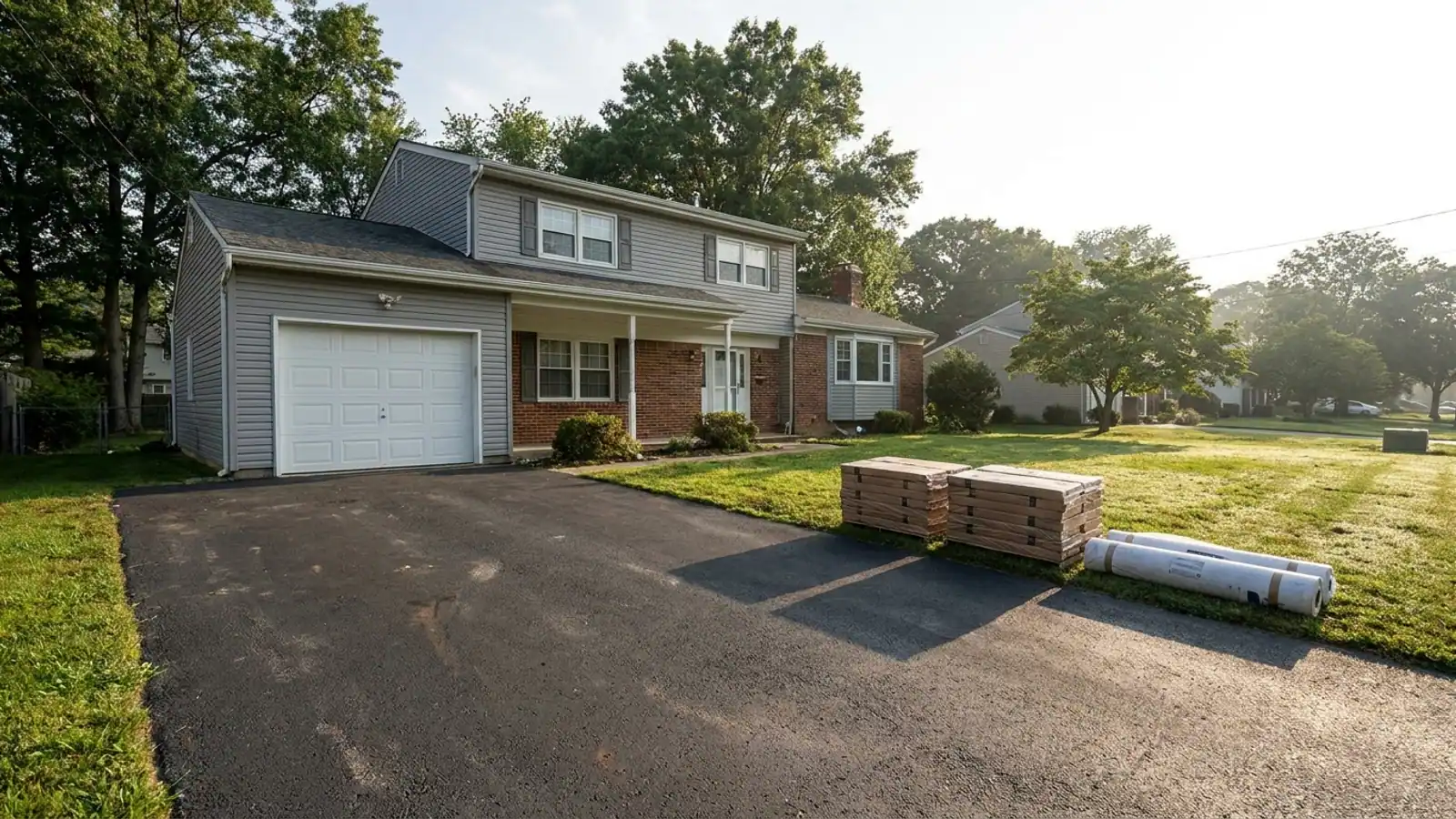
| StageMaterial delivery | Do you need to be home?No | WhyBundles and rolls are staged on the driveway or lawn |
| StageTear-off and install | Do you need to be home?No | WhyAll exterior work, ladders set from outside |
| StageMunicipal inspection | Do you need to be home?No | WhyLightning pulls the permit and attends the inspection |
| StageFinal walkthrough and payment | Do you need to be home?Yes, or arranged | WhyNothing is due until the work is finished and you have inspected it |
The estimate appointment is the one you should plan around
The free inspection is not a drive-by. Someone comes to the house, gets on the roof or along the walls, photographs what is up there, and then sits down with you and goes through what the job includes. It is genuinely free and genuinely no-obligation, and it is also a sales appointment. Say that plainly so nobody is surprised.
Being there for it matters because that is where the scope gets set. Extra shingle layers, soft decking, failed step flashing, rotted fascia behind a gutter: those are found at the inspection and priced into the written estimate, which is how there are no change orders later. If you are not there to hear what was found and ask about it, you are agreeing to a number without the explanation behind it. The contractor selection guide covers what to ask at that appointment and what answers should worry you.
Why the work day itself does not need you
Most residential asphalt roofs are torn off and replaced in one day. Standing-seam metal takes two to four. Siding and gutters run on their own schedules. In every case the crew needs the outside of the house and almost none of the inside.
One real review on file describes it as well as anything: "Crew arrived just before 7am and had the job finished by 7pm. Courteous and very skilled, and the property was spotless." That is a full day of noise and footsteps overhead whether you are sitting under it or not.
If you work from home, understand what you are signing up for. A tear-off is loud. Shovels scrape the deck, nail guns run constantly, and debris hits the dump trailer all day. Taking a video call under an active roof replacement is unpleasant. Nobody needs you to leave, but a lot of people choose to.
What changes with siding
Siding work is quieter than a tear-off but spread over more days and more of your property. The crew needs the full perimeter clear: grills, planters, patio furniture, trash cans, anything hung on the walls. Pull your own items off the siding before the crew arrives so nothing gets set down in the wrong place. If a wall backs onto a neighbor's property or a fenced yard, confirm gate access ahead of time. Material and color choices are settled long before this day, and the siding options guide walks through that decision.
What changes with gutters
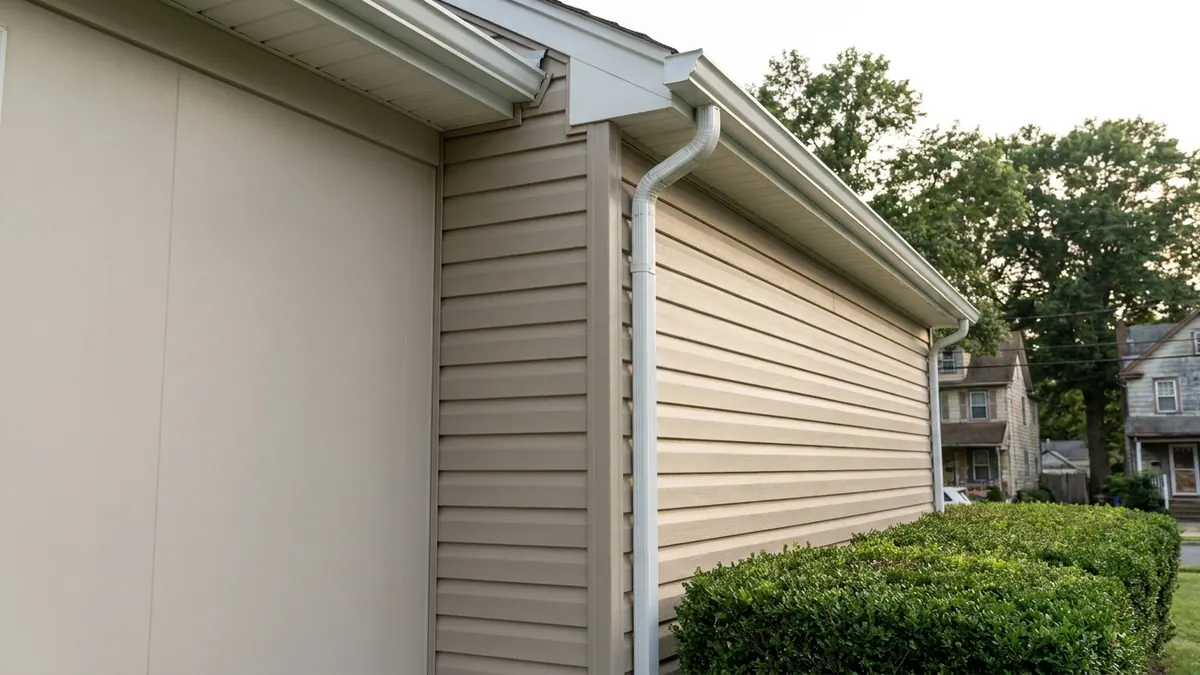
Gutters are the shortest of the three and the least disruptive. Seamless aluminum is rolled on site, so the truck needs a long, flat stretch of driveway or street to run the machine. Downspout locations are the one item worth being around for, because where water lands matters to you and not to the ladder. If you have a preference about which corner a downspout comes down or where it discharges, say it before install, not after. The gutter maintenance guide explains what the finished system should be doing through a New Jersey fall and winter.
Pets, kids and parking
These are the three practical problems, and all three are solved the night before.
- Move every vehicle out of the driveway before the crew arrives. The driveway is where material stages and debris collects, and a car in it slows the whole day.
- Keep pets inside and away from doors. Gates get opened, ladders get moved, and a door held open for thirty seconds is all a dog needs.
- Plan for nap schedules if you have small kids at home. A tear-off is not a quiet morning.
- Take fragile items off the walls inside. Hammering on the deck can shake a picture frame loose on the floor below.
- Clear the perimeter so nothing you care about is within reach of a dropped shingle.
The permit and the municipal inspection do not involve you
You file nothing. Lightning pulls the permit from your municipality's own construction office under the New Jersey Uniform Construction Code and attends the inspection, in every municipality served. You do not need to call the township, take a day off, or be in the house when the inspector comes, because roof, siding and gutter inspections are exterior. The New Jersey roof permit guide explains what gets inspected and why a contractor who asks you to pull the permit yourself is a problem.
The walkthrough at the end is worth being there for
There is no deposit on any job. Nothing is due until the work is finished and you have inspected it. That policy only does something for you if you actually look at the work, so plan to be home at the end of the job or arrange a time soon after.
What to check: the ground, first. Walk the full perimeter and the lawn for nails and debris. Then look at the gutters for shingle grit and dents, the drip edge line along the eaves, the ridge from the street, the valleys and the flashing where the roof meets a chimney or a wall. On siding, sight down each wall for waviness and check the trim and corner posts. On gutters, ask to see water run if there is a hose handy.
If you cannot be there, say so during scheduling and agree in advance on photos of the finished work and the cleanup. That is normal for out-of-state owners and landlords.
What to do next
If you are deciding between being home or not, the honest answer is that the work does not require it, and the estimate and the walkthrough do. Everything in between is your preference.
Book the free inspection and written estimate, pick a time you can actually be there for, and have the scope explained to you on the spot. The written estimate is the final price, so that conversation is the one that decides the project.