Short answer
Collect your estimates inside one to two weeks, then decide. Most written roofing estimates carry a stated expiration, commonly 30 days, because material pricing and crew scheduling move underneath them. Waiting much past that window usually means getting the same roof re-quoted rather than getting a better price.
On this page
- How long a roofing estimate stays good
- Why an estimate expires at all
- How long to spend collecting estimates
- Two estimates, three, or five
- What to confirm in writing before the clock matters
- Deadlines that are real and deadlines that are pressure
- When an expired estimate should be re-quoted, not revived
- What to do next
A roofing estimate is a price held open for a limited time, and most contractors print that time on the paper. Thirty days is the number you will see most often. That is your real decision window, so plan to have every estimate in hand inside one to two weeks and sign or pass while all of them are still live.
The mistake is not getting too many estimates. It is spreading them over six weeks, so the first number has expired by the time the last contractor shows up and you are comparing a current price against a stale one.
How long a roofing estimate stays good
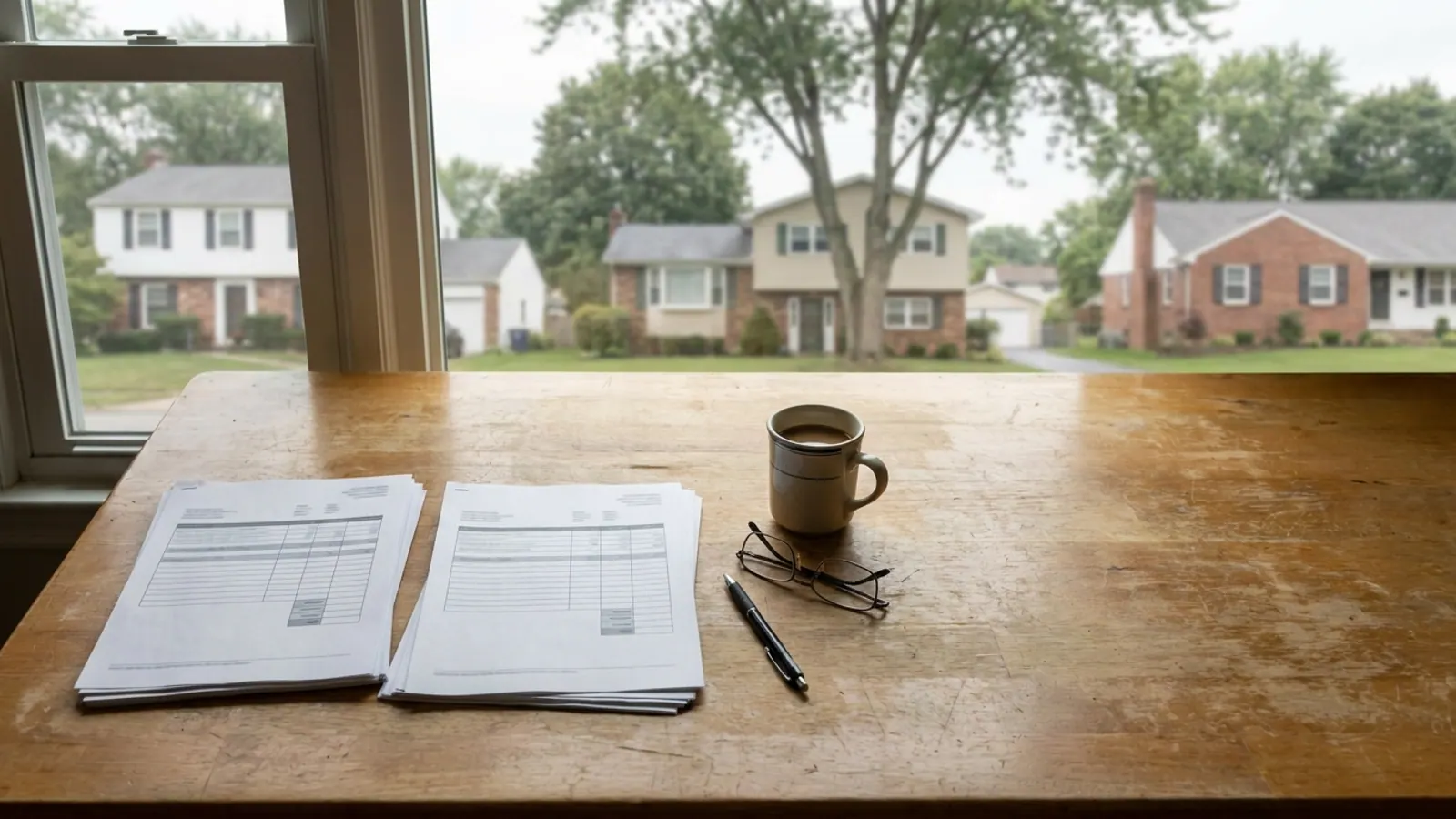
Look at the bottom of the document. A properly written estimate states how long the price is valid, and if yours does not, ask for that date to be added before you do anything else. A price with no expiration sounds generous and is actually the opposite, because it means nobody has committed to anything.
Inside the stated window, the number on the page is the number. After it, the contractor is free to re-price the job, and on a roof that was measured three months ago he probably should, because material costs and the crew calendar have both moved.
Why an estimate expires at all
Three things sit underneath a roofing price and none of them hold still for long.
Material cost. Shingles, underlayment, drip edge, ridge vent and fasteners are all bought at whatever the supply house charges the week of the job. A contractor can hold a price for a month against that. He cannot hold it for a year.
Crew availability. A roof quoted for an open week in October is a different scheduling problem in a backed-up spring. Most residential asphalt roofs are torn off and replaced in a single day, which is what makes a tight schedule possible in the first place, but the calendar still fills.
The roof itself. The condition on the estimate is the condition the inspector saw that day. A winter of ice at the eaves or one windstorm that takes shingles off a slope changes the scope. An estimate written before that damage no longer describes your roof.
How long to spend collecting estimates
Run it as a short, deliberate sequence rather than an open-ended search.
- Day one. Contact two or three contractors. Ask each one how soon they can get to the house and whether the inspection and written estimate are free.
- Days two through seven. Take the appointments. Each one should include someone getting on the roof or into the attic, not a measurement off a satellite image.
- Days seven through ten. Get every estimate in writing. Verbal numbers are not estimates and cannot be compared.
- Days ten through fourteen. Read all three side by side, call back with questions, and check registrations and insurance.
- By day fourteen. Decide. Every price is still inside its window, and you are choosing on the merits rather than on whichever one has not expired yet.
If a leak is active, compress that to a few days and get a tarp on the roof in the meantime.
Two estimates, three, or five
Three is the number that works. One estimate gives you nothing to measure against. Two often leaves you guessing which is the outlier. Past four, the appointments cost more time than the comparison returns, and the estimates start saying the same things in different fonts.
What matters far more than the count is whether the three are describing the same work. One quote that includes tear-off to the decking, new flashing, drip edge, ice and water shield and ventilation is not comparable to one that leaves old step flashing in place. The guide to choosing a roofing contractor in New Jersey lists the questions that separate them, and the roof cost guide explains what actually drives the total on a real house.
What to confirm in writing before the clock matters
An expiration date only protects you if the rest of the document is specific. Before you let an estimate sit even a week, make sure these are on it.
- The full scope, line by line, including tear-off, underlayment, ice and water shield, flashing, drip edge, ridge vent and cleanup.
- The exact shingle line and color, not a brand name alone.
- Who pulls the permit and attends the municipal inspection. Lightning Construction pulls the permit from the municipality's own construction office under the New Jersey Uniform Construction Code and attends the inspection, and the homeowner files nothing.
- What happens if the crew finds extra shingle layers, rotted decking or failed flashing. Lightning writes no change orders, because those conditions are identified at the free inspection and priced into the quote.
- The payment terms. There is no deposit on a Lightning job and nothing is due until the work is finished and you have inspected it.
- The workmanship warranty, in writing, separate from the manufacturer's product coverage.
Deadlines that are real and deadlines that are pressure
Some time limits are legitimate. Some exist to stop you from finishing your comparison. They are easy to tell apart.
| What you hear | What it usually means |
|---|---|
| What you hear"This price is good for 30 days" | What it usually meansA normal validity window, printed on the estimate |
| What you hear"Material pricing changes next quarter" | What it usually meansReal, and the contractor will re-measure and re-quote if you miss it |
| What you hear"Our next opening is in three weeks" | What it usually meansA scheduling fact, not a price deadline |
| What you hear"Sign tonight or the discount is gone" | What it usually meansPressure. A price that only exists for one evening was never the real price |
| What you hear"We need a deposit to hold the number" | What it usually meansWorth questioning. Lightning takes no deposit on any job |
| What you hear"We were in your neighborhood and have leftover material" | What it usually meansA reason to slow down, not speed up |
A contractor who has quoted the work honestly will wait two weeks for your answer. One who cannot has told you something about the number.
When an expired estimate should be re-quoted, not revived
If your estimate is more than a couple of months old, do not ask the contractor to honor it. Ask for a new inspection. Anything that happened on the roof since, including a storm, a winter of ice at the eaves or another season of granule loss, belongs in the new scope. A revived old price can be the wrong price in your favor, which sounds fine until the crew finds work that was never quoted.
Season matters for scheduling rather than for discounts, and the best time of year to replace a roof in New Jersey covers how the calendar affects installation. Delaying a decision on an active leak does not save money, because water keeps reaching the decking, the insulation and the ceilings below.
What to do next
Set a two-week window on your calendar today. Book your inspections inside the first few days of it, get every price in writing, read them against each other, and decide before the first one expires.
If Lightning Construction is one of the three, the inspection and the written estimate are free with no obligation, a salesperson comes to the house, and the written number is the final price with no deposit and no change orders. Request a free estimate or read what the full roof replacement scope includes before the appointment, so you know what to compare when the other quotes land.