Short answer
The rake edge is the sloped edge of the roof at a gable end, where the shingles stop and the trim runs up the slope to the peak. It is the detail a neighbor sees first and the one wind attacks first, because it is an open edge with nothing above it holding the shingles down. Done right it is a rake board, rake drip edge, starter strip and a clean overhang; done cheaply it is old trim reused and field shingles run short.
On this page
The rake edge is the sloped edge of your roof at a gable end, running from the eave up to the ridge. It is the line that frames the triangle of wall below it, it is the first roof detail anybody sees from the street, and on most older New Jersey houses it is the part of the roof that was done fastest and cheapest.
It is also where wind damage usually starts. Everywhere else on the roof, each shingle is held down by the one above it. At the rake, the shingle ends in open air.
What the rake edge is, and what it is not
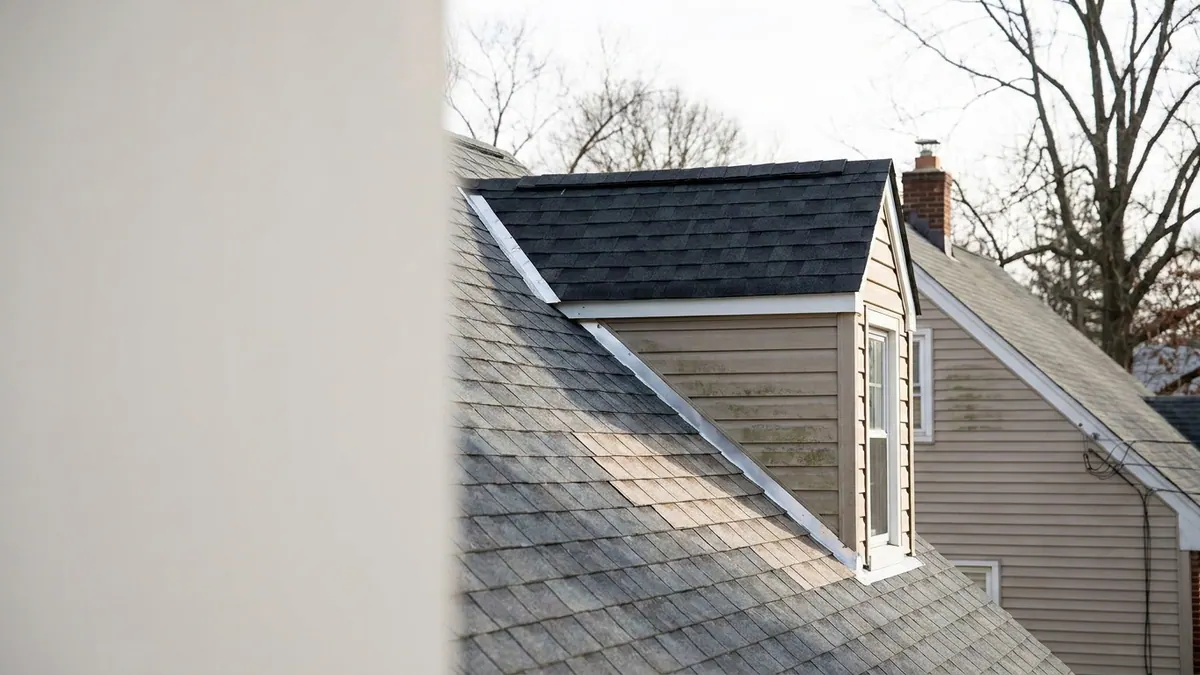
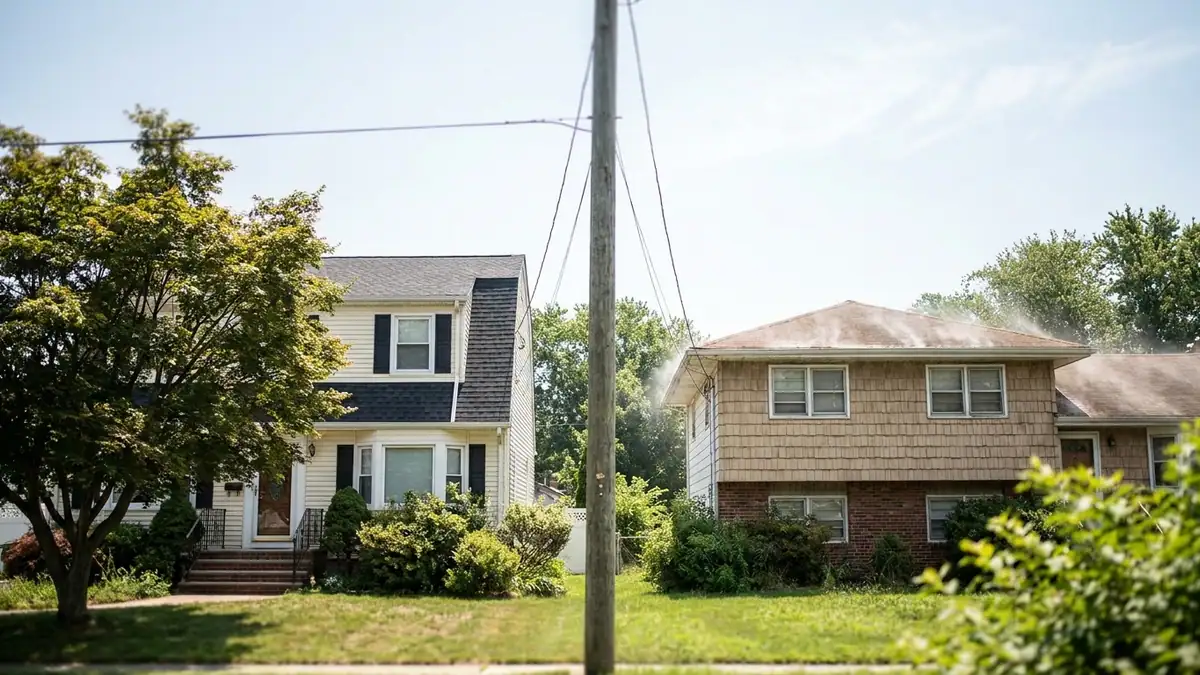
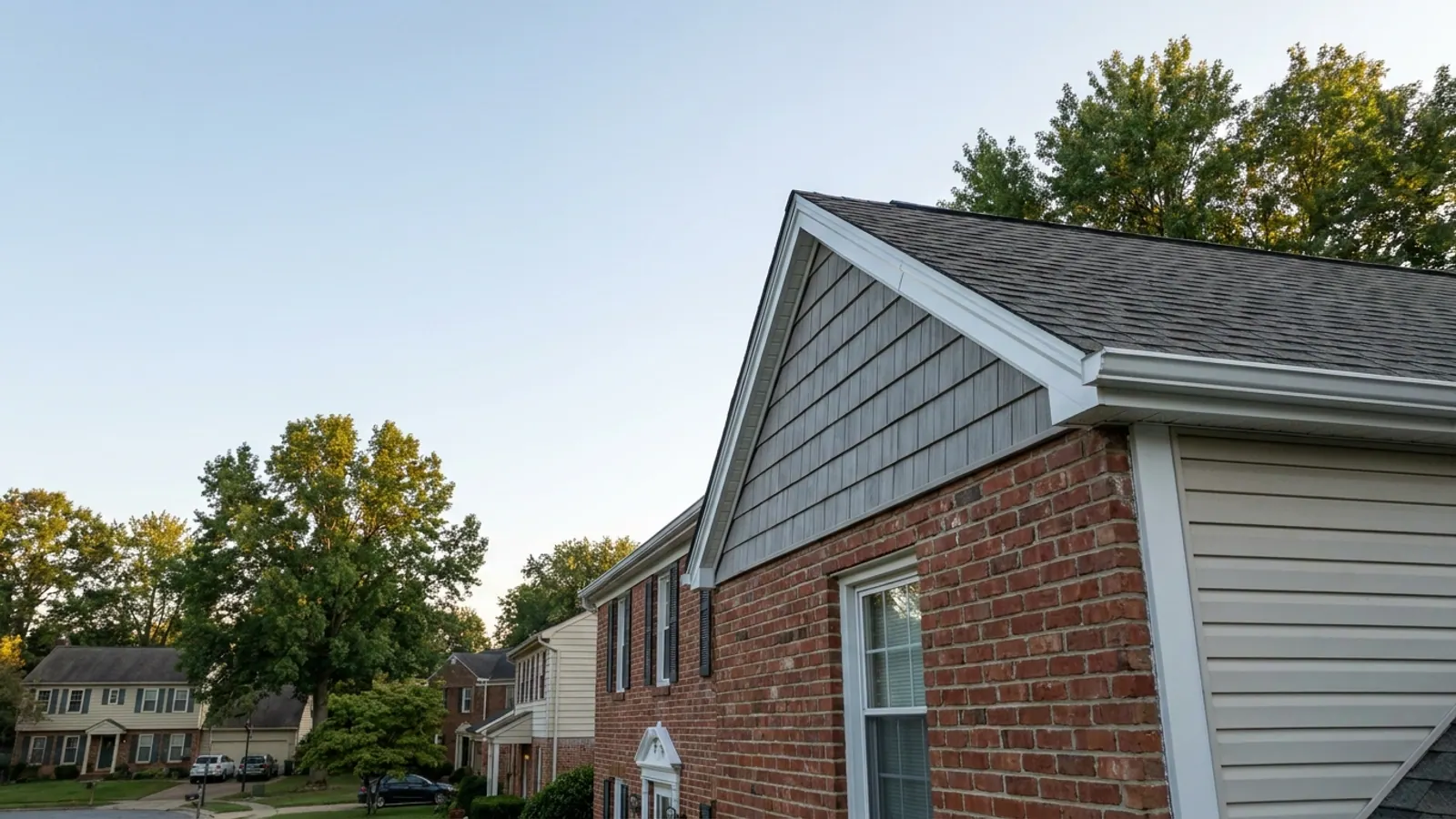
The eave is the horizontal bottom edge of the roof, where the gutters hang. The rake is the sloped edge. If your house has a gable end, the triangle of siding under the peak, then the two edges running up to that peak are the rakes.
The pieces people lump together as "gable trim" are actually four separate things:
| Part | Where it sits | What it does |
|---|---|---|
| PartRake board | Where it sitsOn the face of the roof edge, under the shingle overhang | What it doesCloses the end of the roof framing and carries the trim line |
| PartRake drip edge | Where it sitsMetal, over the rake board, under the shingles | What it doesSheds water off the edge and stiffens the shingle edge against wind |
| PartStarter strip | Where it sitsUnder the first course, along the rake | What it doesBonds the cut shingle edge down so wind cannot get under it |
| PartTrim coil or capping | Where it sitsAluminum wrap over the wood rake board | What it doesKeeps the wood out of the weather and matches the other trim |
A fifth piece shows up on houses with a real gable overhang: the fly rafter, the outboard rafter carried on lookouts past the wall. That overhang is what gives a colonial its proportions. When it sags, the whole rake line reads crooked from the street no matter how new the shingles are.
Why the rake is where wind damage starts
Wind does not push shingles off a roof. It gets under an edge and lifts.
At the rake, there is an open edge from eave to ridge, and the shingles there are cut pieces, not full strips with a factory sealant line positioned where it is supposed to be. If nobody ran a starter strip up the rake, those cut edges have no adhesive under them. A nor'easter finds one, lifts it, and takes the course with it. After a windstorm, the missing shingles are usually in a stair-step pattern working in from the gable end.
This is worse near the water. Sustained wind on an exposed gable is the normal condition down the shore, not the exception, and the Jersey Shore roofing guide covers what salt and constant wind do to an edge detail over time.
The other thing the rake does is get the water out past the wall. A shingle that stops flush with the rake board, or short of it, drips down the face of the board instead of clear of it. Three or four years of that and the bottom of the rake board is soft, the paint is gone, and there is a dark stain running down the siding under it.
What rake edge failure looks like from the driveway
You can diagnose most of this with your feet on the ground.
- The shingle edge along the gable is curled up, wavy, or lifting in a few spots. That is a missing or failed starter strip.
- The rake line is not straight. Sight along it from one corner. A dip near the middle is a sagging fly rafter or rotted lookouts.
- A dark vertical stain on the siding below the top of the rake. Water is running behind the trim where the rake meets the ridge, or where the rake dies into the eave.
- Aluminum capping that has come loose, rattles in wind, or has a wavy belly to it. Often that means the wood behind it went soft and will no longer hold a fastener.
- Visible daylight or an open seam where the rake trim meets the eave trim at the bottom corner. That corner is a common entry point for water and for squirrels and birds.
The order it gets built during a replacement
On a tear-off, the rake is rebuilt in sequence, and skipping a step to save an hour is exactly how a new roof ends up with an old roof's edge.
- Strip the shingles and pull the old rake drip edge. Old metal is not reused.
- Inspect the rake board and the ends of the sheathing. Soft wood comes off now, not later.
- Replace any rotted rake board and any bad sheathing at the edge.
- Run underlayment to the edge, lapped correctly over the board.
- Install new rake drip edge over the underlayment, lapped the right way up the slope so water runs over the joint and not into it.
- Install starter strip along the rake, with the sealant bead at the edge.
- Run the field shingles with a consistent overhang past the metal and snap the line so the edge is straight.
- Cap the rake board in aluminum trim coil if the trim is being redone.
Step six is the one that disappears from cheap quotes. Manufacturer wind ratings assume a starter course at the eaves and the rakes, and running cut-up field shingles instead quietly drops the roof out of its rated coverage. The GAF shingles guide explains how the accessory components tie into the warranty tiers.
What should be written on the estimate
Ask for these lines by name before you sign anything:
- New rake drip edge, with the metal color stated.
- Starter strip at eaves and rakes, by product name.
- Rake board replacement, with the price settled now rather than on the day.
- Trim capping, if the wood trim is being wrapped, and whether soffit and fascia at the eave returns are included.
If an estimate says only "tear off and install shingles," every one of those is a judgment call made by whoever is on the roof that morning. Lightning Construction finds rotted rake board and bad edge sheathing at the free inspection and prices it into the written estimate, so there is no change order halfway through the day. There is no deposit either, and nothing is due until the work is finished and you have walked it. Lightning pulls the permit from your municipality's construction office under the New Jersey Uniform Construction Code and attends the inspection.
Rake work does not meaningfully move the band your job falls into. Most New Jersey asphalt replacements run $9,000 to $22,000 in standard-value towns, $14,000 to $35,000 in higher-value towns, and $25,000 to $60,000 for large or luxury homes, with the band set by the municipality's median home value from ACS 2024 five-year estimates. Roof size, pitch and existing layers move the number far more than the edge detail; the New Jersey roof cost guide breaks down what actually drives the total.
When the rake alone is the repair
Sometimes it is. If the field of the roof is in good shape and only the gable edge is lifting, rebuilding the rake, new metal, new starter, a few courses of shingles and a replaced board, is the honest answer. That is a repair, not a replacement, and a contractor should tell you so.
If the roof is at the end of its life anyway, do not pay twice. Most asphalt roof replacements are torn off and finished in a single day, and the rake gets rebuilt as part of it.
Walk your gable ends and sight the line. If it is wavy, stained, or lifting, see what a New Jersey roof replacement includes and book a free inspection and written estimate. It is free and no-obligation, and a salesperson does come to the house.