Short answer
A rain diverter is a legitimate fix when a short overhang dumps water on one spot and there is no practical way to hang a gutter there. It is a sign you need a gutter when the roof above the door drains a real area of shingles, when the water is soaking the siding or the foundation, or when a full eave was simply skipped. The diverter moves water sideways a few feet; a gutter carries it to a downspout and away from the house.
On this page
- What a rain diverter is and what it does
- When a diverter over a door is the right call
- When the diverter is covering for a missing gutter
- Rain diverter compared with a short gutter run
- How a diverter is installed, and how it starts leaking
- What the entry roof means for the rest of the house
- What to ask for in writing
A rain diverter is a cheap fix when a small overhang dumps water on one spot and there is no sensible way to hang a gutter there. It is a sign you need a gutter when the roof above the door drains a real area of shingles, when the runoff is landing against the siding or the foundation, or when a long eave was skipped during the last gutter job and somebody patched the symptom with a six dollar strip of metal.
Both situations look identical from the stoop. The difference is how much water is actually coming off that roof, and where it ends up after the diverter sends it sideways.
What a rain diverter is and what it does
A rain diverter is a piece of bent aluminum or galvanized steel, usually between two and four feet long, with a raised lip on one side and a flat flange on the other. The flange slides up under a course of shingles. The lip catches water running down the slope and walks it sideways along the roof until it falls off the end of the overhang.
That is the whole mechanism. It does not store water, it does not pipe water, and it does not move water away from the house. It changes the spot where the water lands by a few feet.
On a small gable or shed roof over a front entry, a few feet is often enough. The drip line moves off the top step and lands on mulch or lawn next to the stoop. Nobody gets dripped on, the brick stops staining, and the job cost almost nothing.
When a diverter over a door is the right call
There are real cases where a diverter is the honest answer and a gutter is not.
- The overhang is tiny. A little shed roof covering four feet of door and nothing else sheds very little water in a storm, and a two foot gutter with a downspout on it looks worse than the problem.
- There is nowhere to put a downspout. Some entries have brick on both sides, a railing, a column or a stoop wall that makes a downspout either ugly or a trip hazard.
- The roof above the door is a dormer or a bump-out whose eave is up out of reach, with no fascia to fasten a hanger to.
- You are solving a nuisance, not a water problem. If the siding is dry, the sill is sound and the only complaint is getting wet while unlocking the door, a diverter fixes exactly that.
If the diverter is going on a roof that already has gutters everywhere else, and it is handling one isolated overhang, it is fine. Metal flashing bent to move water is ordinary roofing work.
When the diverter is covering for a missing gutter
The diverter is a symptom in these cases, and adding one just delays the real repair.
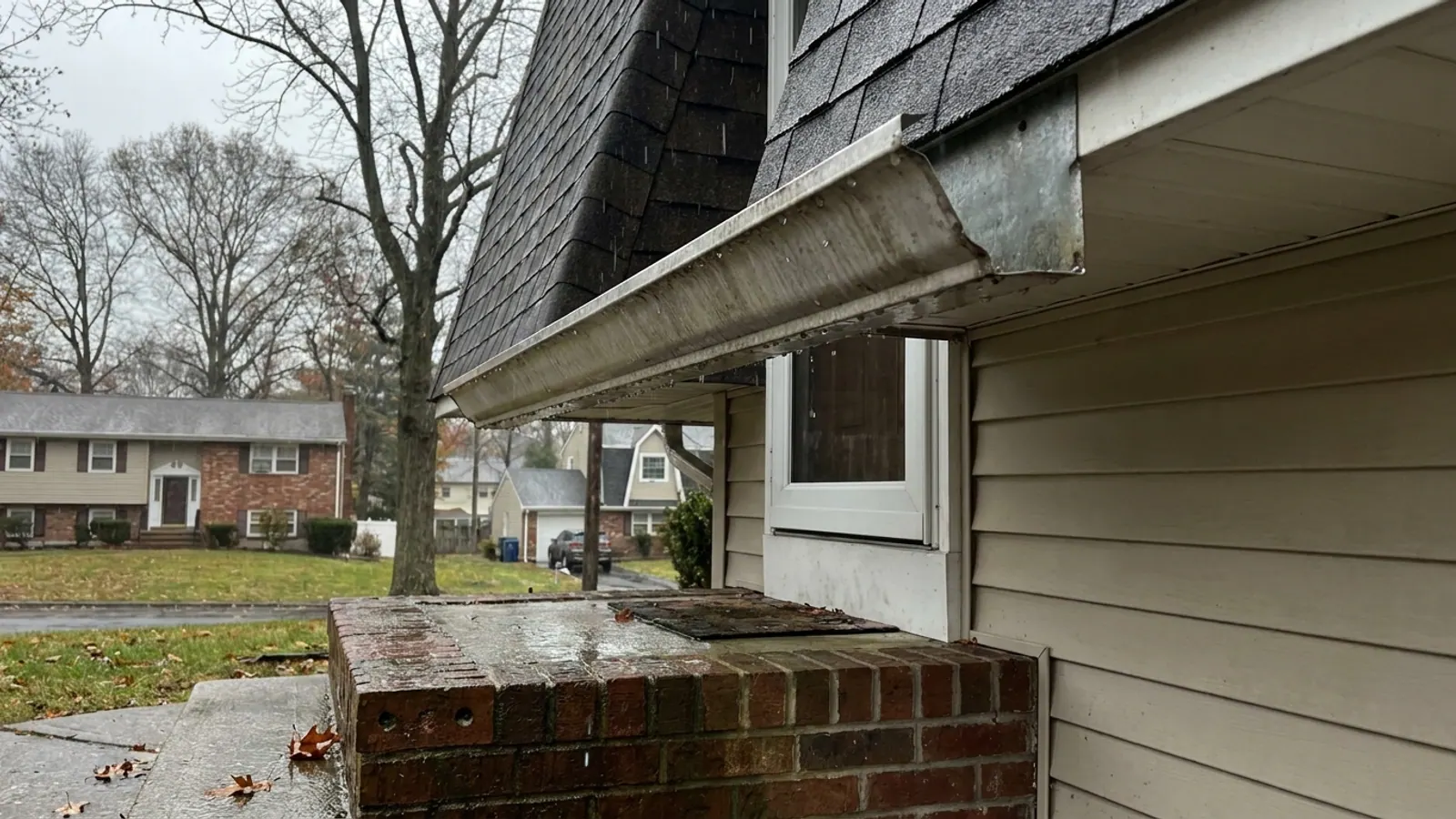
The door sits under a main eave. If the roof plane above the entry runs twenty or thirty feet and drains toward that edge, a diverter is trying to redirect the output of a large area of shingles with a three foot strip of bent metal. In heavy rain it overshoots, overflows the lip and lands where it always did.
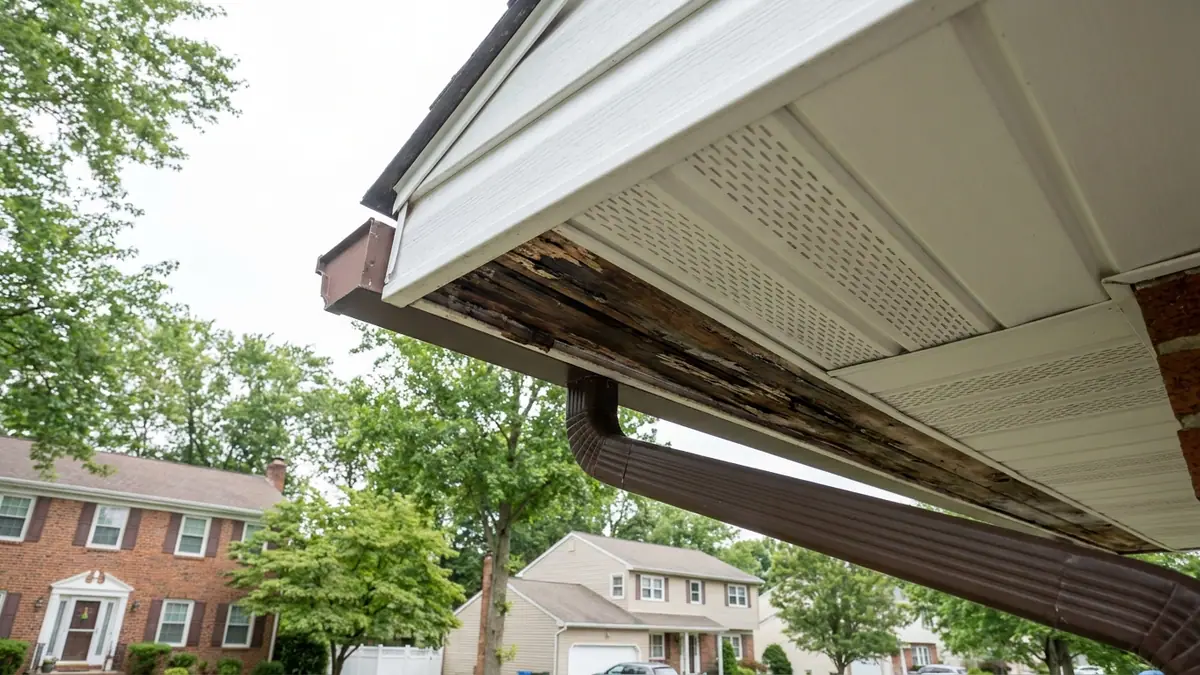
The siding under the door roof is dark, soft or stained. Water running down a wall rather than falling clear of it is a wall problem, and a diverter aimed into the corner makes it worse. Look at the trim, the door casing and the first course of siding.
The soil beside the stoop is trenched out. A groove in the mulch and splash marks eighteen inches up the brick mean concentrated runoff hitting the ground in one line. That water is going down beside the foundation. Moving it four feet sideways still puts it beside the foundation.
The eave was skipped on purpose. Plenty of New Jersey houses got gutters on the long runs and nothing over the entry, the garage return or the bay. The diverter was the cheap patch at the time.
Rain diverter compared with a short gutter run
| Rain diverter | Short seamless gutter | |
|---|---|---|
| What it does with water | Rain diverterMoves it a few feet sideways, then drops it | Short seamless gutterCollects it and carries it to a downspout |
| Where water ends up | Rain diverterStill beside the house, off to one side | Short seamless gutterWherever the downspout discharges |
| Handles a large roof area | Rain diverterNo | Short seamless gutterYes, when sized and pitched correctly |
| Debris | Rain diverterLeaves pile behind the lip and dam it | Short seamless gutterCleanable, and guards are an option |
| Winter behavior | Rain diverterWater refreezes at the new drip point | Short seamless gutterCan also freeze, but the ice forms in the trough, not on a walkway |
| Visual impact | Rain diverterBarely visible from the ground | Short seamless gutterA visible line, color matched to trim |
| Typical use | Rain diverterFour foot entry overhang with no downspout route | Short seamless gutterAny eave draining a real roof area |
How a diverter is installed, and how it starts leaking
The failure mode is always the same, and it is always fasteners.
- The crew lifts the shingle course above the diverter and breaks the sealant strip loose.
- The upper flange slides up under that course so runoff lands on top of the metal, not behind it.
- Fasteners go through the flange high on the roof, where the shingle above covers them.
- The shingle course gets resealed over the flange.
- The low end gets flashed or trimmed so water leaves the roof cleanly instead of wrapping back under the edge.
What a handyman does instead is lay the diverter on top of the shingles and screw it down through the face with gasketed screws and a bead of caulk. That works until the caulk fails, which in New Jersey sun and freeze cycles is a couple of years. Then every one of those screw holes is a hole in your roof, in the exact spot where water is concentrated.
If the shingles above the door are brittle enough that lifting a course cracks them, you are not looking at a diverter job anymore. That is a roof condition question, and it belongs in a real inspection.
What the entry roof means for the rest of the house
A door overhang with no gutter is rarely the only gap. Walk the perimeter during a steady rain and look for the places where water sheets off a bare edge: the garage return, a rear addition, an upper eave above a lower roof. Water dropped from an upper roof onto a lower one hammers the shingles in a line and overloads whatever gutter is below it.
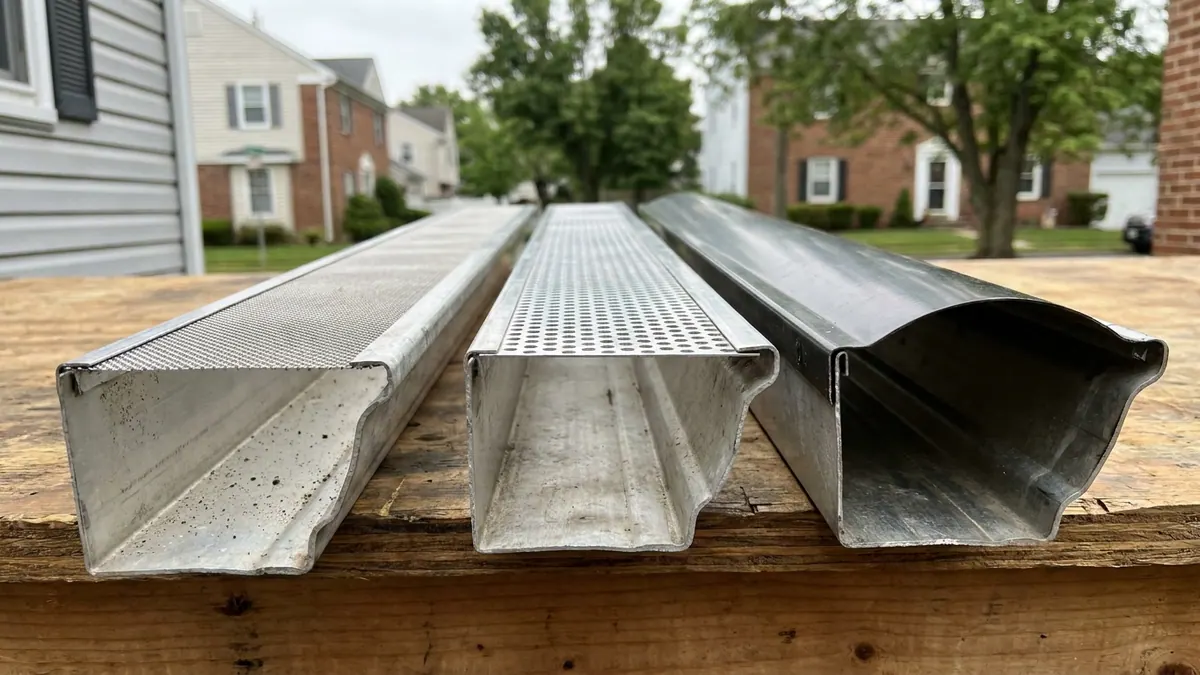
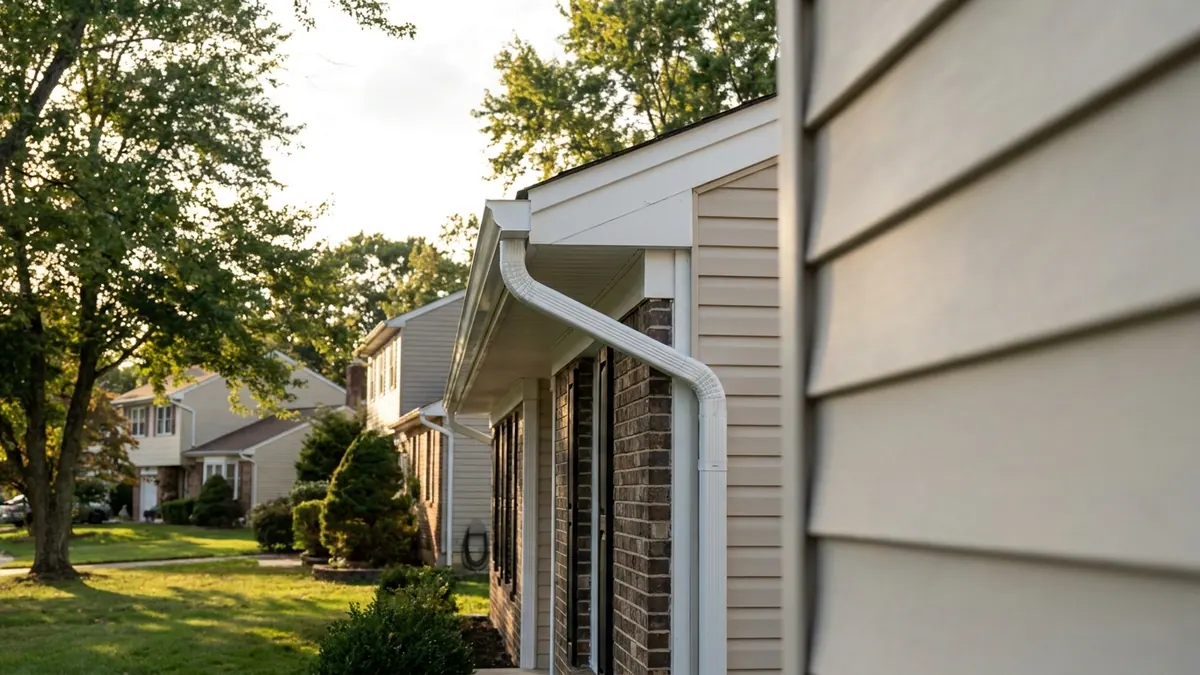
The fix is usually a short seamless run and a downspout with a real discharge point, not a strip of metal. Seamless aluminum gutters are formed on site to the exact length of the run, so a six foot section over an entry has no joints in it at all. The seamless gutters guide covers how the material, the hangers and the guards fit together.
Winter is the other reason to stop relying on a diverter. Runoff that refreezes at the new drip edge builds ice on whatever is below it, and an entry walk is a bad place for that. The ice dam guide explains why the ice forms in the first place, and it is almost never the gutter's fault. Once a gutter is on the entry, keeping it clear of leaves matters, and the seasonal gutter maintenance guide lays out the schedule.
What to ask for in writing
If a contractor proposes a diverter, get three things on the estimate: that the flange goes under the shingle course, that no fasteners are exposed on the shingle face, and where the water is intended to land. If he cannot answer the third one, he has not thought about it.
If you are adding a gutter instead, get the gutter size, the downspout size, the number of downspouts and the discharge point in writing. A downspout that ends at the foundation is not finished work.
Lightning Construction installs seamless aluminum gutters, guards, downspouts and re-pitching across all 21 New Jersey counties. Gutter work runs $1,200 to $3,500 in standard-value towns, $2,500 to $6,500 in higher-value towns, and $4,000 to $12,000 on large or luxury homes, with the band set by the municipality's median home value from ACS 2024 five-year estimates. The inspection and the written estimate are free, a salesperson does come to the house, and there is no obligation. There is no deposit, nothing is due until the work is finished and you have inspected it, and the written estimate is the final price with no change orders. On work that requires a permit, Lightning pulls it from the municipal construction office and attends the inspection.
See what the gutter service covers, or book the free estimate and have someone look at that entry roof before the next storm.