Short answer
Landscaping is protected by covering beds and shrubs with tarps, standing plywood over anything tall or brittle, and putting the dumpster and the tear-off zone where the plants are not. Most damage on a roof job comes from falling debris, a tarp loaded with wet shingles, and truck or dumpster tires on a lawn, and all three are decided before work starts. Ask the crew where the debris is landing and where the container is going before the first shingle comes off.
On this page
- What actually damages landscaping during a roof replacement
- What the crew puts down before the first shingle comes off
- Where the dumpster goes, and why it matters more than the tarps
- What you should move yourself the day before
- Gutters, downspouts and the plants under them
- The nail sweep, and what to check after the crew leaves
- Timing the job around your plants
- What to settle before you sign
Landscaping gets protected by three things: tarps over the beds, plywood over anything tall or brittle, and putting the debris zone and the dumpster where the plants are not. The third one matters most, and it is decided before anyone climbs a ladder.
Most of the damage homeowners find after a roof job is not mysterious. It is a snapped hydrangea under a pile of old shingles, tire ruts in a soaked lawn, or nails found with a bare foot in June. All of it is preventable, and all of it comes down to how the crew sets up the site in the first thirty minutes.
What actually damages landscaping during a roof replacement
Four things, in order of how often they cause a complaint.
Falling debris. A tear-off sends old shingles, nails, felt and pieces of drip edge off the roof edge under gravity. Wet shingles are heavy. A single bundle's worth landing on a foundation shrub will break it, and no tarp thin enough to drape a plant will stop that weight from bending it.
Loaded tarps dragged across beds. The tarp does its job catching debris, then someone has to move it. Dragging a loaded tarp over a bed scrapes mulch off, tears low branches and flattens perennials more thoroughly than the debris did.
Vehicles and the dumpster. A dump trailer or a roll-off container on a lawn sinks into it, especially in a New Jersey spring when the ground is holding water. Ruts on a lawn take a full season to grow out.
Nails. They go everywhere. Roof edges, beds, walkways, the lawn ten feet out, the neighbor's driveway if the wind is up. This is the one that shows up weeks later.
What the crew puts down before the first shingle comes off
| Protection | What it is for | Where it goes |
|---|---|---|
| ProtectionGround tarps | What it is forCatching tear-off debris and nails | Where it goesAlong every roof edge being stripped, run out well past the drip line |
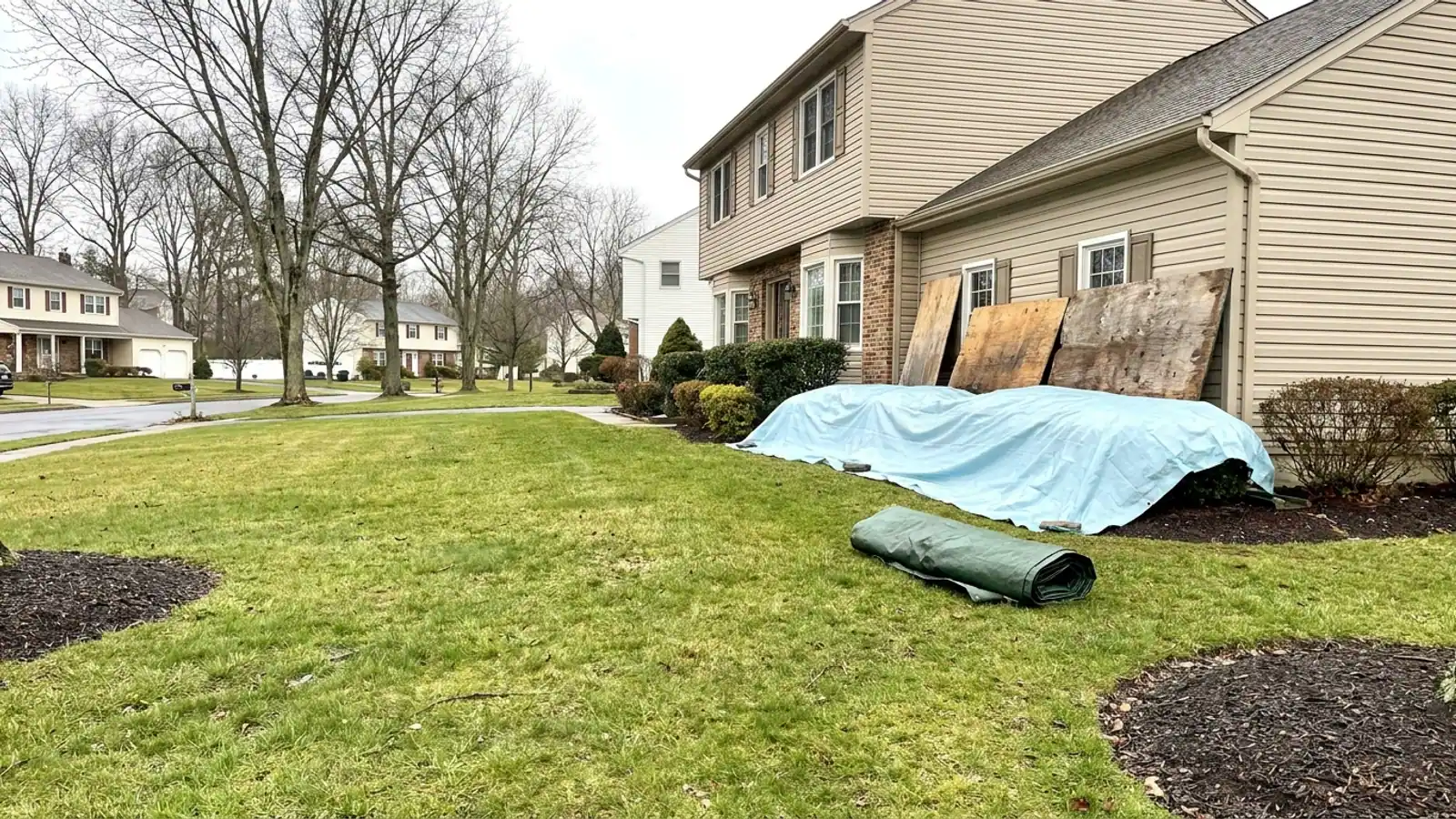
| ProtectionPlywood sheets | What it is forStopping weight, not just dirt | Where it goesLeaned over shrubs, A/C condensers, well heads, low fences and window wells |
| ProtectionPlywood under wheels | What it is forSpreading load | Where it goesUnder the dumpster, under trailer tires, over any pavers or soft asphalt |
| ProtectionFoam or padding | What it is forProtecting hard surfaces | Where it goesUnder ladder feet on decks, patios and finished walkways |
| ProtectionRolling magnet | What it is forNail recovery | Where it goesLawn, beds, driveway, walkways, at the end of the day |
Plywood is the item that separates a careful setup from a lazy one. A tarp over an arborvitae catches shingle grit. A sheet of plywood leaned against the wall above that arborvitae takes the impact of a falling bundle and keeps the plant standing. If a crew shows up with tarps and no plywood, the plan is to sweep up afterward, not to prevent damage.
Where the dumpster goes, and why it matters more than the tarps
The container should sit on the driveway, on plywood, as close as possible to the largest roof plane. Every foot of extra distance is another trip across your property with a loaded wheelbarrow or another armful of shingles carried over a bed.
Ask about it the day before. Two questions cover most of it: where is the container going, and which side of the house is the debris coming off. If the answer to the second question is the side with your beds, ask whether the crew can strip that plane onto tarps and load directly rather than letting it pile up.
On a narrow lot with no driveway room, the container may have to go on the street. That is a municipal question, not a roofing question, and the contractor should know the rules where you live. Lightning pulls the permit from your municipality's own construction office under the New Jersey Uniform Construction Code and attends the inspection, so the office is already a phone call the crew is making.
What you should move yourself the day before
Some things are your job, and the crew will thank you for it.
- Move potted plants, planters and hanging baskets well away from the house — twenty feet minimum, farther on the debris side.
- Take down wind chimes, bird feeders, garden art, solar path lights and anything else staked into a bed near the wall.
- Move patio furniture, the grill and children's play equipment off the perimeter.
- Pull cars out of the driveway and off the street directly in front of the house. Crews start early; a car in the way delays everyone.
- Cut the grass a day or two ahead if you can. Short grass releases nails to a magnet far better than long grass.
- Photograph your beds, lawn and hardscape before the crew arrives. It takes two minutes and settles any later question about what was already broken.
- Tell the crew about anything invisible — a sprinkler head, a septic lid, a French drain, a low retaining wall under ivy, a shallow well head.
That last one is the most useful thing you can do. A crew cannot avoid what it cannot see.
Gutters, downspouts and the plants under them
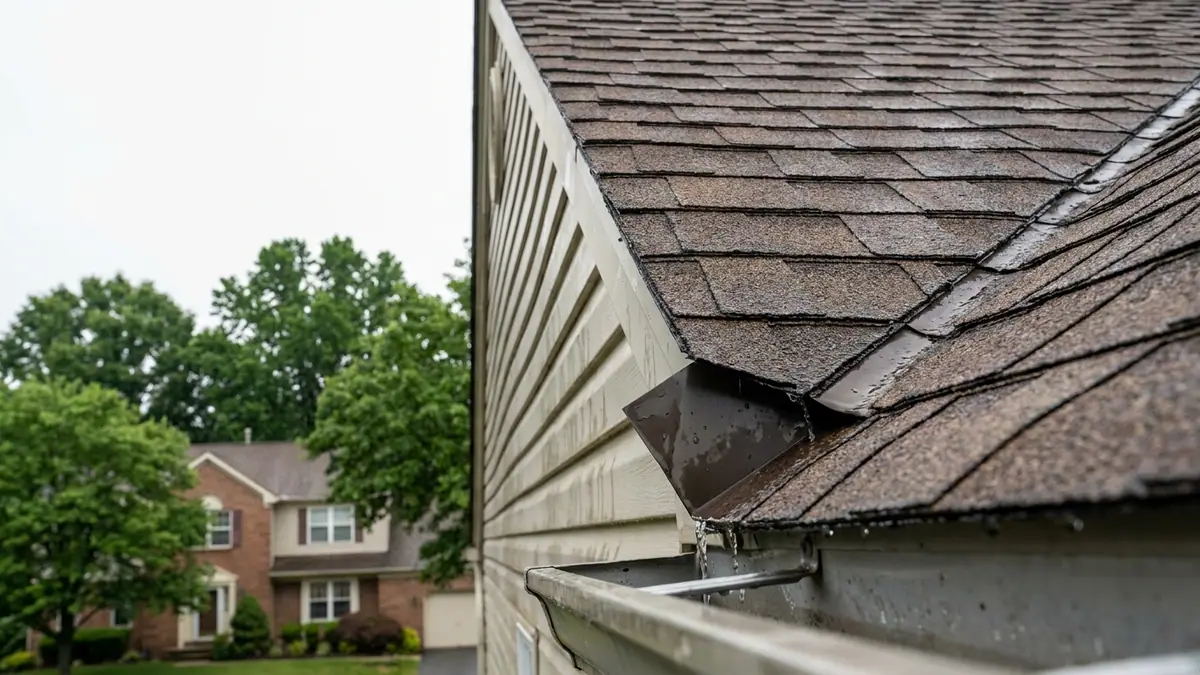
Gutters take a beating during a tear-off. Debris lands in them, old spikes come out with the drip edge, and if new gutters are part of the job the old ones come down entirely. The beds directly under a gutter run are where debris concentrates, so those get tarped first.
If you are having gutters replaced along with the roof, the ground under each downspout is worth a look while everything is open. Water dumping at the foundation is what kills the plants along that wall over time, not one day of construction. That work is covered on the gutters page and it is far cheaper to handle while the crew is already on site.
The nail sweep, and what to check after the crew leaves
A magnet sweep at the end of the day covers the lawn, the beds, the driveway and the walkways, plus a hand pass along the drip line where the densest concentration lands. Mulch beds are the hardest, because a nail can sit an inch down in the bark and a magnet on wheels will not reach it.
Walk the property before you sign off. Look for:
- Nails in the mulch along every wall the crew worked over.
- Bent or snapped branches on foundation plantings.
- Ruts or compressed strips on the lawn where the container or a truck sat.
- Shingle grit in the gutters and on the patio.
- Anything staked, buried or fragile that you flagged the day before.
Run your own magnet a week later, after a rain has settled the grass. That is when the stragglers come up.
One Google review of Lightning puts the standard plainly: "Crew arrived just before 7am and had the job finished by 7pm. Courteous and very skilled, and the property was spotless." Lightning is rated 4.9 out of 5 from 264 Google reviews.
Timing the job around your plants
A one-day job limits exposure by itself. Most asphalt roof replacements are torn off and finished in a single day, so the tarps go down and come up the same afternoon. Standing-seam metal runs two to four days, which means beds stay covered longer and the staging area gets more traffic.
Late fall through early spring is the easiest window for the garden. Perennials are dormant, deciduous shrubs have dropped their leaves, and frozen ground carries equipment far better than saturated April soil. The trade-offs of each season are laid out in the guide on the best time of year to replace a roof.
If your beds are established and you have a choice, avoid scheduling right after a stretch of heavy rain. Wet ground is what turns a container into ruts.
What to settle before you sign
Ask three questions and get the answers in the conversation, not after the fact: where the dumpster sits, which roof planes the debris comes off, and whether the crew brings plywood as well as tarps. A contractor who has a specific answer to all three has done this on a lot of houses. The wider set of questions worth asking is in the guide on choosing a roofing contractor.
Also ask what happens if something gets broken. Lightning is licensed and insured, holds New Jersey Home Improvement Contractor registration 13VH12437000, and is GAF Certified. There is no deposit on any job and no change orders — the written estimate is the final price, because the conditions that normally trigger one are found at the free inspection and priced into the quote.
When you are ready, the roofing page covers replacement, repair and storm work, or you can book a free inspection and written estimate. A salesperson comes to the house, it is genuinely no-obligation, and it is the point at which to walk the beds with him and say what you do not want touched.