Short answer
Washing removes dirt, pollen, mildew and light algae, and most New Jersey vinyl siding looks close to new again after a low-pressure cleaning with the right detergent. It does not fix chalking, faded color, cracked or warped panels, or moisture that is coming from behind the wall. If the panels are brittle, split at the nail hem, or stained from the back, cleaning only confirms what you already suspected.
On this page
Washing fixes dirt. It does not fix siding. That distinction is the whole decision, and most New Jersey homeowners standing in the driveway with a rented pressure washer are actually trying to answer a different question: is this wall dirty, or is it finished?
Dirty vinyl cleans up well. Pollen, road film, mildew in a shaded north elevation, algae at the splash line, spider webs under the soffit, and the dark streaks under gutter joints all come off with a detergent and a low-pressure rinse. What does not come off is chalking, UV fading, cracking, warped panels and anything the siding is hiding. Here is how to tell the two apart before you spend a Saturday on it.
What washing actually removes from vinyl siding
Four things, in order of how often they show up on New Jersey houses.
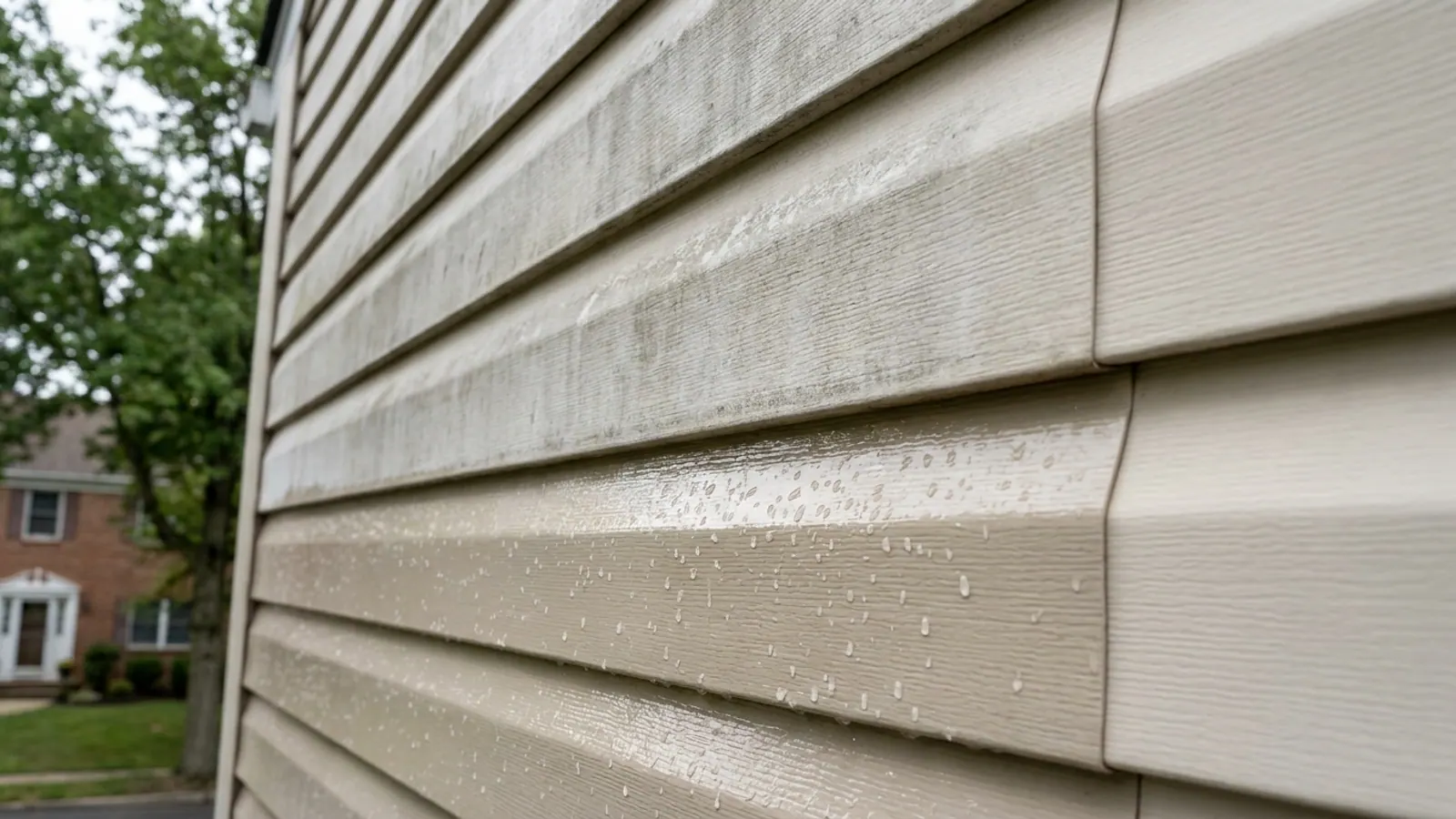
Mildew and algae. Green or black speckling, worst on the north and east walls and under overhangs that stay damp. A detergent with a mildewcide handles it. Plain water does not, because you are rinsing surface spores and leaving the roots in the texture of the panel.
Atmospheric film. Gray-brown haze that builds up everywhere, heaviest near highways and on older neighborhoods with mature trees. This is the layer that makes a wall look tired from the street even when every panel is sound.
Runoff staining. Vertical dark stripes below gutter seams and end caps, and a wider stain under any spot where the gutter overflows. The stripes are oxidized aluminum and roof grit carried down the wall. They come off, but they come back in a year unless the gutter stops overflowing. If you are seeing them, read the gutter maintenance guide before you wash, because cleaning the wall is the second half of that job, not the first.
Splash-line soil. The bottom two courses take mud, grass clippings and mower spray. That band usually cleans fully.
How to wash vinyl siding without damaging it
The pressure is the part people get wrong. Vinyl siding is hung loosely on nails so it can expand and contract, and it is not a sealed surface. A narrow tip at full pressure forces water up under the laps, behind the panel, and into the house wrap. On siding that is 20 years old and has lost plasticizer, the same tip cracks panels and blows the butt edges off.
- Close windows, cover exterior outlets and light fixtures, and wet down the plantings along the foundation before you start.
- Mix a cleaner intended for vinyl. If you use a bleach solution, it must be diluted and rinsed, and the landscaping needs protecting.
- Apply from the bottom up with low pressure or a pump sprayer, so the detergent does not run down dry siding and streak it.
- Let it dwell. Most cleaners need several minutes of contact time to kill mildew. Scrubbing harder is not a substitute for waiting.
- Rinse from the top down with a wide fan tip, aimed level or slightly downward, never upward into the laps.
- Work one elevation at a time and keep the wall wet, so nothing dries mid-process.
If the house is two stories, the honest answer is often to hire someone with the right ladders and soft-wash equipment. Falling off a ladder costs more than the siding.
Chalking: the test that tells you if the color is gone
Run a dry thumb down a sunlit wall. If it comes back coated in a chalky powder the color of the siding, the panel is chalking. That is the surface of the vinyl breaking down under UV, and it is permanent.
Washing removes the loose chalk and the wall darkens back toward its original shade for a while. Then the next layer oxidizes and the chalk returns, usually within a season or two on a south or west elevation. Light chalking on a 15-year-old wall is normal. Heavy chalking that returns within months, combined with a color that no longer matches the panels under the porch roof, means the vinyl has given up its pigment and no cleaner is bringing it back.
Signs the siding is done, not dirty
Walk the house slowly and look for these.
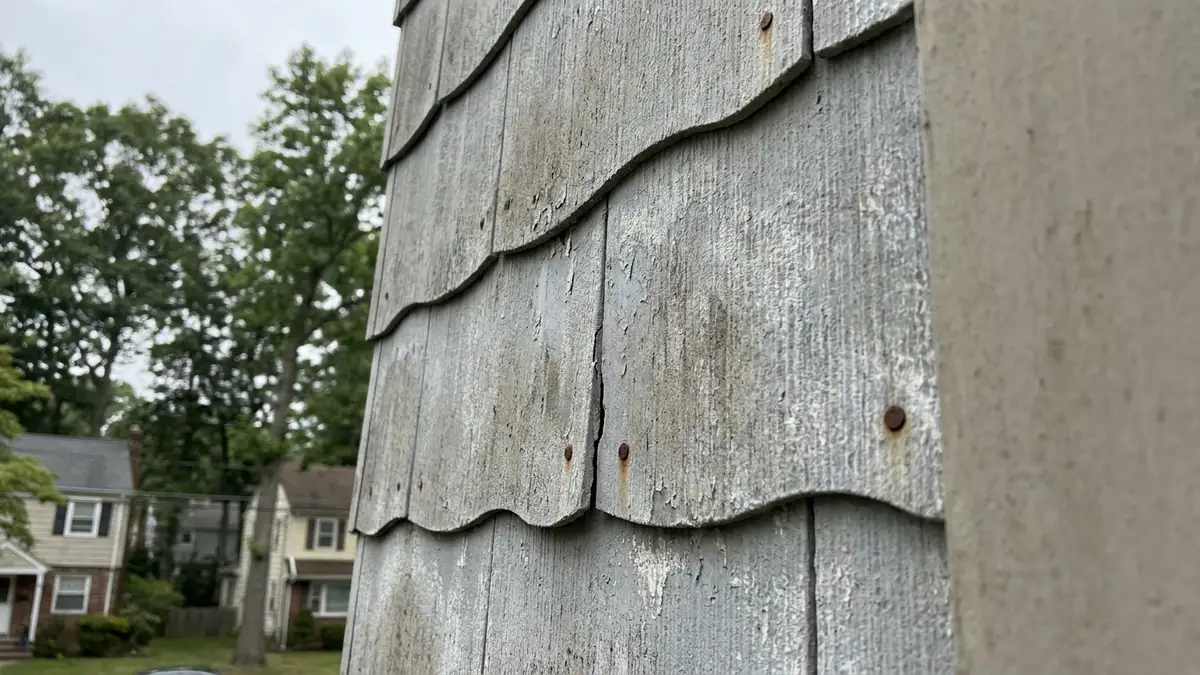
- Cracks and splits, especially at the nail hem along the top edge of a panel and at the butt ends. Aged vinyl goes brittle, and a panel that cracks when you flex it will crack again in the first cold snap.
- Panels that rattle or have popped out of the lock. Once a course unlocks repeatedly, the hem is worn or the nailing is wrong.
- Warped or wavy sections, particularly near grills, dryer vents and anything reflective. Heat distortion does not relax back.
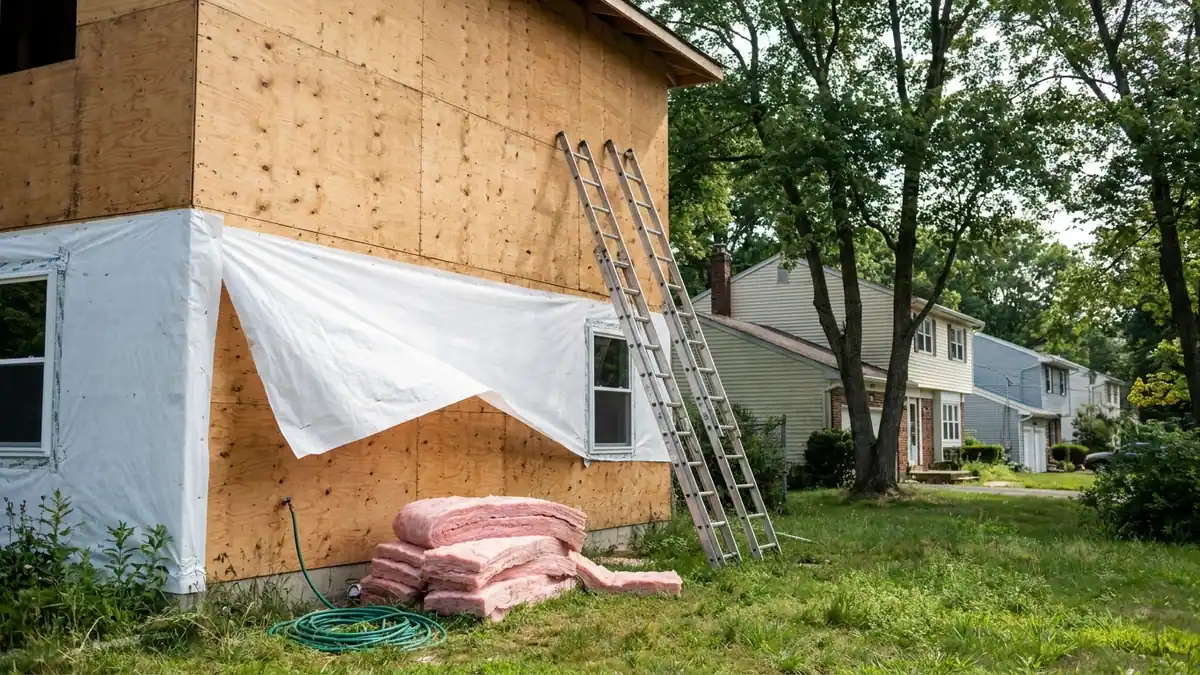
- Soft sheathing. Press firmly on the wall between studs. If it gives, the problem is water behind the siding, not on it.
- Stains that come back fast. A dark patch that returns within days of a wash is usually moisture pushing out from behind the panel.
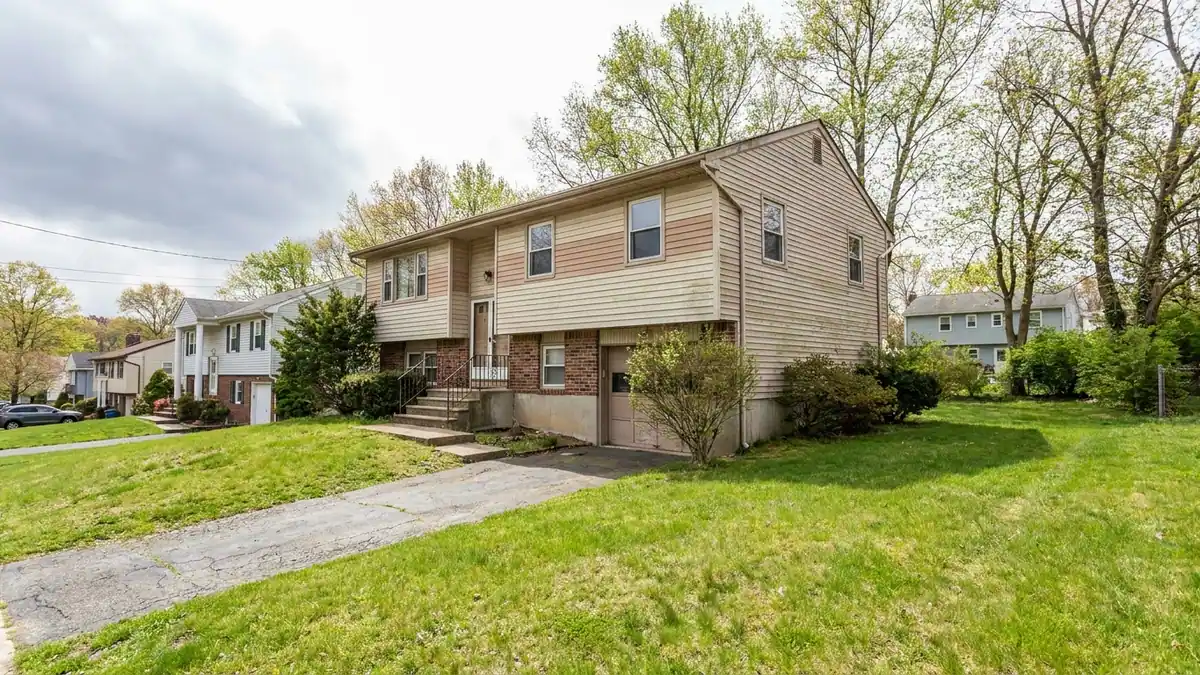
- Mismatched repairs. Patch panels in three shades across one elevation mean the color is no longer available and the wall has been chasing itself for years.
Wash it or replace it
| Condition | Washing fixes it | Replacement is the answer |
|---|---|---|
| ConditionMildew, algae, pollen, road film | Washing fixes itYes | Replacement is the answerNo |
| ConditionGutter streaks and splash-line soil | Washing fixes itYes, once drainage is corrected | Replacement is the answerNo |
| ConditionLight chalking on an otherwise sound wall | Washing fixes itTemporarily | Replacement is the answerNot yet |
| ConditionHeavy chalking plus faded, uneven color | Washing fixes itNo | Replacement is the answerYes |
| ConditionCracked, brittle or split panels | Washing fixes itNo | Replacement is the answerYes |
| ConditionWarped or heat-distorted sections | Washing fixes itNo | Replacement is the answerYes |
| ConditionSoft sheathing or recurring interior damp | Washing fixes itNo | Replacement is the answerYes, and the wall needs opening first |
What a wash costs you versus what it buys
A cleaning is cheap relative to a siding job and it is worth doing on a wall that is simply dirty. It also buys information. A clean wall shows you cracks, chalk lines, and the spots where water has been running where it should not. Homeowners who wash before getting estimates usually have a much clearer picture of what they are dealing with.
What a wash does not buy is time on siding that is already failing. If the panels are brittle, every wash from here risks breaking them, and the wall keeps looking worse each spring.
When replacement is the call, the material decision comes next, and the siding options guide covers vinyl against fiber cement in detail. Siding work in New Jersey runs $10,000 to $22,000 in standard-value towns, $16,000 to $38,000 in higher-value towns, and $30,000 to $70,000 for large or luxury homes, with the band set by the municipality's median home value from ACS 2024 five-year estimates. Size, stories, trim and what is found behind the old panels move the number within that range.
What to do next
If the wall is dirty, wash it low and slow, fix whatever is overflowing above it, and look it over carefully once it is clean. If the thumb test leaves chalk, panels crack when you flex them, or a stain keeps coming back, washing is not the answer and no amount of it will be.
Lightning Construction installs siding across all 21 New Jersey counties, including fiber cement, insulated and standard vinyl, trim, soffit and fascia. The inspection and the written estimate are free with no obligation, and a salesperson does come to the house. If the walls need opening to check sheathing, that happens at the inspection and goes into the quote, so there are no change orders later. There is no deposit, nothing is due until the work is done and you have inspected it, and Lightning pulls the permit and attends the municipal inspection. Book a free estimate and get a straight answer on whether the siding has another decade in it.