Short answer
Patch it when the membrane is still flexible and the leak traces to one seam, one flashing or one penetration. Coat it only when the membrane is intact, clean and dry underneath, because a coating is a surface treatment and it cannot fix wet insulation, a failed wall tie-in or a deck that holds water. Replace the membrane when the surface is brittle and cracked, when the seams are opening in more than one place, or when the plywood under it has gone soft.
On this page
- Find where the water is actually getting in
- When patching is the right call
- When a coating is worth doing, and when it is a waste
- When the membrane has to come off
- Comparing the three options
- Ponding water is a pitch problem, not a membrane problem
- What the tie-in to the house has to look like
- Membrane choices and what to ask for in writing
- What to do next
Patch it when the membrane is still soft and flexible and you can trace the leak to one seam, one flashing or one pipe. Replace it when the surface is brittle, when seams are opening in more than one spot, or when the deck feels soft underfoot. Coating sits between those two, and it is the option most often sold to homeowners who needed one of the other two.
A porch roof is the smallest roof on most New Jersey houses and the one that leaks first. It is nearly flat, it drains slowly, it ties into a wall at the back, and it usually gets ignored until a stain shows up on the porch ceiling or on the bedroom wall above it.
Find where the water is actually getting in
Before anyone quotes a repair, the leak needs a location. On a low-slope porch roof there are only a handful of candidates, and they are not evenly likely.
The wall tie-in is first. Where the porch roof meets the house, there has to be a flashing that runs up the wall and behind the siding or into a brick reglet. If somebody caulked that joint instead of flashing it, the caulk has failed by now and water is running down the sheathing behind the membrane.
Seams are second. Rubber and TPO porch roofs are often seamed across the middle because the original installer used a scrap rather than one piece. Seam adhesive gives up long before the field membrane does.
Penetrations are third. A porch light, a flagpole bracket, an old antenna mount, a conduit for an outlet, a dryer vent. Anything stabbed through the membrane and sealed only with sealant is a leak on a timer.
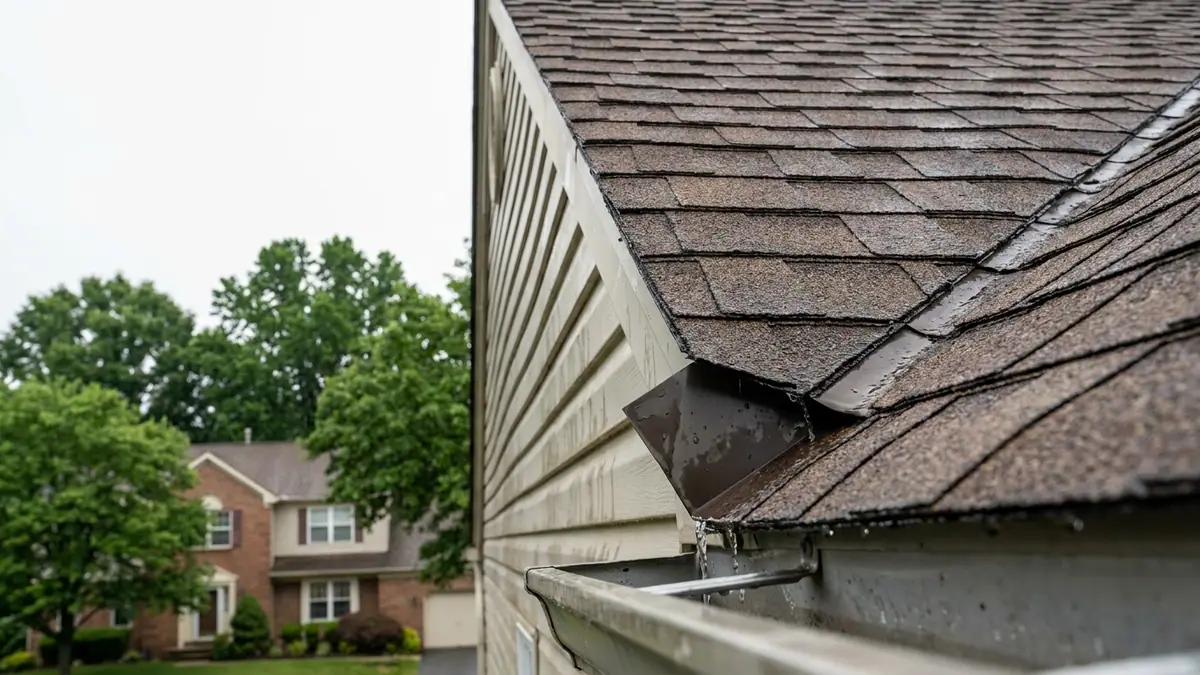
The edge is fourth. Where the membrane wraps over the fascia and into the gutter, a loose or missing metal edge lets wind drive water back under the sheet.
Last, and least common, is the field of the membrane itself. Open rubber in the middle of a porch roof usually means a dropped ladder, a dragged grill or a squirrel, not age.
When patching is the right call
Patch when all three of these are true. The membrane still bends without cracking when you lift a loose corner. The leak is in one identified place. The deck underneath is firm across the whole roof.
A real patch on a rubber roof means cleaning the area with the manufacturer's primer, cutting a target patch with rounded corners, and rolling it in with seam tape or adhesive made for that membrane. It does not mean a tube of roof cement smeared over the hole. Asphalt-based cement on EPDM attacks the rubber and makes the eventual tear-off worse.
The honest version of a patch quote names the square footage, the material it is bonding to, and what happens to the flashing while the crew is up there. If the wall tie-in is the problem, a patch in the field does nothing.
When a coating is worth doing, and when it is a waste
A fluid-applied coating is a surface treatment. It buys you UV protection and it can bridge a hairline crazing across an otherwise sound sheet. It has three hard limits.
It cannot dry out wet insulation or wet plywood. Rolling a coating over trapped moisture seals it in, and the deck keeps rotting under a surface that looks new.
It cannot fix drainage. If water sits on the roof for days, a coating sits in that water too, and the ponded areas are where the coating fails first.
It cannot replace flashing. The joint at the house wall is a detail that has to be built with metal and membrane lapped in the right order. Paint does not change the order.
Coating a porch roof makes sense when the membrane is six or eight years from the end of its life, the deck is dry, the roof drains, and you want to stretch it until you do the main roof. Coating a cracked, shrunken membrane over soft plywood is money spent on appearance.
When the membrane has to come off
Strip it when you see any of the following.
- Shrinkage. EPDM shrinks as it ages, and a shrunk sheet pulls the corners down off the parapet or the wall, tearing the flashing with it.
- Brittleness. The membrane cracks instead of folding when you lift an edge.
- Multiple open seams, or a seam that has been patched twice already.
- Soft or springy spots in the deck, or visible sag between the rafters.
- A history of leaks after every heavy rain, which usually means more than one entry point.
A replacement on a porch means tearing the old sheet off down to the plywood, replacing the sheathing that will not hold a fastener, correcting the pitch where it drains badly, installing new edge metal, running new wall flashing up under the siding, and laying a single piece of membrane across the field where the size allows it.
Comparing the three options
| Patch | Coating | New membrane | |
|---|---|---|---|
| Fixes a single seam or flashing leak | PatchYes | CoatingNo | New membraneYes |
| Fixes wet or rotted decking | PatchNo | CoatingNo | New membraneYes |
| Fixes water that ponds for days | PatchNo | CoatingNo | New membraneYes, with tapered buildup or reframing |
| Fixes a bad tie-in at the house wall | PatchOnly if the patch is the flashing | CoatingNo | New membraneYes |
| Right when the membrane is brittle | PatchNo | CoatingNo | New membraneYes |
| Right as a stopgap before a full roof | PatchYes | CoatingYes, if the deck is dry | New membraneNot necessary yet |
Ponding water is a pitch problem, not a membrane problem
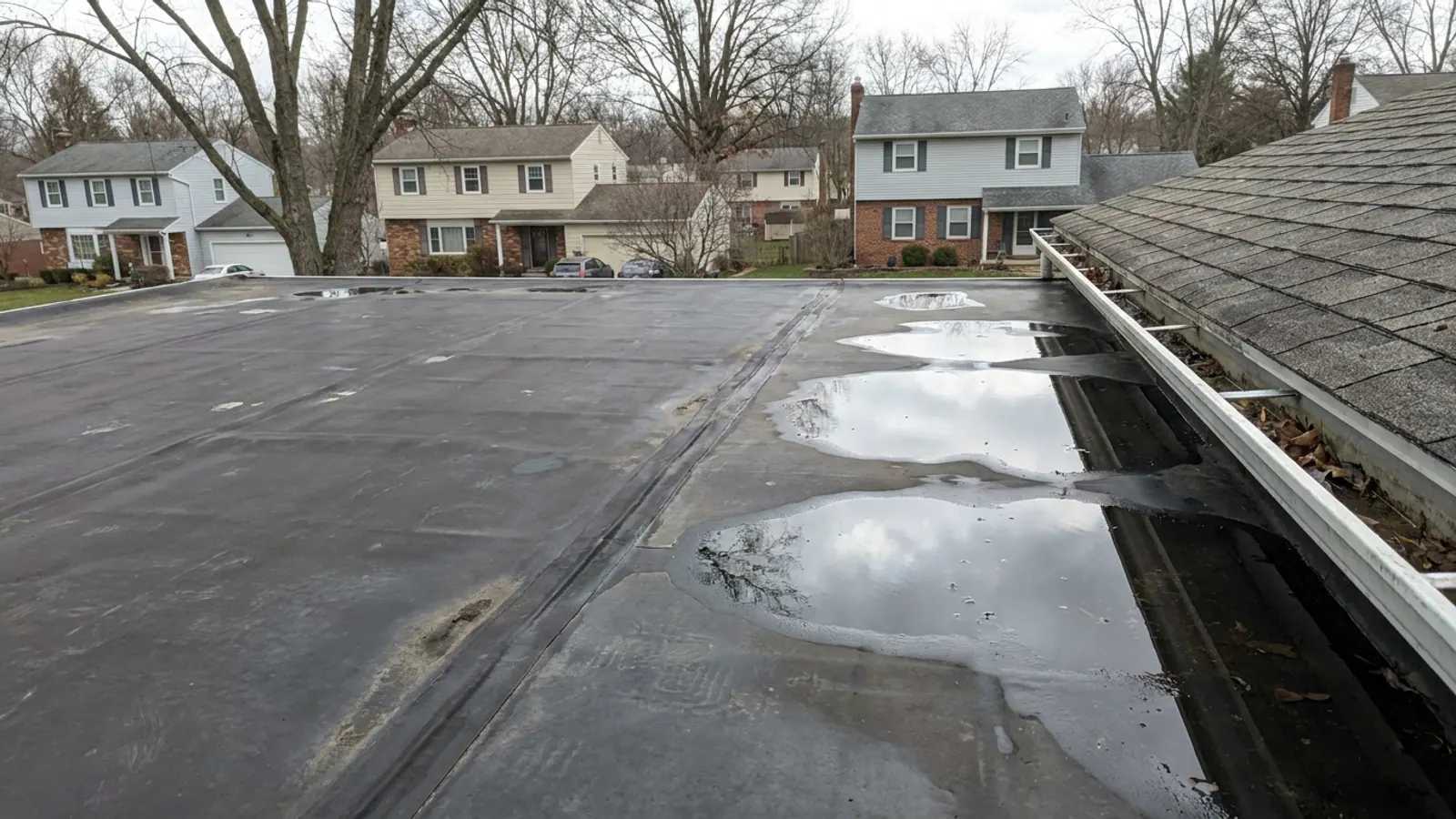
Water still sitting on the porch roof 48 hours after the rain stops is telling you the roof does not drain. Low-slope does not mean no slope. Porch roofs get flat because the framing sagged, because an addition was tied in at the wrong height, or because somebody built the porch level to begin with.
No membrane and no coating solves that. The fix is tapered insulation board built up under the new membrane, or sistering and re-pitching the framing. Either way it gets decided before the quote, not after the tear-off. If the water is draining to the edge but then backing up, look at the gutter first, because an undersized or sagging gutter at a porch edge backs water onto the membrane. Our gutters page covers re-pitching and seamless replacement.
What the tie-in to the house has to look like
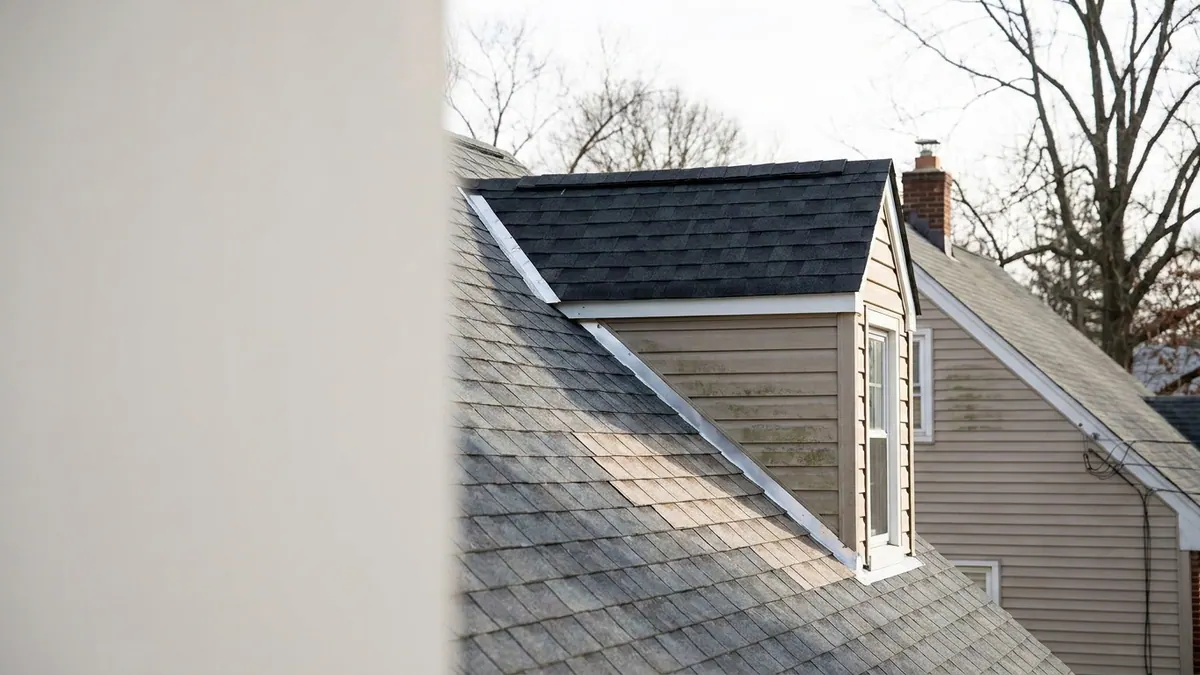
This is the detail that separates a porch roof that lasts from one that leaks in year three. The membrane has to turn up the wall several inches and terminate under a counterflashing or a termination bar with sealant. Above it, the siding or the brick has to shed water onto the face of that flashing, not behind it. Where the porch roof dies into a sloped shingle roof above, the shingles and the membrane have to lap in the correct order with step flashing at the sidewall.
If your current porch roof has a bead of caulk at the wall and nothing else, you have found your leak.
Membrane choices and what to ask for in writing
EPDM, TPO and modified bitumen all work on a porch. The flat and low-slope roofing guide goes through how the three systems differ and where each belongs. For the quote itself, get these spelled out.
- The membrane type and thickness, and whether the field is one piece or seamed.
- What happens to the decking, including the price for replacing sheathing if it is bad. This should already be in the number, not an allowance.
- The wall flashing method, in words. Metal counterflashing, termination bar, or tucked behind siding.
- New edge metal and whether the gutter is being reset or replaced.
- Who pulls the permit and attends the municipal inspection.
Lightning Construction finds the decking, flashing and layer conditions at the free inspection and prices them into the written estimate, so there is no change order when the old membrane comes off. Permits are pulled by Lightning from your municipality's construction office under the New Jersey Uniform Construction Code, and the inspection is attended by Lightning. There is no deposit, and nothing is due until the work is finished and you have looked at it.
What to do next
If the porch ceiling is staining now, get the roof looked at before the next freeze, because water in the deck plus a cold night opens every seam a little further. If the main roof is also near the end of its life, do both at once. The crew is already there, the flashing between the two planes gets built as one assembly, and you are not paying twice to set up.
See the roofing page for what a replacement includes, or book a free inspection and written estimate. A salesperson comes to the house, the inspection and the estimate cost nothing, and there is no obligation.