Short answer
"Plywood extra" means the contractor has not priced your roof decking and will bill it separately once the old roof is off. Nobody can tell you a fair dollar figure for that sheet from a blog post, because it depends on the contractor's material, labor and disposal cost, so the number that matters is the one written into your contract before anyone climbs on the roof. Lightning Construction finds the bad decking at the free inspection and prices it into the estimate instead, so there is no per-sheet charge and no change order.
On this page
"Plywood extra" means the contractor has not priced your roof decking. He is telling you that when the old shingles come off, any sheathing that has to be replaced gets billed on top of the number you are looking at. The estimate in your hand is not the price of the job.
That is not automatically dishonest. Decking is the one part of a roof nobody can see until the roof is off. What makes it a problem is when the line says "plywood extra" and stops there — no per-sheet figure, no definition of what counts as a bad sheet, no proof required. That is a blank line on a contract you already signed, filled in by someone standing on your roof while your house is open to the weather.
Why decking is the one item contractors leave open
Under the shingles and underlayment is the sheathing: plywood or OSB panels on most New Jersey homes built from the 1960s on, and 1x6 or 1x8 plank boards on older stock. It is nailed to the rafters and it is what holds every nail in your roof. If a sheet is soft, delaminated or split, a nail driven into it pulls right back out, and the shingle above it is held on by nothing.
Water finds decking long before it finds your ceiling. A slow leak at a chimney or a rusted vent boot soaks the same square foot of plywood for years. From the ground the roof looks fine. From inside the attic, on the underside, you can often see the stain. That is the difference between a contractor who quoted from the driveway and one who got into the attic.
The honest version of "plywood extra" is a contractor who looked carefully, expects the deck to be mostly sound, and wants a defined mechanism for the few sheets he cannot rule out. The dishonest version is a low headline number that gets made whole on the day.
What the line should say, in writing, before you sign
A decking clause you can live with answers all six of these. If yours answers three, get the other three added in writing before the contract is signed.
- The unit price. A flat dollar figure per sheet, or per linear foot for plank replacement, stated in the contract.
- What is included in that figure. Material, labor, fasteners, and disposal of the old sheet. If disposal is billed separately you will see it again.
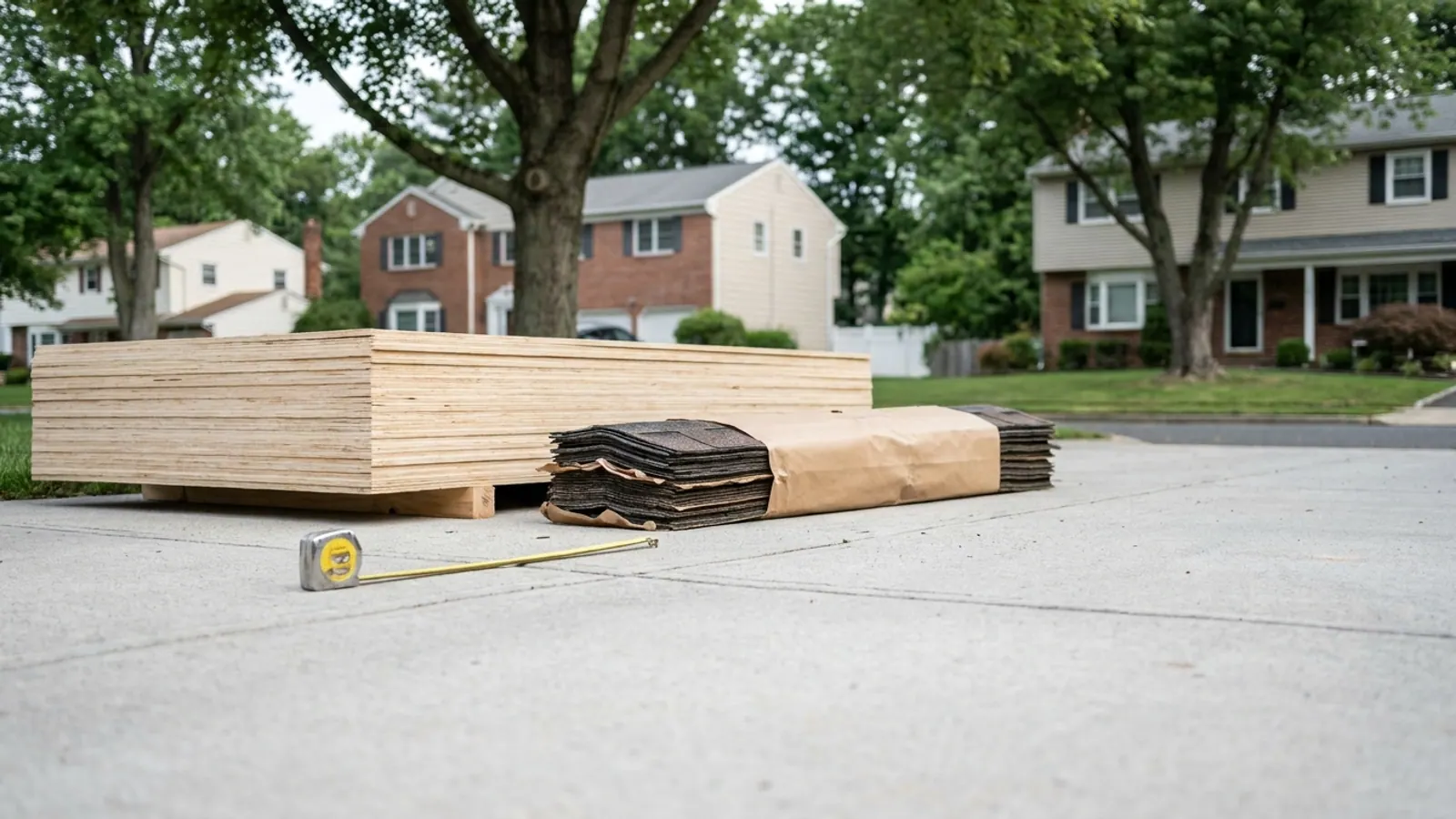
- The sheet size the price refers to. A standard panel is 4 feet by 8 feet. Decide now whether a partial replacement is billed as a partial or rounded up to a full sheet.
- Whether any sheets are included in the base price. Some contractors include the first two or three; some include none. Either is fine as long as it is written.
- Who confirms the count. You should be called and shown the bad sheets before they are cut out, not handed a number at the end of the day.
- Proof. Dated photos from the roof of each bad section before removal and the new sheathing in place, delivered with the invoice.
Per sheet, per square foot, or time and materials
Three structures show up on New Jersey estimates. They are not equally safe for you.
| Structure | How it is billed | Your exposure |
|---|---|---|
| StructurePer sheet, flat price | How it is billedOne number per 4x8 panel replaced | Your exposurePredictable, as long as the count is documented and confirmed with you |
| StructurePer square foot | How it is billedArea of sheathing replaced | Your exposureWorkable, but partial sheets and waste get argued about after the fact |
| StructureTime and materials | How it is billedCrew hours plus receipts | Your exposureOpen-ended, decided by the party sending the bill, with no ceiling |
| StructureIncluded in the estimate | How it is billedNo separate decking line at all | Your exposureNone, if the estimate is genuinely final |
Time and materials on decking is the one to push back on. You are not in a position to audit hours on a roof you cannot see from the ground, on the day your house is stripped.
So what should a sheet actually cost
Here is the blunt answer: no article can give you a fair per-sheet number, and you should distrust any that does. The cost of a sheet of sheathing swings with the lumber market, and the labor to cut out a rotted panel, fit a new one to the rafter centers and nail it off is a different job on a walkable ranch than on a steep cut-up colonial. Any figure printed today would be wrong somewhere in New Jersey by next quarter.
What you can do is compare the number across the estimates you already have. Get three quotes and ask every contractor for the per-sheet price in writing. If two are close and one is triple, that third company is not pricing plywood — it is pricing the moment when you have no other option. The contractor selection guide covers the other questions worth asking in the same conversation.
Also watch the relationship between the headline price and the decking clause. A quote well under the others with an aggressive per-sheet rate attached is not a cheaper roof. It is the same roof with the money moved into a line you cannot evaluate yet. What actually drives a roof total — size, pitch, layers, valleys, penetrations — is covered in the New Jersey roof cost guide.
How much decking a typical New Jersey roof needs
Most roofs need some and not much. The predictable spots are the same every time:
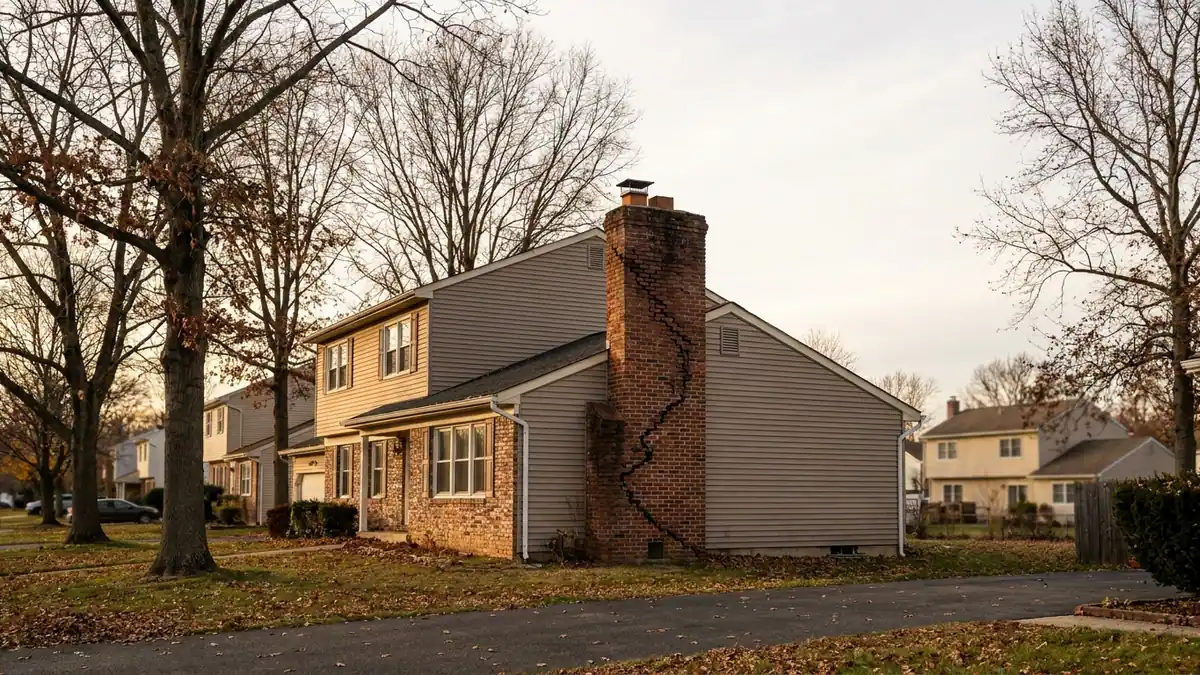
- Around the chimney, where old step flashing and counterflashing have been failing quietly.
- In the valleys, where water concentrates and where an old cut valley was patched.
- At the eaves, on homes that have had ice dams back water up under the shingles.
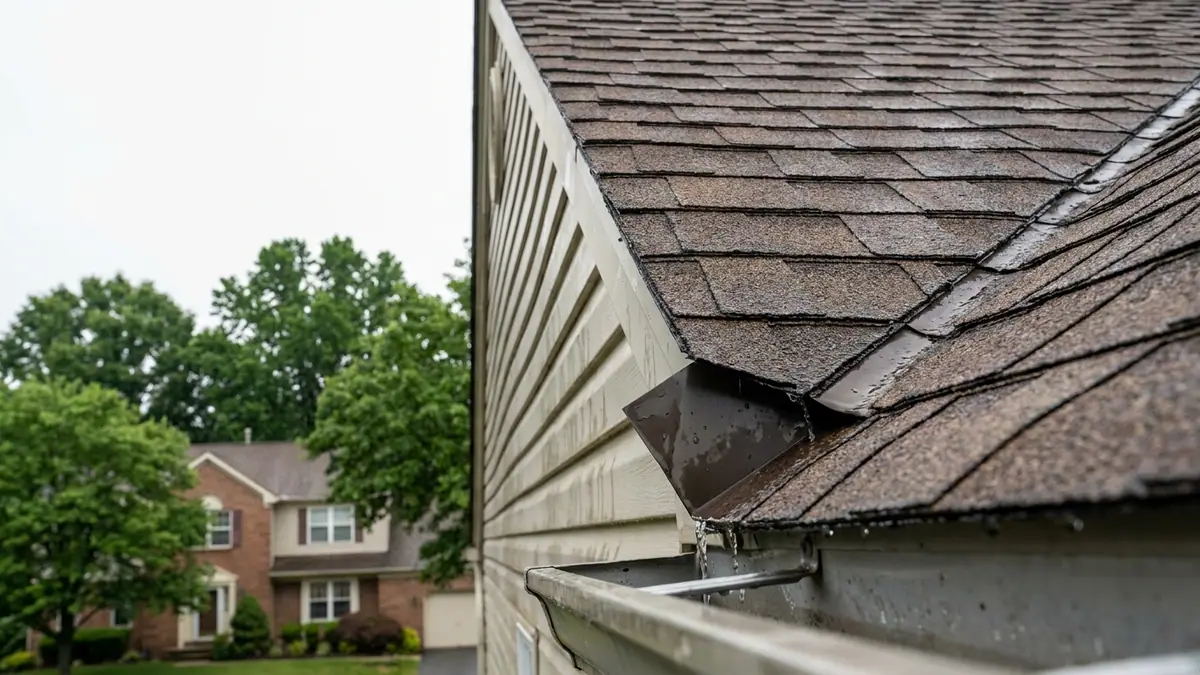
- Around plumbing vents and bath fan vents with cracked boots.
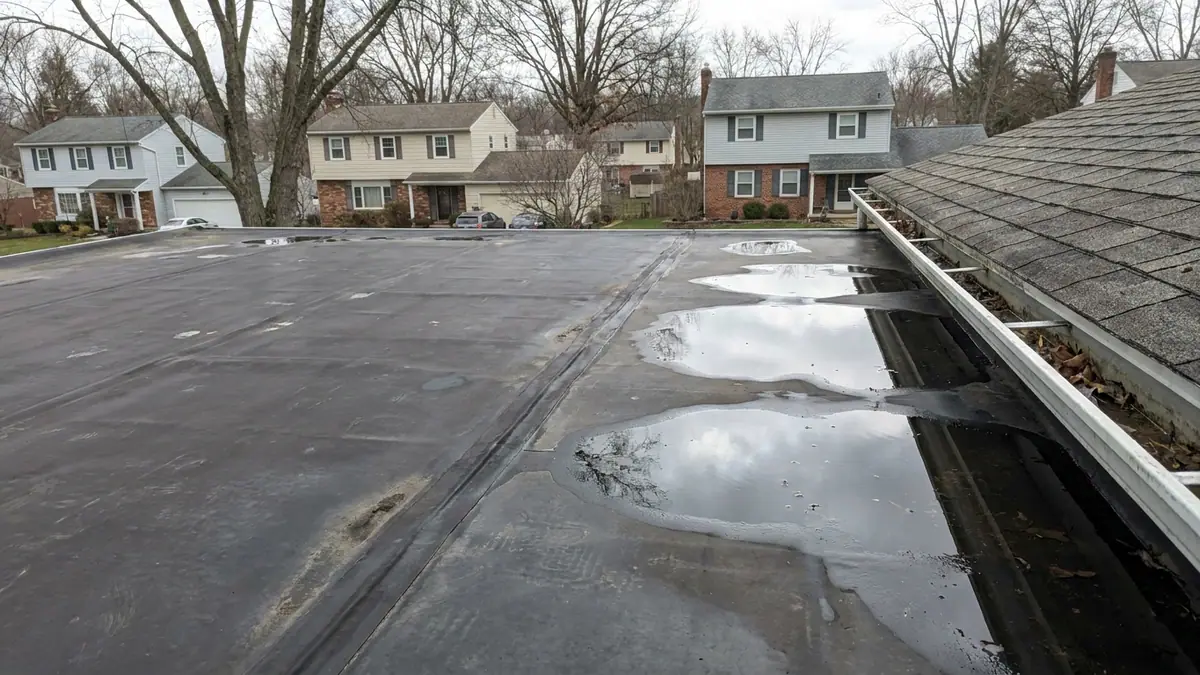
- Any low-slope section, like a porch or a rear addition, that was shingled when it should not have been.
Houses with a history of ice damming at the roof edge are the ones where eave sheathing surprises people. If that is your house, the ice dam guide explains what caused it, which matters because replacing the wood without fixing the cause buys you another round of the same damage.
A roof that has never leaked, has one layer on it and is being replaced for age usually needs very little. A roof with two layers, active stains in the attic and a chimney that has been dripping into a bedroom is a different conversation, and any contractor who tells you otherwise before tearing off is guessing.
The version with no per-sheet line at all
Lightning Construction does not write a plywood-extra line, because it does not write change orders. The free inspection covers the roof surface and the attic, the decking condition is assessed then, and whatever has to be replaced is priced into the written estimate. That estimate is the final price. There is also no deposit — nothing is due until the work is finished and you have inspected it — and Lightning pulls the permit and attends the municipal inspection under the New Jersey Uniform Construction Code, in every municipality. You file nothing.
The estimate appointment is free and carries no obligation, and a salesperson does come to the house. That is the trade: an hour of your time, a real look at the deck from both sides, and a number that does not move.
What to do next
If you are holding an estimate with "plywood extra" on it, do three things today. Call the contractor and ask for the per-sheet price, the photo requirement and the confirmation process in writing. Ask whether he got into your attic, and what he saw. Then get a second written estimate that prices the decking up front so you have something to compare against.
When you want the full number instead of the starting number, book a free inspection and written estimate. Lightning Construction is veteran-owned, GAF Certified, licensed and insured under New Jersey Home Improvement Contractor registration 13VH12437000, and works in all 21 counties. See what is included in a roof replacement before you sign anything with an open line on it.