Short answer
Yes, you can replace the siding on just the second story, and it is a normal job when the damage or wear is confined to the upper walls. It works when the break falls at a real horizontal break in the wall, such as a band board or a porch roof line, and when the new course is flashed and lapped so water running down the upper wall sheds over the old siding below. What it will not do is match the existing color, and it does not save half the money, because access and setup are the expensive part of working two stories up.
On this page
- When second-story siding only is the right call
- Where the break between new and old siding has to fall
- The transition has to shed water, not just look finished
- Why the color will not match, and what to do about it
- What a partial siding job costs compared to the whole house
- What to get in writing before you agree to a partial job
- What to do next
Yes, you can replace the siding on the second story only. Contractors do it every season in New Jersey, usually after a storm takes out one wall, or because the upper walls are chalked and brittle while the lower half still looks acceptable. The job is legitimate. What decides whether you are happy with it a year later is where the break falls, how the transition is flashed, and whether you can live with two different shades of the same color on one elevation.
Here is what actually goes into that decision.
When second-story siding only is the right call
Partial replacement makes sense when the failure is confined and the reason for it is understood.
The common cases:
- Wind damage on the upper walls, where gable ends and second-story elevations take the pressure and the lower walls are shielded by the neighbors, the grade and the trees.
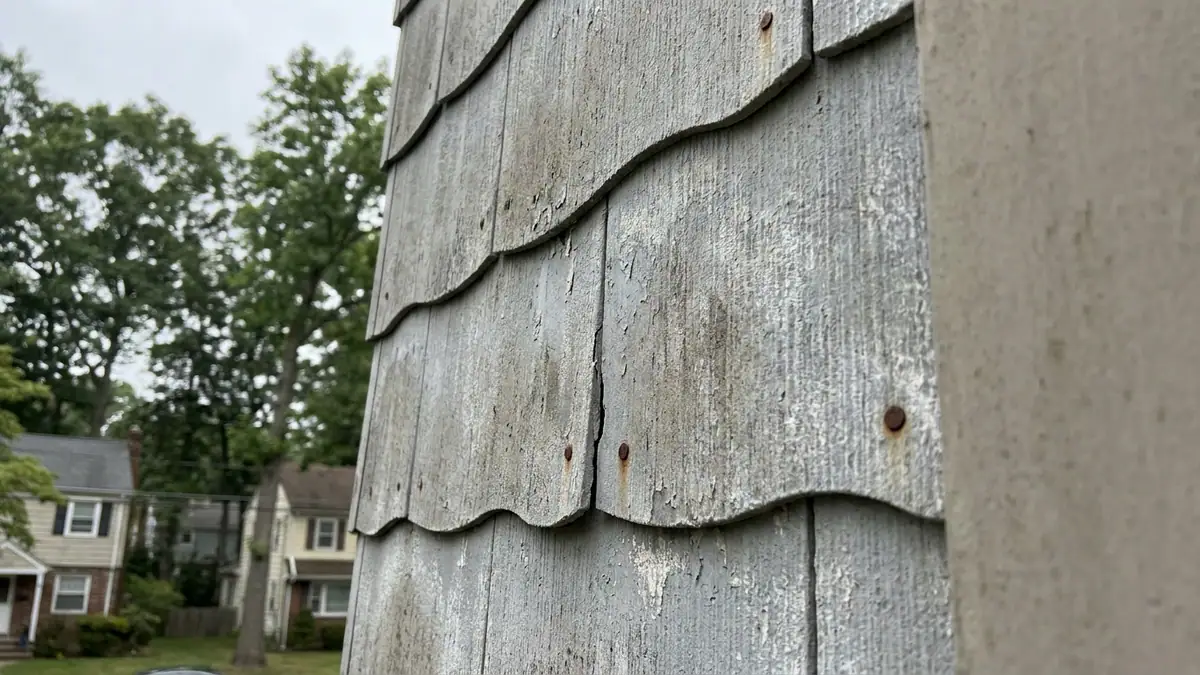
- Sun-driven failure on one or two elevations. South and west walls chalk, fade and get brittle years before north-facing walls do.
- A dormer, a gable or a shed-roof addition with siding that was never the same as the rest of the house.
- Damage from a failed gutter or a roof edge that dumped water down one section of wall for years.
Partial replacement is the wrong call when the siding is simply old everywhere. Vinyl that has reached the end of its service life on the second story is normally within a few years of the same on the first, and you will pay setup costs twice to get there. It is also the wrong call when nobody has established why the upper walls failed. If the cause is water getting behind the siding at the roof edge, new panels over the same detail fail the same way.
Where the break between new and old siding has to fall
This is the part homeowners underestimate. A siding transition needs a horizontal line that already exists on the house, not an invented one.
Good break points:
- A band board or belly band between floors.
- The intersection of a porch roof, garage roof or bay roof with the wall.
- A change of material, such as the top of a brick or stone water table.
- An outside corner, if you are replacing one full elevation rather than one story.
Bad break points: the middle of an open wall, the top of a window, or a random course line. Vinyl siding locks course to course, so a mid-wall stop needs a trim piece to close it, and a trim piece running across open wall with nothing above or below it to justify it looks like exactly what it is.
If your house has no band board and no roof intersection at the floor line, adding one is an option. It has to be installed as a flashed water-shedding detail, not nailed on as decoration.
The transition has to shed water, not just look finished
Siding is a drainage plane, not a seal. Water runs down behind and across the face of the panels and must be handled at every horizontal interruption. A partial job creates a new interruption where there was none.
What has to happen at the break, in order:
- Strip the old siding a course or two below the intended line so there is clean wall to work on.
- Inspect the sheathing and the existing house wrap at the transition, and replace anything soft, stained or delaminated.
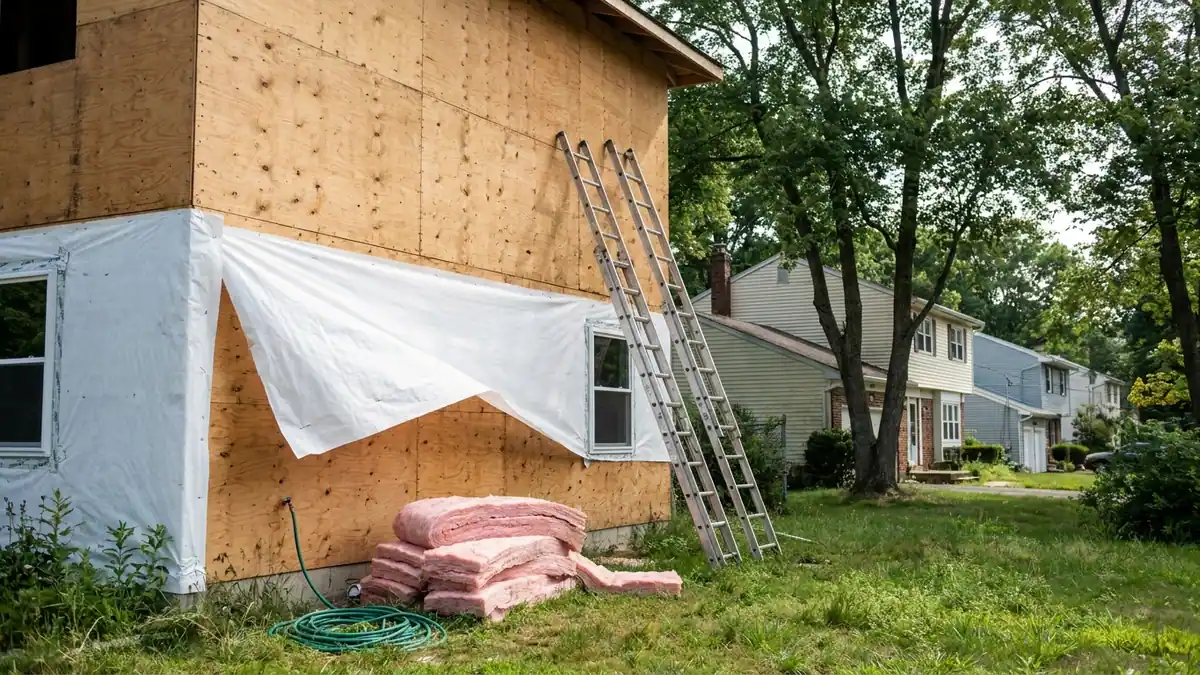
- Lap the new house wrap over the old wrap below it, shingle-style, so water travels outward and downward. Never tuck new wrap behind old.
- Install metal flashing over the band board or trim, with a drip leg that projects past the face of the siding below.
- Start the new siding above the flashing with a proper starter strip, so the first new course is locked and not just face-nailed.
- Cut and refit the top course of the old siding below with a finish trim so it terminates cleanly under the flashing.
Skip step four and the transition becomes a horizontal shelf that pushes water straight into the wall cavity. That is the single most common way a partial siding job turns into rot behind the wall two winters later.
Why the color will not match, and what to do about it
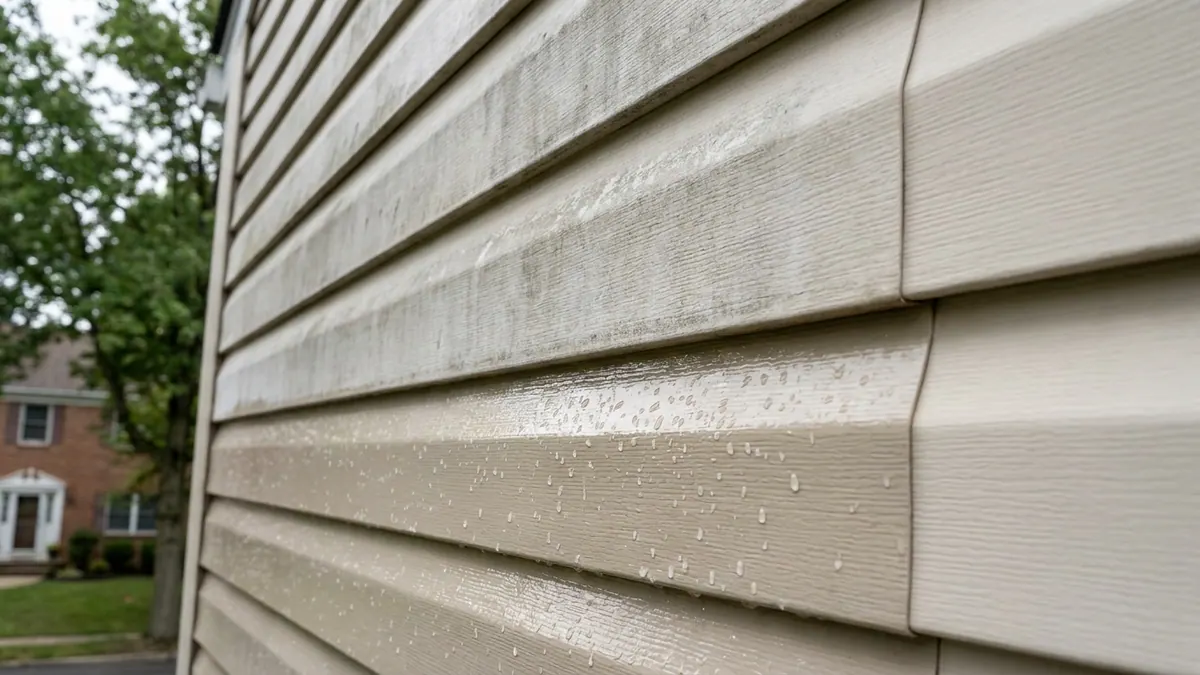
Vinyl fades. It fades unevenly by elevation, because the south and west walls get far more ultraviolet exposure than the north wall. A panel pulled from the same product line in the same color name will look brighter and cleaner than the wall it sits above, and on a dark color the gap is obvious from the street.
Profiles change too. Manufacturers discontinue lines and revise panel profiles, and a double 4-inch clapboard from one maker does not line up with another maker's double 4-inch.
Three honest ways to handle it:
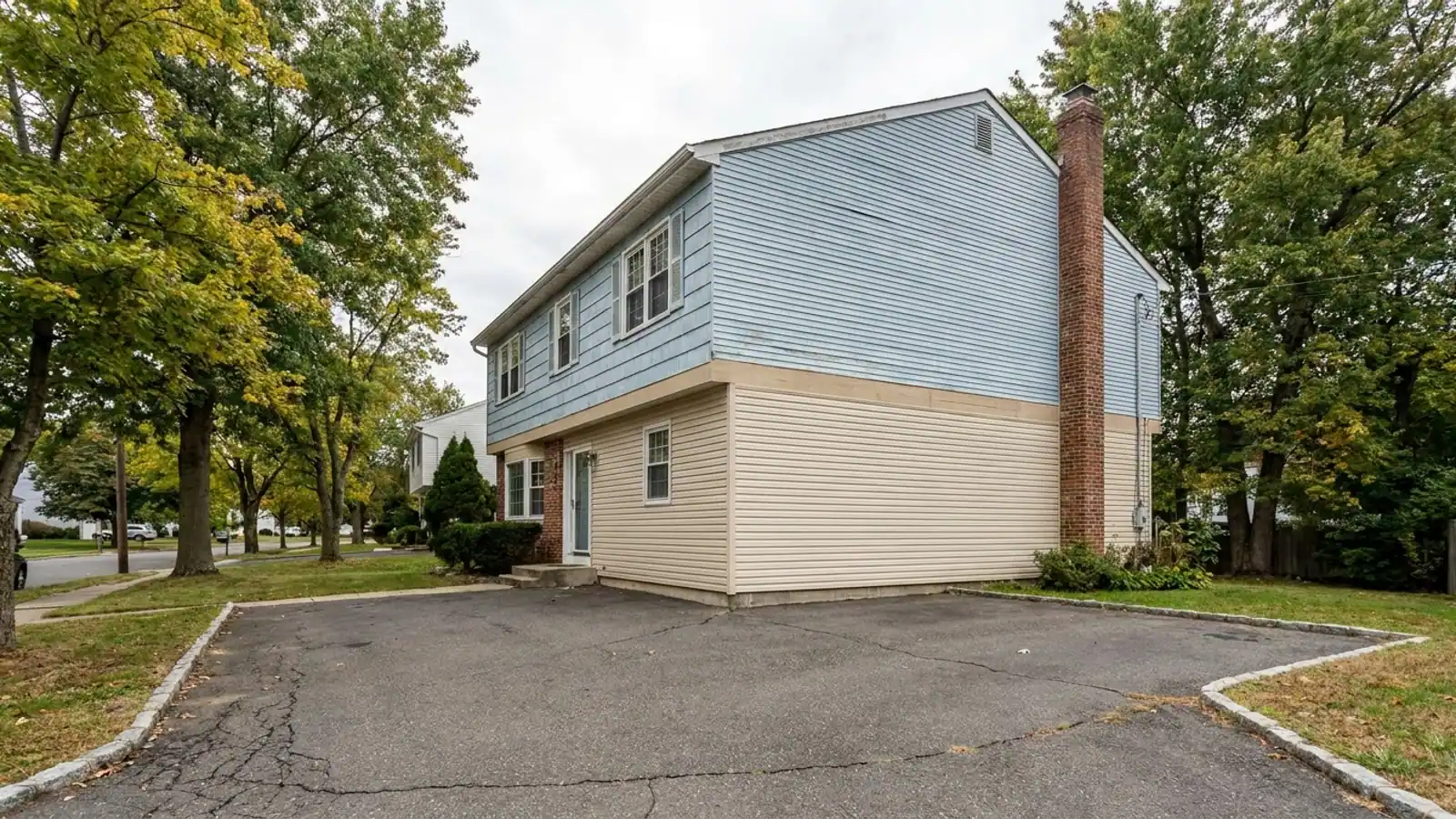
- Accept the break as a design feature. A band board with genuinely different colors above and below reads as intentional on a colonial or a split level. A near-match that is off by one shade reads as a repair.
- Replace by elevation instead of by story, so the transition happens at an outside corner and the two colors are never in the same view.
- Replace everything and pick one color. If the lower half is within a few years of needing it anyway, this is usually the cheaper path over ten years.
If you are selecting material at the same time, the siding options guide covers how vinyl and fiber cement differ in cost, thickness and service life before you commit to a product you may have to match again later.
What a partial siding job costs compared to the whole house
It does not cost half. Siding in New Jersey runs $10,000 to $22,000 in standard-value towns, $16,000 to $38,000 in higher-value towns and $30,000 to $70,000 for large or luxury homes, with the band set by the municipality's median home value from ACS 2024 five-year estimates. Those are whole-house ranges, and a top-half-only job lands higher than half of them for reasons that have nothing to do with square footage.
| Cost driver | Full house | Second story only |
|---|---|---|
| Cost driverLadders, staging, setup and takedown | Full houseOnce | Second story onlyOnce, and all of it on the upper walls |
| Cost driverGround protection and disposal | Full houseOnce | Second story onlyOnce, for less material |
| Cost driverTrim, soffit and fascia at the roof edge | Full houseIncluded in the run | Second story onlyStill the full perimeter |
| Cost driverWall area covered | Full houseAll of it | Second story onlyRoughly the harder half |
| Cost driverNew transition flashing and trim | Full houseNone needed | Second story onlyAn added detail across every elevation |
| Cost driverPermit and inspection | Full houseOne | Second story onlyOne |
The second story is the slow part of a siding job. The first story is the part a crew moves through quickly. Removing the easy half from the scope does not remove much labor. Expect a partial job to come in meaningfully above half the whole-house number, and ask for both prices on the same visit so you can see the gap on your own house. What drives your number specifically is covered on the siding page.
What to get in writing before you agree to a partial job
Ask for these by name on the estimate:
- The exact line where new meets old, described by a building feature, not by a floor.
- Whether new house wrap is going on the replaced area, and how it laps the existing wrap.
- The flashing detail at the transition, including the drip leg.
- What happens if sheathing under the removed siding is rotted, and at what price.
- Whether soffit, fascia and trim on the replaced area are included.
- The manufacturer and the exact profile and color, so a future match is at least possible.
The fourth one matters most on a partial job, because opening one wall is where surprises live. Lightning Construction finds those conditions at the free inspection and prices them into the estimate, so there is no change order on the day. The written estimate is the final price, there is no deposit, and nothing is due until the work is finished and you have inspected it. Lightning also pulls the permit from your municipality's construction office and attends the inspection, in every municipality, under the New Jersey Uniform Construction Code.
What to do next
Have someone look at the upper walls up close before you decide anything. Chalking, brittleness, loose courses and staining at the roof edge are all readable from a ladder and none of them are readable from the driveway. That visit is also when you find out whether the lower half is genuinely sound or just less visible.
Lightning Construction is veteran-owned and family-operated, based in Manalapan, GAF Certified, licensed and insured under New Jersey Home Improvement Contractor registration 13VH12437000, and rated 4.9 out of 5 from 264 Google reviews. It works in all 21 New Jersey counties, listed on the service areas page.
Book a free inspection and written estimate. It is genuinely no-obligation, and a salesperson comes to the house. Ask for the partial number and the whole-house number side by side, and decide with both in front of you.