Short answer
One leak is a repair until someone proves otherwise. If the shingles around it are still flat, flexible and holding their granules, and the water is coming from a single failed detail like step flashing or a pipe boot, a repair is the correct call. Replacement becomes the honest answer when the leak is one symptom of a surface that has aged out across the whole roof, or when the decking under it is already soft.
On this page
One leak is a repair until someone proves otherwise. A single stain on a ceiling means one detail on your roof failed, and on a roof with life left in it, replacing that detail is the whole job.
The reason homeowners get pushed straight to replacement is that a replacement is a bigger sale. The reason some homeowners genuinely need one is that the leak they noticed is the first of several that are coming. Telling those two situations apart takes an attic, a ladder and about forty minutes.
Start with what caused the leak, not the stain on the ceiling
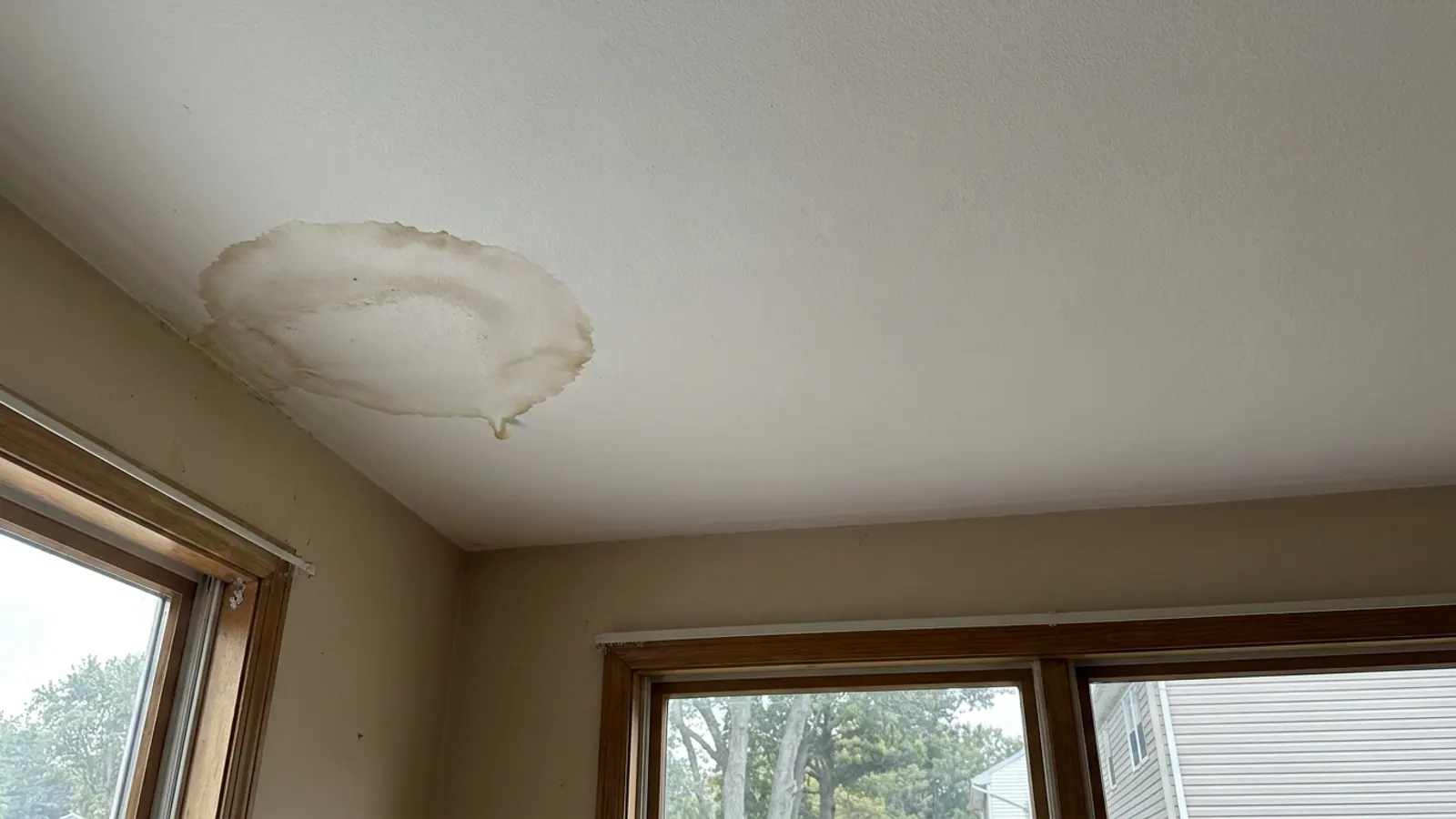
Water does not enter a roof where it shows up inside. It enters at a high point, runs down the top of the decking or along a rafter, and drops through at the first low spot or nail penetration it reaches. A stain in the middle of a bedroom ceiling is often fed by a chimney or a pipe penetration eight feet up the slope.
So the first question is never "how bad is the ceiling." It is "what is the entry point." On New Jersey houses the entry point is usually one of five things:
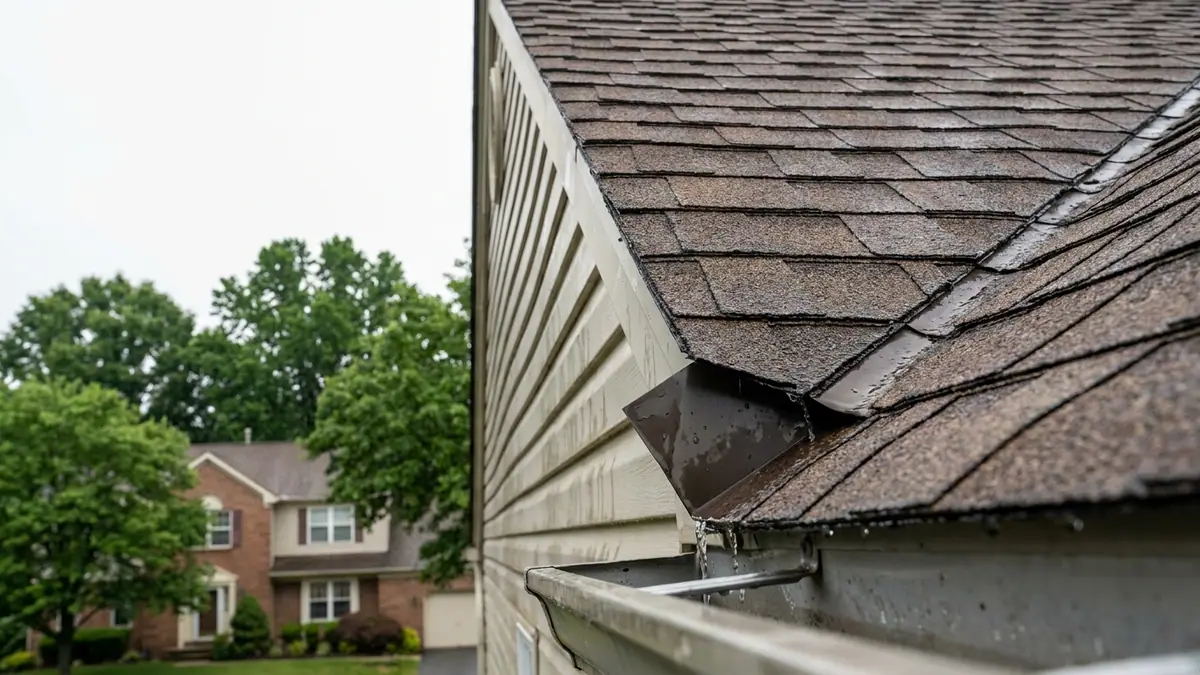
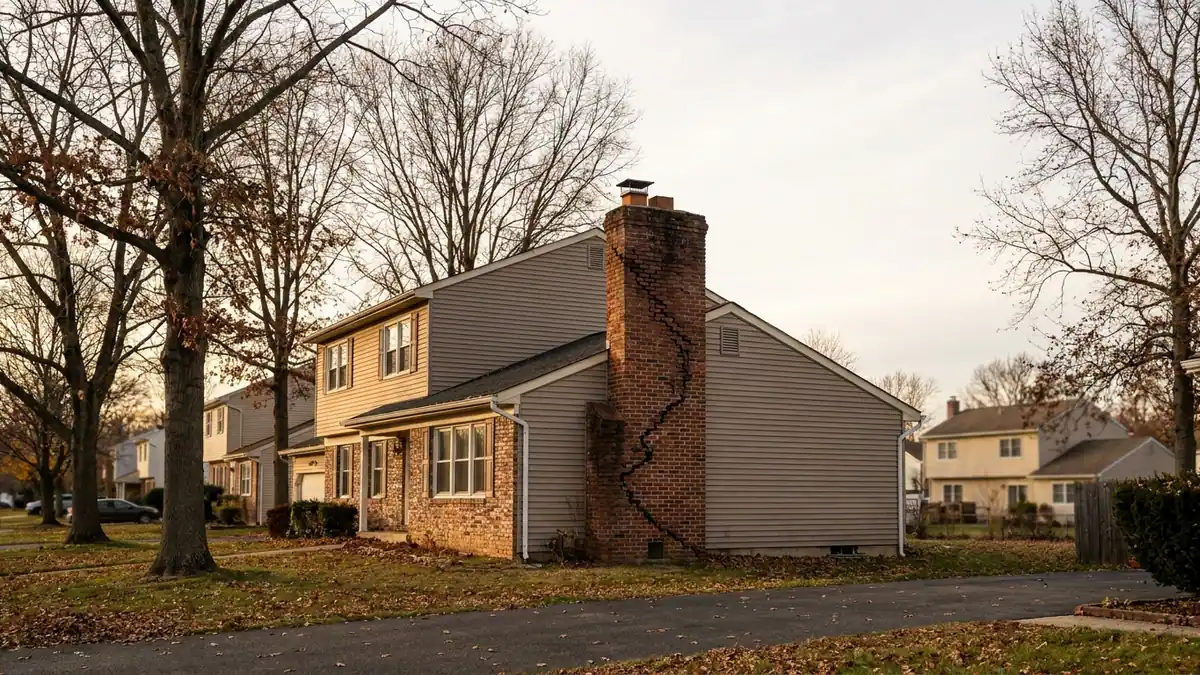
- Step flashing where a roof plane meets a wall, a chimney or a dormer cheek.
- A rubber pipe boot that has hardened and split around the plumbing vent.
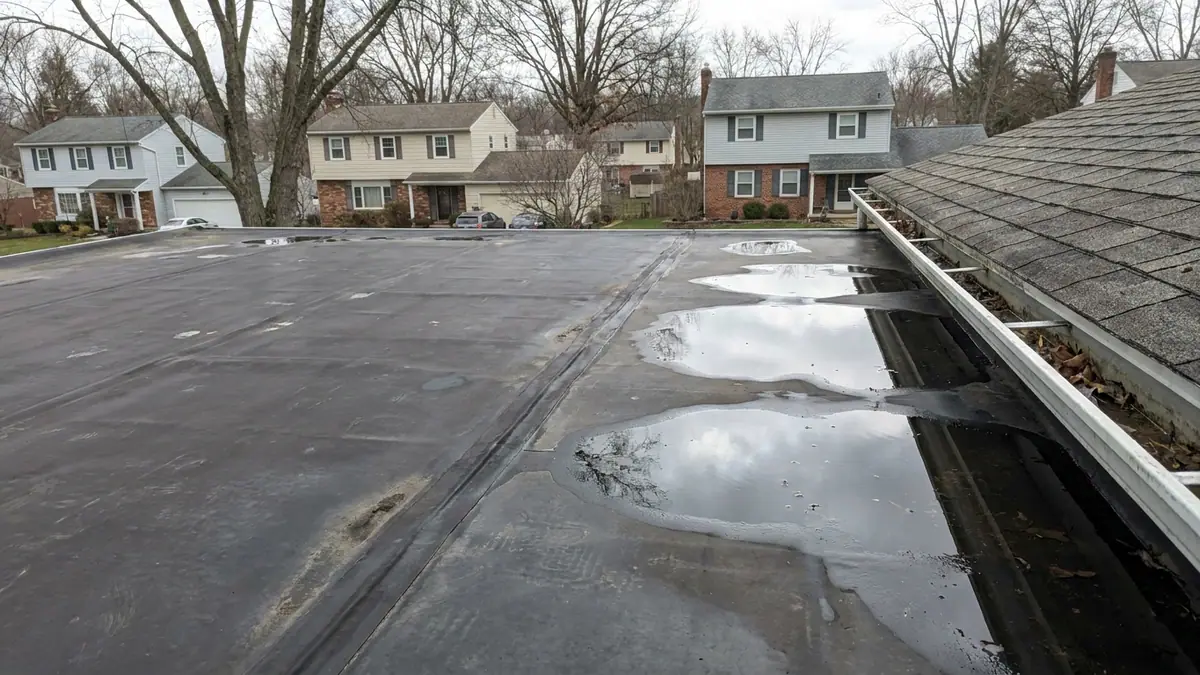
- A valley where two planes meet, especially where debris has been sitting.
- A skylight curb or the flashing kit around it.
- Nails backed out of the decking, or shingles lifted and creased by wind.
Every one of those is a repair on a sound roof. None of them is a reason to strip a house.
When a repair is the right answer
A repair holds when the material around the failure is still doing its job. Look for shingles that lie flat, corners that do not curl up, granule coverage that is even instead of patchy, and a shingle you can lift slightly in warm weather without it cracking. If that is what the roof looks like, and the leak traces to one detail, fix the detail.
A correct repair means removing the failed component and installing a new one. New step flashing woven in course by course. A new boot, not a bead of sealant around the old one. Shingles pulled back and re-laid over new underlayment in the valley. If a quote describes caulk, roof cement or a coating over the top of the problem, that is not a repair, that is a delay, and the water comes back.
When a single leak means the roof is done
Replacement is the honest answer when the leak is a symptom of general age rather than one bad detail. The signals are consistent:
| What the roofer finds | What it means | The call |
|---|---|---|
| What the roofer findsOne split pipe boot, shingles otherwise flat and flexible | What it meansIsolated component failure | The callRepair |
| What the roofer findsWind-creased shingles in one small area, rest of roof sound | What it meansLocalized storm damage | The callRepair, and check for an insurance claim |
| What the roofer findsOld step flashing corroded at one wall, decking dry | What it meansDetail at end of life | The callRepair that wall |
| What the roofer findsCurled, brittle shingles across multiple slopes | What it meansSurface has aged out; the next leak is already forming | The callReplace |
| What the roofer findsBald patches with asphalt showing, granules filling the gutters | What it meansNo UV protection left | The callReplace |
| What the roofer findsSoft or delaminated decking over more than a few sheets | What it meansWater has been in the assembly a long time | The callReplace |
| What the roofer findsTwo existing layers of shingles and an active leak | What it meansNothing can be repaired reliably through two layers | The callReplace |
The 10 signs you need a new roof guide walks through those conditions in detail, including the ones that are only visible from inside the attic. Read it before you agree to either number.
What a repair buys you on an older roof
This is the part that decides most jobs. On a twenty-year-old asphalt roof with brittle shingles, a repair is still worth doing if it stops water today and you are not ready to replace. It just needs to be priced as what it is: a stopgap of a season or two, not a fix.
The trade-off is simple arithmetic you can do yourself. If a roofer wants a meaningful sum to chase leaks on a roof that will need replacing within two years, and asphalt replacement in your municipality's band runs $9,000 to $22,000 in standard-value towns and higher in higher-value towns, spending money twice rarely makes sense. If the roof has eight or ten years left, a repair is clearly the better spend. Ask for both numbers in writing at the same visit so you are comparing real figures rather than a feeling. The New Jersey roof cost guide explains how the bands are set.
Matching shingles on a repair
A repair on a roof more than about ten years old will not match exactly. Shingle colors get discontinued, and the existing roof has weathered. A good repair blends the patch where it is least visible and tells you up front that you will see it from the street. A roofer who promises an invisible patch on a fifteen-year-old roof is guessing.
What should happen at the visit
Before anyone quotes anything, expect the roof and the attic both to be looked at. From above: the flashing points, the valleys, the boots, the roof edge and the condition of the shingle field. From inside: the underside of the decking, the rafters, the insulation and the sheathing around the suspected entry point. Wet decking, staining and rust on the nail points tell you how long this has been going on.
Ask for photographs of what was found and have the roofer show them to you at the house. Then ask two questions. Which specific component failed, and what will replace it? And if the answer is replacement, what did you see that a repair would not solve?
At Lightning Construction the inspection and the written estimate are free with no obligation, and a salesperson does come to the house. That is a straight sales appointment, plainly stated. The company also runs 24/7 emergency response, which matters when the leak is active in the middle of a storm and the priority is stopping water rather than deciding on a plan.
The insurance question on a single leak
Cause decides coverage. Insurers generally treat sudden damage from a wind or hail event differently from gradual wear, so a shingle torn off in a storm and a pipe boot that dried out over fifteen years are not handled the same way. Photograph the ceiling stain, note the date and the weather, and get the roofer's photos of the roof before anything is repaired. The roof insurance claim guide covers the filing sequence and the documents an adjuster asks for.
What to do next
- Put a bucket under the drip and pull back anything on the floor below it. Do not cut the ceiling open yet.
- Photograph the stain and write down the date and what the weather was doing.
- Go into the attic with a flashlight and look uphill from the stain for wet decking or a dark trail on a rafter.
- Get the roof inspected and insist on seeing photos of the entry point.
- Get both numbers in writing, the repair and the replacement, and decide with the roof's actual condition in front of you.
If the answer is a replacement, the terms matter as much as the price. On roofing work Lightning Construction takes no deposit, so nothing is due until the job is finished and you have inspected it, and writes no change orders, because extra shingle layers, rotted decking and unusable flashing are found at the inspection and priced into the estimate. Lightning pulls the permit from your municipality's construction office under the New Jersey Uniform Construction Code and attends the inspection; you file nothing. Most asphalt replacements are torn off and finished in a single day.
If you have an active leak or a stain you do not understand, book a free estimate and get the entry point identified before anyone talks about a whole roof.