Short answer
Not automatically. If your gutters are seamless, tight to the fascia, correctly pitched and not leaking at the seams or corners, they can come down and go back up with the new roof. Replace them when they sag, leak, are undersized for the roof above them, or when the fascia behind them is soft, and do it while the crew is already working at the eave.
On this page
Not automatically. If your gutters are seamless aluminum, still tight to the fascia, pitched correctly and not leaking at the seams or the corners, they can come off and go back on with the new roof and give you years more service. Replace them when they sag, leak, are undersized for the roof draining into them, or when the wood behind them has gone soft.
The reason this question matters is timing, not gutters. A roof crew is already at the eave with ladders, a dumpster and the edge of the roof stripped open. That is the one day when swapping gutters costs the least it will ever cost. Decide before the crew shows up, not while they are standing on the driveway holding a section of old aluminum.
What happens to your existing gutters during a roof replacement
They get worked around, and sometimes they get taken down. Tear-off debris lands in gutters, so a careful crew either detaches the runs on the slopes being stripped or protects them and cleans them out before rehanging. Either way the gutters get handled, and old sectional gutters do not always survive being handled.
Here is the normal sequence on a one-day asphalt replacement:
- Ground protection goes down, including tarps at the base of the walls to catch debris that clears the eave.
- Gutters on the slopes being stripped are detached or shielded, depending on their condition and how the drip edge will be installed.
- The old roof comes off to the decking, and any soft or delaminated sheathing is cut out and replaced.
- Drip edge and gutter apron go on at the eaves, tucked so runoff is carried past the fascia board and into the trough.
- Underlayment, ice barrier at the eaves and valleys, then shingles.
- Gutters are rehung, or new seamless gutters are run on site, and the pitch is checked toward each downspout.
- The property is cleaned and swept for nails, and the gutters and downspouts are flushed clear of granules and debris.
Most New Jersey asphalt roofs go through all of that in a single day. Adding gutters to the same job adds hours, not days.
Drip edge is the real reason this comes up
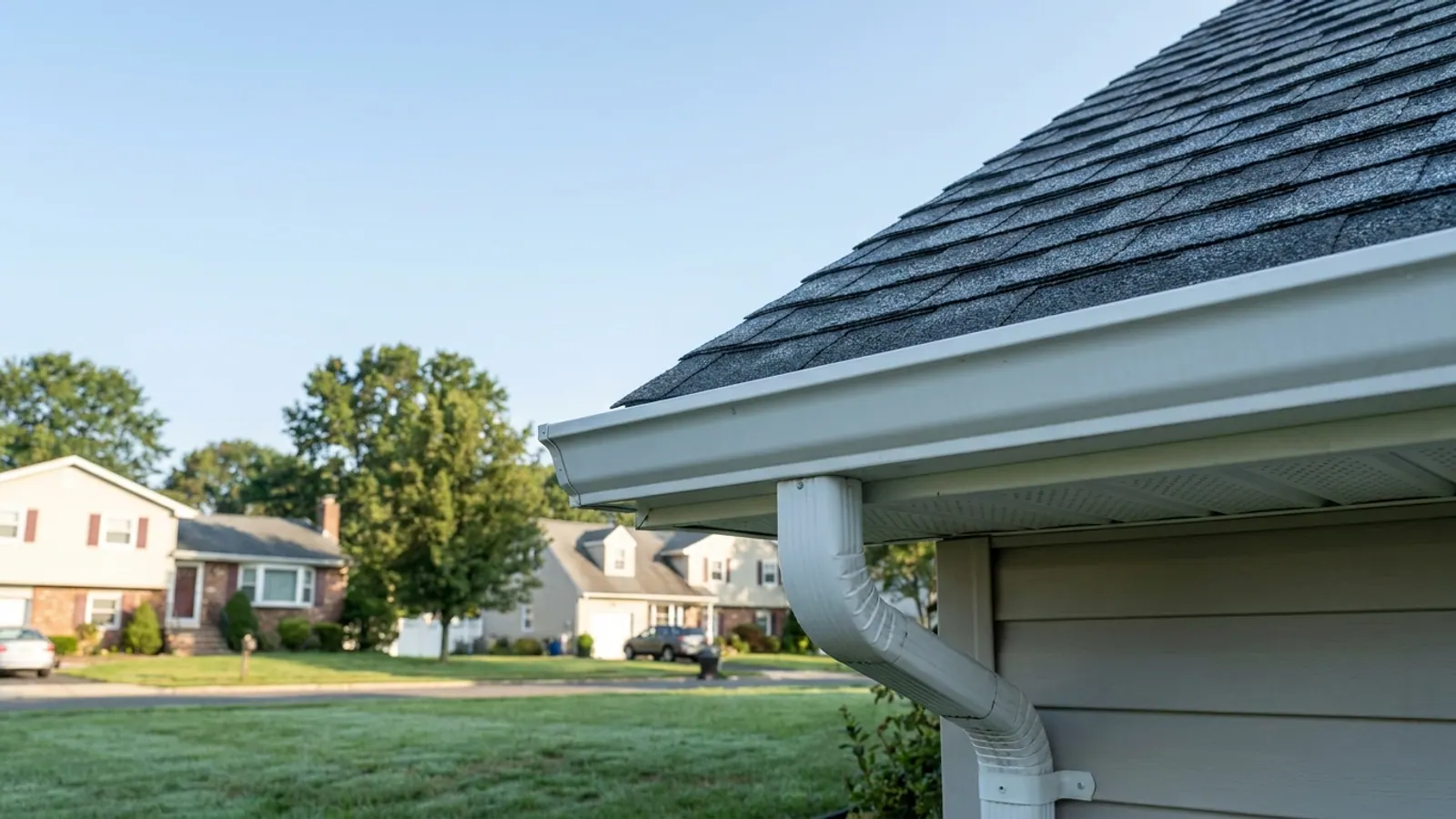
The metal at the roof edge is what decides whether water lands in the gutter or behind it. Drip edge and gutter apron are thin formed metal installed along the eave so runoff leaving the last shingle course is kicked forward into the trough instead of wicking back onto the fascia. If that metal is missing, bent or installed over the back of the gutter instead of behind it, water runs down the fascia every storm, the wood stays wet, and the hangers eventually let go.
That is why a new gutter hung on old, wrong edge metal leaks the same way the old one did. It is also why the honest version of this decision is not "gutters or no gutters" but "is the whole roof edge assembly right when the crew leaves." On a roof replacement, the edge metal is being replaced anyway. It is the natural moment to get the gutter side of it correct too.
If the fascia behind the gutter is soft, that gets addressed at the same time. Rotted fascia will not hold a gutter spike or a hidden hanger, and nailing new hangers into wet wood buys you a season.
When to keep the gutters you have
Keep them if all of the following are true. Walk the perimeter of the house and look up, and after the next hard rain look again while it is running.
| What you find | What it means | Keep or replace |
|---|---|---|
| What you findSeamless runs, no joints except at corners and end caps | What it meansModern gutter, few leak points | Keep or replaceKeep |
| What you findGutter tight to the fascia along its whole length | What it meansHangers are still holding in sound wood | Keep or replaceKeep |
| What you findWater runs to the downspout and drains, no standing pools | What it meansPitch is correct | Keep or replaceKeep |
| What you findSectional gutters with a joint every ten feet | What it meansEvery seam is a future leak | Keep or replaceReplace |
| What you findSagging in the middle of a run, or a visible dip | What it meansHangers are pulling out or the fascia is soft | Keep or replaceReplace, and inspect the fascia |
| What you findWater sheets over the front edge in heavy rain when clean | What it meansUndersized for the roof area draining into it | Keep or replaceReplace with the correct size |
| What you findRust streaks, split seams, taped or caulked repairs | What it meansEnd of service life | Keep or replaceReplace |
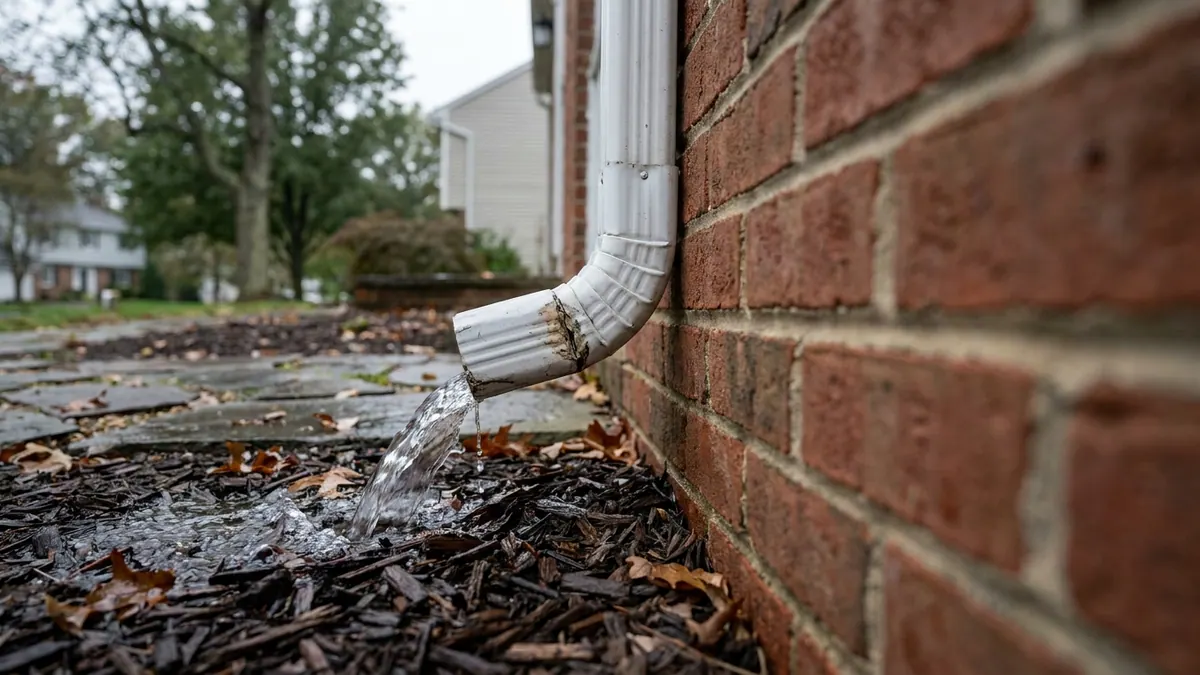
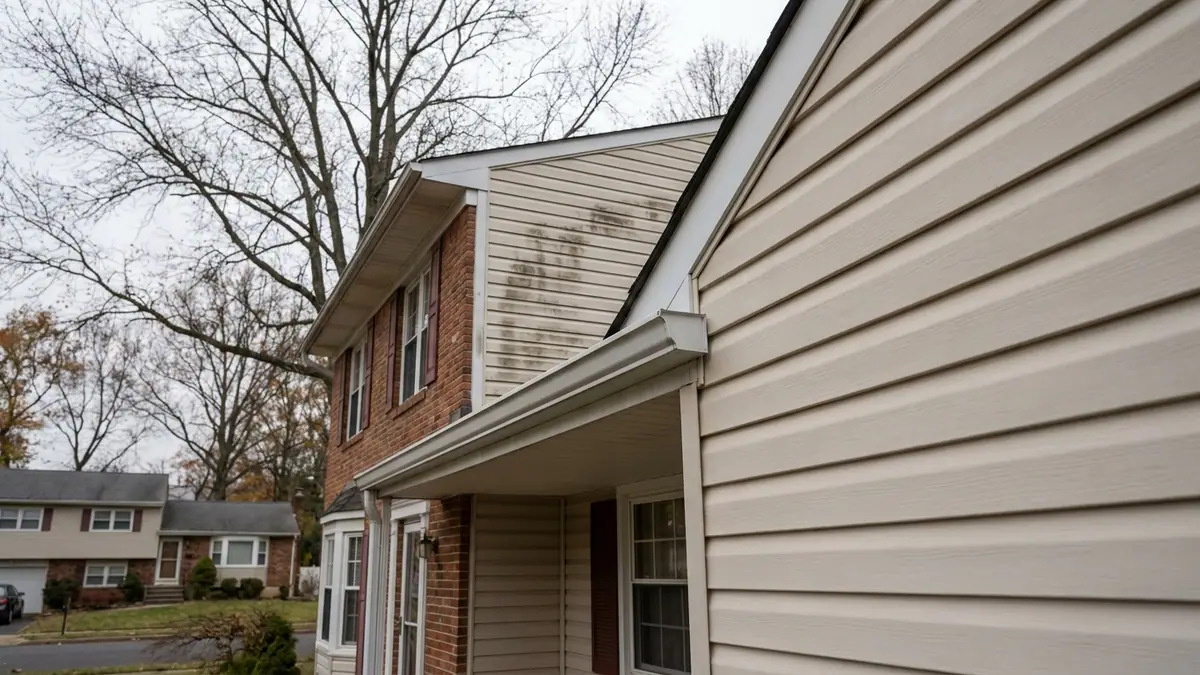
| What you findStain lines down the fascia and siding behind the gutter | What it meansWater is getting behind the trough | Keep or replaceReplace, and fix the edge metal |
The deeper background on seamless construction, materials and guards is in the seamless gutters guide. What matters at roof-replacement time is narrower: does this gutter still do its job, and is the wood behind it sound.
When replacing them with the roof is the obvious call
Three situations make it easy.
The gutters are the same age as the roof
If the aluminum went up with the roof you are now tearing off, it has been through the same twenty-plus New Jersey winters, the same ice, the same summer expansion cycles. Sectional gutters from that era are held together with sealant that has long since hardened and cracked. Reusing them is spending nothing today to spend more in three years.
The gutters overflow even when clean
Overflow on a clean gutter is a capacity problem, not a maintenance problem. It shows up on steep roofs and on long runs that drain a large plane through a single downspout. Sizing is worth getting right at replacement rather than living with it, since the labor is identical either way.
There is rot at the fascia or soffit
Once the wood at the roof edge is failing, the gutter, the fascia and the roof edge are one repair, not three. Doing the roof and leaving wet trim behind is how a homeowner ends up paying a second crew to open the same area a year later.
What this costs, and how to keep the number honest
Seamless aluminum gutters in New Jersey run $1,200 to $3,500 in standard-value towns, $2,500 to $6,500 in higher-value towns, and $4,000 to $12,000 on large or luxury homes. The band is set by the municipality's median home value. Roof replacement pricing is banded the same way and is broken down in the New Jersey roof cost guide.
What keeps that number honest is having the gutter scope written into the same estimate as the roofing work, before anything starts. Lightning Construction takes no deposit and writes no change orders, so the conditions that usually turn into a surprise line item on gutter day — rotted fascia, missing edge metal, hangers that will not hold — are found at the free inspection and priced into the quote. Lightning also pulls the permit and attends the municipal inspection under the New Jersey Uniform Construction Code, so you file nothing.
Ask for these specifics in writing:
- Gutter size and downspout size, stated in inches, not "standard."
- Number and location of downspouts, and where each one discharges.
- Whether drip edge and gutter apron are included at every eave.
- Whether any fascia or soffit replacement is included, and how much.
- Whether guards are included, and on which runs.
- Who cleans and flushes the gutters before the crew leaves.
What to do next
Walk the perimeter, look for sag, seams, rust and stained fascia, and then look again during the next real rain. If two or more items on the table above apply, plan on new seamless gutters with the roof rather than after it. If the gutters are seamless, tight and draining, say so up front and have the estimate reflect detach-and-reset instead.
Either way, get both scopes on one written estimate from one contractor, so nobody can point at the other trade when water shows up on the fascia. Book a free inspection and written estimate — there is no cost and no obligation, and a salesperson does come to the house.