Short answer
Gauge is a thickness scale that runs backward, so 24 gauge steel is thicker than 26 gauge. On a house, that extra thickness mostly buys flatter panels, better dent resistance and the ability to run wider panels and mechanically seamed profiles. On a simple roof with narrow panels and a sheltered exposure, 26 gauge steel is a legitimate choice and not a downgrade by itself.
On this page
Gauge measures sheet steel thickness on a scale that runs backward: the lower the number, the thicker the metal. A 24 gauge panel is thicker than a 26 gauge panel, roughly 0.024 inches against roughly 0.019 inches nominal. That gap sounds trivial written down. On a roof it decides how flat the panels look, how they handle a dropped branch, how wide the panels can be and which seam the installer can use.
It is not a quality grade. A 26 gauge roof is not a cheap roof by definition and a 24 gauge roof is not automatically a good one. The gauge has to match the profile, the panel width and the exposure. Here is what each one actually changes.
What gauge means, and what it does not mean
Gauge is a nominal standard, not a measured guarantee. Steel is rolled to a thickness range, and two coils both sold as 26 gauge can differ slightly. Reputable panel manufacturers publish a minimum thickness for each gauge. If a number on your estimate matters to you, ask for the manufacturer's data sheet showing the minimum, not just the gauge number.
Two things gauge does not tell you:
- The substrate. Steel panels are either galvanized or Galvalume coated before paint, and that coating does more for corrosion life than thickness does. Aluminum panels are not measured in gauge at all. They are specified in decimal inches, usually 0.032 or 0.040 for residential work. If an estimate says 24 gauge aluminum, somebody is copying numbers between systems.
- The finish. Paint system is a separate line. A PVDF finish holds color and gloss far longer than a polyester based one, and that is true at either gauge.
So gauge is one of four specs that belong on a metal roofing estimate: substrate, thickness, finish and profile. A quote that lists only "standing seam metal roof" has told you nothing you can compare.
Side by side: 24 gauge vs. 26 gauge steel
| 26 gauge | 24 gauge | |
|---|---|---|
| Nominal thickness | 26 gaugeAbout 0.019 in | 24 gaugeAbout 0.024 in |
| Stiffness across the pan | 26 gaugeLower, flexes more | 24 gaugeNoticeably higher |
| Dent resistance | 26 gaugeFair, shows point impacts | 24 gaugeBetter under hail and dropped limbs |
| Oil canning tendency | 26 gaugeHigher, especially on wide flat pans | 24 gaugeLower at the same width |
| Typical panel widths | 26 gauge12 to 16 in | 24 gauge12 to 18 in, wider pans practical |
| Seam types | 26 gaugeSnap lock, some mechanical | 24 gaugeSnap lock and mechanically seamed |
| Finish availability | 26 gaugeOften more polyester options | 24 gaugeBroad PVDF availability |
| Material cost | 26 gaugeLower | 24 gaugeHigher |
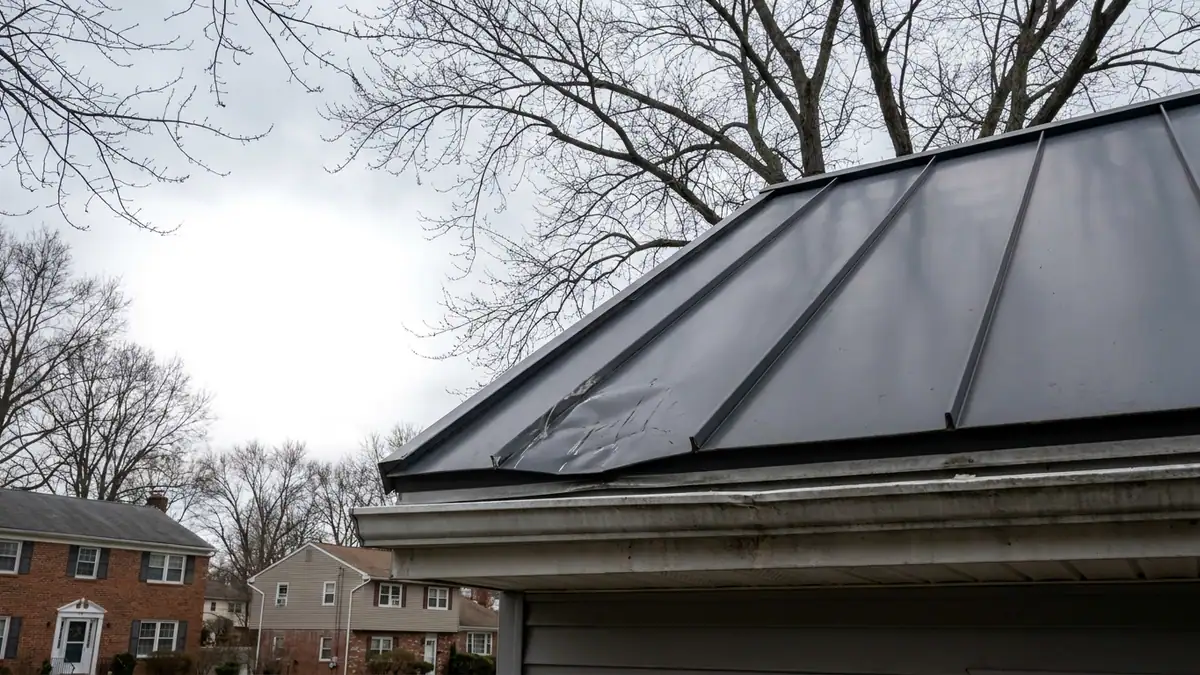
The column that changes the look of your house is oil canning. That is the slight waviness you see in the flat area of a panel when light rakes across it. It is an appearance issue, not a failure, but homeowners notice it on dark colors and wide pans. Thicker steel resists it. So do narrower panels, striations or pencil ribs rolled into the pan, flat decking and careful handling on site. Going to 24 gauge helps, but it does not buy a perfectly flat roof on its own.
Where 24 gauge earns the upgrade
Spend the money on thicker steel in these situations:
- Wide pans. Anything over about 16 inches wide wants 24 gauge, because the unsupported flat area between the seams is what waves.
- A dark or high gloss color. Dark charcoal, black and deep bronze show every ripple. A lighter matte color on 26 gauge can read flatter than a black 24 gauge panel.
- Mechanically seamed profiles. A double lock seam is folded by a machine on the roof. The metal has to take that fold without cracking the finish, and 24 gauge is the normal specification for it.
- Trees over the roof. Falling limbs and acorns dent thin steel. If you are under mature oaks, the thicker panel is worth it.
- Long, exposed runs. Open coastal exposure, long rafter runs and roofs that catch wind off a field all load panels harder.
For Jersey Shore houses, wind and salt matter more than gauge alone, and fastener and clip metallurgy matters most of all. The Jersey Shore roofing guide covers what salt air does to a roof assembly over time.
Where 26 gauge is the honest recommendation
26 gauge steel is a real roofing product and it belongs on plenty of New Jersey houses.
- Narrow panels, 12 to 14 inches wide, where the flat area between seams is small.
- Metal shingle and stamped panel systems, which get their stiffness from the forming rather than the thickness. A pressed slate or shake profile at 26 gauge is stiffer in the hand than a flat 24 gauge pan.
- Porches, dormers, bay roofs and small sections of metal tied into an asphalt roof.
- Sheltered roofs with short runs and no overhanging trees.
What does not belong on a house at any budget is the 29 gauge exposed fastener panel sold for barns and pole buildings. It is thin, it oil cans badly, and the gaskets under the screws are the whole waterproofing strategy.
What else carries more weight than gauge
The panel is one layer in an assembly. These decide whether the roof leaks:
- Underlayment. A high temperature synthetic or self adhered membrane under metal, with ice and water protection at the eaves and valleys.
- Clips and fasteners. Concealed clips that let panels move with temperature, screwed into sound decking.
- Flashing. Chimneys, sidewalls, valleys and skylights are where roofs leak, metal or not.
- Trim gauge. Valley metal, rake, eave and ridge trim are often quoted a gauge thinner than the field panels. Those pieces take the foot traffic and the ice. Ask for them to match.
The full assembly is laid out in the standing seam metal roofing guide. If you are still deciding between metal and asphalt at all, the asphalt vs. metal comparison is the better place to start than a gauge debate.
What the gauge does to your price
It moves you within a range, not into a different one. Metal roofing in New Jersey runs $18,000 to $35,000 in standard value towns, $28,000 to $55,000 in higher value towns, and $45,000 to $120,000 for large or luxury homes. The band comes from the municipality's median home value in the ACS 2024 five-year estimates. Roof size, pitch, the number of valleys, hips and penetrations, the trim package and the profile you choose move the total far more than one step in sheet thickness.
Ask for both gauges priced on the same estimate if you want to see the difference on your own roof instead of in an article.
What to put in writing before you sign
Make the estimate say all of this:
- Substrate and thickness, stated as Galvalume steel at 24 or 26 gauge, or aluminum at a decimal thickness.
- Panel profile, seam type and exact panel width.
- Finish system, named by the paint type and the warranty that comes with it.
- Gauge of valley metal, ridge, hip, rake and eave trim.
- Underlayment type and where ice and water protection runs.
- Clip and fastener type.
Lightning Construction is veteran owned, family operated, GAF Certified, licensed and insured under New Jersey Home Improvement Contractor registration 13VH12437000, and serves all 21 New Jersey counties. There is no deposit on any job, nothing is due until the work is finished and you have inspected it, and there are no change orders, because the written estimate is the final price. Lightning pulls the permit from your municipality's construction office and attends the inspection. Standing seam installs take two to four days.
The inspection and the written estimate are free with no obligation, and a salesperson does come to the house. See the metal roofing page for the systems installed, or book the free estimate and have the gauge, the profile and the trim spelled out on paper before you compare anything.