Short answer
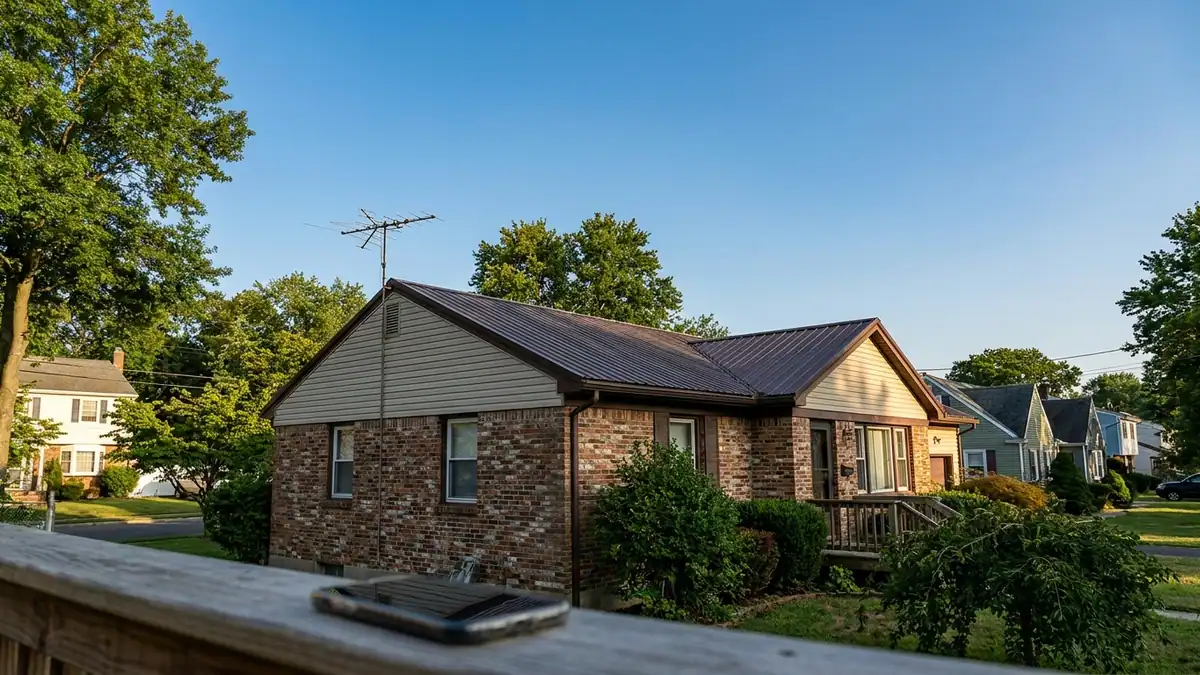
Exposed-fastener panels are screwed through the face of the metal with rubber-gasketed screws, and those gaskets are the part that ages, hardens and eventually leaks. Standing seam holds the panel with clips hidden under the seam, so nothing penetrates the weather surface and the metal is free to expand and contract. On a house you live in, concealed clips are almost always the better system, and exposed fastener belongs on a barn, a shed or a detached garage.
On this page
- What an exposed-fastener metal roof actually is
- What a concealed-clip standing seam roof does differently
- Thermal movement, and why screws back out
- Side by side
- Where an exposed-fastener panel is still the right call
- What each system does to price and schedule in New Jersey
- What to get in writing before you sign
- What to do next
Exposed fastener means the screws pass through the face of the panel and you can count every one of them from the driveway. Concealed clip means the panel is held by clips hidden under a raised seam, with no hole through the weather surface of the roof at all. That single difference drives the service life, the maintenance, the way the roof handles New Jersey temperature swings, and most of the price gap between the two systems.
What an exposed-fastener metal roof actually is
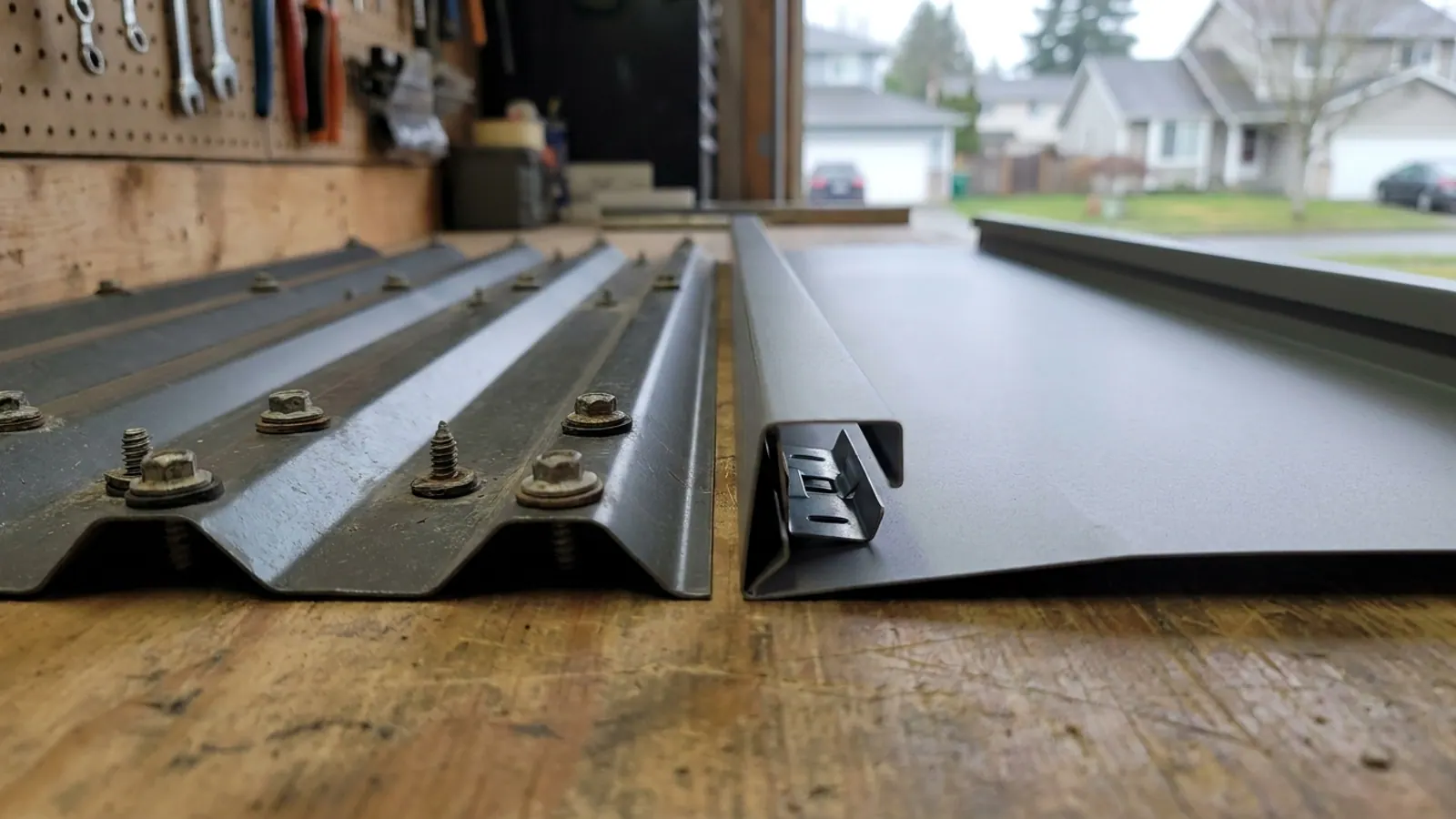
It is a ribbed panel, usually 26 or 29 gauge steel, screwed straight down through the flat of the panel into the decking or into purlins. Each screw carries a rubber washer, normally EPDM, sandwiched under a metal cap. Tighten the screw and the washer compresses against the panel and seals the hole.
That is the whole waterproofing strategy: a compressed rubber ring around a hole you drilled on purpose. It works, and it works for years. The panels go down fast, there is very little fabrication, and the material is the cheapest way to get a metal roof over a structure.
The screws run in rows across every panel, along each support line and at every side lap. On a full house roof that adds up to thousands of individual seals, and every one of them is a place the roof can eventually leak.
The gasket is the part that fails
Rubber washers sit in full sun, freeze, thaw and take UV year-round. Over time they harden, shrink and crack. The screw is still tight and the roof still looks fine from the ground, but the seal underneath is no longer a seal.
Installation makes it worse or better. Over-drive a screw and the washer squeezes out past the metal cap, where sunlight destroys it in a fraction of the time. Under-drive it and the washer never compresses at all. Drive it at an angle and it seals on one side only. A crew working fast with an impact driver does all three of those without meaning to.
The fix is re-screwing, usually with larger-diameter screws so the new threads grip fresh metal rather than a widened hole. It is real, recurring work on a roof that was sold as maintenance-free.
What a concealed-clip standing seam roof does differently
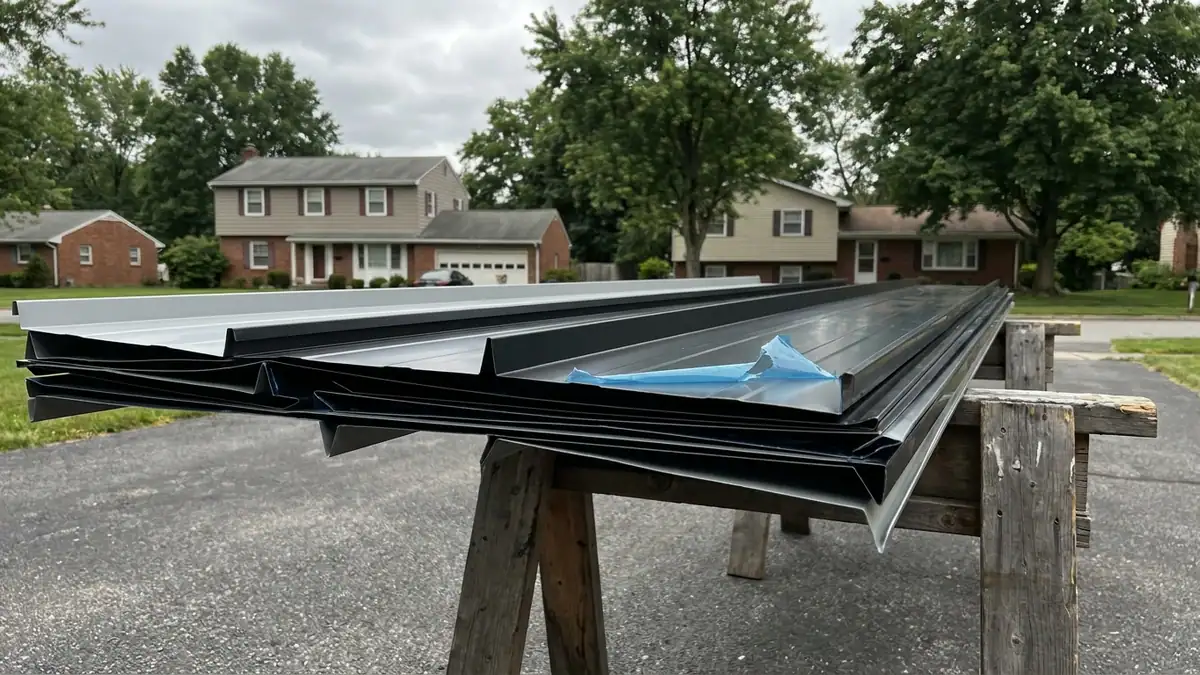
Standing seam panels run vertically from ridge to eave. The clip sits in the seam, is screwed to the decking, and then the seam is folded or snapped closed over it. The clip is inside the roof. The screw is under the seam. Water running down the panel never crosses a fastener.
There are still exposed fasteners on a standing seam job — at some trim, at terminations, at certain flashings — but they are few, they are placed where they are covered or shielded, and they are not carrying the roof's waterproofing.
The second thing the clip does matters just as much. Many clips are floating, which means the panel is allowed to slide against the clip as it heats and cools instead of being pinned in place.
Thermal movement, and why screws back out
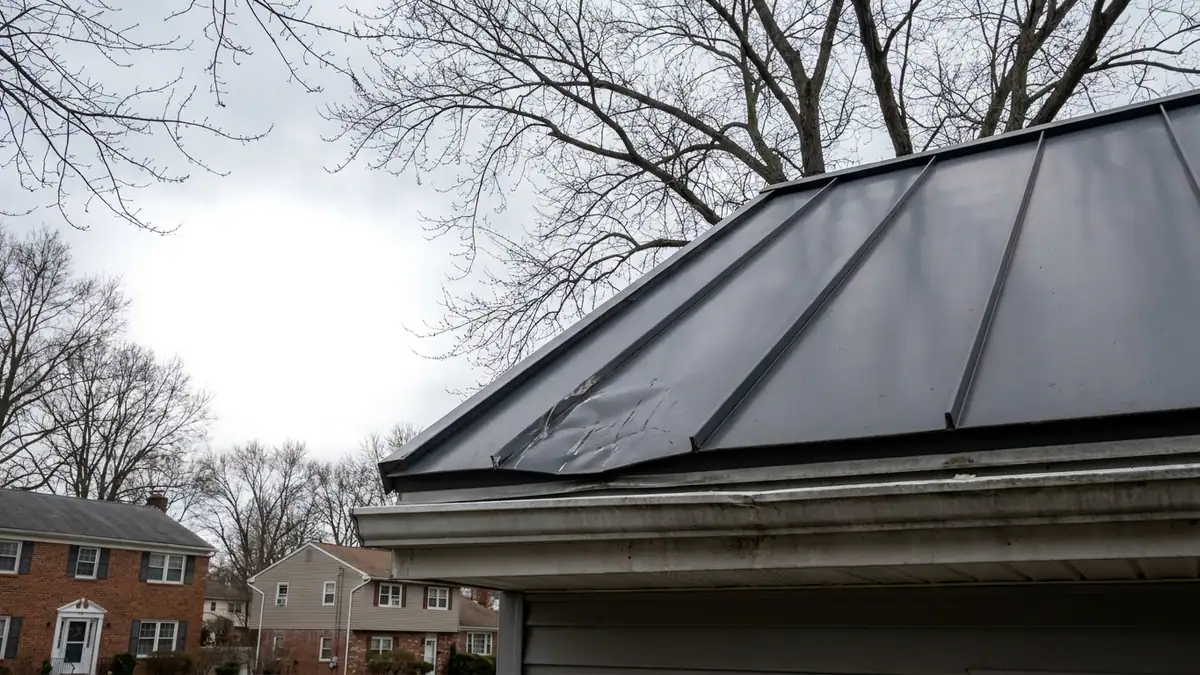
Metal expands and contracts with temperature, and a New Jersey roof surface swings across a wide range between a January night and an August afternoon. A 20-foot panel does not move much in any single hour, but it moves every day for decades.
When the panel is screwed through its face, that movement is fighting the screw. The hole slowly elongates. The threads wear. The screw loosens, the washer no longer compresses, and the head starts to sit proud of the panel. That is why exposed-fastener roofs so often need their screws gone over, and why the ones that are ignored start leaking at random points in the field of the roof rather than at a flashing.
A floating clip removes that fight entirely. The panel moves, the clip lets it, and the screw is never loaded in a way it was not designed for.
Side by side
| Exposed fastener | Standing seam, concealed clip | |
|---|---|---|
| How the panel is held | Exposed fastenerScrews through the face of the panel | Standing seam, concealed clipClips hidden inside the seam |
| Holes in the weather surface | Exposed fastenerThousands | Standing seam, concealed clipNone in the field of the roof |
| Waterproofing depends on | Exposed fastenerRubber gaskets staying compressed | Standing seam, concealed clipPanel geometry and folded seams |
| Handles thermal movement | Exposed fastenerPoorly, the screws resist it | Standing seam, concealed clipYes, floating clips let panels slide |
| Recurring maintenance | Exposed fastenerScrew inspection and eventual re-screwing | Standing seam, concealed clipNone on the fasteners |
| Look from the street | Exposed fastenerVisible screw rows, agricultural | Standing seam, concealed clipClean vertical lines, no fastener heads |
| Typical use | Exposed fastenerBarns, sheds, garages, outbuildings | Standing seam, concealed clipHouses |
| Relative cost | Exposed fastenerLowest cost metal system | Standing seam, concealed clipHigher, more labor and fabrication |
Where an exposed-fastener panel is still the right call
A contractor who will not name these is selling rather than advising.
- A detached garage, barn, pole building or shed where cost is the priority and a leak is an inconvenience rather than a disaster.
- An unconditioned outbuilding with no finished ceiling, where a failing screw shows itself immediately and costs nothing to chase down.
- A structure you plan to replace or rebuild inside the next decade.
What it is not right for is the roof over your bedrooms. A leak in the middle of an exposed-fastener field on a finished house travels along the decking before it shows on a ceiling, and by then you are dealing with wet insulation and stained drywall, not a screw.
What each system does to price and schedule in New Jersey
Metal roofing here runs $18,000 to $35,000 in standard-value towns, $28,000 to $55,000 in higher-value towns, and $45,000 to $120,000 for large or luxury homes. The band is set by the municipality's median home value from ACS 2024 five-year estimates, not by which fastener system you choose. Within a band, an exposed-fastener panel sits at the low end and a standing seam roof sits higher, because standing seam is more material, more fabrication and considerably more labor.
Time on site differs too. Most asphalt roof replacements are done in a single day. Standing-seam metal takes two to four days, because panels are cut to length, clips are set individually and every valley, sidewall and penetration detail is fabricated on the job.
If you are still weighing metal against shingles at all, the asphalt vs. metal comparison covers that decision, and the standing-seam metal roofing guide walks through panel profiles, seam types and substrates in depth.
What to get in writing before you sign
Ask for these specifically. An estimate that names them is an estimate from someone who has thought about the roof.
- The panel profile and gauge, and whether the system is exposed fastener or concealed clip.
- The clip type on a standing seam job, and whether it is fixed or floating.
- The underlayment, including what goes in the valleys and at the eaves.
- How the panels terminate at ridge, eave, rake, sidewalls and every penetration, since flashing is where metal roofs actually leak.
- Whether any decking repair is priced in, or left open to be settled after tear-off.
- Who pulls the permit and who attends the municipal inspection.
On the last two, Lightning Construction finds decking, flashing and layer problems at the free inspection and prices them into the quote, so there is no change order on the day. There is no deposit either — nothing is due until the work is finished and you have inspected it. Lightning pulls the permit from your municipality's construction office under the New Jersey Uniform Construction Code and attends the inspection, in every municipality. You file nothing.
What to do next
If the building is a barn or a shed, an exposed-fastener panel is a reasonable, honest choice and you should price it. If it is your house, price standing seam, and compare it against a quality asphalt roof rather than against the cheapest metal on the market. Metal roofing material life runs 50 years and up, which is the argument for paying once.
Lightning Construction is veteran-owned, family-operated, licensed and insured, and rated 4.9 out of 5 from 264 Google reviews. See what the metal roofing service covers, then book a free inspection and written estimate. It is genuinely no-obligation, and a salesperson does come to the house.