Short answer
Lead paint is likely on any wood siding painted before 1978, and it changes how the old siding comes off rather than whether it can come off. Federal rules require a lead-safe certified firm and contained, wet work practices once more than 20 square feet of exterior painted surface is disturbed. Ask any contractor to show you their lead-safe certification and their containment plan in writing before the first clapboard moves.
On this page
- Why 1978 is the line
- How to find out whether your siding actually has it
- What the federal renovation rule requires on an exterior job
- What changes on the job site
- Covering the old wood versus taking it off
- Rental property is a separate obligation
- What belongs in writing before anyone pulls a board
- What this does to the price
- What to do next
If your house was built before 1978 and the wood siding has ever been painted, plan on lead paint being there. That does not stop the siding from being replaced. It changes how the old material comes off, who is allowed to take it off, what the ground around your house looks like for the length of the job, and how the debris leaves the property.
This is a practical problem, not a legal fog. Below is what actually changes on the job.
Why 1978 is the line
Lead was banned from residential paint in the United States in 1978. Paint applied before that date can contain it, and on exterior wood it was common because lead made the coating durable. Anything painted after 1978 is not a lead concern from the paint itself, although a 1950s house repainted in 1995 still has the original coats buried under the newer ones.
New Jersey has a lot of this housing. Passaic's median home was built in 1938. Trenton's was built in 1953 and Clifton's in 1951. Those are median years, which means half the houses in each of those places are older still. If you own a painted wood clapboard or shingle house in a town like Passaic or Trenton, the question is not whether lead paint is a possibility. It is how the contractor intends to handle it.
How to find out whether your siding actually has it
There are three honest answers, in order of certainty.
- Assume it. For a pre-1978 painted exterior, assuming lead is present is the standard approach and it is what the federal renovation rule is built around.
- Have a certified lead inspector or risk assessor test it. This is the only way to get a documented answer, and it is a separate service from a siding estimate.
- Use swab kits from a hardware store. These give you a rough indication on a specific spot and nothing more. A negative swab on one board does not clear the house.
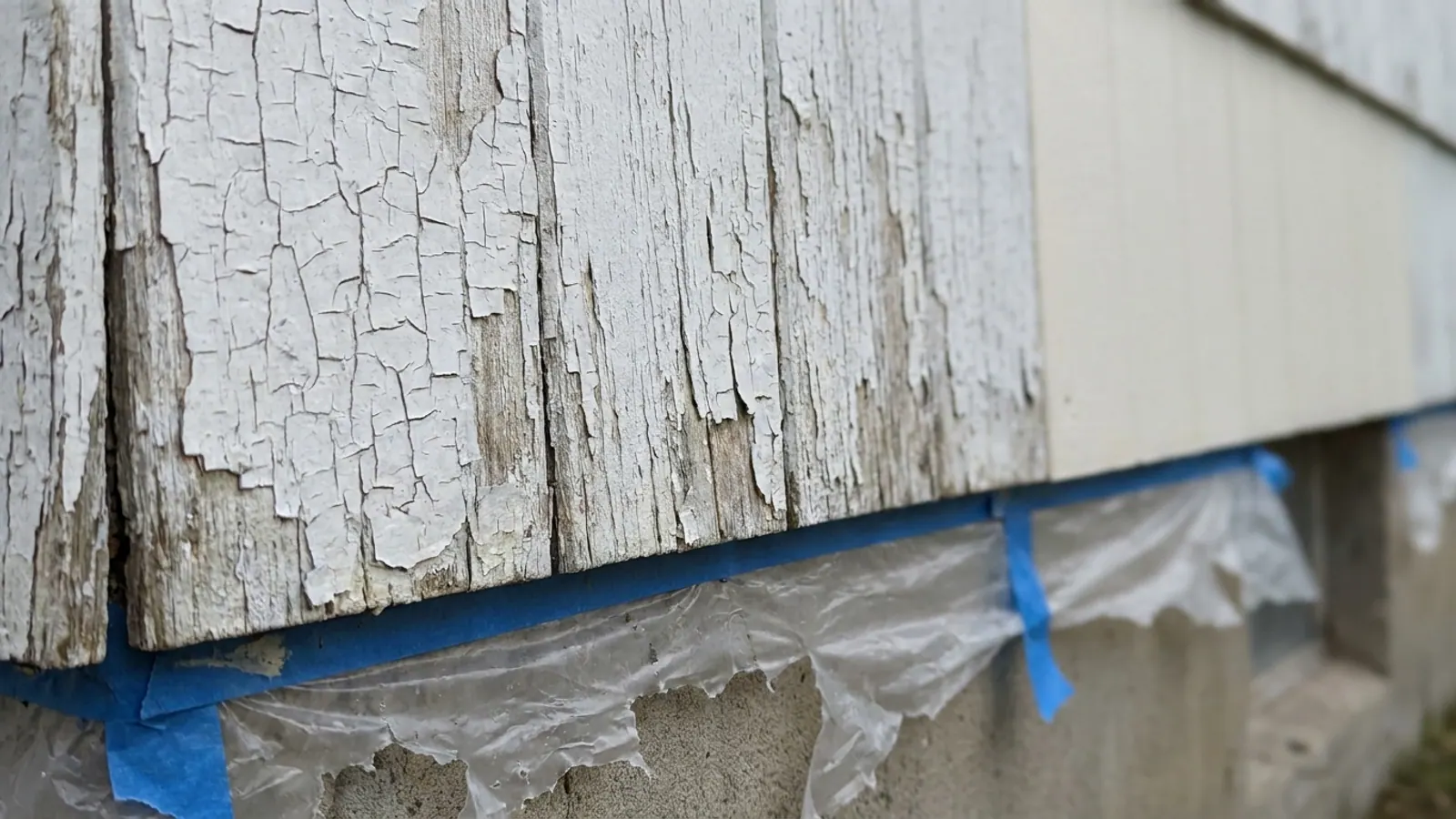
The visual cues people look for are alligatored paint, thick chalky buildup and layers that peel in hard chips rather than flaking. Those point to age, not to lead specifically. Age is the actual trigger.
What the federal renovation rule requires on an exterior job
The EPA Renovation, Repair and Painting rule applies to work on housing built before 1978 when more than 20 square feet of exterior painted surface will be disturbed. A full siding replacement clears that threshold on the first wall. The rule requires that the work be done by a lead-safe certified firm using certified renovators, that the work area be contained, that specific practices be avoided, and that the area be cleaned and checked before the job is called done.
Three practices are off the table on a lead job:
- Open-flame burning or torching of painted surfaces.
- Machine sanding or grinding without HEPA exhaust attached.
- High pressure washing, which drives chips and dust into the soil and across property lines.
The homeowner's job here is short. Ask the contractor for the firm's lead-safe certification, ask who the certified renovator on site will be, and ask for the pre-renovation lead pamphlet that the rule requires you be given. Get all of it before the contract is signed, not on the morning the truck shows up. If a bidder dismisses the question or says it does not apply to siding, that bid is telling you something.
What changes on the job site
The difference is visible from the curb.
| Post-1978 siding tear-off | Pre-1978 painted wood siding | |
|---|---|---|
| Ground protection | Post-1978 siding tear-offTarps to catch debris | Pre-1978 painted wood sidingHeavy plastic sheeting, taped at the foundation and weighted at the edges, extended out from the wall |
| Removing boards | Post-1978 siding tear-offPried and dropped | Pre-1978 painted wood sidingMisted first, pried with the paint face kept intact, carried down rather than dropped |
| Cutting and sanding | Post-1978 siding tear-offStandard tools | Pre-1978 painted wood sidingHEPA-equipped tools, or wet methods, or neither |
| Cleanup | Post-1978 siding tear-offSweep and magnet pass | Pre-1978 painted wood sidingWet wipe and HEPA vacuum, no dry sweeping, sheeting folded inward and bagged |
| Debris | Post-1978 siding tear-offDumpster | Pre-1978 painted wood sidingContained and covered, chips kept off soil and out of garden beds |
| Weather | Post-1978 siding tear-offWork continues in wind | Pre-1978 painted wood sidingHigh wind stops exterior lead work because containment fails |
The other change is your own routine. Keep windows and doors on the work walls closed. Move the grill, the patio furniture, the sandbox and the vegetable beds out of the containment zone before the crew arrives. Keep kids and pets off that side of the house until the sheeting comes up and the area is cleaned. Soil is where exterior lead dust ends up, and soil is where small children get into it.
Covering the old wood versus taking it off
Some contractors will offer to leave the painted wood in place and side over it, on the logic that undisturbed paint stays undisturbed. That is only half right. Nailing through, cutting trim, removing corner boards and pulling off window casings all disturb the painted surface, so the same work practices apply. It also leaves you with no look at what is behind the wall, and on a house that old the house wrap is often absent entirely and the sheathing is board, not plywood.
If the wood is sound and dry, an enclosure can be a defensible choice. If there is any sign of water staining, soft trim, insect damage or interior paint peeling on exterior walls, tear it off and look. The one advantage of a pre-1978 wall is that once it is open, you can see every bay before the new wall goes on. Material choice at that point is its own decision, and the siding options guide lays out vinyl and fiber cement honestly, including where each one belongs on an older house with real trim profiles to match.
Rental property is a separate obligation
If the pre-1978 house is a rental rather than your residence, New Jersey has its own lead-based paint inspection requirements for rental dwellings that sit on top of the federal work-practice rule. Those obligations run between the owner and the municipality, and they are not satisfied by a contractor doing a lead-safe siding job. Check with your municipal office or your attorney about where your property stands before you schedule work.
What belongs in writing before anyone pulls a board
Get these on the estimate itself, not in a text message:
- That the house is treated as pre-1978 and lead-safe work practices will be used.
- The firm's lead-safe certification.
- Who protects the ground, how far out the sheeting runs, and who removes it.
- How debris is contained and hauled.
- What happens to rotted sheathing or framing found behind the old siding, with the price already in the number.
That last line is where most pre-1978 siding jobs go sideways, because nobody prices the unknown and the unknown shows up on day two. Lightning Construction writes no change orders. The conditions that normally trigger one are identified at the free inspection and included in the written estimate, and there is no deposit, so nothing is due until the work is finished and you have inspected it. Lightning also pulls the permit from your municipality's construction office under the New Jersey Uniform Construction Code and attends the inspection.
What this does to the price
It moves you within a range, not into a new one. New Jersey siding replacement runs $10,000 to $22,000 in standard-value towns, $16,000 to $38,000 in higher-value towns, and $30,000 to $70,000 for large or luxury homes, with the band set by the municipality's median home value from ACS 2024 five-year estimates. Containment, wet methods, HEPA cleanup and slower removal are labor, and labor on an older house with hand-cut trim is already the biggest variable. What you should refuse is a cheap bid that is cheap because the containment line is missing.
What to do next
Walk the house and look at the paint on the worst wall, usually the south or west side. If it is chipping, cupping or flaking off in chunks, stop scraping it yourself and get it looked at. Lightning's inspection and written estimate are free with no obligation, and a salesperson does come to the house. Book a free siding estimate or read what the full siding replacement scope covers, including trim, soffit and fascia, before you start collecting bids.