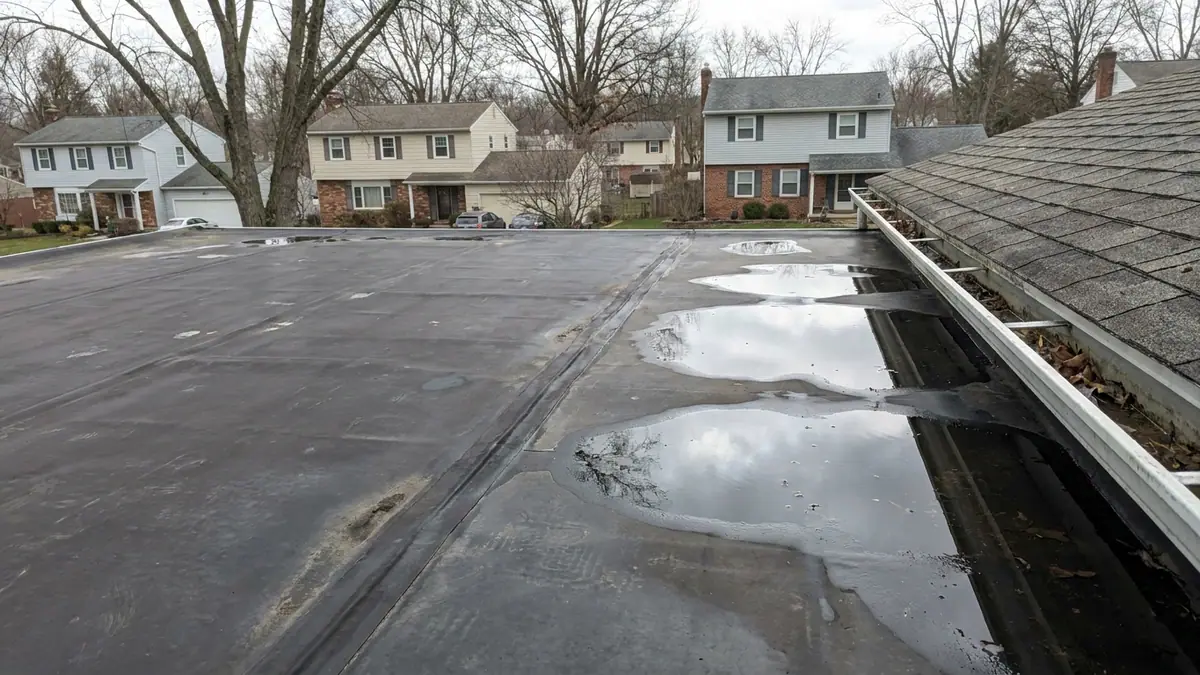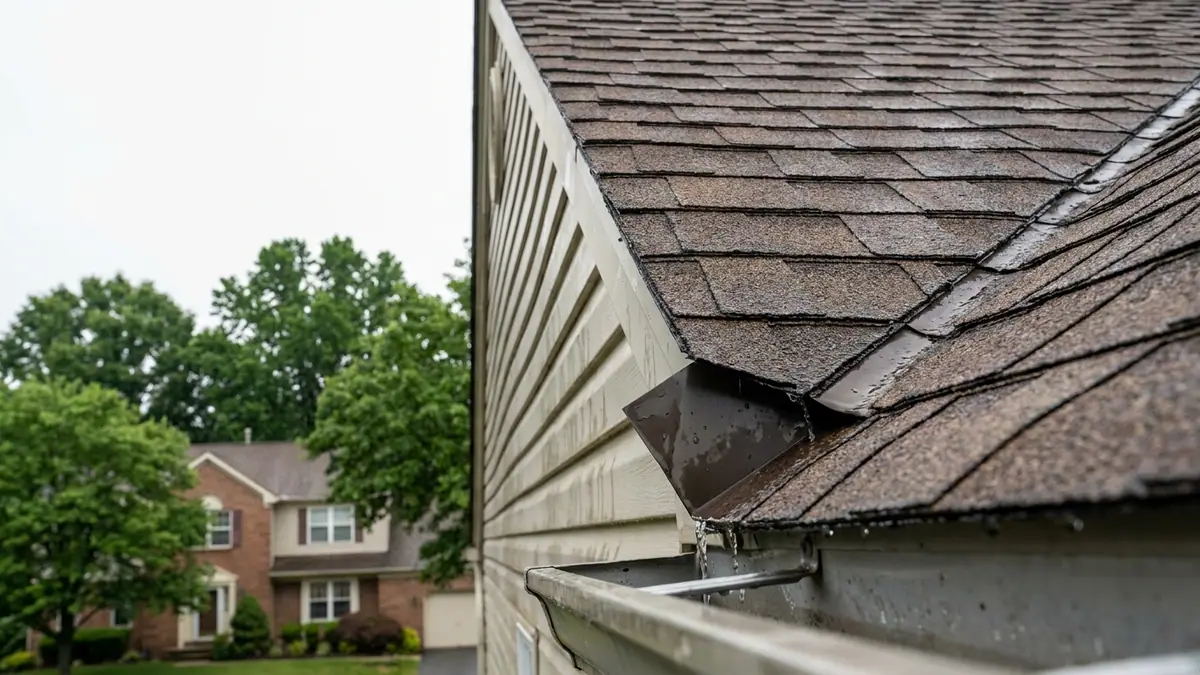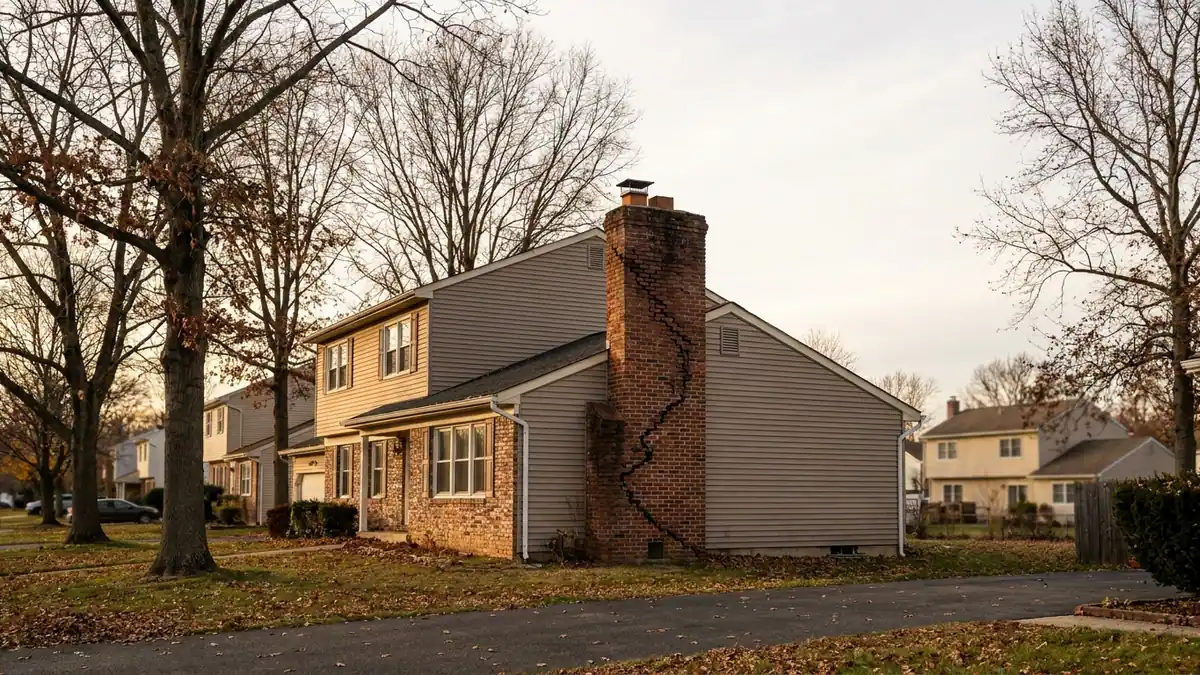
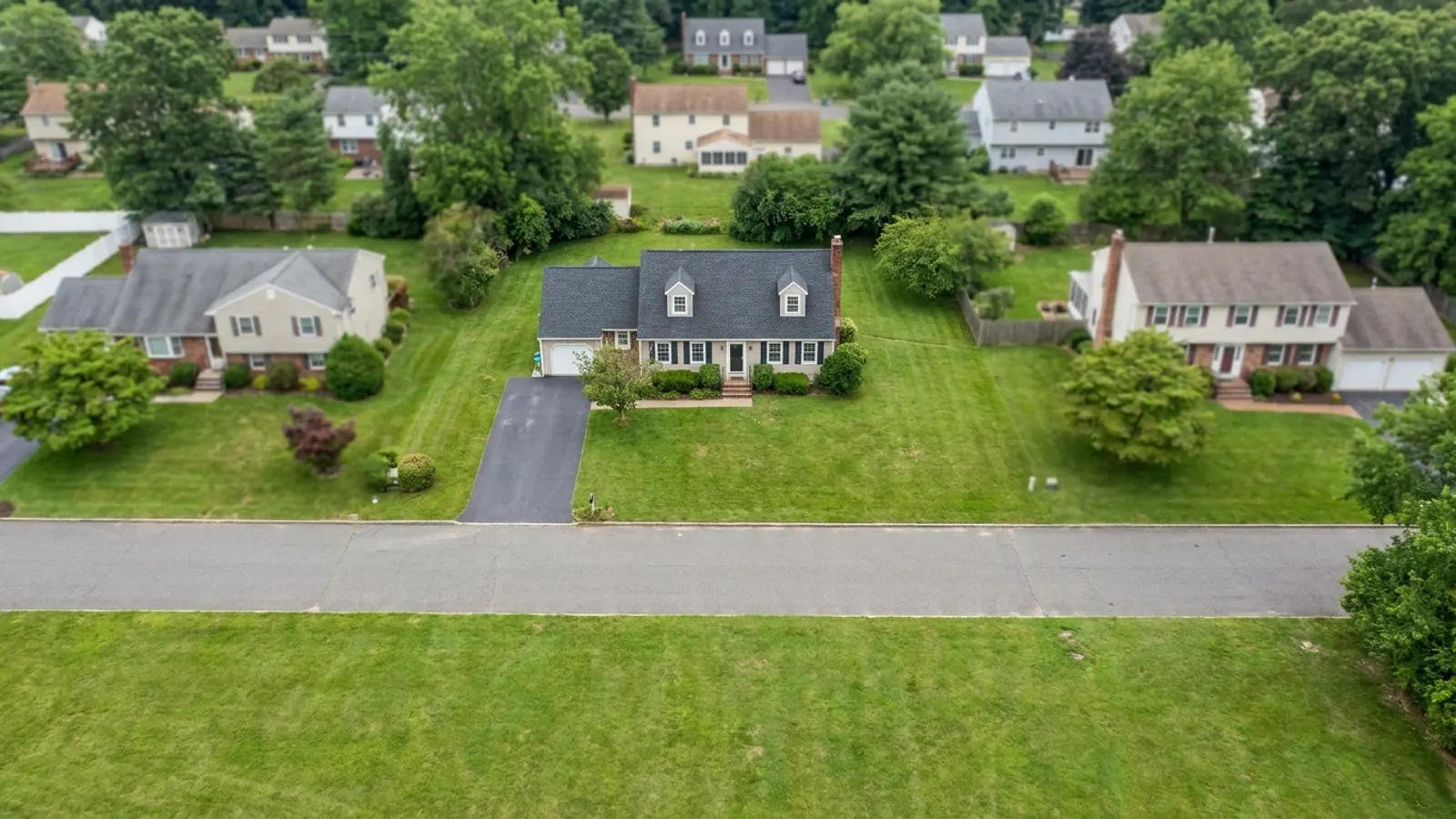
Short answer
A roofing square is 100 square feet of roof surface, so a 2,000-square-foot roof is 20 squares. You can get a rough number by measuring your home's footprint and multiplying by a pitch factor, but that estimate ignores waste, overhangs, dormers and valleys. Use your number to sanity-check the quotes you receive, not to price the job yourself.
On this page
- What a roofing square is and why the trade uses it
- How to estimate your roof squares from the ground
- Pitch changes the number more than people expect
- Waste, and why 21 squares gets ordered as 23
- Why two contractors give you different square counts
- What the square count tells you about price, and what it does not
- What to do with your number
A roofing square is 100 square feet of roof surface. If a contractor tells you your roof is 24 squares, they are saying it covers roughly 2,400 square feet, and that is the unit the entire trade uses to order material and price labor.
You can work out an approximate number yourself in about twenty minutes with a tape measure and a calculator. It will not be exact, and it is not supposed to be. What it gives you is a way to look at three quotes and know immediately whether one of them is describing a different roof than the other two.
What a roofing square is and why the trade uses it
Shingles are sold and installed by the square, not by the square foot. Most architectural asphalt shingles come three bundles to a square, so a 24-square roof is 72 bundles sitting on your driveway or staged on the roof deck. Underlayment, ice and water shield, starter strip and ridge cap are all quantified against the same number.
Labor tracks it too. A crew stripping and reshingling a 20-square walkable roof and a crew doing a 45-square roof with four valleys and a steep pitch are doing very different days of work, and the square count is the first thing that tells them which one they are looking at.
When you read an estimate, the square count is the line that everything else is built on. If that number is wrong, every number under it is wrong.
How to estimate your roof squares from the ground
You do not need to get on the roof. Do not get on the roof.
- Measure the footprint of the house at ground level. Walk the perimeter with a tape and record the length and width of each rectangular section, including the garage and any additions. A 40-foot by 28-foot main body and a 22-foot by 22-foot garage wing are two separate rectangles.
- Add the overhang. Eaves and rakes typically project 12 to 24 inches beyond the wall. Measure one, then add that projection to both ends of each dimension. A 40-by-28 body with 16-inch overhangs becomes roughly 42.7 by 30.7.
- Multiply each rectangle to get its footprint area, then add them together.
- Multiply that total by the pitch factor from the table below.
- Divide by 100. That is your square count, before waste.
For a 1,900-square-foot footprint on a 6/12 roof, the math is 1,900 x 1.118 = 2,124 square feet, or about 21 squares.
Finding your roof pitch without climbing
Pitch is rise over 12 inches of horizontal run. From inside the attic, hold a level against a rafter, mark 12 inches along the level, and measure straight down to the rafter at that point. Six inches down means a 6/12 pitch. From the ground, you can also count shingle courses against a fixed vertical, but the attic method is faster and more accurate.
Most New Jersey houses built after the war fall between 4/12 and 8/12. Older colonials, capes with steep gables and anything with a finished attic room often run 9/12 or higher, and above 8/12 the roof stops being walkable, which affects labor as much as material.
Pitch changes the number more than people expect
| Roof pitch | Multiplier | 1,900 sq ft footprint becomes |
|---|---|---|
| Roof pitch3/12 | Multiplier1.031 | 1,900 sq ft footprint becomes1,959 sq ft, about 20 squares |
| Roof pitch4/12 | Multiplier1.054 | 1,900 sq ft footprint becomes2,003 sq ft, about 20 squares |
| Roof pitch6/12 | Multiplier1.118 | 1,900 sq ft footprint becomes2,124 sq ft, about 21 squares |
| Roof pitch8/12 | Multiplier1.202 | 1,900 sq ft footprint becomes2,284 sq ft, about 23 squares |
| Roof pitch10/12 | Multiplier1.302 | 1,900 sq ft footprint becomes2,474 sq ft, about 25 squares |
| Roof pitch12/12 | Multiplier1.414 | 1,900 sq ft footprint becomes2,687 sq ft, about 27 squares |
This is why a homeowner who says "my house is 1,900 square feet, so I need 19 squares" is always low. Your floor plan is flat. Your roof is not. Between pitch and overhang, roof area commonly runs 20 to 40 percent above the footprint underneath it.
Waste, and why 21 squares gets ordered as 23
Every cut shingle produces a piece that gets thrown away. Valleys, hips, rakes and anything that has to be trimmed around a chimney or a skylight generate offcuts, and steeper roofs generate more of them because courses have to be racked and cut more carefully.
Contractors add a waste factor to the field measurement, generally in the range of 10 to 15 percent for a simple gable and higher for a cut-up roof with multiple hips and valleys. Hip and ridge cap and starter course are usually counted separately on top of that, since they are different products.
So there are two honest numbers for the same roof: the measured field area and the ordered quantity. Neither one is wrong. They are just answers to different questions. When quotes disagree, this is the most common reason.
Why two contractors give you different square counts
The short answer is that they measured different things, or one of them did not measure at all.
Some companies pull an aerial measurement report from satellite imagery, which is accurate on the main planes and can miss a low addition roof, a porch or a dormer hidden under tree cover. Some measure on site with a wheel and a ladder. Some quote from the driveway using the property tax record's living area, which is the worst method available because it ignores pitch, overhang, garage and any section of roof over unheated space.
Ask each contractor one question: is the number on my estimate the measured roof area or the material quantity including waste? An estimator who has actually been on the roof answers that in one sentence. One who has not will change the subject.
A low square count is also a way to make a bid look competitive while leaving the shortfall to be discovered later. That is the same mechanism behind a quote that grows after the tear-off, and the contractor selection guide covers the other questions that separate bids fast.
What the square count tells you about price, and what it does not
It tells you the scale of the job. It does not tell you the price, because square count is only one of several inputs. Pitch, the number of stories, access for a dumpster, how many layers are already up there, decking condition, the state of the flashing and the shingle line you choose all move the total.
In New Jersey, most asphalt roof replacements land in the $9,000 to $22,000 range in standard-value towns, $14,000 to $35,000 in higher-value towns, and $25,000 to $60,000 for large or luxury homes. Those bands are set by the municipality's median home value, not by your square count alone. The full breakdown of what drives the number is in the New Jersey roof cost guide.
Do not take a range, divide it by your squares and treat the result as a per-square price. That number does not survive contact with a real roof.
What to do with your number
Use it as a check, not a quote. If your own estimate says roughly 22 squares and a bid comes in written for 16, ask what happened to the garage. If a bid says 34, ask whether that includes waste and cap.
Then have the roof measured properly. At Lightning Construction the inspection and the written estimate are free with no obligation, and a salesperson does come to the house. The estimate that comes out of it is the final price, because there are no change orders. The conditions that normally trigger one, including extra shingle layers, rotted decking and unusable flashing, are found during that inspection and priced into the quote. There is no deposit either, so nothing is due until the work is finished and you have inspected it.
Lightning pulls the permit from your municipality's construction office under the New Jersey Uniform Construction Code and attends the inspection, in every municipality. You file nothing. Most asphalt replacements are torn off and finished in a single day, whatever the square count, though a large or steep roof runs a longer day.
Measure your roof if you want the confidence. Then get it measured for real. You can see what the work covers on the roofing page or request a free estimate and have someone put a tape on it.